Cleopatra's Alexandria: The Egypt No Museum Can Contain
Cleopatra VII spoke nine languages and was the first Ptolemaic ruler to bother learning Egyptian. Her city is mostly underwater. Here is what survived and why it matters.

Quick Facts
- Best time to visit
- October to April. Mediterranean winters are mild and cool, ideal for walking between sites. July and August bring humidity and school-holiday crowds that overwhelm smaller sites like the Catacombs.
- Entrance fee
- Kom el-Shoqafa: EGP 180 (approx $3.70 USD), students EGP 90. Pompey's Pillar: EGP 100 (approx $2 USD). Alexandria National Museum: EGP 150 (approx $3 USD). Qaitbay Citadel: EGP 100 (approx $2 USD). Bibliotheca Alexandrina antiquities museum: EGP 80 included in main ticket.
- Opening hours
- Most sites 8am to 5pm daily, reduced hours Fridays. Catacombs occasionally close for maintenance without notice; call the Supreme Council of Antiquities Alexandria office before visiting.
- How to get there
- Express train from Cairo Ramses to Alexandria Masr Station: EGP 45 to 155 depending on class, approx 2 hours 15 minutes. Within Alexandria: taxis EGP 30 to 60 between sites. Blue trams EGP 1 but slow and complex for first-timers.
- Time needed
- One full day for the main historical circuit. Two days if combining with the Bibliotheca cultural program, the Jewish Cemetery of Chatby, and a proper harbor lunch.
- Cost range
- Budget EGP 600 to 900 per day including transport, entries, and street food. Mid-range EGP 1,500 to 2,500 per day including a sit-down fish lunch and private guide for one site.
Quick Facts
Best time to visit: October to April. Alexandria's Mediterranean climate means summer humidity and crowds; spring and autumn give you cool mornings and manageable crowds at sites like the Catacombs and the Bibliotheca.
Entrance fees: Kom el-Shoqafa Catacombs: EGP 180 (approx $3.70 USD), students EGP 90 Pompey's Pillar site: EGP 100 (approx $2 USD) Royal Jewelry Museum: EGP 100 (approx $2 USD) Bibliotheca Alexandrina antiquities museum: EGP 80 (approx $1.65 USD) for museum access within the main ticket Greco-Roman Museum (if reopened after restoration): check current status before going
Opening hours: Most sites open 8am to 5pm daily, with shorter hours on Fridays. The Catacombs close occasionally for maintenance with no warning; call ahead.
How to get there: Trains from Cairo's Ramses Station to Alexandria's Masr Station run roughly every hour; tickets range from EGP 45 (second class) to EGP 155 (first class AC). The journey is two hours and fifteen minutes on the express. Within Alexandria, white-and-blue taxis run on meter or negotiated fare; expect EGP 30 to 60 between major sites. The blue tram is EGP 1 but slow and confusing for first-timers.
Time needed: One full day for the main Cleopatra-era circuit; two days if you want context from the Bibliotheca and the Greco-Roman Museum.
Cost range: Budget EGP 600 to 900 per day including transport, entry, and food. Mid-range EGP 1,500 to 2,500 including a good fish lunch at Kadoura.
---
Why This Place Matters
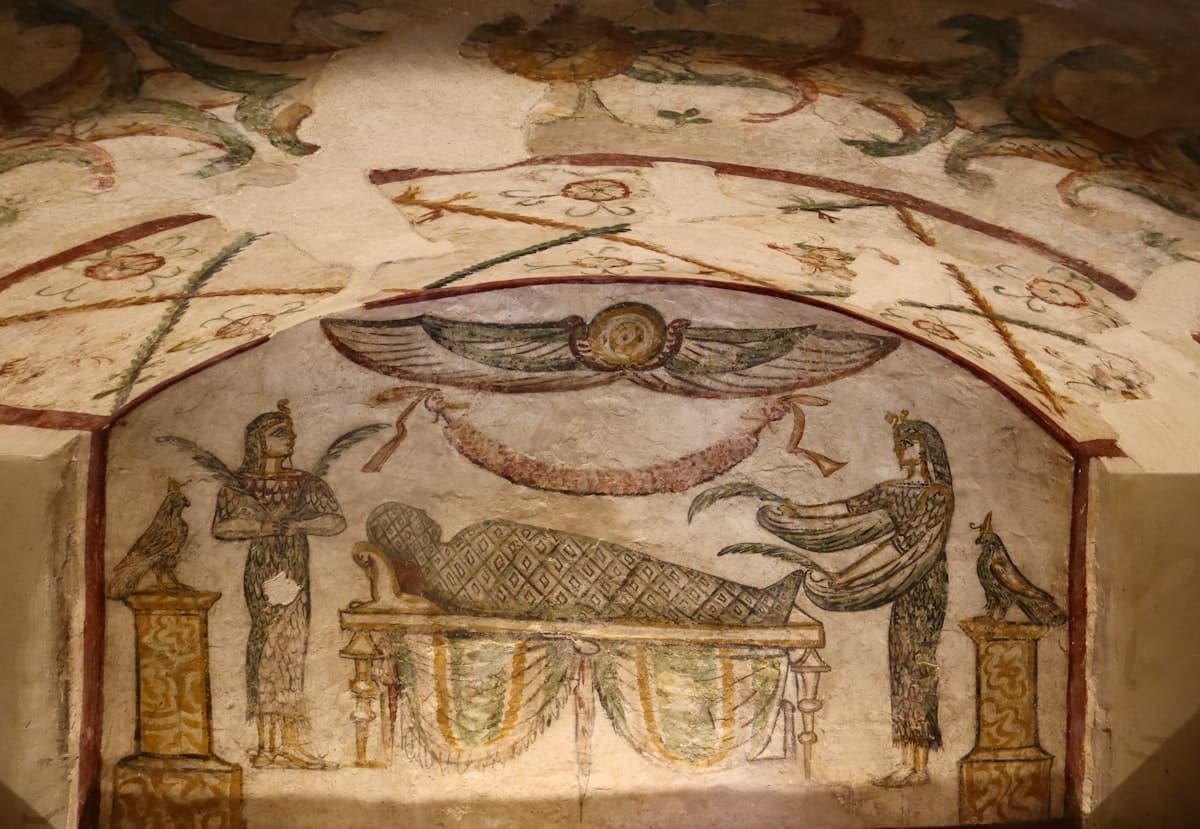
Cleopatra VII never lived in the city tourists visit today. The Alexandria she knew, the one with the Lighthouse, the Mouseion, the royal palaces along the eastern harbor, lies between three and eight meters beneath the sea. An earthquake in 365 AD and a subsequent tsunami shifted the seabed and swallowed the palace quarter. What divers from Franck Goddio's Hilti Foundation have retrieved since 1996 includes sphinxes, columns, and sections of Antirrhodos Island, the private royal island where Cleopatra likely met Caesar. You cannot visit any of it. It sits in the harbor you can see from the Corniche.
This is the central fact of any honest Cleopatra Alexandria Egypt historical guide: almost everything directly connected to her is inaccessible. What survives above ground is the city that came after her, built over her city by Romans, then Byzantines, then Arab conquerors, then Ottomans, then Muhammad Ali's dynasty. Alexandria is not a ruin of one civilization. It is a compression of several, each one using the bones of the last.
That compression is exactly why it rewards serious attention. The Cleopatra-era city was a deliberate invention: Alexander the Great founded it in 331 BC and handed the design to Dinocrates of Rhodes, the architect who had just finished rebuilding the Temple of Artemis at Ephesus. Alexander never saw the finished city. He was buried in it, in a tomb that has also never been found.
---
What the Ptolemies Actually Built (And What It Cost Them)
The Ptolemaic dynasty, the Greek-Macedonian family that ruled Egypt for three hundred years before Cleopatra ended their line by dying in 30 BC, operated on a philosophy that combined genuine intellectual ambition with aggressive propaganda. The Library of Alexandria, which Ptolemy I commissioned around 295 BC, was not simply a collection of books. It was a state project designed to make Alexandria the intellectual center of the Mediterranean world. Ships arriving in Alexandria's harbor were required to surrender their scrolls for copying. The copies were returned. The originals were kept.
At its height, the Library held between 400,000 and 700,000 scrolls, depending on which ancient source you trust. Eratosthenes, who served as head librarian in the third century BC, calculated the circumference of the earth using shadow measurements taken simultaneously in Alexandria and Aswan. He was off by roughly two percent. Working in 240 BC with a stick and geometry.
The original Library is gone, almost certainly destroyed gradually across several centuries of political violence rather than in a single dramatic fire. The modern Bibliotheca Alexandrina, opened in 2002 and designed by the Norwegian firm Snohetta, sits on the same promontory where many scholars believe the ancient Library stood. The building is worth entering not for nostalgia but for the antiquities museum inside it, which holds a genuinely undervisited collection of Ptolemaic artifacts, Islamic manuscripts, and the personal library of the Egyptian poet and critic Taha Hussein. None of the tour groups go there. They photograph the exterior and leave.
---
The Sites That Are Actually Worth Your Time
Kom el-Shoqafa: Where Three Religions Buried Their Dead Together
The Catacombs of Kom el-Shoqafa are the most interesting site in Alexandria and among the most interesting in all of Egypt, and most tourists spend forty minutes there. This is a mistake.
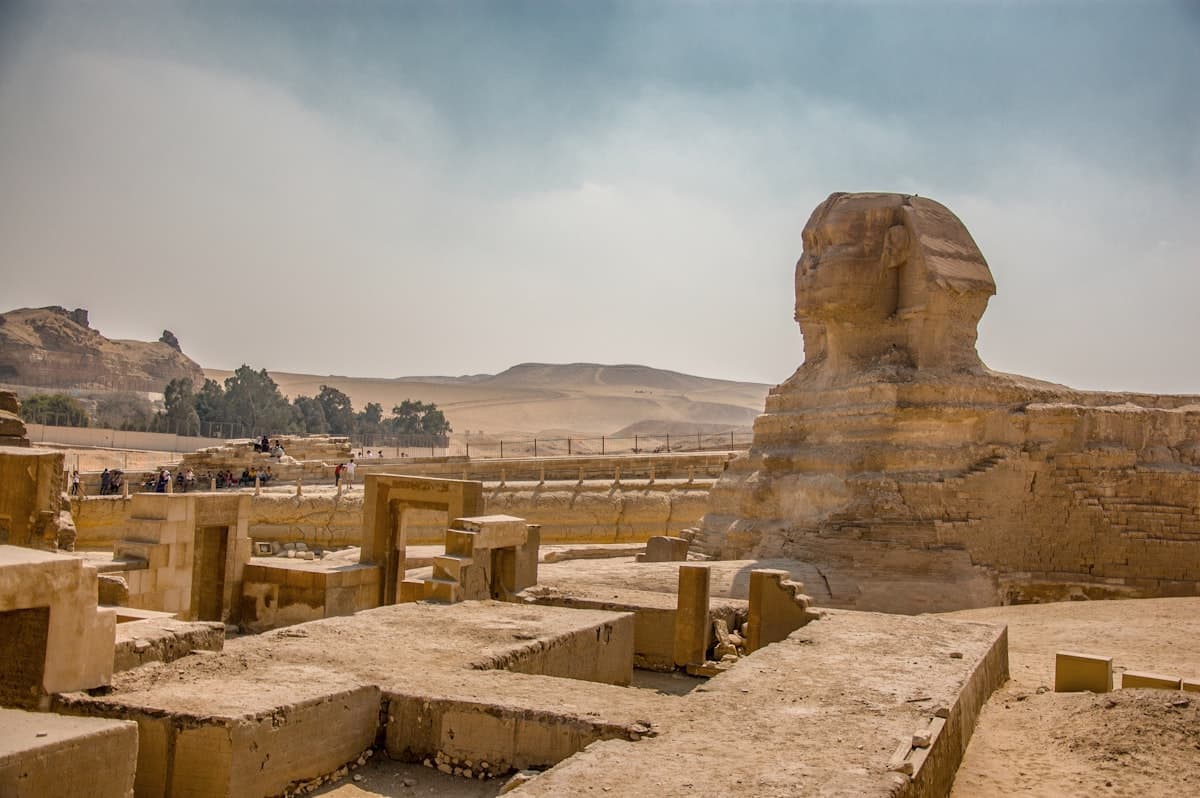
Discover in 1900 when a donkey fell through the ground, the catacombs were carved in the second century AD and used through the fourth century. Three tiers descend into the bedrock. What makes Kom el-Shoqafa extraordinary is not its scale but its theology: the burial chambers show Egyptian gods rendered in Roman sculptural style carrying out rituals described in Greek hieroglyphic-style carvings. Anubis, the jackal-headed god of embalming, appears wearing Roman legionnaire armor. The snake gods Agathodemon and Uraeus frame the entrance in a style that blends pharaonic iconography with Hellenistic decoration.
This is not confusion. It is deliberate syncretism, a burial community that refused to choose between traditions and instead fused them into something new. Some of the later burials show Christian symbols in the same chambers. Three religious systems, one catacomb. Alexandria was always this.
Spend at least ninety minutes. Take the spiral staircase slowly. The main tomb chamber at the bottom, the Triclinium where families held funeral banquets beside the dead, still has its stone benches along the walls. The scale is intimate in a way that the Valley of the Kings is not.
Pompey's Pillar: The Name Is Wrong, the History Is Better
Pompey's Pillar has nothing to do with Pompey. The Roman general was murdered on an Egyptian beach in 48 BC, and the pillar was not erected until 297 AD, in honor of the Emperor Diocletian. The name was attached by medieval European travelers who needed a Roman villain to blame for things and settled on Pompey because he was available.
The pillar itself is the largest ancient monolith outside Rome and Aswan: 26.85 meters tall, made from a single piece of red Aswan granite, and originally part of the complex of the Serapeum, Alexandria's great temple to Serapis. Serapis was a god invented by Ptolemy I specifically to unite his Greek and Egyptian subjects under a single deity. The strategy worked for three hundred years. The temple was destroyed by a Christian mob in 391 AD on orders from Bishop Theophilus. Two sphinxes survive on the grounds, and the sphinx on the left pedestal still wears its original paint faintly if you look in the right morning light.
---
The Connections
A Cleopatra Alexandria Egypt historical guide that stops with Cleopatra is missing most of the city's argument. Alexandria's layers connect in specific and often violent ways.
The Arab conquest of Alexandria in 641 AD under the general Amr ibn al-As ended seven centuries of Greco-Roman rule in a negotiated surrender, not a sack. The terms gave Coptic Christians three days to leave. Amr wrote to the Caliph Umar describing the city: "I have captured a city from the description of which I shall refrain. Suffice it to say that I have seized therein 4,000 palaces, 4,000 baths, 400 theatres, 1,200 greengrocers and 40,000 Jews." Whether the numbers are accurate is less important than what they reveal: the city Cleopatra knew had already been transformed almost beyond recognition by the time Islam arrived.
The Ottoman-era Qaitbay Citadel, which sits on the island at the mouth of the eastern harbor and which every tourist photographs, was built in 1477 by the Mamluk Sultan Qaitbay on the exact foundations of the Pharos Lighthouse. The Lighthouse, one of the Seven Wonders of the Ancient World, had survived earthquakes in 956, 1303, and 1323 before finally collapsing. Qaitbay used its stones. The lighthouse became a fortress. The fortress is now a naval museum. This is how Alexandria works.
---
Common Mistakes
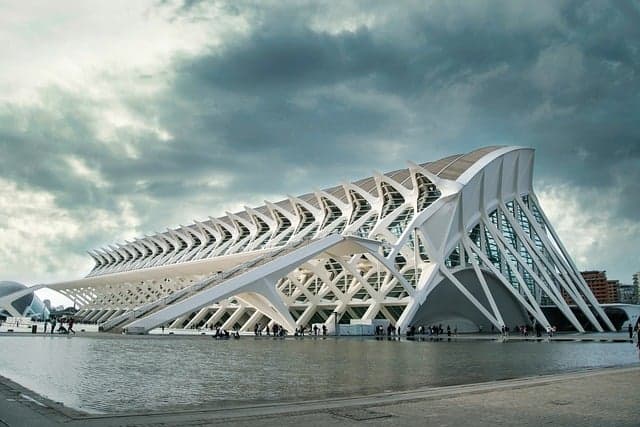
Spending your only afternoon at the Corniche. The waterfront is pleasant and the sea breeze is real, but the Corniche is a twentieth-century construction. Walking it for three hours while the Catacombs and the Jewish Cemetery of Chatby go unvisited is a real cost.
Visiting the Greco-Roman Museum without checking if it is open. The museum has been under restoration since 2005, with partial reopenings that close again without notice. Confirm current status through the Egyptian Ministry of Antiquities website before building your day around it.
Paying for the sound and light show at Qaitbay. It costs EGP 200 and tells you a fictionalized version of Alexandria's history in forty minutes. The view from the citadel walls in the late afternoon, which is free once you have paid entry, is worth three of those shows. See the building in daylight.
Skipping the Jewish Cemetery of Chatby. Almost nobody goes. The cemetery holds the graves of the Jewish community that made Alexandria one of the Mediterranean's great cosmopolitan cities in the nineteenth and early twentieth century. Lawrence Durrell's Alexandria Quartet was written in the shadow of this community. By 1967, most of Alexandria's Jews had fled. The cemetery is maintained by a single caretaker. It is one of the most quietly devastating places in Egypt and takes twenty minutes.
Trusting your hotel's history tour. Most Alexandria hotel tours are a bus, Pompey's Pillar for fifteen minutes, Qaitbay for twenty, lunch, done. This is not a tour. It is a checklist. Hire a private guide through the Egyptian Tour Guide Syndicate or through Bibliotheca Alexandrina's cultural program, which runs occasional guided walks with actual scholars.
Arriving without cash. Alexandria sites are cash only. ATMs near the Corniche and around Saad Zaghloul Square are reliable, but the ones near specific sites like the Catacombs in the Karmouz district sometimes run dry.
Eating at the hotel instead of at the harbor. The fish restaurants along the old harbor, particularly Kadoura and Fish Market, serve mullet and sea bass pulled from Mediterranean waters that morning. A grilled sea bass lunch at Kadoura runs EGP 300 to 450 per person including mezze. This is the meal Alexandria owes you.
---
Practical Tips
Alexandria's major sites are spread across the city and not walkable between each other in comfortable heat. Budget for taxis and plan clusters: Pompey's Pillar and the Catacombs are close together in the southwest; Qaitbay and the Corniche are the eastern harbor; the Bibliotheca is midtown along the waterfront.
The Egyptian pound fluctuates. All USD equivalents in this guide are approximate and based on recent rates. Carry EGP in small denominations.
For the underwater archaeology: Goddio's team publishes ongoing research through the European Institute for Underwater Archaeology. Some of the retrieved objects are in the Maritime Museum within Qaitbay. Others are at the Alexandria National Museum on Tariq al-Hurriya, which holds a genuine Ptolemaic collection including a submerged royal statue retrieved from the harbor. The National Museum is EGP 150 entry and receives very few Western tourists, which means no crowds and patient, knowledgeable guards who will talk if you show interest.
For serious Cleopatra research context, the book to read before you go is Adrian Goldsworthy's biography of Cleopatra, not Stacy Schiff's, which is beautifully written but less rigorous on the archaeology. Knowing what has been found underwater and what remains theoretical will make the harbor view from the Corniche mean something.
Frequently Asked Questions
The Weekly Dispatch
More on Egypt, every Friday.
Cultural depth and places most guides never mention.
No spam. Unsubscribe anytime.