Cleopatra's Alexandria: The Historical Guide Egypt Doesn't Advertise
Cleopatra's palace is underwater. Her tomb has never been found. Most of the city she ruled is inaccessible. Here is what actually survives, and why it matters more than you think.

Quick Facts
- Best time to visit
- October to April. The Mediterranean summer (July to August) brings extreme crowds of Egyptian vacationers, doubled hotel prices, and humidity. October offers the best balance of comfortable temperatures, thinner crowds, and clear light.
- Entrance fee
- Kom El Shoqafa: EGP 360 (approx $7 USD). Pompey's Pillar complex: EGP 180 (approx $3.50 USD). Alexandria National Museum: EGP 120 (approx $2.50 USD). Royal Jewelry Museum: EGP 200 (approx $4 USD). Bibliotheca Alexandrina general entry: EGP 100 (approx $2 USD).
- Opening hours
- Most major sites 9am to 5pm daily. Bibliotheca Alexandrina Sunday to Thursday 11am to 7pm, Friday to Saturday 3pm to 7pm. Some sites reduce hours in Ramadan.
- How to get there
- From Cairo: Egyptian National Railways express from Ramses Station, approximately 2 hours, EGP 90 to 180 per seat. Within Alexandria: white taxis EGP 30 to 60 per short trip (negotiate first). Tuk-tuks in older districts EGP 10 to 20. Local buses along the Corniche EGP 2 to 5.
- Time needed
- 3 days minimum to cover the major Ptolemaic, Roman, Coptic, and Islamic layers meaningfully. A single day allows only a surface pass through two or three sites.
- Cost range
- Budget EGP 600 to 900 per day including basic accommodation, transport, and entry fees. Mid-range EGP 1,800 to 3,000 per day with a better hotel and guided access to key sites.
Quick Facts
Best time to visit: October to April, when Mediterranean humidity drops and the light turns the color of old coins.
Entrance fees: Kom El Shoqafa Catacombs: EGP 360 (approx $7 USD), students EGP 180 Pompey's Pillar complex: EGP 180 (approx $3.50 USD), students EGP 90 Royal Jewelry Museum (Ptolemaic artifacts): EGP 200 (approx $4 USD) Alexandria National Museum: EGP 120 (approx $2.50 USD) Bibliotheca Alexandrina: EGP 100 (approx $2 USD) general entry; exhibitions priced separately
Opening hours: Most major sites 9am to 5pm daily. Bibliotheca Alexandrina opens Sunday through Thursday 11am to 7pm, Friday and Saturday 3pm to 7pm.
Getting there: From Cairo, take the Egyptian National Railways express from Ramses Station; the two-hour journey costs EGP 90 to 180 depending on class. Microbus from Cairo's Torgoman terminal costs around EGP 60 but takes four hours minimum. Within Alexandria, white taxis rarely use meters; negotiate first and expect EGP 30 to 60 per short trip. A tuk-tuk in the older districts costs EGP 10 to 20.
Time needed: Three days minimum to do this honestly. One day does not touch it.
Cost range: Budget EGP 600 to 900 per day including accommodation, transport, and entry fees. Mid-range EGP 1,800 to 3,000 per day.
---
Cleopatra VII ruled the most powerful kingdom in the eastern Mediterranean and built her palace on a promontory that is now twelve feet underwater in Alexandria's Eastern Harbour. You cannot visit it. Neither can most archaeologists. The French underwater excavation team led by Franck Goddio has mapped the submerged royal quarter since 1996 and has recovered over 20,000 objects, but the site itself remains closed to recreational diving. This is the central fact about Cleopatra's Alexandria: the city she knew is largely gone, drowned by earthquakes and subsidence over seventeen centuries, and what remains above water is a palimpsest of every civilization that came after her.
This is not a reason to stay home. It is a reason to look differently.
Why This Place Matters
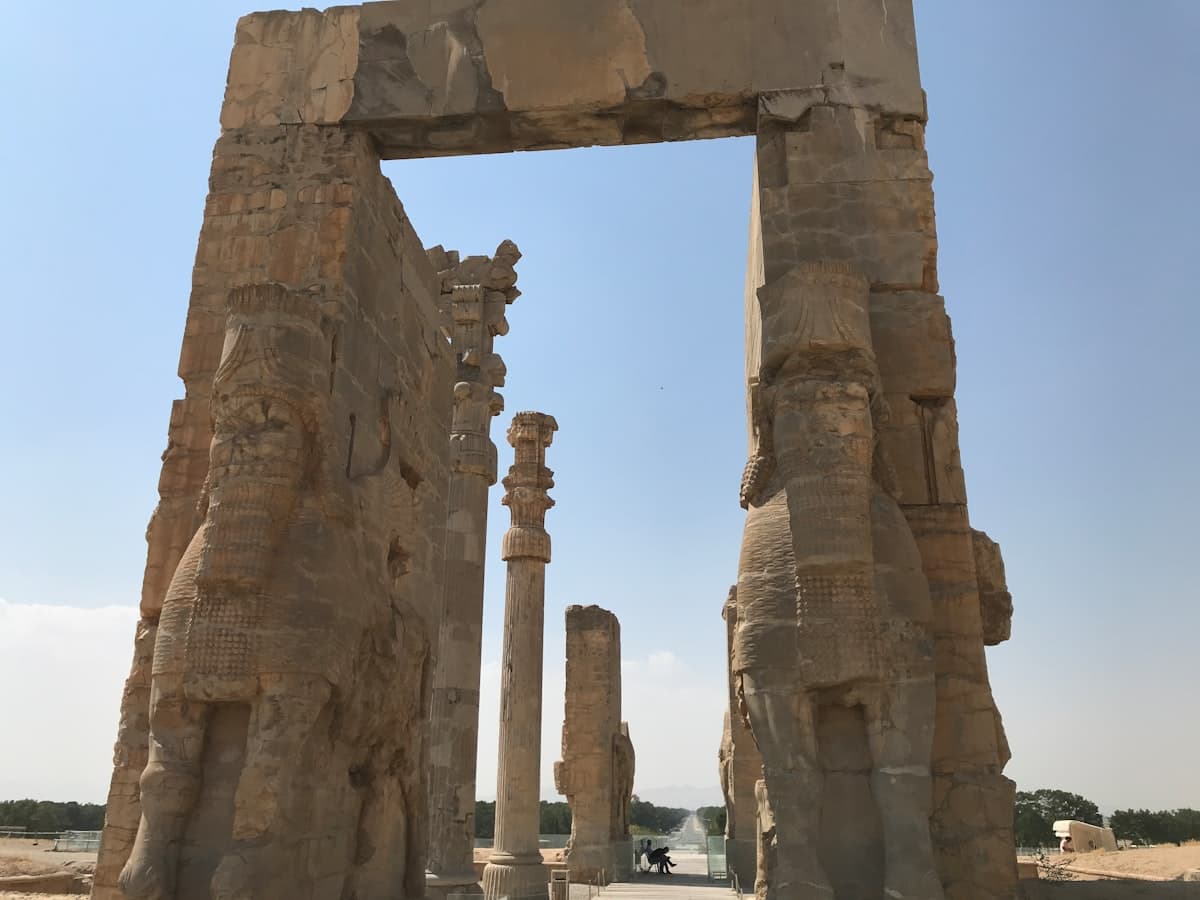
Alexandria was founded in 331 BC by Alexander the Great, who reportedly sketched its layout in barley flour because he had no chalk. He never saw it finished. He died in Babylon at thirty-two, and the city was completed by his general Ptolemy, who founded the dynasty that would last three centuries and produce, in its final ruler, the woman the world remembers.
What the Ptolemies built was not just a city. It was a deliberate argument about civilization. The Library of Alexandria, at its height, held an estimated 400,000 scrolls, and ships entering the harbor were legally required to surrender any books they carried so copies could be made for the collection. The scholars it attracted included Euclid, who wrote the Elements there; Eratosthenes, who calculated the circumference of the earth to within 200 kilometers from Alexandria; and Hypatia, the philosopher and mathematician murdered by a Christian mob in 415 AD, whose death is often cited as a marker for the library's effective end. The library's physical destruction was not a single Roman act of vandalism. It deteriorated across centuries, through Caesar's fire in 48 BC that destroyed a warehouse of scrolls on the docks (not the library itself, a distinction that matters), through the decline of royal funding, through the conversion of the Serapeum temple that housed its daughter collection.
The actual location of the main library building has never been definitively identified. You cannot stand where it stood. This, paradoxically, is what makes Alexandria so interesting: you are always researching a ghost.
What Actually Survives, and What to Do With It
The honest Cleopatra Alexandria Egypt historical guide begins with a reorientation. You will not find Cleopatra's world intact above ground. What you will find is the city that grew on top of it, through centuries of Roman, Coptic, Arab, Fatimid, Mamluk, Ottoman, and finally British occupation, each layer explaining the next.
Pompey's Pillar is the most visible ancient monument in the city, a 27-meter granite column erected in 297 AD by the Roman prefect Posthumus in honor of Emperor Diocletian. Its name is wrong on two counts: it honors Diocletian, not Pompey, and it was probably mislabeled by medieval Crusader pilgrims who confused it with a monument to Julius Caesar's rival. What most visitors don't know is that the column stands inside the ruins of the Serapeum, one of the ancient world's great temple complexes, dedicated to Serapis, a deity invented by the Ptolemies specifically to bridge Egyptian and Greek religious culture. Serapis combined Osiris and Apis with Greek divine characteristics. The theology was a political project. The statue of Serapis that once stood here was described by ancient sources as so beautiful it induced involuntary reverence. The Christian bishop Theophilus ordered it destroyed in 391 AD. The column survived. The sphinx statues flanking the steps are original Ptolemaic-era pieces.
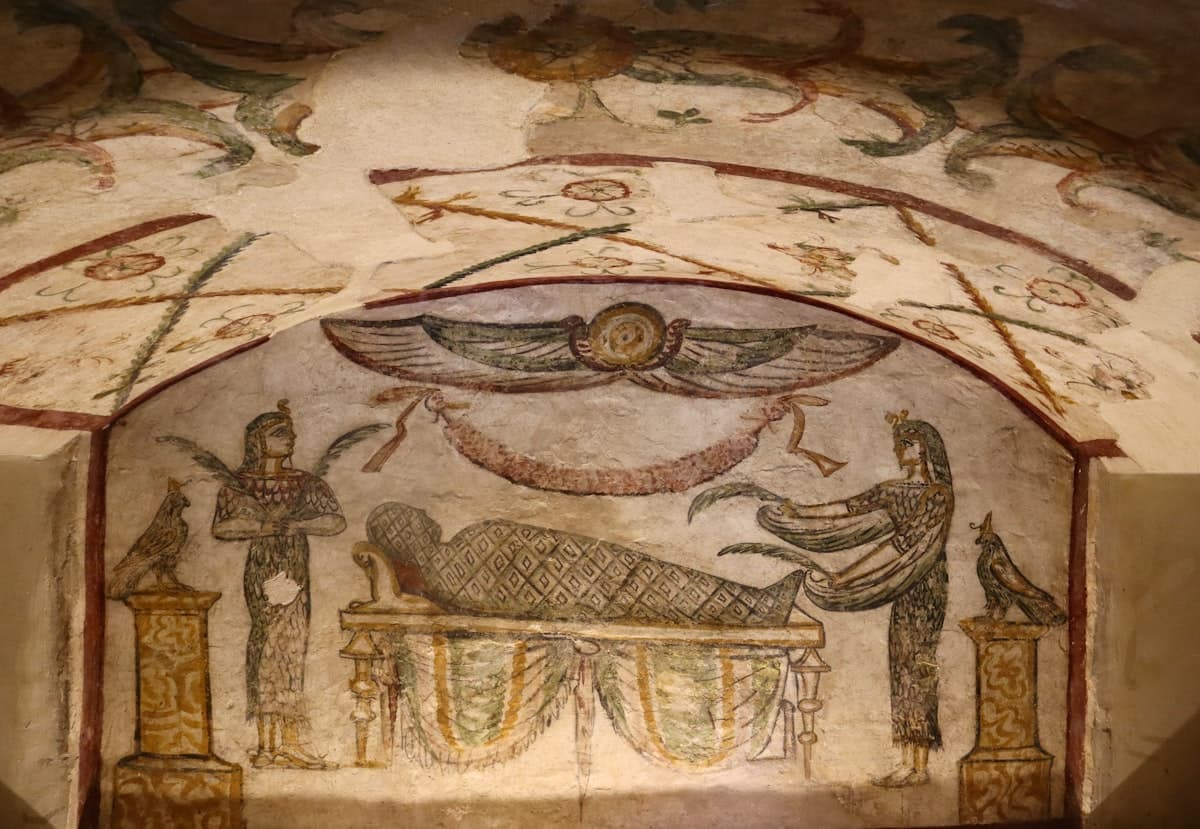
Kom El Shoqafa, fifteen minutes by taxi from Pompey's Pillar, is a necropolis carved into the limestone plateau in the second century AD. It is the most important Roman-Egyptian site in the city and one of the Seven Wonders of the Middle Ages according to medieval Islamic scholars. The catacombs descend three levels, each carved with decorative schemes that are simultaneously Roman in style and Egyptian in symbolism, Anubis wearing Roman armor, Medusa's head carved alongside the Eye of Horus. This is not artistic confusion. It is a deliberate theological fusion by a community navigating two cultures simultaneously. The central tomb's carved reliefs are among the best-preserved examples of this syncretic art in existence. Go on a weekday morning before 10am. The site floods at the lowest level regularly, and the bottom tier is often inaccessible.
The Alexandria National Museum, housed in a restored Italian palazzo on Tariq al-Hurriya, contains three floors of objects spanning the Pharaonic, Greek, Roman, Coptic, and Islamic periods. The basement level holds the Ptolemaic and Roman pieces, including portrait heads from the royal quarter recovered from the underwater excavations. One case holds a small faience figurine that is believed to represent Cleopatra VII herself, holding a cornucopia, dating from the late first century BC. The label is modest. The object is extraordinary. Admission at EGP 120 makes this one of the most underpriced museums in Egypt.
The Connections
Alexandria's history cannot be understood in isolation from the rest of Egypt, or from Rome, or from the Islamic world that eventually absorbed it.
When Amr ibn al-As conquered Alexandria in 641 AD, he reported back to Caliph Umar that the city contained 4,000 palaces, 4,000 bathhouses, 400 theaters, and 40,000 Jews paying tribute. The numbers are likely exaggerated, but the scale of the city he encountered was real. The Arab conquest did not destroy Alexandria. It redirected it. The capital of Egypt moved from Alexandria to the new garrison city of Fustat, which became Cairo, and Alexandria declined from its position as the second city of the Roman world to a provincial port.
The Fatimids, who founded Cairo in 969 AD, treated Alexandria as a commercial gateway rather than a cultural center. The Mamluks built the fort that now stands at the eastern harbor entrance, Qaitbay Citadel, in 1477 AD, using stones from the collapsed Lighthouse of Alexandria, one of the Seven Wonders of the Ancient World, which had stood on that same promontory since approximately 280 BC before earthquakes destroyed it between the tenth and fourteenth centuries. You are, when you visit Qaitbay, standing on the rubble of a wonder, inside a fort built by a sultan who started his life as a slave purchased in the Circassian markets. This is the compressed archaeology of Alexandria: the extraordinary is always inside the ordinary, and nothing was built on empty ground.
The Bibliotheca Alexandrina, opened in 2002 on the approximate site of the ancient library, is a contemporary monument that works hard to connect to its predecessor. The tilted disc of its roof, designed by the Norwegian firm Snohetta, is carved with 120 scripts from every writing system in human history. Whether it succeeds as a library or as a cultural institution is a separate argument. It succeeds as an act of civic ambition, which is very much in the Ptolemaic tradition.
Common Mistakes
Assuming Cleopatra's tomb will be found at Taposiris Magna. The site 45 kilometers west of Alexandria, where archaeologist Kathleen Martinez has been excavating since 2005 in search of Cleopatra and Antony's burial site, is genuinely interesting, but the theory remains unproven. Visiting as a tourist is not straightforward, access is restricted to academic groups, and the journey on a shared microbus from Alexandria's Midan El Gumhurriya costs EGP 15 but deposits you some distance from the site. Do not make it the centerpiece of your Cleopatra Alexandria Egypt historical trip without confirming current access.
Skipping the National Museum for the Bibliotheca Alexandrina. The Bibliotheca is architecturally interesting and houses a manuscript museum worth seeing. But the National Museum has better objects, better context, and a fraction of the visitors. Most tour groups go to the library. Go to the museum.
Paying for the sound and light show at Pompey's Pillar. It costs EGP 300 and projects colors onto a column while a narrator delivers information available on any Wikipedia page. The column is more interesting in morning light for free.
Coming to Alexandria expecting Cairo's energy. Alexandria is a Mediterranean city. It moves at a different pace, eats later, sits in cafes longer, and feels more Greek and Italian in its rhythms than the rest of Egypt. Adjust your expectations accordingly, or you will spend three days frustrated by what you think is inefficiency.
Eating at the Cecil Hotel for nostalgia reasons. The Cecil was once the gathering point for Alexandria's cosmopolitan intelligentsia: Lawrence Durrell wrote about it, Somerset Maugham stayed there. The building survives on Saad Zaghloul Square, but the restaurant is expensive, the food is average, and the atmosphere is corporate. Go to Zephyrion in Abu Qir, 25 kilometers east on a local bus for EGP 5, and eat fried shrimp beside the Mediterranean. That is the real Alexandria meal.
Visiting in July or August. The city floods with Egyptian summer vacationers. Every beach is overcrowded, hotel prices double, and the sites are busy in an unpleasant rather than interesting way. October is the correct answer.
Ignoring the Coptic and Islamic layers. The Church of Saint Mark is said to stand near the site of the evangelist's martyrdom in 68 AD, making Alexandria one of the earliest centers of Christianity, a fact most visitors encounter nowhere on their itinerary. The medieval Islamic city centered on the Attarine mosque, which was itself built over a Ptolemaic temple and then a Byzantine church. Every significant site in Alexandria is a vertical argument between civilizations. Missing two of the four floors is a choice, but make it knowingly.
Practical Tips
Stay in the Raml Station or Ibrahimiyya neighborhoods rather than the waterfront strip. The accommodation is better value, you are within walking distance of most key sites, and the street food, liver sandwiches, falafel, and ful from the carts near Raml Station, costs EGP 15 to 30 per item.
Hire a local guide for the catacombs specifically. The signage is poor, the context without a guide is nearly absent, and a good guide hired through the Alexandria National Museum or a reputable local agency costs EGP 400 to 600 for a half day and changes the experience entirely. Do not hire the men who approach you outside Pompey's Pillar.
Bring a flashlight to Kom El Shoqafa regardless of what the site attendants tell you. The lighting in the lower chambers is inconsistent.
The Eastern Harbour glass-bottom boat tours advertised along the Corniche will show you murky water and the occasional ancient stone. They cost EGP 200 to 400 and are not worth it. The Goddio excavation results are better viewed in the National Museum's underwater archaeology exhibit.
Learn three words: shukran (thank you), bikam (how much), and la shukran (no thank you). Alexandria's tourist hustle is gentler than Cairo's but it exists, and these three words handle ninety percent of it.
Frequently Asked Questions
The Weekly Dispatch
More on Egypt, every Friday.
Cultural depth and places most guides never mention.
No spam. Unsubscribe anytime.