Cleopatra's Alexandria: The Historical Guide Egypt Doesn't Simplify
Cleopatra's palace lies underwater, flooded by a 4th-century earthquake. You can dive to it. Most tourists never find out this is an option.

Quick Facts
- Best time to visit
- October to April. Mediterranean humidity peaks in July and August making outdoor sites uncomfortable. October and November offer the best combination of manageable crowds and pleasant temperatures.
- Entrance fee
- Bibliotheca Alexandrina EGP 60 (approx $1.25 USD), all museums included EGP 150 ($3 USD). Graeco-Roman Museum EGP 300 ($6 USD), students EGP 150. Catacombs of Kom el-Shoqafa EGP 300 ($6 USD), students EGP 150. Fort Qaitbay EGP 100 ($2 USD), students EGP 50.
- Opening hours
- Most sites daily 9am to 5pm. Bibliotheca Alexandrina Sunday to Thursday 10am to 7pm, Friday and Saturday 10am to 4pm. Hours subject to change; verify directly before visiting.
- How to get there
- From Cairo: express train from Ramses Station, approx 2.5 hours, EGP 150 to 450 depending on class. Within Alexandria: Uber and Careem widely available; tram along corniche EGP 3. Negotiate full-day taxi at EGP 600 to 900 for site visits.
- Time needed
- Minimum two full days. Three days if including underwater archaeology dive or eastern city sites. Each of the three main site clusters (Eastern Harbor, Anfushi/Catacombs, Bibliotheca area) requires roughly half a day.
- Cost range
- Budget EGP 800 to 1,200 per day including transport, entry fees, and local meals. Mid-range EGP 2,000 to 3,500 per day including better accommodation and seafood restaurants. Underwater dive experience adds EGP 3,000 to 5,000 separately.
Quick Facts
Best time to visit: October to April, when Alexandria's Mediterranean humidity drops and the light off the harbor turns the particular gray-blue that made this city famous among ancient poets.
Entrance fees: Bibliotheca Alexandrina: EGP 60 (approx $1.25 USD) for general entry; EGP 150 ($3 USD) with all museums included Graeco-Roman Museum: EGP 300 (approx $6 USD), students EGP 150 Catacombs of Kom el-Shoqafa: EGP 300 (approx $6 USD), students EGP 150 Fort Qaitbay: EGP 100 (approx $2 USD), students EGP 50 Underwater archaeology diving permits: contact the Egyptian Supreme Council of Antiquities in advance; cost varies by operator, roughly EGP 3,000 to 5,000 ($60 to $100 USD) through licensed dive centers
Opening hours: Most sites open daily 9am to 5pm. Bibliotheca Alexandrina opens Sunday through Thursday 10am to 7pm, Friday and Saturday 10am to 4pm. Closed some national holidays.
How to get there: From Cairo, the Marsa Matrouh train line from Ramses Station runs express services in about 2.5 hours; tickets from EGP 150 to 450 ($3 to $9 USD) depending on class. By road, the Desert Road takes roughly 2.5 hours. Within Alexandria, ride-hailing apps (Uber, Careem) are cheap and reliable. Trams still run along the corniche for EGP 3, which is a better way to understand the city's scale than any taxi.
Time needed: Two full days minimum. Three days if you want to include the underwater archaeology experience or the sites east of the city center.
Cost range: Budget EGP 800 to 1,200 per day, mid-range EGP 2,000 to 3,500 per day including meals at the old Greek-owned restaurants along the seafront.
---
Cleopatra VII never called herself Egyptian. She called herself Philopator, "she who loves her father," and she was in every administrative sense a Macedonian Greek, the last ruler of a dynasty founded when Alexander the Great's general Ptolemy declared himself pharaoh in 305 BC. She was, however, the first ruler of her dynasty to bother learning the Egyptian language. Her predecessors, over nearly three centuries, had not. This detail sits at the center of every honest Cleopatra Alexandria Egypt historical guide, because it tells you something the monument-and-museum circuit does not: the city Cleopatra ruled was not an Egyptian city. It was a Mediterranean city built on Egyptian soil, and what survives of it today is stranger, more layered, and more interesting than the romantic legend allows.
Why This Place Matters
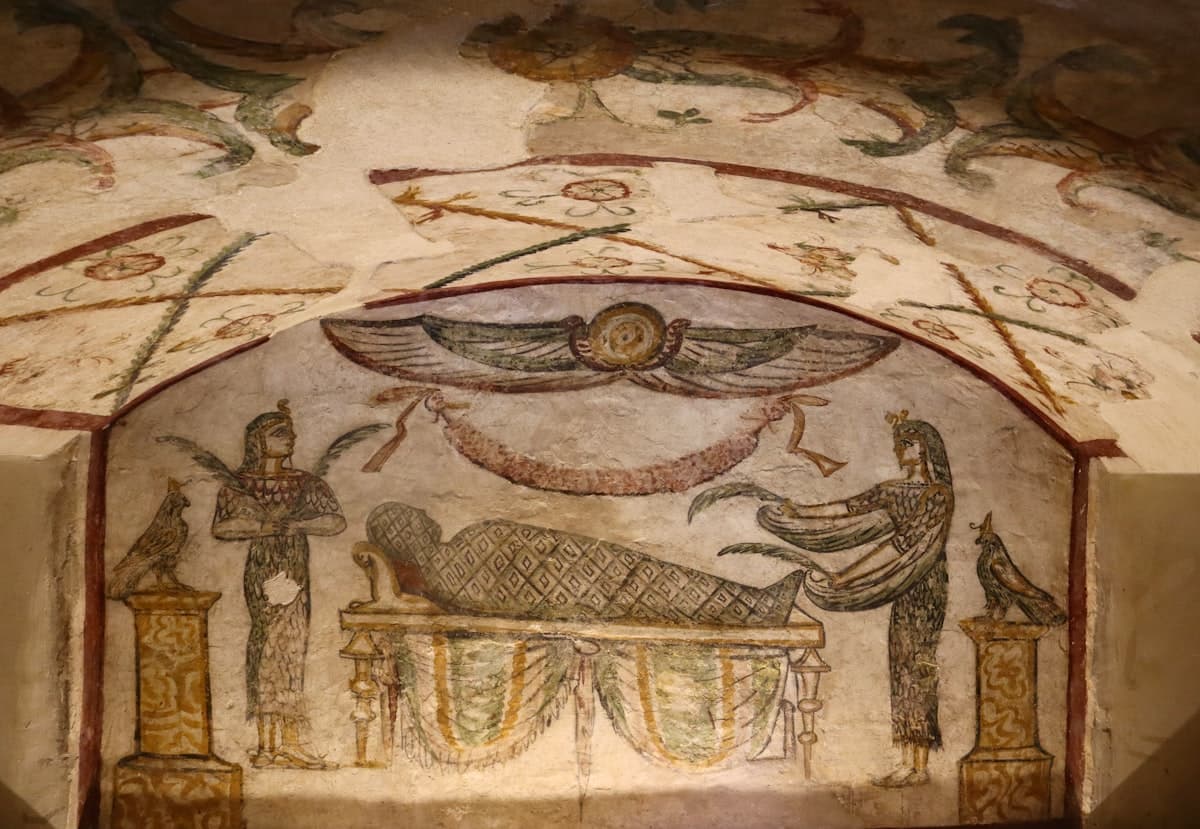
At its height under the Ptolemies, Alexandria held between 500,000 and 1 million people, making it probably the largest city on earth. The Library it housed was not simply a repository for books but an active research institution that paid scholars to move there and work. Eratosthenes, its third chief librarian, calculated the circumference of the earth around 240 BC using shadow measurements taken simultaneously in Alexandria and Aswan, and arrived at a figure within 1.5 percent of the modern measurement. This happened 1,700 years before Columbus sailed.
The city Cleopatra inhabited no longer exists above the waterline. In 365 AD, a catastrophic earthquake and tsunami, now known as the Crete earthquake, caused the royal quarter of Alexandria to subside into the harbor. The palace complex where Cleopatra entertained Julius Caesar and later Mark Antony now lies roughly 6 to 8 meters underwater, in the Eastern Harbor. French archaeologist Franck Goddio began mapping the site systematically in 1996 and found not just palace foundations but sphinxes, obelisks, and statuary still largely intact on the harbor floor. Egypt's Ministry of Antiquities has discussed creating an underwater museum at the site for years. For now, licensed dive operators can take you there.
This is what Alexandria offers that Luxor and Cairo cannot: the sensation of a civilization that did not simply age and deteriorate but was physically swallowed by the sea. Coming here as part of a Cleopatra Alexandria Egypt historical journey means accepting that the most significant sites are either underwater, built over by later civilizations, or reconstructed. The city rewards the visitor who understands this before arriving.
What the Harbor Holds and What It Cost
Stand on the corniche at the Eastern Harbor at 7am, before the traffic asserts itself, and look at the water. Below you, at some indeterminate point, is the probable site of the Pharos lighthouse, one of the Seven Wonders of the Ancient World, which stood roughly 130 meters tall and is estimated to have burned wood, oil, or some combination thereof at its summit for over a thousand years. It collapsed, most likely due to a sequence of earthquakes between the 10th and 14th centuries. What replaced it was Fort Qaitbay, the Mamluk fortress completed in 1477, which used the Pharos's own stone as building material. If you visit Qaitbay, which you should, you are walking on the remains of a wonder of the world. Some of the column drums and foundation blocks visible within the fort's courtyard are almost certainly Pharaonic in origin, repurposed first by the Greeks, then by the Romans, then by the Mamluks.
This is the rhythm of Alexandria: nothing sits on original ground. The Graeco-Roman Museum, currently being refurbished and partially open, contains a mummified crocodile from the Fayum alongside Greek-style portrait busts alongside Roman coins bearing Cleopatra's image, the only verified contemporary likenesses of her that survive. She does not look like Elizabeth Taylor. She has a prominent nose, a sharp chin, and the expression of a woman who speaks nine languages and runs an empire. This is not an insult. It is the face of competence.
The Fort Qaitbay visit costs EGP 100 and takes about an hour. The views across the harbor to where the Pharos stood are the main reason to go. The small naval museum inside is skippable unless you have a specific interest in 19th-century Egyptian maritime history.
The Catacombs and the Syncretic City
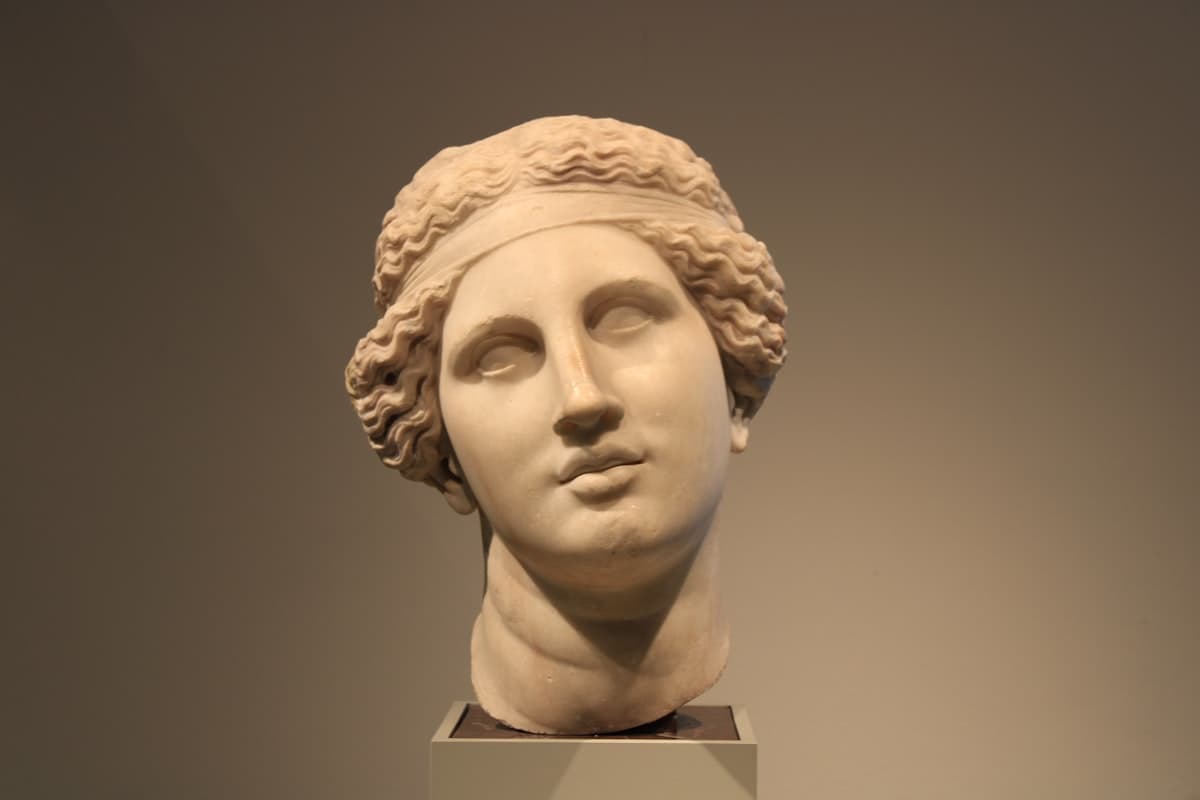
The Catacombs of Kom el-Shoqafa are the most important thing in Alexandria that most visitors underestimate. Discovered accidentally in 1900 when a donkey fell through the ground into an entrance shaft, they represent one of the most extraordinary examples of cultural fusion in the ancient world. They were carved in the 2nd century AD, when Alexandria was under Roman rule but still deeply Greek in culture and still surrounded by Egyptian religious practice. The catacombs are simultaneously all three things.
In the main burial chamber, you will find Anubis wearing Roman armor. You will find Egyptian gods rendered in Greek sculptural style. You will find a frieze in which the embalming of Osiris is depicted using the visual conventions of a Roman banquet. This was not confusion or poor craftsmanship. This was a community, probably wealthy Greek-speaking Alexandrians, deliberately constructing a funerary space that honored three cosmologies at once, because in second-century Alexandria, the borders between those cosmologies had become genuinely porous. The catacombs are three levels deep; the lowest level floods seasonally and is not accessible to visitors. The two accessible levels take about 90 minutes to explore properly. Go early; the site gets unpleasant once tour groups arrive around 10:30am.
The Catacombs sit roughly 1.5 kilometers from Pompey's Pillar, a red Aswan granite column 27 meters tall that has nothing to do with Pompey the Roman general, despite the medieval European name. It was erected in 297 AD in honor of the Emperor Diocletian and likely stood within the temple complex of Serapis, the deliberately invented deity the Ptolemies created to give Greeks and Egyptians a shared god. Serapis combined attributes of Osiris and Apis the bull with the aesthetics of Greek Zeus. The project half-worked: Serapis became genuinely popular across the Mediterranean. The Serapeum complex it anchored was destroyed by a Christian mob in 391 AD, one of the more significant acts of cultural demolition in the ancient world.
The Connections: Alexandria Inside Egypt's Long Story
Alexandria can feel like a parenthesis in Egyptian history, a Greek-Roman interruption between the Pharaonic age and the Islamic era. This framing is wrong and worth correcting.
When the Arab general Amr ibn al-As took Alexandria in 641 AD, he wrote to Caliph Omar in Medina: "I have taken a city of which I can only say that it contains 4,000 palaces, 4,000 baths, 400 theatres, 1,200 greengrocers and 40,000 Jews." Whether or not the numbers are accurate, the letter captures a city still operating at Ptolemaic scale almost a thousand years after Cleopatra's death. The Islamic city built directly on top of the Ptolemaic one, and mosques in the old city frequently sit over Roman foundations that sit over Greek foundations that sit over earlier Egyptian settlements.
The Bibliotheca Alexandrina, the modern research library and cultural center opened in 2002 and designed to deliberately echo and honor the ancient Library, is not a monument to the past. It is one of the most active intellectual institutions in the Arab world, housing a Manuscript Museum that contains Quranic calligraphy alongside Coptic papyri alongside Greek astronomical texts. This is the city's actual thesis: Alexandria has always been a place where civilizations argue with each other in the same room. The Bibliotheca costs EGP 60 to enter and is worth two hours of any serious traveler's time.
The Coptic presence in Alexandria is older than Islam and older than the city's reputation as a Greek metropolis. Saint Mark is said to have founded the Alexandrian church around 42 AD, making it one of the earliest Christian communities in the world, predating Rome's. The Coptic community in Alexandria worships in churches that have occupied the same neighborhoods for nearly two millennia. The Church of Saint Mark in the Anfushi district is modest and mostly unvisited by tourists. It is worth finding.
Common Mistakes

Going to Montaza Palace expecting to understand Cleopatra's Alexandria. The palace was built by the Khedive Abbas II in 1892 as a summer residence. The gardens are pleasant. The connection to ancient Alexandria is zero. Tour itineraries often include it as a Cleopatra-adjacent site because it is on the eastern harbor. Skip it unless you specifically want to see late Ottoman royal architecture, which is actually not a bad reason to visit.
Skipping the Graeco-Roman Museum because it is partially closed. The museum has been under renovation for years, but sections are open, and what is accessible includes the most complete collection of Ptolemaic and Roman-era artifacts in Egypt. The coins bearing Cleopatra VII's image alone are worth the EGP 300 entry fee.
Doing Alexandria as a day trip from Cairo. The train takes 2.5 hours each way. You will arrive at 11am, rush through two or three sites, eat lunch, and leave. The city requires at least two nights to understand its rhythm, particularly the particular quality of its evening light and its café culture, which descends from the Greek and Italian communities that defined it in the early 20th century.
Paying for a Cleopatra-branded boat tour of the harbor without asking whether it includes an actual archaeologist or dive opportunity. Most of these tours circle the Eastern Harbor for 45 minutes and tell you that Cleopatra's palace is down there somewhere. This information costs EGP 0 to learn from this article.
Trusting that the sites listed online are actually open at the hours listed. Egyptian site hours change seasonally and with renovation schedules. Call the Bibliotheca directly at their publicly listed number before visiting. The Graeco-Roman Museum has a specific opening situation that changes without much online notice.
Eating at the restaurants on the corniche that market themselves to tourists. Walk two blocks inland and the price halves and the food improves. Abo Ashraf near Anfushi is where Alexandrians eat fish. The fuul and ta'ameya spots near the central tram station have been operating for decades.
Assuming the underwater sites are inaccessible. They are not. They require advance planning, a licensed dive operator, and contact with the Supreme Council of Antiquities for permits. But the option is real, and for anyone with open-water dive certification, it is the single most historically significant dive in the Mediterranean.
Practical Tips
Alexandria runs on a different clock from Cairo, slightly slower and considerably more livable. The city's serious cultural sites are concentrated in three clusters: the Eastern Harbor area (Qaitbay, the corniche, the underwater site), the central Anfushi and Kom el-Shoqafa area (the Catacombs, Pompey's Pillar, the Coptic churches), and the Shatby and Silsila area (the Graeco-Roman Museum, the Bibliotheca). Each cluster takes half a day. Plan accordingly.
The Mediterranean humidity in summer, July and August especially, makes the city uncomfortable and the outdoor sites exhausting. October to April is the correct window for a serious historical visit.
For the underwater archaeology option, contact the Bibliotheca Alexandrina's Center for Alexandrian Studies (they maintain research connections to the Goddio Foundation excavations) or look for dive operators specifically licensed for the Eastern Harbor sites rather than general Alexandria dive shops.
Alexandria's taxi drivers will try to sell you a full-day car tour. If you take one, negotiate a set price for the full day before getting in (EGP 600 to 900 is reasonable for a full day) and give the driver a list of sites rather than accepting their itinerary, which will include Montaza Palace and other time-fillers.
The tram is genuinely useful for understanding the city's geography. Line 1 runs the length of the corniche. Ride it once from end to end before starting your site visits. It costs EGP 3 and takes 45 minutes and will teach you how Alexandria sits between its harbor and its desert hinterland better than any map.
Frequently Asked Questions
The Weekly Dispatch
More on Egypt, every Friday.
Cultural depth and places most guides never mention.
No spam. Unsubscribe anytime.