Italian Community Alexandria Egypt: History & Guide
At its peak, Alexandria had 40,000 Italian residents who built a city that looked more like Naples than Africa. Almost none remain. Here is what they left behind.

Quick Facts
- Best time to visit
- October to April. Mediterranean humidity drops, light quality improves for walking and photography, and the city is not crowded with Egyptian summer vacationers.
- Entrance fee
- Latin Cemetery at Chatby: free. Royal Jewelry Museum: EGP 200 (approx $4 USD), students EGP 100. St. Catherine's Church: free, donations welcome.
- Opening hours
- Chatby Cemeteries: Saturday to Thursday 8am to 5pm. Royal Jewelry Museum: Tuesday to Sunday 9am to 5pm. St. Catherine's Church: open during morning mass daily approximately 7am to 9am and by appointment.
- How to get there
- From Cairo: Spanish Train from Ramses or Sidi Gaber to Alexandria (EGP 45 to 90 second class). Within Alexandria: tuk-tuk from Raml Station to Chatby EGP 20 to 30. Taxi from downtown to Zizinia district EGP 40 to 60.
- Time needed
- Full day minimum for the walking circuit, Chatby Cemetery, and Royal Jewelry Museum. Two days if combining with Bibliotheca Alexandrina and the Anfushi fishing quarter.
- Cost range
- Budget EGP 400 to 700 per day including transport, entry fees, and a local lunch. Mid-range EGP 1,200 to 2,000 per day including a sit-down meal at a European-style restaurant and a taxi rather than tuk-tuks.
Quick Facts
Best time to visit: October to April, when Mediterranean light is low and soft and the streets are walkable without the summer humidity that turns downtown into a steam room.
Entrance fees: Most sites associated with the Italian community are churches, cemeteries, and public streets. The Latin Cemetery (Chatby Cemeteries complex) is free to enter during opening hours. The Royal Jewelry Museum, housed in a villa that encapsulates the cosmopolitan era, charges EGP 200 (approx $4 USD), students EGP 100.
Opening hours: Chatby Cemeteries open Saturday through Thursday, 8am to 5pm. The Royal Jewelry Museum opens Tuesday through Sunday, 9am to 5pm. Most Catholic churches open for morning mass (typically 7am to 9am) and by appointment.
How to get there: From central Cairo, take the Spanish Train from Sidi Gaber station (EGP 45 to 90 second class, roughly $1 to $2). Within Alexandria, a tuk-tuk from Raml Station to Chatby runs EGP 20 to 30. A taxi from downtown to the Latin Quarter area costs EGP 40 to 60.
Time needed: A full day minimum if you walk the Italian-era architecture circuit, visit Chatby, and end in a cafe on the Corniche. Two days is better.
Cost range: Budget EGP 400 to 700 per day. Mid-range EGP 1,200 to 2,000 per day including a meal at one of the old European-style restaurants.
---
Why This Place Matters
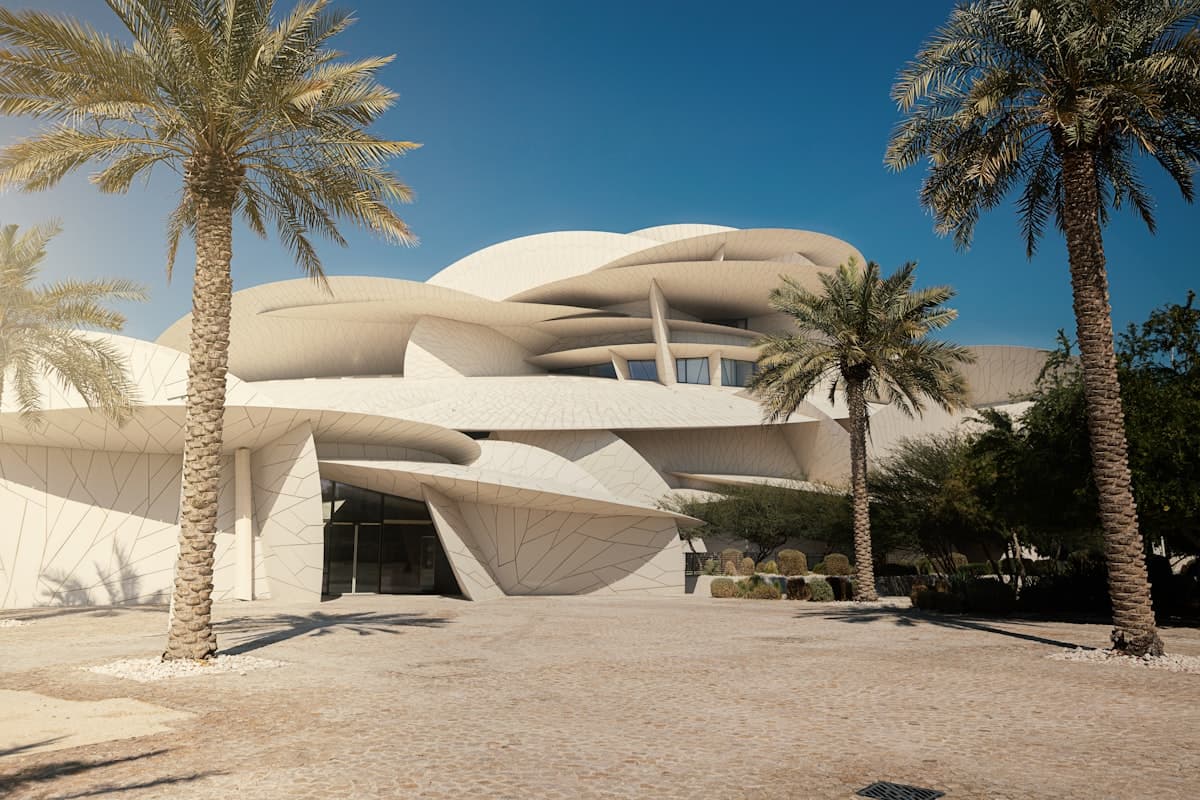
At the peak of the cosmopolitan era in the 1920s and 1930s, Alexandria was home to more than 40,000 Italian nationals, making them the largest single foreign community in the city. They were not tourists or colonial administrators. They were fishermen from Sicily, architects from Milan, merchants from Genoa, and anarchists from Naples who had fled Mussolini. They built churches, schools, a hospital, a yacht club, a newspaper called L'Imparziale, and entire neighborhoods whose bones you can still read in the facades if you know what you are looking for.
This matters because what happened to Alexandria's Italians is one of the cleanest case studies in how a Mediterranean city unmakes itself. The community began dissolving after the 1952 revolution and effectively ended after 1956, when Nasser nationalized the Suez Canal and the Egyptian government expelled or pressured out most foreign nationals. Within a decade, 40,000 people were reduced to a few hundred. The city they built did not leave with them.
The Italian community Alexandria Egypt history guide cannot be told without understanding that Alexandria was never a simply Egyptian city in the demographic sense. The 1882 census recorded Italians, Greeks, French, Syrians, Jews, Armenians, and Maltese as permanent residents numbering over 100,000 in a city of roughly 230,000. They were not a diaspora overlay on top of an Egyptian city. They were constitutive of it.
---
What the Italians Built: Reading the Streets
Start at Saad Zaghloul Square, which the Italians called Piazza Mohammed Ali before Egyptian nationalism renamed it. The buildings surrounding it were designed primarily by Italian and Italian-trained architects working in a style that blended Art Nouveau, neo-Renaissance, and what you might generously call Eastern Mediterranean eclecticism. Look up. The cornices, the iron balconies, the stone reliefs of wheat and lion heads, these details were not decorative accidents. They were the physical assertion that Alexandria was a European-facing Mediterranean port, not a provincial Egyptian town.
Walk south on Nabi Daniel Street and you reach what was once the centro of Italian commercial life. The Banca di Roma had a branch here. So did several Italian import houses dealing in olive oil, marble, and Venetian glass. The buildings are mostly subdivided into small shops now, the upper floors hidden behind satellite dishes and laundry lines. But the proportions are still there. These are not buildings that think small.
The Church of St. Catherine on Raml Station Square is the most visible Italian Catholic monument in the city. Built in 1848 and expanded in 1929, it was the spiritual center of the Italian community and also the site of marriages, baptisms, and funerals that tracked the community's entire arc from arrival to departure. The interior has a quiet that feels earned. Attend a morning mass if you can. The congregation is tiny now, mostly Filipino domestic workers and a handful of elderly Alexandrians, but the ritual continues.
The Hospital That Survived Its Founders
The Italian community founded the Ospedale Italiano in 1893, which still operates today as a public hospital under Egyptian management. This single fact contains an entire history. The institution outlasted the community that built it, was nationalized without being destroyed, and continues to serve a city whose Italian residents number, at current count, fewer than two hundred. The building on Port Said Street retains its original facade, a sober neo-classical front that announces seriousness and permanence. It got the permanence, at least.
---
The Latin Cemetery at Chatby: Where the Community Is Buried
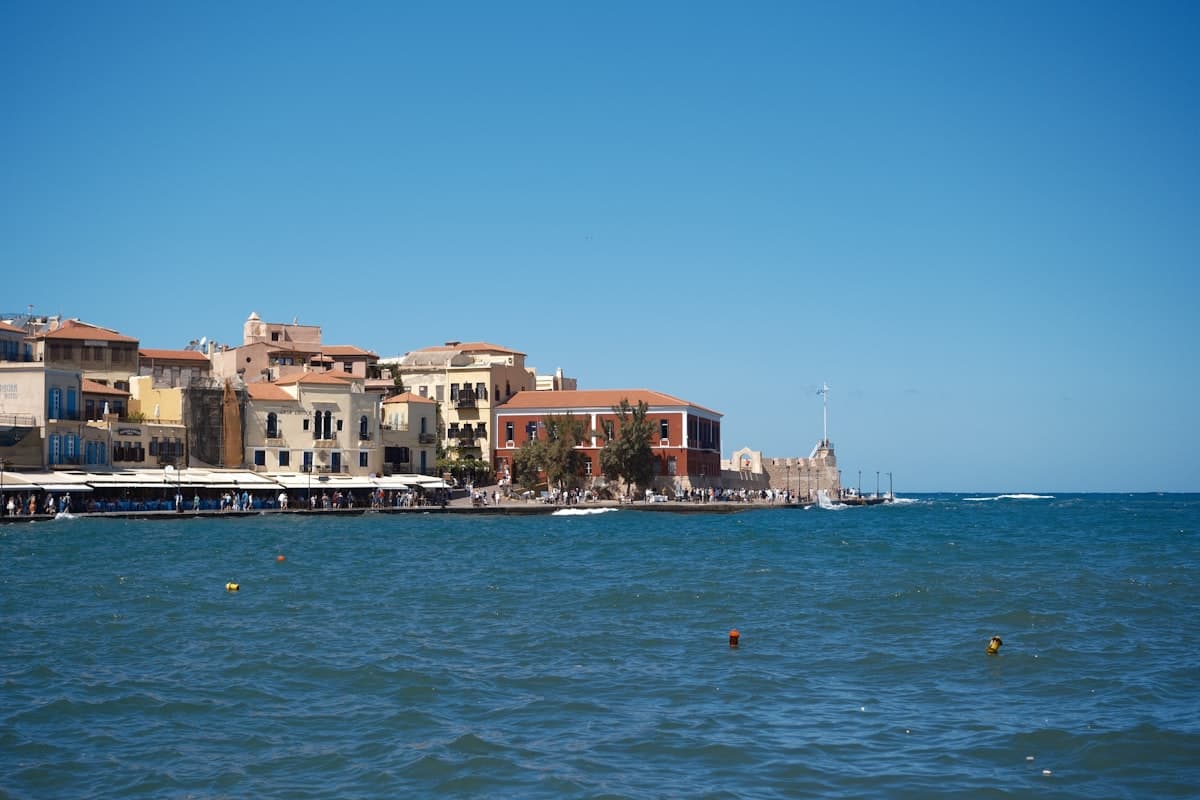
The most concentrated archive of the Italian community Alexandria Egypt history is not a museum or a street. It is the Latin section of the Chatby Cemeteries, a few kilometers east of downtown along the Corniche.
Chatby itself is one of the oldest cemetery sites in Alexandria, with Greek-era tombs dating to the 3rd century BC still partially visible in an adjacent archaeological zone. The Latin Cemetery was established in the 19th century and contains the graves of Italians, French, Greeks, Maltese, and other Catholic residents of the cosmopolitan city. The Italian section is immediately identifiable by its scale and ambition. Entire family vaults built in Carrara marble, imported from Italy at considerable expense, line the central paths. The inscriptions are in Italian, sometimes mixing in Latin for the epitaphs. Dates run from the 1850s through the 1970s, and then they stop.
What makes Chatby worth two hours of your time is precisely this stop. You can read the thinning of the Italian presence decade by decade in the declining density of graves. The 1920s and 1930s sections are crowded, the lettering confident, the monuments large. The 1960s section is sparse, the monuments smaller, some graves clearly never properly maintained because the families had already left by the time the person died. Walking it is like reading a demographic collapse in stone.
Practical note: bring water, wear comfortable shoes, and go in the morning. The cemetery is not manicured. Some sections are overgrown enough that you will need to push past vegetation to read inscriptions. A guide is useful but not essential. The groundskeepers are knowledgeable and accept tips (EGP 50 to 100 is appropriate for a 30-minute informal tour).
---
The Connections: Layers Under Every Italian Stone
The building that houses the Royal Jewelry Museum in the Zizinia district was originally a palace built for a Francophone Egyptian aristocrat in the 1920s, designed in a French baroque style by an Italian architect. The jewelry inside belonged to the Egyptian royal family. The architect was Italian. The neighborhood around it was called Zizinia after Stefano Zizinia, an Italian merchant who arrived in Alexandria in the early 19th century and became wealthy enough to develop an entire quarter of the city. He has a street named after him that most people assume is Arabic.
This layering is the key to understanding Alexandria as a city. The Italians built on top of Arab Alexandria, which was built over Byzantine Alexandria, which overlaid the Greek city that Alexander founded in 331 BC. The Corniche road itself was built in the 1930s by the Egyptian government using designs partly influenced by Italian urban planning models then fashionable under Mussolini. Egyptian nationalism and Italian aesthetics were not opposites in Alexandria. They were in constant conversation.
The connection most visitors miss: the Attarine Mosque in the old Arab quarter was converted from a Byzantine church dedicated to St. Athanasius, which itself was built over the probable site of the Serapeum, the great temple of the Hellenistic city. When Italian Catholic priests held mass in Alexandria in the 19th century, they were doing so in a city whose Christian past had been continuously overwritten for 1,400 years. Nothing about the Italian Catholic presence was simple or isolated.
---
Common Mistakes
Treating this as a single-site visit. There is no Italian museum in Alexandria. The history is embedded in streets, cemeteries, churches, and cafes. If you arrive expecting one building to explain everything, you will leave frustrated. Build a walking route and spend half a day in motion.
Going to Pastroudis and calling it research. The famous cafe on El-Horreya Avenue trades on cosmopolitan-era nostalgia and has done so since Lawrence Durrell name-checked Alexandria in The Alexandria Quartet. The coffee is fine, the prices are high by local standards (EGP 80 to 120 for a cappuccino), and the atmosphere is a reconstruction of a reconstruction. Go if you like cafes. Do not go expecting an authentic relic of Italian Alexandria.
Skipping Chatby because it sounds morbid. The Latin Cemetery is the single most concentrated and legible record of the Italian community's presence and departure. Visitors who skip it because cemeteries make them uncomfortable miss the entire emotional core of the story.
Hiring a general Alexandrian tour guide without asking specifically about the cosmopolitan period. Most guides are trained primarily on pharaonic and Islamic history. A guide who cannot name Zizinia, who does not know the location of the old Banca di Roma, or who has not been to the Latin Cemetery recently will walk you past the most interesting things without knowing they exist. Ask specific questions before you book.
The contrarian take on the Alexandria National Museum: Every itinerary includes it, and it is genuinely not worth the EGP 180 entry fee if your interest is the Italian community history guide specifically. The museum covers pharaonic, Coptic, and Islamic Alexandria adequately but gives the cosmopolitan era a single token room with limited objects and minimal interpretation. The money and two hours are better spent at Chatby and the Royal Jewelry Museum, which together give you more of the period in physical form.
Assuming the churches are closed. Most visitors walk past St. Catherine's and assume it operates on tourist-attraction hours. It does not. It operates on Catholic-mass hours. If you arrive at 9am on a weekday you will find it open, quiet, and often empty. This is infinitely better than the locked-gate experience most people report.
Missing the Italian-language inscriptions on buildings you have already passed. Several buildings in the downtown core still carry original Italian inscription plaques, usually above the fourth or fifth floor where repainting has not reached. The name Società Dante Alighieri above a building on Rue Fouad indicates the former site of the Italian cultural institute, which operated in Alexandria from 1909. Look up.
---
Practical Tips
The best single day for this itinerary is a weekday in November or March, when the Mediterranean light is low and the streets are not crowded with summer visitors. Start at St. Catherine's for 7:30am mass, walk the downtown Italian-architecture circuit by 9am, reach Chatby by 11am, and end with lunch at one of the fish restaurants near the old fishing harbor at Anfushi, which itself has a Sicilian-fisherman history worth asking about.
For the cemetery, a good Arabic phrasebook line to know is "ana bahath 'an al-maqabir al-italyaniyya" (I am looking for the Italian graves). The groundskeepers will immediately know where to take you.
Do not bring a large camera bag to Chatby. The neighborhood around the cemeteries is functional and working-class, and conspicuous tourist equipment draws attention. A phone camera is sufficient and less likely to result in you being followed by someone hoping to sell you something.
If you read Italian or French, the best primary source on the community is Robert Ilbert's Alexandrie 1830-1930, available in French at bookshops near the Alexandria Library (Bibliotheca Alexandrina). It is dense, academic, and the most serious single account of the cosmopolitan city in print. An English condensation of this history appears in Michael Haag's Alexandria: City of Memory, which is easier to find and adequately sourced.
Finally: the story of Italian Alexandria is not a sad story to be consumed with nostalgia. It is a complicated history of migration, ambition, colonialism-adjacent privilege, cultural production, and eventual displacement. The Italians who built churches and palaces in Alexandria also benefited from Capitulation laws that gave European residents legal immunity from Egyptian courts until 1937. Holding both facts at once is the only honest way to walk these streets.
Frequently Asked Questions
The Weekly Dispatch
More on Egypt, every Friday.
Cultural depth and places most guides never mention.
No spam. Unsubscribe anytime.