Jewish Alexandria Egypt: Synagogues, History and What Remains
At its peak, Alexandria had 40 synagogues and a Jewish population of 100,000. Today, fewer than five Jews live in the city. The buildings are still there.

Quick Facts
- Best time to visit
- October to April. Mediterranean winters are mild, the city is quieter, and walking the old Jewish quarter for several hours is comfortable. Summer is hot and humid and the sites have no air conditioning.
- Entrance fee
- Eliyahu Hanavi Synagogue: free, donations welcome. Jewish cemeteries at Chatby: free, appointment required. No ticketing system exists for either site.
- Opening hours
- Eliyahu Hanavi: weekday mornings by appointment, confirm in advance as no fixed public hours exist. Chatby cemeteries: by appointment only, typically available Saturday to Thursday mornings.
- How to get there
- Taxi or Uber from Raml Station to Nabi Daniel Street: approximately EGP 40 to 60. Alexandria tram to Manshia stop: EGP 5. From Cairo by train to Sidi Gaber Station: EGP 60 to 150 depending on class, then taxi to site.
- Time needed
- Two to three hours for the synagogue and surrounding quarter alone. A full day if combining with Chatby cemeteries, the Greco-Roman Museum, and a walk along the eastern harbor Corniche.
- Cost range
- Budget EGP 400 to 700 per day including food, transport, and incidentals. Mid-range EGP 1,200 to 2,000 per day with a specialist walking tour and a proper seafood lunch on the harbor.
Quick Facts
Best time to visit: October to April, when the Mediterranean coast is cool and manageable. Summer heat makes walking the old Jewish quarter exhausting by midday.
Entrance fee: Eliyahu Hanavi Synagogue: free entry (donations welcome, and genuinely appreciated). The Jewish cemetery at Chatby requires a request through the Jewish Community of Alexandria, which can be arranged via email in advance. No fee, but no unannounced visits.
Opening hours: Eliyahu Hanavi Synagogue: Saturday mornings for Shabbat service when a minyan is possible (rare), and by appointment through the Egyptian Jewish community office. The building is occasionally open for tourism on weekday mornings. Confirm before visiting, as hours shift without notice.
How to get there: From central Alexandria, take a taxi or ride-hail app (Uber or Careem) to Nabi Daniel Street in the Manshia district. Cost from Raml Station: roughly EGP 40 to 60. Alternatively, the tram stops at Manshia; fare is EGP 5. From Cairo, the train to Sidi Gaber or Misr Station takes approximately two hours and costs EGP 60 to 150 depending on class.
Time needed: Two to three hours for the synagogue and surrounding quarter. A full day if you combine it with the Chatby cemeteries, the Greco-Roman Museum, and a walk along the Corniche to understand the layered city these communities inhabited.
Cost range: Budget EGP 400 to 700 per day including food and transport. Mid-range EGP 1,200 to 2,000 per day with a guided walking tour and a decent meal at a seafood restaurant on the eastern harbor.
---
Why This Place Matters
In 1937, Jews made up roughly 25 percent of Alexandria's foreign-registered population, a community of merchants, cotton brokers, intellectuals, and professionals who had been in Egypt, in some family lines, since the time of Alexander the Great himself. The philosopher Philo of Alexandria, who attempted in the first century CE to reconcile Jewish theology with Greek philosophy and whose work later shaped Christian thought, was Alexandrian Jewish. The Letter of Aristeas, a text describing the translation of the Hebrew Bible into Greek, places that event in Alexandria, producing what became the Septuagint, the version of scripture that early Christianity ran on. This is not ancient-world trivia. The intellectual consequences of a Jewish community existing in this specific city, at the intersection of Mediterranean trade and Hellenistic philosophy, shaped the religious architecture of three world religions.
By 1956, following the Suez Crisis and Nasser's nationalization decrees, mass expulsions and voluntary departures had reduced the community from approximately 80,000 to a fraction of that within a decade. Families packed what they could carry. Businesses, apartments, libraries, and synagogues were left behind. Egypt's Jewish population citywide today numbers in the very low dozens, most of them elderly women in Cairo. In Alexandria, the count is effectively zero to five, depending on who is defining residency.
What remains in Alexandria is architectural: two synagogues, three cemeteries, and a neighborhood whose street grid still follows the logic of a community that shaped this city for two millennia.
---
Eliyahu Hanavi: The Synagogue That Survived
The Eliyahu Hanavi Synagogue on Nabi Daniel Street is one of the largest synagogues in the Middle East, with a seating capacity of 700. It was built in its current form in 1354, though a synagogue on or near this site predates that construction by centuries. The street itself is named for the Prophet Daniel, a figure claimed by both the Jewish and Islamic traditions, and the site of what is locally described as Daniel's tomb sits a short walk away, now a mosque. The naming is not accidental. This neighborhood existed at the overlap of communities for a very long time.
When you enter, if you are able to arrange access, the scale stops you. The interior is 35 meters long, with marble columns, a women's gallery running the upper perimeter, and a central bimah that feels designed for a congregation of hundreds. The light comes through high windows in the particular flat-white Mediterranean way that makes Alexandria different from Cairo: no desert haze, just sea brightness. The wooden pews are intact. The Ark still holds Torah scrolls. A chandelier from the nineteenth century hangs from the ceiling, slightly tilted, as if nothing particularly dramatic has happened here.
The Egyptian government, to its credit, has funded restoration work on the building. The Ministry of Antiquities classified it as a protected heritage site, which means it cannot be demolished or repurposed, and repairs to the roof and façade were completed in stages over the past two decades. This is genuinely significant: in many parts of the region, buildings without active communities disappear. Eliyahu Hanavi has not disappeared. The question of what it becomes when the last person with living memory of using it is gone is one Egypt has not yet answered.
A caretaker, usually an elderly Muslim man whose family has served in this role for generations, will often show you the interior with evident pride. He may point out the plaques on the walls, donated by families whose names you will recognize if you know the history of Alexandrian cotton: Cattawi, Mosseri, Aghion. These were not small families. The Cattawi family produced a finance minister of Egypt. The Mosseri family built railways.
---
The Cemeteries and What They Record
The Jewish cemeteries at Chatby, east of the city center, are where the full demographic weight of this community becomes concrete. The oldest section contains graves from the nineteenth century, with inscriptions in Hebrew, French, Italian, Arabic, and Ladino, reflecting the Sephardic families who arrived after the Spanish expulsion of 1492. The more recent sections contain graves from the mid-twentieth century, the last generation buried here before the community dissolved.
The cemeteries are maintained by the Egyptian government and by a small foundation connected to the remaining Jewish community in Cairo. They are not ruins. The paths are swept, the more prominent graves are legible, and the groundskeepers take the work seriously. But visiting requires advance arrangement, and you should not simply appear at the gate. Contact the Jewish Community of Alexandria through the communal organization based in Cairo, give at least a week's notice, and bring a letter or printed confirmation of your request. The process is straightforward and the visit is worth the effort.
What you will see at Chatby is a record of a cosmopolitan Egypt that the twentieth century dismantled in stages. Graves of Greek Jews, Italian Jews, Sephardic Jews from Anatolia, Ashkenazi Jews who arrived from Eastern Europe in the late nineteenth century. A community that was never entirely homogeneous, that argued among itself, that had its own class hierarchies and sectarian subdivisions, and that was nonetheless recognizable as Alexandrian. The city absorbed everyone. Then it released them all.
---
The Connections
You cannot understand Jewish Alexandria without understanding that it existed inside a city that was also simultaneously Greek, Roman, Coptic Christian, Arab Muslim, Ottoman, and eventually British colonial. The Eliyahu Hanavi Synagogue sits a few hundred meters from the site of what was once a significant Ptolemaic temple complex, later built over by Roman structures, later still incorporated into the street patterns of the Arab city. Three blocks away, the Abu al-Abbas al-Mursi Mosque, completed in its current form in 1943, sits on foundations that include Roman and possibly earlier materials. The Jewish quarter did not exist apart from this layering. It was embedded in it.
The Alexandrian Jewish community also had direct and specific ties to the Coptic Christian community: both groups occupied a complicated middle position in Ottoman and later British-administered Egypt, both were subject to legal frameworks that distinguished them from the Muslim majority, and both developed strong internal communal institutions, schools, hospitals, and benevolent associations as a result. The Ben Ezra Synagogue in Cairo's Coptic quarter, not technically an Alexandrian site but essential to understanding Egyptian Jewish history, is where the Cairo Geniza was discovered in 1896: a cache of roughly 400,000 manuscript fragments, including documents in Hebrew, Arabic, and Judeo-Arabic that rewrote our understanding of medieval Mediterranean trade. Alexandria's community was connected to that Cairo community by family, commerce, and correspondence that was, for centuries, preserved in that building.
If you are coming from Cairo, visit Ben Ezra first. Then come to Alexandria and the frame will be complete.
---
Common Mistakes
Arriving without an appointment. The Eliyahu Hanavi Synagogue is not a functioning museum with regular hours. Showing up and knocking on the iron gate will sometimes work, if the caretaker is present and in a generous mood, but it is not a reliable strategy. One email sent a week in advance to the Jewish community contact, available through the Egyptian Jewish community's online presence, will almost always result in an arranged visit.
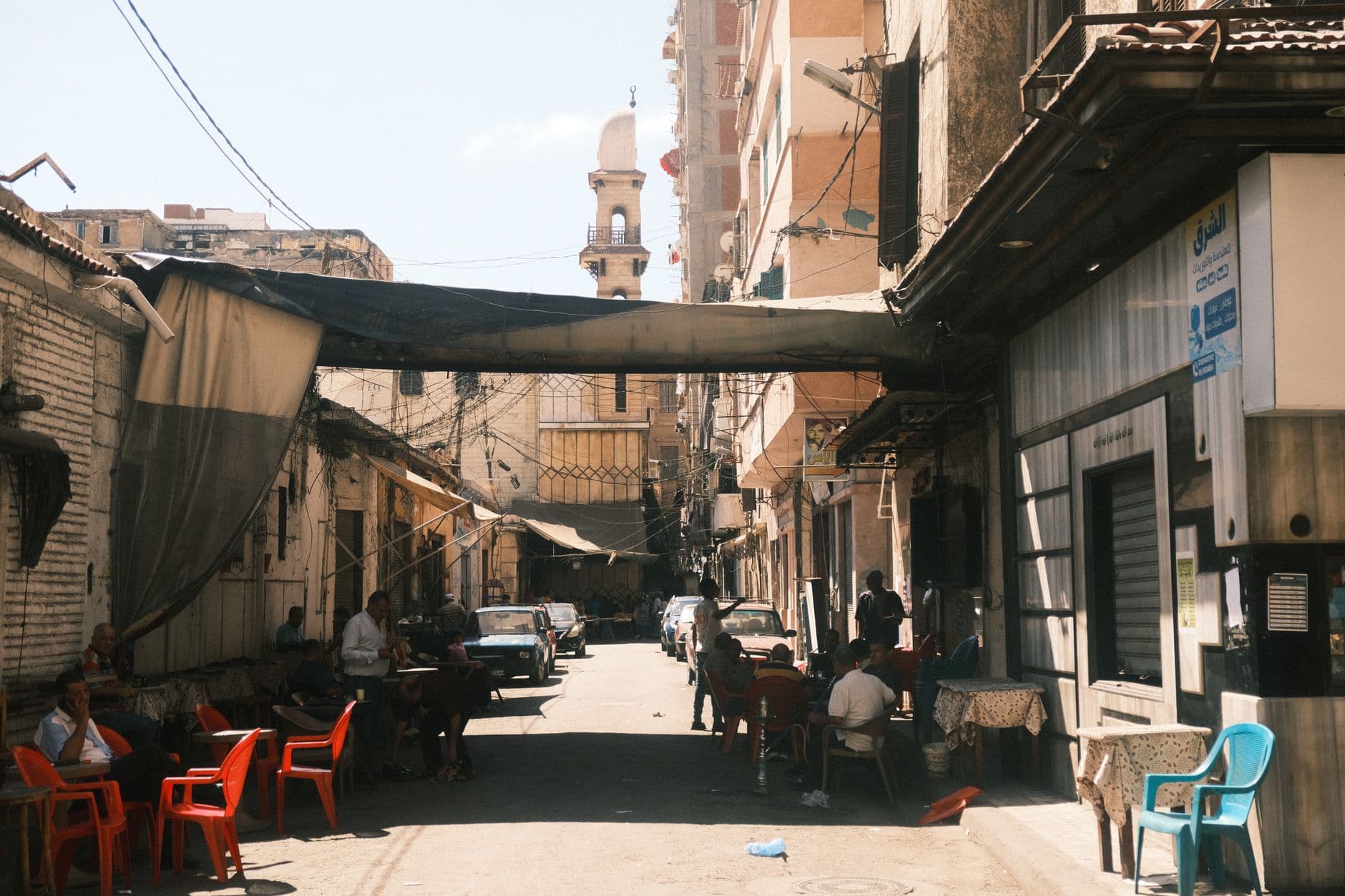
Skipping the neighborhood and only visiting the synagogue. Nabi Daniel Street and the surrounding blocks of the old Jewish quarter are where the residential and commercial texture of the community is still legible, in the scale of the apartment buildings, the shape of the shopfronts, the occasional Hebrew letter visible above a doorframe that nobody has bothered to remove. An hour walking the streets repays the effort in a way that no interior alone can.
Treating the sound and light shows at other Alexandria sites as a substitute for understanding the city's layers. The fort of Qaitbay, which most tour itineraries include, is built on the site of the Pharos of Alexandria, one of the Seven Wonders of the Ancient World. The sound and light show there costs EGP 250 and tells you less about the site than a five-minute read before you arrive. Skip it. Stand on the roof of the fort at dusk and look east at the city instead.
Photographing people without asking. This applies everywhere in Egypt, but in a site as personally and communally charged as the synagogue, it matters more. The caretaker may be photographed; ask first. Any remaining community members who might be present for a service should not be photographed at all.
Underestimating the logistics of the Chatby cemetery visit. Visitors who try to combine Chatby, Eliyahu Hanavi, and the Greco-Roman Museum in a single morning will spend the day feeling rushed and come away with nothing properly absorbed. Give the cemetery its own half-day.
Expecting a living community to perform itself for you. Jewish Alexandria history is a story of absence as much as presence. Come to understand what was here and what dismantled it, not to find a community still intact. The emotional register of the visit is closer to a memorial than a cultural tour, and being prepared for that makes the experience honest rather than disorienting.
Conflating Egyptian Jewish history with Israeli-Palestinian politics. The history of Jewish Alexandria is Egyptian history. The community that lived here for two millennia was Alexandrian, spoke Arabic and French alongside Hebrew, ate the same food as their Muslim and Christian neighbors, and was expelled or chose to leave under specific historical pressures that are worth understanding on their own terms.
---
Practical Tips
Wear modest clothing when visiting the synagogue: shoulders and knees covered. This is a religious site and also a courtesy to the caretaker and any community members who may be present.
Bring cash. There is no card reader anywhere in this part of the itinerary.
If you read any Hebrew, French, or Italian, the cemetery plaques will give you more than a translation can. Bring a phone camera and take your time at the inscriptions.
Hire a local guide who specifically knows the Jewish quarter, not a generic Alexandria city guide. The difference in depth is significant. Several Alexandria-based tour operators specialize in the multicultural history of the city; ask specifically for someone who has worked with the Jewish community or the Mosaic Foundation researchers who have been documenting the community for years.
The best time of day for the synagogue interior is mid-morning, when the Mediterranean light comes through the upper windows cleanly. Late afternoon is acceptable. Midday in summer is not recommended for comfort or photography.
From Alexandria, a day trip to the Delta town of Damanhur, which had its own significant Jewish community and retains a small synagogue, is possible but requires a car and advance planning. For those serious about Jewish Alexandria Egypt history, the Delta circuit adds essential context.
Finally: bring more patience than you think you need, and bring less agenda. This is not a site that rewards the checklist approach. It rewards the person who stands still in a 700-seat synagogue with seven people's worth of footprints in the dust and tries to do the arithmetic of what that silence means.
Frequently Asked Questions
The Weekly Dispatch
More on Egypt, every Friday.
Cultural depth and places most guides never mention.
No spam. Unsubscribe anytime.