Jewish Alexandria: History, Synagogues, and What Remains
At its peak, Alexandria had 80,000 Jewish residents and 50 synagogues. Today, fewer than five Jews live in the city. One synagogue survives. It is extraordinary.

Audio Guide: Jewish Alexandria: History, Synagogues, and What Remains
Quick Facts
- Best time to visit
- October to April. The Mediterranean humidity drops, the light is cleaner, and the city is less crowded than summer when Egyptian families vacation here en masse.
- Entrance fee
- Free, but a donation of EGP 100 to 200 (approximately $2 to $4 USD) to the restoration fund is expected. Prior appointment required.
- Opening hours
- By prior arrangement only on most days. Saturday morning services during Hanukkah and Passover are open to Jewish visitors. Contact the Nebi Daniel Association or Egyptian Jewish Community website at least one week in advance.
- How to get there
- Train from Cairo Ramses Station to Alexandria Misr Station: EGP 95 to 180 (approx $2 to $4 USD), about 2 hours. Taxi from Misr Station to 69 Nabi Daniel Street: EGP 40 to 60 (under $2 USD).
- Time needed
- 45 to 60 minutes for the synagogue alone. Full day recommended to include the Cavafy Museum, Kom el-Dikka, and a walk through the former Jewish quarter.
- Cost range
- Budget EGP 400 to 700 per day. Mid-range EGP 1,200 to 2,000 per day including central Alexandria accommodation.
Quick Facts
Best time to visit: October to April, when Alexandria's Mediterranean humidity drops and the light on the corniche turns clean and pale. Avoid August, when the city fills with Egyptian vacationers and everything becomes harder.
Eliyahu Hanavi Synagogue entrance fee: Free, but a donation to the restoration fund is expected and appropriate. Bring EGP 100 to 200 (approximately $2 to $4 USD).
Opening hours: The synagogue opens for visits Saturday mornings during Hanukkah and for Passover services, but the Egyptian government's restoration authority allows supervised visits on other days by prior arrangement. Contact the Jewish Community of Alexandria through the Egyptian Jewish Community website at least one week ahead. Do not simply show up.
How to get there: From Cairo, take the Egyptian National Railways train from Ramses Station. The Turbo Express takes approximately 2 hours and costs EGP 95 to 180 (roughly $2 to $4 USD) depending on class. From Alexandria's Misr Station, take a taxi or rideshare to Nabi Daniel Street in the Manshiyya district. The ride costs EGP 40 to 60 (under $2 USD). The synagogue sits at 69 Nabi Daniel Street, a few blocks from the sea.
Time needed: The synagogue itself takes 45 minutes to an hour. Budget a full day if you intend to walk the wider Jewish Alexandria geography, including the former Jewish quarter, the Chatby necropolis, and the sites connected to the Alexandrian Jewish intellectual tradition.
Cost range: Budget EGP 400 to 700 per day, mid-range EGP 1,200 to 2,000 per day including accommodation in the city center.
---
Why This Place Matters
Philo of Alexandria, the Jewish philosopher who attempted to reconcile the Torah with Platonic philosophy, was born in this city around 20 BCE. He was not a marginal figure. He led a diplomatic embassy to Rome to appeal to Emperor Caligula on behalf of Alexandria's Jews after a pogrom in 38 CE destroyed hundreds of synagogues and killed thousands. His work shaped Christian theology more than most Christians know, and his city shaped him entirely.
Alexandria's Jewish community is among the oldest continuously documented in the world. Jews arrived here within decades of the city's founding by Alexander the Great in 331 BCE, invited as settlers and traders. By the first century CE, they constituted perhaps forty percent of the city's population and occupied two of its five named districts. The Septuagint, the Greek translation of the Hebrew Bible that became the foundational text of Christian scripture, was produced here, according to tradition by seventy-two Jewish scholars working in parallel on the island of Pharos. The fact that seventy-two independent translations were said to be identical was taken as proof of divine inspiration. Modern scholars are more skeptical, but the translation itself was real and its consequences were permanent.
This history does not read as ancient. Alexandria's Jewish community was still 80,000 strong in the 1940s. It had newspapers, theater companies, hospitals, schools, and fifty functioning synagogues. The community included cotton merchants, doctors, lawyers, and the founders of what became some of Egypt's most significant commercial institutions. Within twenty years of Israel's establishment in 1948, nearly all of them were gone, expelled or pressured out through a combination of the 1948 war's aftermath, Nasser's nationalizations, and the 1956 Suez Crisis, which triggered mass deportations of Jews holding British and French citizenship. By 1967, the community had collapsed from 80,000 to a few hundred. Today, Alexandria's Jewish population is estimated at fewer than five people, all elderly.
One synagogue survived intact. It is worth traveling to Alexandria specifically to see it.
---
Eliyahu Hanavi: The Synagogue That Remained
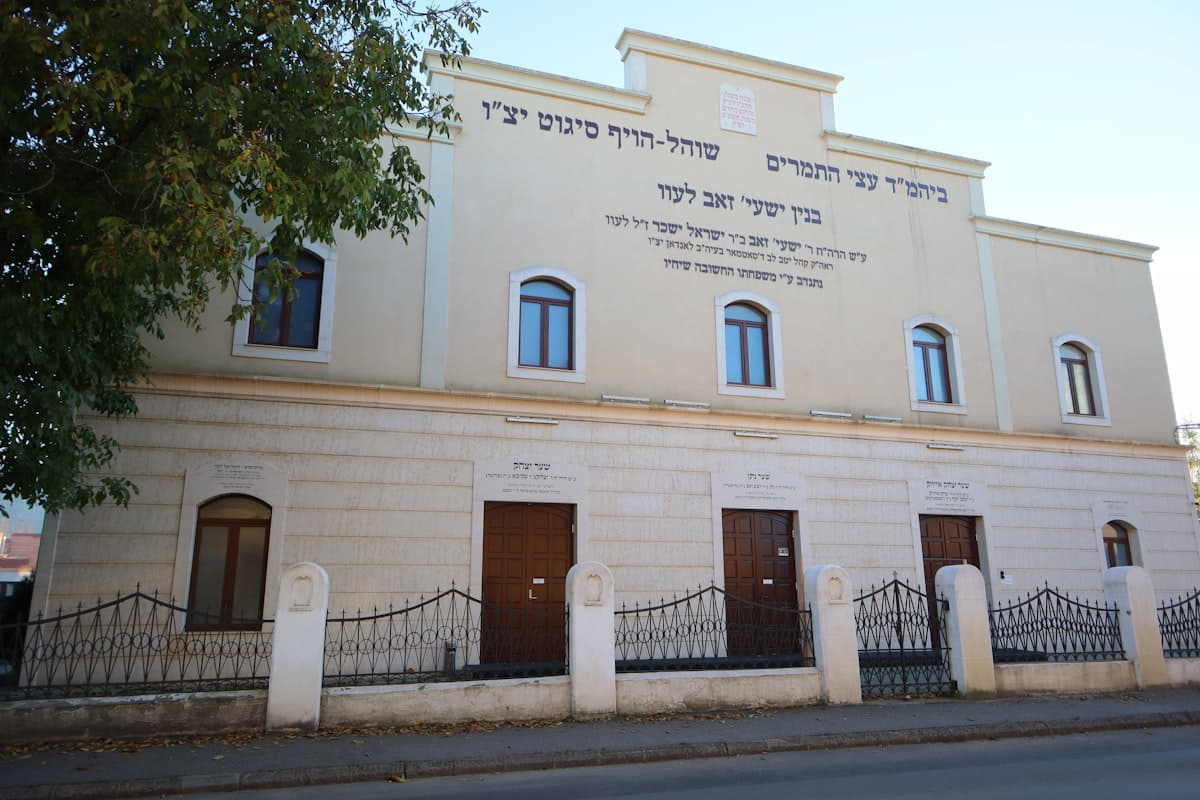
The Eliyahu Hanavi Synagogue, dedicated to the Prophet Elijah, sits on Nabi Daniel Street, a name that itself points to the layered religious geography of Alexandria. The street is named for the Prophet Daniel, and a mosque at its southern end is said by local tradition to contain the tomb of Alexander the Great himself, though no archaeologist has confirmed this. The synagogue is a few hundred meters north, toward the sea.
The current building dates to 1354, though a synagogue has stood on or near this site since the eleventh century. The structure you enter today was significantly rebuilt and expanded in the nineteenth century, giving it the interior proportions of a grand Italian synagogue more than an Egyptian one. The sanctuary can seat 700 people. When the Egyptian government undertook a major restoration between 2019 and 2022, spending an estimated 130 million Egyptian pounds on the project, workers found that the original floors were marble inlaid with geometric patterns that had been covered over by later renovations. They were uncovered and restored.
Inside, the ark housing the Torah scrolls is flanked by columns of rose-colored marble. The women's gallery runs along three sides of the upper floor, its wooden railings carved in a style that reads as both Moorish and Venetian, which is exactly what it is: Alexandrian Jewish communities were shaped by the waves of Sephardic Jews expelled from Spain in 1492 and later by Italian Jewish merchants who settled here in the eighteenth century. The building holds all of that history in its proportions.
What is harder to hold is the silence. A synagogue built for 700 now hosts perhaps a dozen visitors at a time, most of them tourists, a few Egyptian Jewish diaspora members returning on private pilgrimages. During the full restoration, a handful of Torah scrolls were returned by community members who had taken them when they fled. The scrolls are real, still there, still in use for the rare Shabbat services held during Hanukkah.
The Egyptian guards assigned to the site are friendly and genuinely proud of the building. They will tell you, in Arabic, that this is their heritage too. They are not wrong.
---
The Wider Geography: What the City Still Holds
The synagogue is the anchor, but Jewish Alexandria history extends across the city in ways that most visitors never trace.
The Chatby necropolis, a short walk from the synagogue, contains Jewish burial grounds dating to the Ptolemaic period, the third and second centuries BCE. The grave inscriptions are in Greek, which tells you something precise: Alexandria's early Jewish community was so thoroughly Hellenized that Greek had become their primary language. This is why the Septuagint needed to be written at all. The community could no longer read Hebrew.
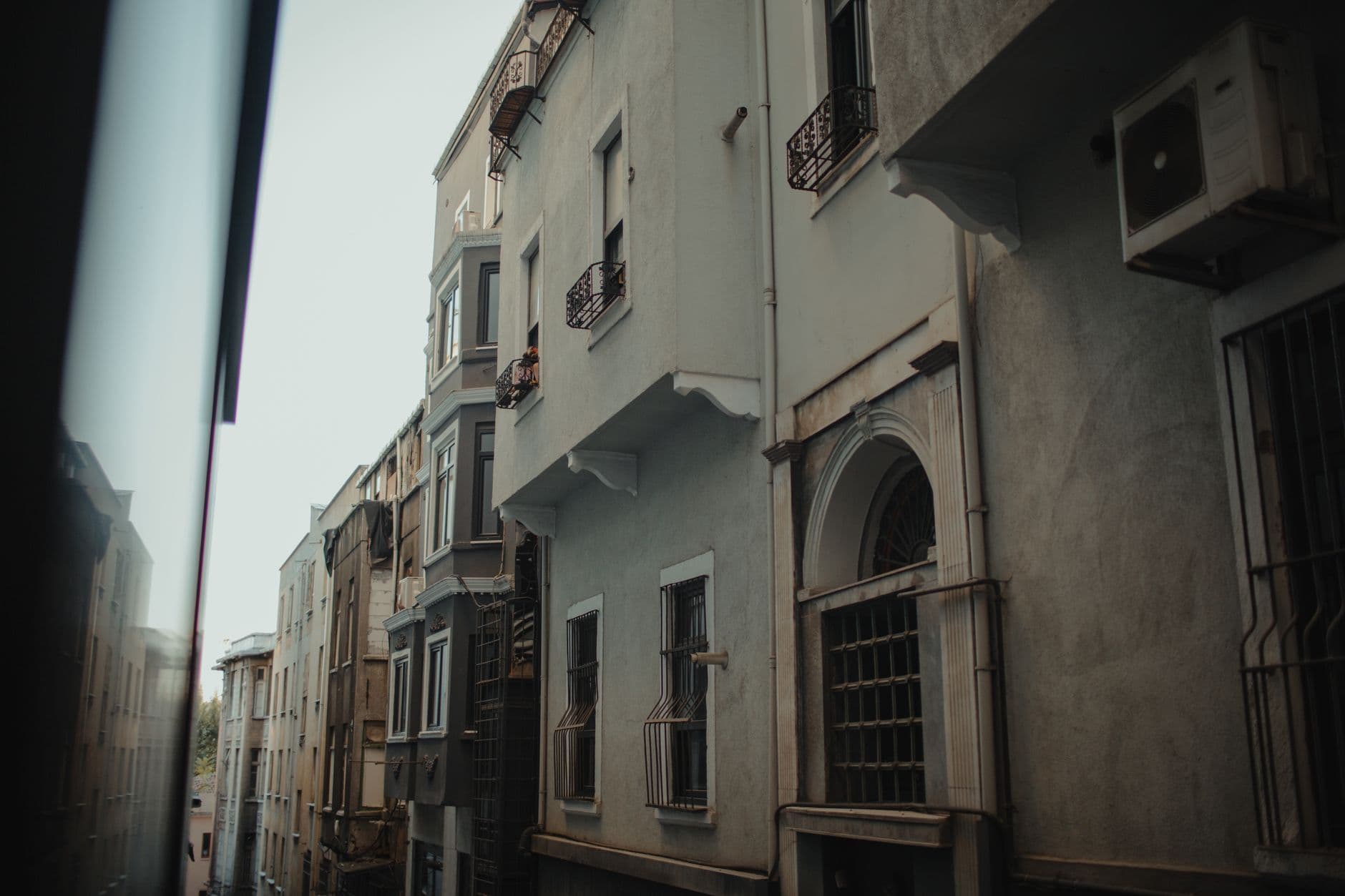
Along the former Jewish quarter near the Attarine district, the buildings that once housed Jewish schools, social clubs, and the offices of the Jewish community newspaper Al-Shams still stand, now occupied by other businesses and families. There are no plaques. Nothing marks them as what they were. A knowledgeable local guide, or the research of scholars like Robert Ilbert or the historian Gudrun Krämer, can help you find them. The community organization Nebi Daniel Association, founded by Alexandrian Jewish descendants now living in Israel, Europe, and the United States, has documented many of these locations and their histories are available online before you travel.
The Cecil Hotel on the corniche, one of Alexandria's landmark buildings, appears in the memoirs of Alexandrian Jewish writers as a social gathering point in the 1930s and 1940s. Lawrence Durrell, who was not Jewish but whose Alexandria Quartet documented the community with some accuracy and much romanticization, stayed here. The hotel has been refurbished and its bar still functions. It is a reasonable place to sit and read Durrell or, better, the poetry of Edmond Jabès, the Alexandrian Jewish poet who was expelled in 1957 and eventually became one of France's most significant postwar voices.
---
The Connections
The Nabi Daniel Street on which the synagogue stands runs almost perfectly north to south along what scholars believe is the route of the ancient city's main east-west boulevard, the Canopic Way, though the actual alignment has shifted over two millennia of construction, demolition, and sea-level change. The Roman agora excavated at Kom el-Dikka, twenty minutes' walk east, gives you the physical scale of the ancient city that Philo and his community inhabited.
Kom el-Dikka is worth visiting precisely because it dismantles the assumption that Alexandria's ancient layers are inaccessible. The Roman odeon there, a small theater with original marble seating intact, dates to the first or second century CE. Philo died sometime after 50 CE. He could have attended performances in a structure whose marble you can touch today.
The Cavafy Museum, housed in the apartment where the Greek Alexandrian poet Constantine Cavafy lived until his death in 1933, is ten minutes by foot from the synagogue. Cavafy wrote about Jewish Alexandria obliquely, and his poem on the city's lost Hellenistic world resonates differently when you understand that it was written by a man watching multiple communities disappear simultaneously from the same streets. The museum costs EGP 50 (approximately $1 USD) and is rarely crowded.
For the connection to Islamic Alexandria, note that the Attarine Mosque, a short walk from the synagogue, was built on the site of a church that was itself built over a temple that may have housed the tomb of Alexander the Great before it was lost. The entire central district of Alexandria is a vertical archaeology of religious succession, each community building on or within what the last left behind.
---
Common Mistakes
Arriving without prior arrangement. The synagogue does not function as a standard tourist site with posted hours and a ticket window. Visitors who simply walk up to the gate, which happens constantly, are turned away. Contact the community organization at least a week in advance. The process is not difficult, but it is required.
Spending all your time inside the synagogue and none in the surrounding streets. The building is the most physically preserved piece of Jewish Alexandria, but the neighborhood around it contains the actual texture of what the community was. Walk Nabi Daniel Street both north and south. Look at the architectural details of the pre-1960s apartment buildings. Ask a guide who knows the district.
Booking a general Alexandria city tour that includes the synagogue as a checkbox stop. Most of these tours allocate fifteen to twenty minutes to the site, which is enough time to take photographs and nothing else. The building deserves an hour minimum, and the context requires preparation before you walk in.
Skipping the Cavafy Museum because it does not seem directly relevant. It is the single best lens for understanding what Alexandria felt like when it was a genuinely cosmopolitan city, which is the essential context for understanding what was lost when the Jewish community and the Greek community and the Italian community all departed within roughly the same decade.
Reading Durrell's Alexandria Quartet as a reliable historical document. It is a novel, and a self-consciously literary one. Durrell's Alexandria is a projection. For actual historical grounding, Krämer's The Jews in Modern Egypt or the memoirs collected by the Nebi Daniel Association are more useful preparation.
Expecting visible emotion or ceremony. The synagogue is maintained, restored, and formally protected. But it is not a living community space in the way that phrase usually implies. If you arrive hoping for Friday evening services with a congregation, you will be disappointed. The reality is more complicated and, honestly, more affecting: a beautiful building preserved by a state that expelled the community it was built for, tended by Muslim guards who treat it with genuine respect, visited by the descendants of people who had to leave it behind.
Paying for the sound and light show at Pompey's Pillar, which the ticket office near the harbor sometimes packages with other Alexandria tickets. It is poorly produced, historically thin, and at EGP 200 to 300 adds nothing you will not learn from thirty minutes of reading. Skip it and spend that time walking the corniche at dusk, which costs nothing and tells you more about what the city is.
---
Practical Tips
Alexandria is best done as a two-night stay rather than a day trip from Cairo, which is how most organized tours treat it. The train journey is comfortable, but arriving and departing the same day leaves you with four to five usable hours at most, which is not enough for a city with this much depth.
For accommodation, the area around the corniche has options at every price point. The Steigenberger Cecil Hotel sits directly on the waterfront and carries the historical resonance mentioned above. Mid-range options on or near Saad Zaghloul Square are walking distance to both the synagogue and the Cavafy Museum.
Alexandria's traffic is considerably calmer than Cairo's, and the central district is walkable if you have reasonable stamina. The synagogue, Cavafy Museum, Kom el-Dikka, and Attarine Mosque form a circuit that can be done on foot in half a day.
If you want a guide specifically for Jewish Alexandria history, ask the Nebi Daniel Association through their website before you travel. They can occasionally connect visitors with community members or historians who offer context that no general guide provides.
Bring a light layer even in summer. The Mediterranean sea wind on the corniche is real and persistent. In winter, Alexandria is genuinely cold by Egyptian standards, routinely dropping to 10 or 11 degrees Celsius at night.
Frequently Asked Questions
The Weekly Dispatch
More on Egypt, every Friday.
Cultural depth and places most guides never mention.
No spam. Unsubscribe anytime.