Jewish Alexandria: Synagogues, History, and a Vanished World
At its peak, Alexandria had 80,000 Jewish residents and over 50 synagogues. Today, fewer than five Jews remain in the city. The buildings are still there.

Quick Facts
- Best time to visit
- October to April. Mediterranean humidity drops, the light is clear, and crowds are minimal. July and August are hot and humid but the synagogue itself is cool inside.
- Entrance fee
- Free. A donation to the caretaker is customary and appreciated. No ticket booth exists.
- Opening hours
- Sunday to Friday, 10am to 4pm. Closed Saturdays and Jewish holidays. Advance contact with the Egyptian Jewish Community office is strongly advised before visiting.
- How to get there
- Taxi from Ramla Square: EGP 30 to 50 (under $2 USD), approximately 10 minutes. Taxi from Misr train station: EGP 40 to 60, approximately 15 minutes. The synagogue is on Nebi Daniel Street in central Alexandria. No direct microbus route.
- Time needed
- 45 minutes to 1 hour for the synagogue alone. Half day (4 to 5 hours) if combining with the Jewish cemetery, surrounding minority-community neighborhood walk, and the Bibliotheca Alexandrina archive section.
- Cost range
- The Jewish heritage walk costs almost nothing in entry fees. Budget EGP 200 to 400 for transport and meals in a half day. A specialist private guide adds EGP 600 to 900.
Quick Facts
Best time to visit: October to April, when Mediterranean humidity drops and the light on limestone facades is clear rather than bleached.
Eliyahu Hanavi Synagogue entrance fee: Free entry for visitors. A donation is customary. You must register with security and present your passport. Photography is permitted in the main hall but confirm with the caretaker before shooting the ark.
Opening hours: Sunday to Friday, 10am to 4pm. The synagogue is closed on Saturdays and Jewish holidays. Because visits are managed by a small staff, call ahead: arriving unannounced risks a closed gate. The Alexandrian Jewish Community contact number is listed through the Egyptian Ministry of Tourism's heritage office.
How to get there: From Ramla Square in central Alexandria, a taxi to Nebi Daniel Street costs roughly EGP 30 to 50 (under $2 USD). From the Misr train station, the ride is about 15 minutes. No useful microbus route runs directly to the synagogue. Walking from Cecil Hotel takes about 12 minutes along the Corniche then inland.
Time needed: The synagogue itself takes 45 minutes to an hour. Combining it with a walk through the surrounding Greek Quarter remnants, the old Jewish cemetery on Sidi Gaber Road, and the adjacent Coptic and Catholic churches on the same block takes a half day. Add the Alexandria National Museum for the full picture: budget 4 to 5 hours total.
Cost range: The Jewish heritage walk costs almost nothing in entry fees. Budget EGP 200 to 400 for transport and food in a half day. A guide who specializes in Alexandria's minority communities charges roughly EGP 600 to 900 for a private 3-hour tour and is worth every pound.
---
At its peak in the 1940s, Alexandria was home to roughly 80,000 Jewish residents. The community operated more than 50 synagogues, a dozen schools, multiple hospitals, and a rabbinical court that issued legal opinions referenced across North Africa and the Levant. Today, the number of Jews living in Alexandria is fewer than five. Possibly two. The exact figure depends on who you ask and whether you count part-time residents.
The buildings, remarkably, are still there.
This is not a story of destruction. It is a story of departure, which is quieter and in some ways harder to reckon with. The synagogues were not bombed or bulldozed. They were simply left behind, locked from the inside, as families packed what they could carry and boarded ships to Israel, France, Brazil, and the United States across two decades of mid-century upheaval. What remains in Alexandria is a layered archive of a civilization that flourished here for over two thousand years and then, within the space of a single generation, ceased to exist.
Why This Place Matters
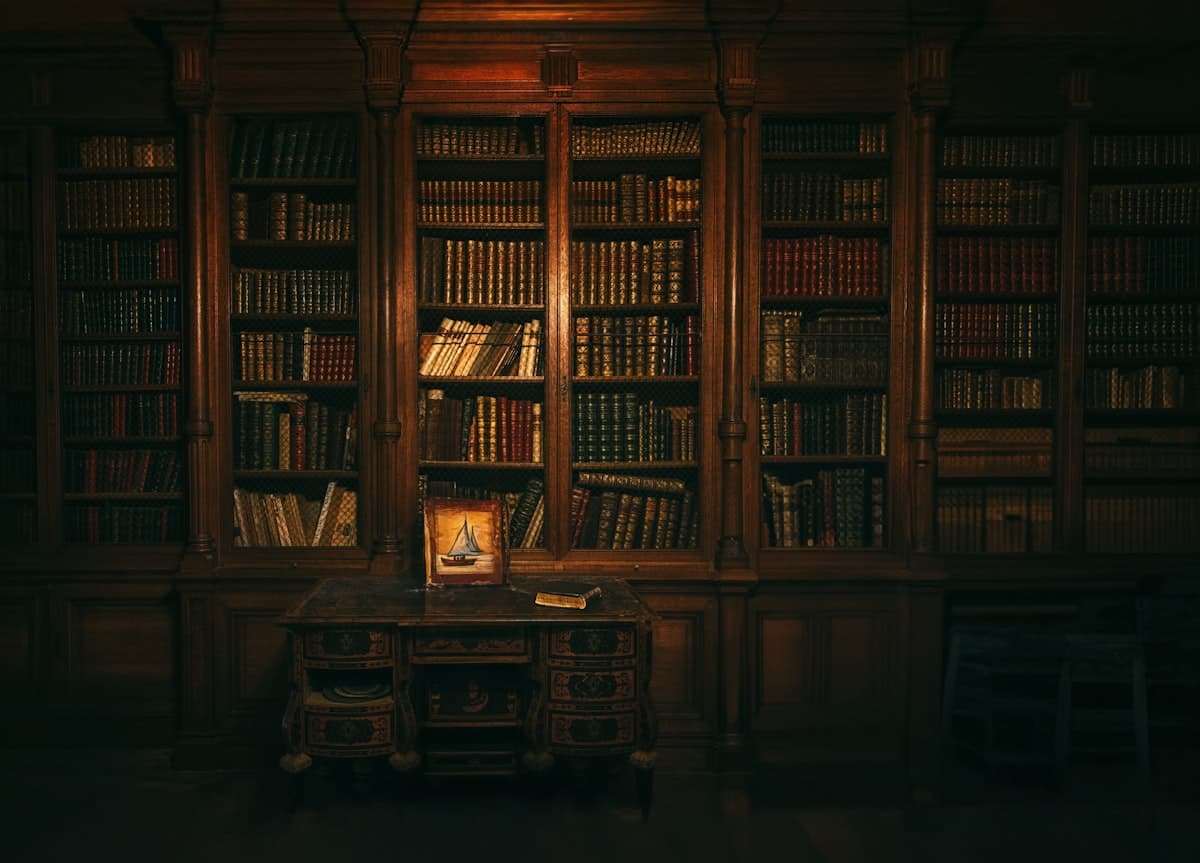
Alexandria's Jewish community is not a footnote in Egyptian history. It is one of the oldest continuous Jewish communities in the world, predating the destruction of the Second Temple in Jerusalem by several centuries. Jews arrived in Alexandria under the Ptolemies, possibly as early as the reign of Ptolemy I in the 3rd century BCE, invited as soldiers, merchants, and administrators for a city that was being invented from scratch on the Mediterranean coast.
By the 1st century CE, Jews made up an estimated 40 percent of Alexandria's population and occupied two of the city's five districts entirely. The Great Synagogue of Alexandria, which no longer stands, was described by the Talmud as so large that worshippers in the back could not hear the reader, requiring an attendant to wave a flag when the congregation should say Amen. It was destroyed during the Jewish-Roman wars under Trajan around 115 CE, a catastrophe that effectively ended the first great chapter of Alexandrian Jewish life.
The community rebuilt, slowly. By the medieval period it was modest. Under the Fatimid and Mamluk caliphates, Jewish merchants in Alexandria served as critical intermediaries in the spice and textile trade between the Mediterranean world and the Indian Ocean. The Cairo Geniza documents, discovered in a synagogue storeroom in Fustat in 1896, contain hundreds of letters from Alexandrian Jewish merchants describing their commercial networks in extraordinary detail, the most complete picture of medieval Mediterranean trade that survives from any community.
The modern community arrived in waves from the 15th century onward: Sephardic Jews expelled from Spain in 1492, Karaite Jews from Cairo, Greek-speaking Romaniotes, Ashkenazi families from Central Europe, and Mizrahi families from Syria and Iraq, all drawn by Alexandria's revival as a commercial port under Muhammad Ali in the 19th century. By 1900 it was one of the most cosmopolitan cities on earth, and its Jewish community reflected that complexity completely.
The mass departure happened between 1948 and 1967. The 1948 Arab-Israeli War made Jewish Egyptians politically suspect. The 1952 revolution that brought Nasser to power accelerated economic pressure on minority communities. The Suez Crisis of 1956 was the breaking point: Nasser expelled British and French nationals and froze the assets of Jewish residents, most of whom held foreign passports. Families who had lived in Alexandria for generations left within weeks, often with a single suitcase and the equivalent of a few dollars because asset transfers were restricted. The 1967 war effectively ended what little remained.
Eliyahu Hanavi: What You Will Actually See
The Eliyahu Hanavi Synagogue on Nebi Daniel Street is the last functioning Jewish space in Alexandria and one of the most significant surviving synagogue buildings in Africa. It was built in its current form in 1354, though the site has held Jewish worship since at least the 11th century. The name means Elijah the Prophet, and a medieval tradition held that the prophet himself visited this spot, which gives you a sense of how deep the community's roots felt to those who maintained it.
The exterior is deliberately unremarkable, a plain cream facade on a narrow street, which is historically intentional. Pre-modern Jewish communities in Islamic cities rarely advertised synagogue entrances. You pass through a gate, cross a small courtyard where cats sleep on warm stone, and enter a space that stops you.
The interior is built in the Sephardic style: a large rectangular hall with the bimah (reading platform) at the center rather than pushed to the front, wooden pews arranged around it, and women's galleries running along three walls at the upper level. The ceiling is painted in pale blue with gilt detail. The Aron Hakodesh, the ark holding the Torah scrolls, is a carved marble structure at the eastern wall, oriented toward Jerusalem, and it contains scrolls that are still used on the rare occasions when a minyan can be assembled.
What the photographs do not show you is the smell: a specific combination of old wood, stone that has absorbed decades of incense and candle smoke, and the particular dryness of a building that is carefully maintained but rarely warm with human breath. It smells like a memory of use rather than use itself.
The caretaker, a Muslim Egyptian man whose family has maintained the building for decades, will tell you this matter-of-factly. His grandfather did the same job. The irony is not lost on him and he does not perform it as irony. It is simply what his family does.
The Scrolls and What Survived
The Torah scrolls inside Eliyahu Hanavi are among the most valuable objects in the building, and their survival is not accidental. During the periods of mass emigration, community leaders made deliberate decisions about what to take and what to leave. Religious objects were sometimes carried out, sometimes buried, sometimes entrusted to caretakers. A significant number of Alexandrian Jewish manuscripts and ritual objects are now held by the Jewish Theological Seminary in New York, the Ben Zvi Institute in Jerusalem, and the Bibliotheca Alexandrina's archive here in the city, which holds documents related to the community's history even if the community itself is gone.
The Bibliotheca Alexandrina, rebuilt on the site of the ancient library and opened in 2002, contains a small but serious archive of materials related to Alexandria's Jewish history. It is worth an hour of your time if you want context before visiting the synagogue. The contrast between the ancient library's ambitions and the departed community that once used the real library of antiquity is not subtle.
The Cemeteries and the Hidden Geography
The Jewish cemeteries of Alexandria are where the community's full history becomes legible in a way that the synagogue, carefully maintained and somewhat rarified, cannot quite achieve. The main Jewish cemetery on Sidi Gaber Road contains graves spanning four centuries, from Ottoman-era merchants buried under Hebrew and Ladino inscriptions to early 20th-century tombstones in French and Italian that reflect the community's multilingualism and European orientations.
Walking through it, you notice that the same family might have members buried under Greek lettering, Hebrew, and French within three generations. This is not confusion about identity. It is a record of a community that genuinely lived in multiple languages simultaneously, whose members debated in French at the Sporting Club, prayed in Hebrew on Shabbat, argued with their landlords in Arabic, and wrote business letters in Italian.
The cemetery is officially accessible but practically difficult. Bring the contact information for the Jewish Community office if you want to arrange a visit, as the gate is not reliably open to walk-in visitors. A local guide with community connections is the easiest solution.
The other sites in the Jewish heritage circuit are less preserved but worth noting. The former Jewish hospital on Nabi Daniel Street is now a government building. Several of the smaller synagogues that operated in the Moharrem Bey and Sporting districts have been converted to apartments or storage, their facades altered but their proportions still visible to anyone who knows what a 19th-century synagogue footprint looks like.
The Connections
The Jewish Alexandria history does not exist in isolation from the rest of the city's layered identity, and that layering is what makes Alexandria different from every other Egyptian city.
The street where Eliyahu Hanavi stands, Nebi Daniel, is named for the Prophet Daniel, a figure sacred to Jews, Christians, and Muslims. A Coptic church and a Catholic church sit within 200 meters of the synagogue. This is not coincidence. This neighborhood was the center of the city's minority religious communities for centuries, and they built near each other because shared vulnerability creates shared geography.
The Ptolemaic royal quarter, which once occupied the northeastern corner of Alexandria where you are now walking, was built by Greek rulers who invited Jewish scholars to translate the Hebrew Bible into Greek, the Septuagint, completed around 250 BCE. That translation shaped the entire trajectory of Christianity, because the New Testament quotes scripture from the Septuagint, not from the Hebrew original. The theological history of Western civilization runs through this neighborhood.
The Kom el-Dikka Roman theater, a 20-minute walk away, was built in a city where Jewish residents were simultaneously Roman citizens, Greek-speaking intellectuals, and Torah-observant Jews. Philo of Alexandria, the 1st-century Jewish philosopher who tried to reconcile Mosaic law with Platonic philosophy, lived and wrote in this city. His work influenced early Christian theology more than almost any other Jewish thinker. He probably walked past the site where Eliyahu Hanavi now stands.
The Ottoman-era cotton trade that brought Sephardic Jewish families back to Alexandria in large numbers also brought the Greek merchants whose churches still stand nearby, the Armenian traders whose community hall you can still find if you look, and the Lebanese Christian families who built the villas of Stanley and Sidi Bishr. All of them are now largely gone. Alexandria lost about two-thirds of its non-Arab population between 1950 and 1980. The Jewish community was simply the most complete departure.
Common Mistakes
Arriving without calling ahead. Eliyahu Hanavi is not a museum with predictable staffing. The gate is locked when the caretaker is not present, and there is no ticket booth or posted schedule that is reliably accurate. Call or email the Egyptian Jewish Community office at least two days before your visit. This is not bureaucracy for its own sake. The caretaker genuinely needs advance notice to be there.
Treating this as a quick photo stop. Visitors who spend 15 minutes here miss everything. The building rewards slow attention: the detail in the ark, the gallery railings, the wear patterns on the floor that tell you where generations of worshippers stood. Sit in the pews for a few minutes. Let the silence do something.
Skipping the cemeteries. Most visitors to Jewish Alexandria see only Eliyahu Hanavi and consider the visit complete. The cemeteries contain the actual social history of the community in a way that no maintained building can. The multilingual tombstones alone are worth an hour of your time.
Hiring a general Alexandria guide instead of a specialist. A standard city guide will tell you the synagogue was built in 1354 and that the community is mostly gone. A specialist in Alexandrian minority communities will tell you about specific families, specific departures, and the political mechanisms of dispossession in detail that turns history into something you can feel. The price difference is minimal. The experience difference is not.
Taking the Montazah Palace detour the same day. Montazah is 20 minutes east of the city center and exists in a completely different register. The former royal gardens are pleasant and completely unrelated to everything you will have just processed at the synagogue and cemetery. Your mind needs time with what it has seen. Go to a café on the Corniche instead.
Expecting restoration. Eliyahu Hanavi has been carefully maintained, but it is not a museum installation. Peeling paint, worn stone, and faded gilding are part of what you are seeing. This is what a 670-year-old building looks like when the community that built it is gone. The imperfection is the honest version of the story.
Skipping the Bibliotheca Alexandrina's archive section. Most tourists treat the Bibliotheca as a modern architecture landmark and spend their time in the main reading room. The archival exhibitions related to Alexandria's minority communities are on the lower levels and are almost always empty. They are also genuinely excellent, with photographs, documents, and objects from the Jewish, Greek, and Armenian communities that give you the historical framework the synagogue itself cannot provide.
Practical Tips
Wear shoes you can walk in for several hours. The Jewish heritage walk, done properly, covers 3 to 4 kilometers across uneven pavements.
Bring a hat and water from October onward. Alexandria is cooler than Cairo but the Mediterranean sun between 11am and 2pm is direct and the streets near the synagogue have no reliable shade.
The neighborhood around Nebi Daniel Street is safe and walkable. It is also not particularly touristed, which means you will navigate it largely in Arabic. Basic Arabic phrases help more here than in the tourist-facing parts of the city.
Friday is technically a possible visiting day but the neighborhood changes character around midday when mosque prayers draw crowds to the street. Saturday the synagogue is closed entirely. Sunday to Thursday mornings are the most reliable window.
If you want a specialist guide, the Alexandrian historian and community contact network can be accessed through the Bibliotheca Alexandrina's public affairs office or through the Egyptian Ministry of Tourism's Alexandria regional office. Prices for private guided tours of the Jewish heritage sites range from EGP 600 to 900 for 3 hours depending on the guide's credentials.
Do not bring food or drinks into the synagogue. This is obvious but worth stating because some visitors treat minority-community heritage sites with less formality than they would a mosque or church.
Finally: this is a place where someone's great-grandmother was married and someone else's grandfather was buried and someone else's entire world was lost in a single summer. The correct register is quiet attention. You are not visiting a ruin. You are visiting an ending.
Frequently Asked Questions
The Weekly Dispatch
More on Egypt, every Friday.
Cultural depth and places most guides never mention.
No spam. Unsubscribe anytime.