Mohamed Ali Mosque & Albanian History in Egypt: The Full Guide
An Albanian soldier who arrived in Egypt with 300 troops became its ruler, built Cairo's skyline-defining mosque, and founded a dynasty that lasted 150 years. Here is the full story.

Audio Guide: Mohamed Ali Mosque & Albanian History in Egypt: The Full Guide
Quick Facts
- Best time to visit
- October through March for cool clear weather. Arrive before 9am or after 2pm to avoid midday heat and Friday prayer closures.
- Entrance fee
- EGP 450 per adult (approx $9 USD), EGP 225 for students with valid ID. Covers the full Citadel complex including Mohamed Ali Mosque, Al-Nasir Muhammad Mosque, and the Carriage Museum.
- Opening hours
- Daily 8am to 5pm (winter), 8am to 6pm (summer). Mosque closes approximately 12pm to 2pm on Fridays for congregational prayer.
- How to get there
- Metro Line 1 to Mar Girgis (EGP 8) then taxi EGP 25 to 35. Direct taxi from Tahrir Square EGP 50 to 80. Ride-share apps (Uber, Careem) are reliable and often cheaper than street taxis.
- Time needed
- 2 hours for mosque and courtyard alone. 4 hours for full Citadel complex. Half-day if combining with Sultan Hassan Mosque (EGP 180) and Al-Rifai Mosque (EGP 150) below.
- Cost range
- Budget EGP 600 to 900 including entry, transport, and lunch in Sayeda Zeinab. Mid-range EGP 1,500 to 2,500 with a licensed guide and restaurant meal.
Quick Facts
Best time to visit: October through March, when the Citadel plateau sits in cool, clear light rather than summer haze. Friday mornings bring the most atmospheric call to prayer but also the most local worshippers, so arrive before 9am or after 2pm.
Entrance fee: EGP 450 per adult (approximately $9 USD). Students with valid ID pay EGP 225. The fee covers the Citadel complex, which includes the Mohamed Ali Mosque, the Al-Nasir Muhammad Mosque, and the Carriage Museum. There is no separate ticket for the mosque itself.
Opening hours: Daily 8am to 5pm in winter, 8am to 6pm in summer. The mosque closes briefly during Friday prayer, roughly 12pm to 2pm.
How to get there: From Tahrir Square, Cairo Metro Line 1 to Mar Girgis station (EGP 8), then a short taxi or ride-share to the Citadel gate (around EGP 25 to 35). Alternatively, a direct taxi from downtown Cairo runs EGP 50 to 80 depending on traffic. Bus 951 from Abdel Moneim Riad terminal costs EGP 5 but adds time. Most visitors combine the Citadel with the nearby Sultan Hassan and Al-Rifai mosques directly below, which are accessible on foot.
Time needed: Two hours minimum for the mosque and courtyard alone. Four hours if you intend to walk the full Citadel complex. A half-day if you descend afterward to Sultan Hassan Mosque.
Cost range: Budget EGP 600 to 900 for entry, transport, and a lunch in the Al-Azhar area. Mid-range EGP 1,500 to 2,500 if you add a guide and a proper meal in Islamic Cairo.
---
Why This Place Matters
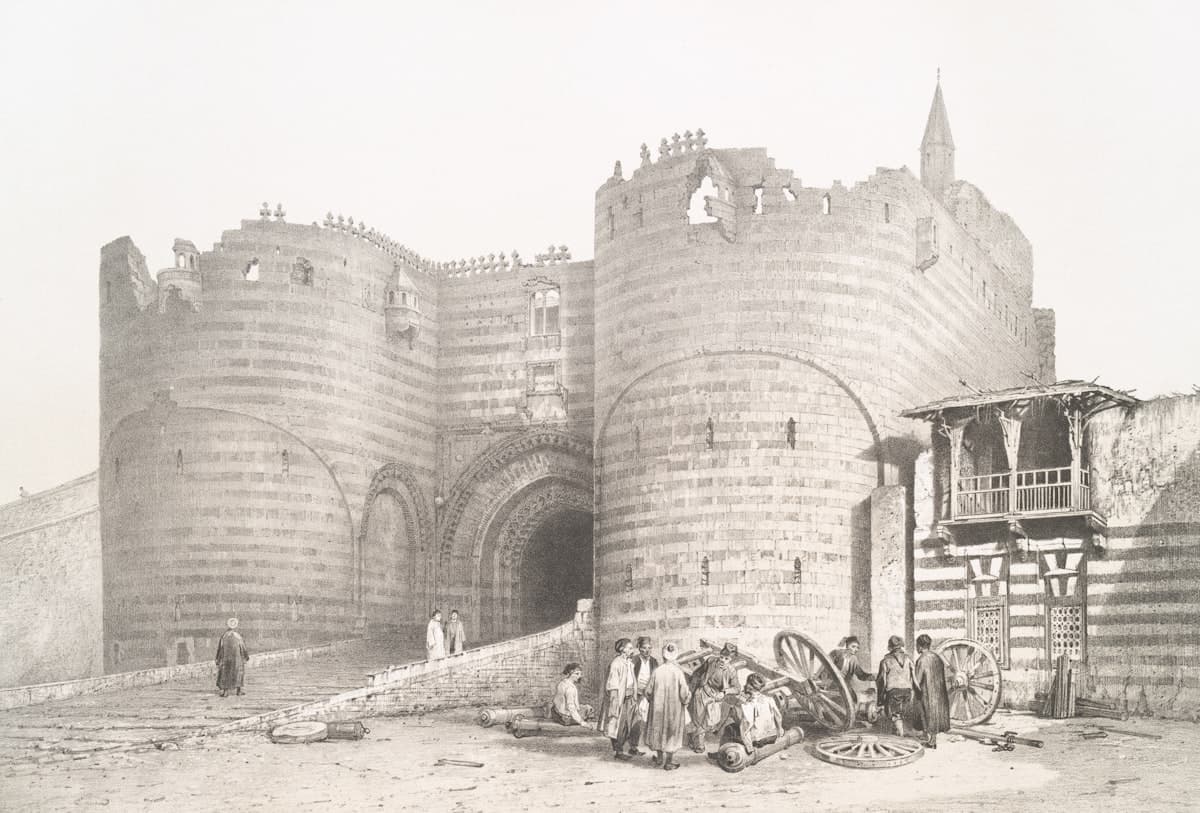
Mohamed Ali Pasha was not Egyptian. He was not Ottoman in any deep cultural sense either. He was born in 1769 in Kavala, a port city that now sits in northeastern Greece, to an Albanian family of merchants and minor military men. He arrived in Egypt in 1801 as a junior commander in an Ottoman expeditionary force of 300 Albanian soldiers, sent to reclaim the country after Napoleon's brief occupation. Within four years he had maneuvered himself to the governorship. Within a decade he had turned Egypt into a de facto independent state, modernized its army, massacred the Mamluk elite who threatened his power, and begun a dynasty that would rule Egypt until 1952.
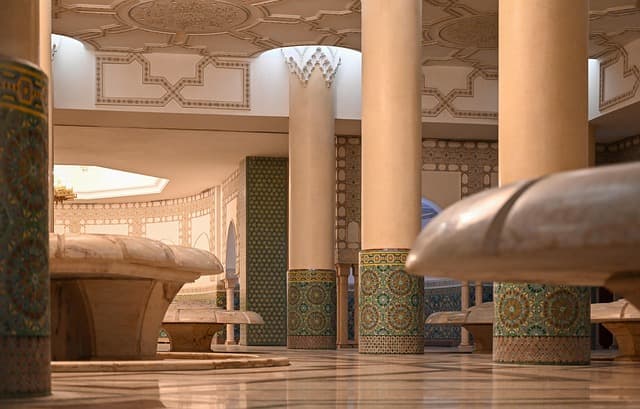
The mosque he built between 1830 and 1848 on the highest point of the Citadel of Saladin is not a Cairene building in any traditional sense. It is Ottoman through and entirely so: two minarets in the Ottoman pencil style, a central dome flanked by smaller semi-domes, an ablution fountain in the courtyard modeled on Istanbul's Sultan Ahmed Mosque. The architect, Yusuf Boshnak, was brought from Istanbul. The design references Sinan's sixteenth-century masterpieces in Constantinople more than anything built in Cairo before or since. Mohamed Ali looked at a city full of Fatimid and Mamluk architecture and chose to build something that looked like it belonged on the Bosphorus. That decision tells you everything about how he saw himself and what he was trying to say.
The Albanian history Egypt Mohamed Ali guide that most visitors receive skips the complexity: the fact that this foreign-born soldier became the architect of modern Egypt, that the educational missions he sent to Paris produced Egypt's first generation of secular intellectuals, and that his infrastructure projects, however brutal in their labor demands, transformed the Delta's agricultural capacity and shaped the country's economy for a century.
---
What You Actually See: Reading the Mosque
You enter the Citadel through the Bab al-Azab gate, still scarred from the 1811 massacre in which Mohamed Ali lured the Mamluk beys to a celebration and had them killed in the narrow passage below. The last Mamluk, according to the most repeated account, escaped by leaping his horse over the walls. The gap is visible in the battlements. Whether the story is true is debated. That it is still told speaks to how Cairenes process the violence on which this period was built.
The mosque's courtyard floor is covered in alabaster from the quarries at Beni Suef, the same stone used in the Pyramid of Menkaure's casing. The ablution fountain in the center was not built for use but for display: it was considered too ornate for actual washing and a separate, functional facility stands to the side. The clock tower in the northwest corner was a gift from King Louis-Philippe of France in 1846, exchanged for the obelisk that now stands in the Place de la Concorde in Paris. The French clock has never worked reliably. The obelisk has stood in Paris for nearly 180 years without incident.
Inside, the dome rises 52 meters above the floor. The chandeliers are hung low enough that the light pools at human level, which creates a warmth that photographs rarely capture. Look at the walls before you look up: the lower sections are alabaster, the upper sections are painted plaster imitating the Iznik tile work that Mohamed Ali saw in Istanbul and could not afford to import in sufficient quantities. The imitation is careful enough that most visitors never notice.
Mohamed Ali's tomb is in the southeastern corner of the mosque, enclosed in a white marble screen. He died in Alexandria in 1849, partially blind and probably suffering from dementia in his final years. His body was brought here to the monument he built for himself, and here it has remained through revolution, war, and the end of his dynasty.
---
The Albanian Thread: A Story Most Guides Skip
Kavala, Mohamed Ali's birthplace, was and remains proud of the connection. The city contains a museum dedicated to him and a reconstruction of his birth house. In Egypt, the Albanian dimension of his story tends to be smoothed over in favor of a nationalist narrative in which he is simply the founder of modern Egypt. Both framings miss the more interesting truth.
The Albanian soldiers who came with Mohamed Ali in 1801 were mercenaries in the Ottoman system, valued for their fighting capability and their lack of local loyalties. Egypt was not their home, which meant they had no stake in preserving its existing power structures. This made Mohamed Ali unusually free to dismantle and rebuild. His massacre of the Mamluks in 1811 was not just political convenience: it was the action of a man who understood that Egypt's Islamic medieval elite had no claim on his loyalty because he had arrived from outside it entirely.
His language at home was Albanian and Ottoman Turkish. He did not learn Arabic fluently until he was well into his governance of Egypt, relying on translators for much of his early rule. The detail matters because it recalibrates how you read his modernization projects: the French-trained military advisors, the European-curriculum schools, the textile factories in the Delta. These were not the reforms of a man who saw himself as transforming his culture. They were the infrastructure decisions of a practical, militarily-minded outsider who wanted a strong state and recognized that European models were currently winning wars.
The Albanian history Egypt Mohamed Ali connection also explains something about the architecture you are standing inside. The Ottoman style of this mosque was not nostalgia. It was political positioning: a signal to Istanbul that Mohamed Ali was a loyal governor building in the imperial tradition, even as he was simultaneously building an army capable of defeating Ottoman forces and briefly seizing Syria.
---
The Connections: Everything Below the Mosque
The Citadel itself was built by Saladin beginning in 1176, using stone quarried from the smaller pyramids at Giza. You can see the marks in the Citadel's lower courses if you look at the exterior walls from the road below. Saladin never lived in it; he died in Damascus in 1193 before it was completed.
The view from the mosque's terrace faces northwest toward the pyramids of Giza and southeast toward the Muqattam hills. On clear winter mornings, both are visible simultaneously from the same spot: the oldest monumental stone structures in the world and the Islamic medieval citadel built partly from their casing stones. Cairo does this constantly, layers its eras so completely that separating them becomes a kind of deliberate act of forgetting.
Diectly below the Citadel, Sultan Hassan Mosque was completed in 1363 and is considered the finest example of Mamluk architecture in Egypt. It was built by a sultan who was so young and unstable that his own amirs assassinated him before the mosque was finished. The minaret collapsed in 1361, killing several hundred people standing below. The mosque that Mohamed Ali could see from his elevated fortress every day of his rule was built by the system he dismantled. The juxtaposition is not accidental in terms of geography, even if it was not planned as commentary.
The Al-Rifai Mosque, built between 1869 and 1912 and directly adjacent to Sultan Hassan, contains the tombs of Egypt's last royal family, including King Farouk, deposed in 1952. Mohamed Ali's dynasty, which began with an Albanian mercenary in 1805, ended 147 years later with a king sent into exile on a yacht. The three mosques standing within view of each other span the Mamluk era, the Mohamed Ali era, and the end of both.
---
Common Mistakes
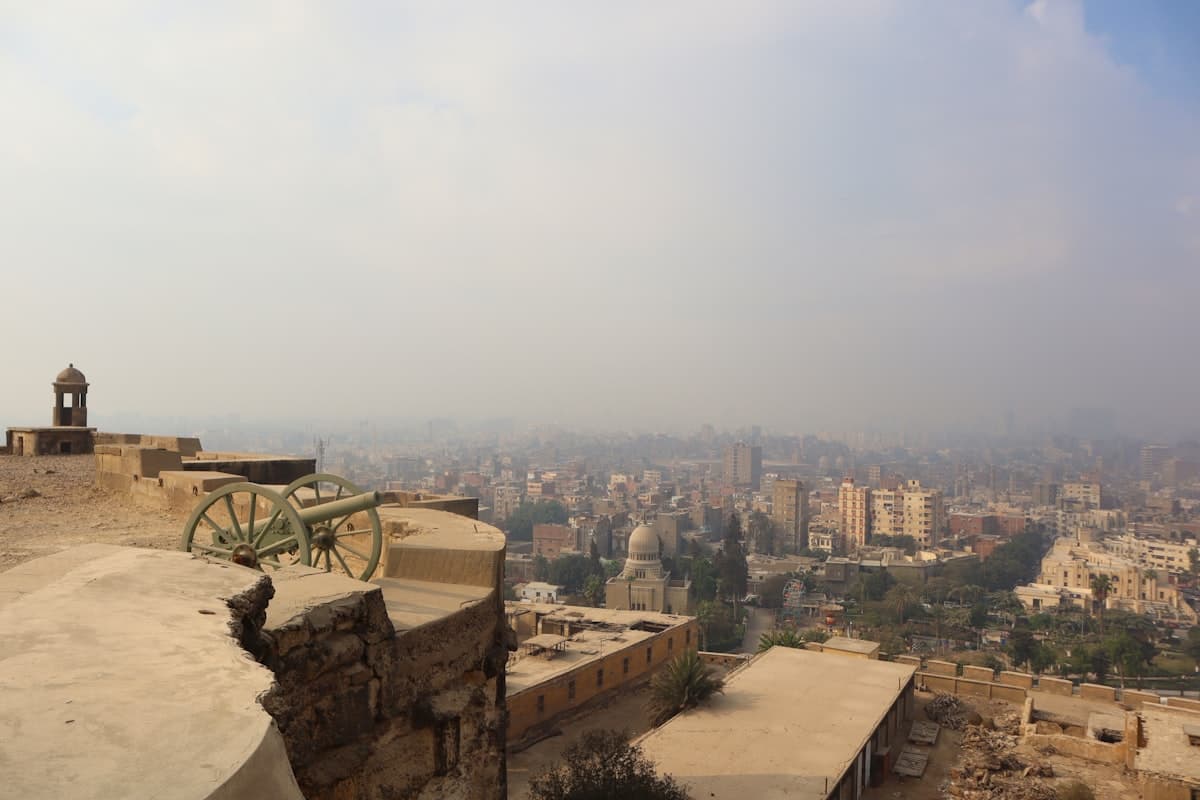
Arriving at midday in summer. The Citadel plateau has almost no shade and the pale stone reflects heat with considerable efficiency. Temperatures on the terrace in July and August can feel ten degrees hotter than street level. The mosque interior is cool. The walk between buildings is not.
Paying for a guide at the gate. Unofficial guides at the Bab al-Gadid entrance charge EGP 200 to 400 and frequently deliver inaccurate information about the mosque's construction, misidentifying the architect and conflating the building phases. A good licensed Egyptologist guide, booked in advance through a reputable agency, costs more (around EGP 600 to 800 for a half-day) but is a different experience entirely. The gate guides are not worth the saving.
Skipping Sultan Hassan Mosque to save time. This is the most common mistake visitors make and the one with the most cost. Sultan Hassan is five minutes' walk from the Citadel entrance and requires a separate ticket of EGP 180. The interior portal, at 38 meters high, is the tallest Mamluk doorway in the world. The light in the qibla iwan at 10am is genuinely unlike anything else in Cairo. Do not skip it.
The sound and light show at the Citadel. It costs EGP 400, runs about 45 minutes, and delivers a narrated history so simplified it borders on fiction. Everything the show covers, this article covers better for free. Skip it without guilt.
Assuming the mosque is primarily a tourist site. It is an active mosque. Dress appropriately: shoulders and knees covered, shoes removed before entering. Women are offered loose robes at the door if needed. Visitors who arrive loudly during prayer times or treat the tomb area as a photo backdrop create real friction with worshippers and occasionally with guards. The site rewards quiet attention.
Combining the Citadel with the Egyptian Museum in a single day. Both require sustained concentration. Doing both means doing neither properly. The Citadel and Islamic Cairo is one day. The Egyptian Museum, now supplemented by the Grand Egyptian Museum in Giza, is another.
Not looking at the exterior walls. Most visitors walk straight to the mosque entrance without examining the Citadel's medieval fortifications, which contain Arabic inscriptions, embedded Roman and Pharaonic architectural fragments, and evidence of at least four distinct building campaigns. The Albanian history Egypt Mohamed Ali story is only the most recent layer. The walls behind you are older and stranger.
---
Practical Tips
Combine your visit with the two mosques directly below the Citadel: Sultan Hassan (EGP 180) and Al-Rifai (EGP 150). Both are within a ten-minute walk of the Citadel entrance and the three together form a coherent half-day circuit through Cairo's post-Fatimid Islamic architecture.
The Citadel's Military Museum and Carriage Museum are included in your entrance fee. The Military Museum is dense with Ottoman and nineteenth-century material and takes about 45 minutes if you read the panels. The Carriage Museum contains the actual carriages used by Mohamed Ali's dynasty, including the carriage in which Khedive Ismail rode to the opening of the Suez Canal in 1869. It is oddly moving and consistently empty.
Photography is permitted throughout, including inside the mosque, except during prayer. The interior is dim: bring a camera that handles low light or accept that your phone will struggle with the chandeliers.
For lunch after the Citadel, walk north into the Sayeda Zeinab neighborhood rather than eating at the tourist-adjacent cafes near the gate. The price difference is significant and the food is better.
Frequently Asked Questions
The Weekly Dispatch
More on Egypt, every Friday.
Cultural depth and places most guides never mention.
No spam. Unsubscribe anytime.