Mohamed Ali Mosque Cairo: The Albanian Who Remade Egypt
An Albanian soldier who couldn't read Arabic built Egypt's most recognizable skyline feature. The mosque he commissioned tells you more about power than piety.
Quick Facts
- Best time to visit
- October to March; arrive at 8am to beat tour groups
- Entrance fee
- EGP 450 (approx $9 USD) for the full Citadel complex; students EGP 225
- Opening hours
- Daily 8am to 5pm (winter), 8am to 6pm (summer); brief closures for prayer times
- How to get there
- Taxi from Tahrir Square: EGP 50 to 80. Metro to Sadat then taxi: EGP 40 to 60. Bus 951 from Ramses: EGP 5
- Time needed
- 2 to 3 hours for mosque and terrace; 4 hours for full Citadel complex
- Cost range
- EGP 600 to 900 per person including transport, entry, and a coffee nearby
Quick Facts
Best time to visit: October to March, early morning (8am to 10am) before tour groups arrive
Entrance fee: Included in the Citadel complex ticket: EGP 450 (approximately $9 USD), students EGP 225. The Citadel ticket also covers the Military Museum and the National Police Museum inside the complex.
Opening hours: Daily 8am to 5pm (winter), 8am to 6pm (summer). The mosque itself observes prayer times; expect brief closures at midday and mid-afternoon prayers.
How to get there: From Downtown Cairo, take the Cairo Metro to Sadat Station then a taxi or ride-share to the Citadel (roughly EGP 40 to 60, about 15 minutes depending on traffic). A direct taxi from Tahrir Square costs EGP 50 to 80. The 951 CTA bus also runs from Ramses to the Citadel for EGP 5, though service is irregular.
Time needed: 2 to 3 hours for the mosque and Citadel grounds, half a day if you plan to visit the adjacent Al-Nasir Muhammad Mosque and the Citadel's museums.
Cost range: EGP 600 to 900 for a solo visitor including transport, ticket, and a coffee nearby in the Islamic Cairo quarter.
---
Mohamed Ali Pasha, the man who modernized Egypt, sent his sons to European schools, broke the Mamluk monopoly on power, and built the mosque that defines Cairo's skyline to this day, never learned to read or write Arabic. He was an Albanian-speaking soldier from Kavala, a small Ottoman port city in what is now northern Greece, and he arrived in Egypt in 1801 as part of an Albanian regiment dispatched to help expel Napoleon's forces. He left as the founder of a dynasty that would rule Egypt until 1952.
The mosque that carries his name, finished in 1848 after nineteen years of construction, was deliberately built to be seen. It sits at the highest point of the Citadel, the medieval fortress that Saladin began in 1176, and its two Ottoman-style minarets, each 82 meters tall, are visible from virtually every rooftop in Cairo. Mohamed Ali knew exactly what he was doing. He had already massacred the Mamelukes at this very site in 1811, inviting their leaders to a banquet and ordering their slaughter in the Citadel's narrow lane. The mosque was the architectural punctuation mark on that political sentence.
---
Why This Place Matters
The Citadel of Saladin is one of those sites where six centuries of Egyptian power stack on top of each other in a single afternoon. Saladin chose this ridge, called the Muqattam spur, because the prevailing north wind carried cool air across it while the rest of medieval Cairo sweltered. He imported workers from captured Crusader castles to build it, which is why certain construction techniques in the lower walls look distinctly European.
The Ottoman Empire took the Citadel from the Mamluks in 1517, and the Ottomans built their own mosque inside its walls, the Al-Nasir Muhammad Mosque, which still stands. When Mohamed Ali arrived nearly three centuries later, he ordered the demolition of an Ottoman-era palace on the highest point of the ridge to make room for his own mosque. He was literally building over his predecessors to signal that a new era had begun.
The Albanian history Egypt Mohamed Ali guide most visitors receive focuses on the interior grandeur and stops there. What most guides omit: Mohamed Ali modeled his mosque on the Sultan Ahmed Mosque in Istanbul, not on any Egyptian precedent. He brought in a Greek architect named Yusuf Boshna to design it. The alabaster that sheathes the entire interior and exterior courtyard walls was quarried at Beni Suef, roughly 120 kilometers south of Cairo, the same region that supplied stone for Pharaonic temples. The connection between ancient and modern is in the walls themselves.
---
What You Are Actually Standing In
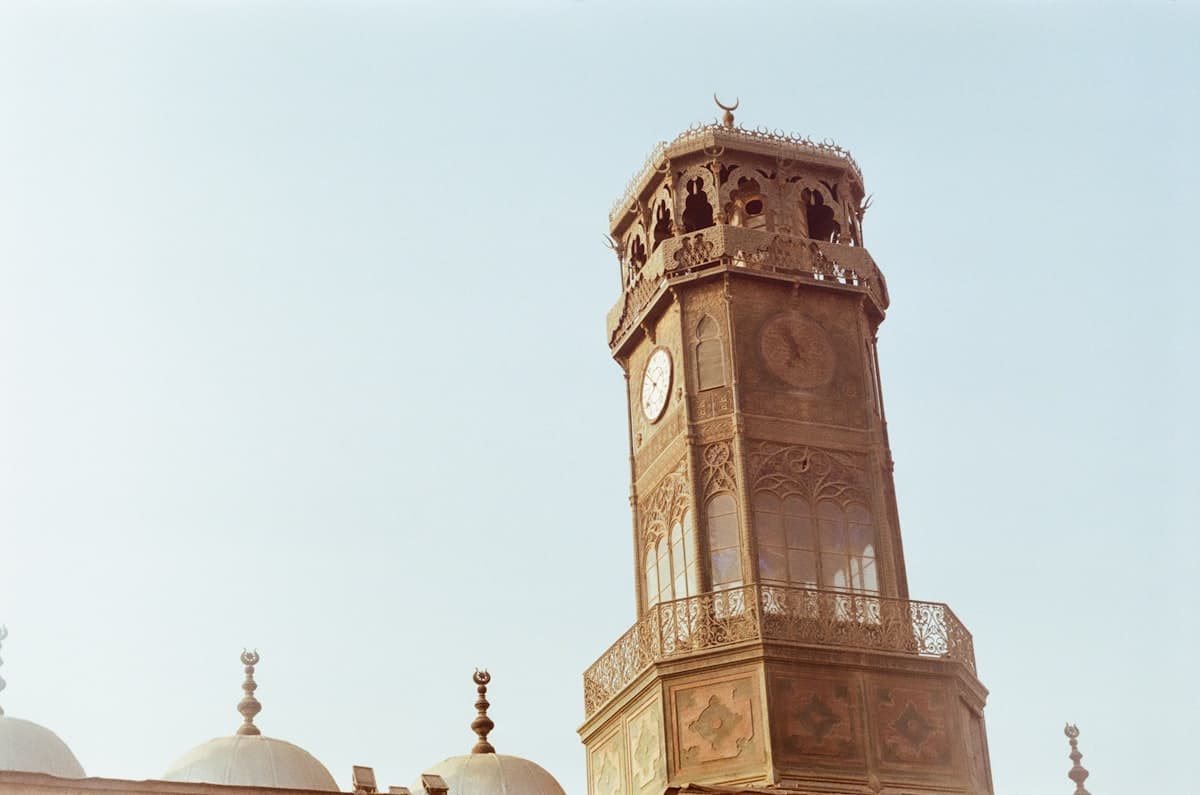
Before you enter the mosque, stop in the outer courtyard. The clock tower in the center was a gift from King Louis Philippe of France, sent in 1846 as part of an exchange: France wanted the obelisk that now stands in the Place de la Concorde in Paris. Mohamed Ali sent the obelisk. France sent this clock. The clock has never worked properly. The obelisk has been in Paris for 190 years.
Inside the mosque, the alabaster is the first thing that stops you. It covers the lower walls floor to ceiling, cool to the touch even in summer, and it diffuses the light entering through the 365 windows in a way that shifts through the day. The dome itself sits 52 meters above the floor, surrounded by four smaller semi-domes in the Ottoman style that Mohamed Ali's architect borrowed from Sinan, the great Ottoman architect who designed the Süleymaniye Mosque in Istanbul. If the interior looks more Turkish than Egyptian, that is because architecturally it is.
Mohamed Ali is buried here, in the white marble cenotaph on the right side of the main prayer hall. His actual tomb is beneath it, according to the Islamic custom of burial below the prayer floor. The brass grilles surrounding the cenotaph were added by later Khedives. Look at the chandeliers: they are enormous, hung low, designed for oil lamps that were converted to electricity during the reign of Khedive Ismail in the 1870s. The conversion was done quickly and without much care, which is why the wiring, now replaced again, was always slightly chaotic.
The Terrace Most Visitors Rush Through
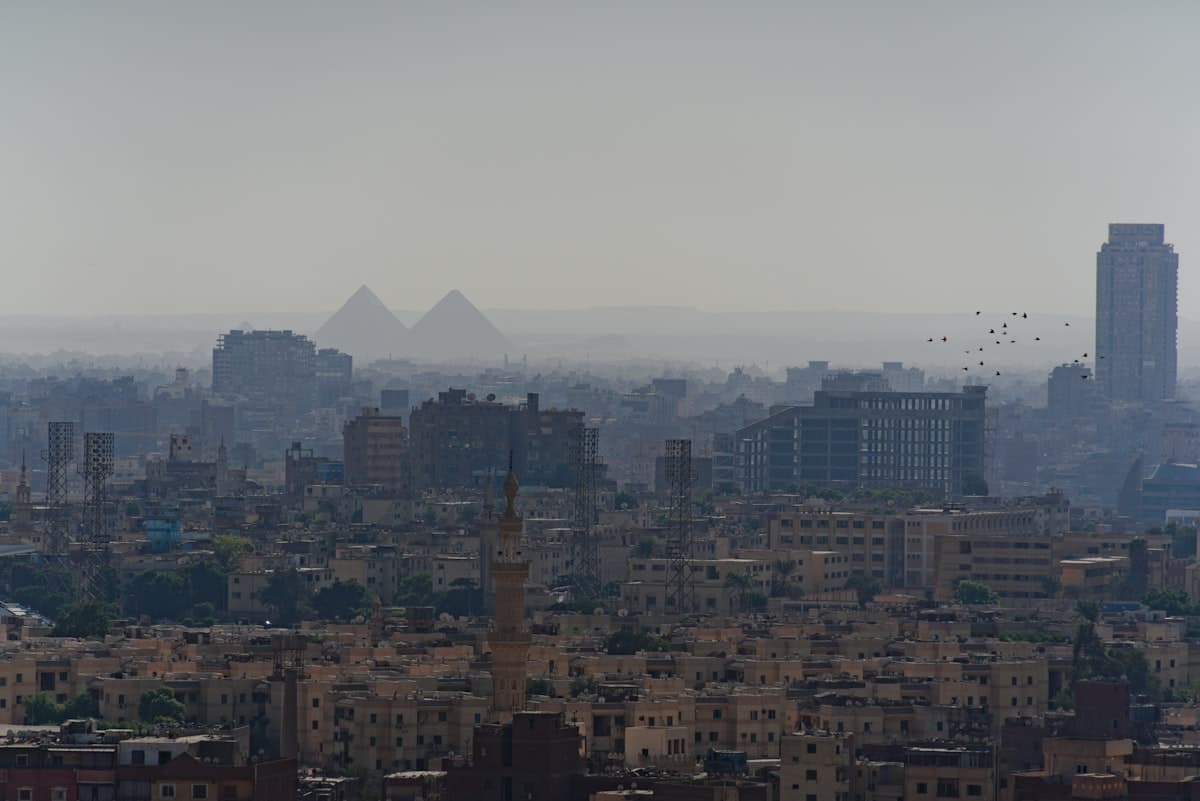
After the mosque interior, most tour groups reassemble and move on. Walk instead to the northern terrace of the Citadel, just past the mosque's entrance courtyard. From here, on a clear winter morning, you can see the Giza pyramids to the southwest, the dense geometry of Islamic Cairo's minarets below you, and the thin brown line of the desert where Cairo ends and the Eastern Desert begins. This is the view that Saladin's military engineers wanted: total visual dominance over the city and the approaches to it.
The terrace also gives you a direct sightline to the well known as Joseph's Well, dug into the bedrock of the Citadel between 1176 and 1182. It descends 87 meters, making it one of the deepest wells in the medieval Islamic world, cut in a double-spiral shaft so that animals could descend on one ramp and ascend on the other simultaneously, carrying water up from the aquifer. It has nothing to do with the biblical Joseph. Saladin's soldiers called it Bir Yusuf because Saladin's own name was Yusuf.
---
The Connections
The Albanian history Egypt Mohamed Ali guide rarely connects him to the longer Ottoman story, but the connection is direct and consequential. The Ottoman Empire conquered Egypt in 1517 under Sultan Selim I, defeating the Mamluk Sultan Qansuh al-Ghuri at the Battle of Marj Dabiq in Syria. Al-Ghuri died in that battle at approximately 76 years old, fighting on horseback. Egypt then spent 280 years as an Ottoman province, its Mamluk beys effectively running the country under nominal Ottoman governors.
Mohamed Ali ended that arrangement permanently. But he did it not by rejecting Ottoman culture, he did it by outplaying it. He sent Egyptian students to Paris to study military science, medicine, and engineering. He hired French, Italian, and British advisors. He built the first modern medical school in the Arab world at Qasr al-Aini in Cairo in 1827. He industrialized cotton production in the Delta. He conquered Sudan, parts of the Arabian Peninsula, and briefly most of Greater Syria before European powers forced him to retreat.
The mosque you are standing in is the capstone of all of this: a monument designed to place Mohamed Ali's legacy in the same visual register as the great Ottoman sultans, built by a man who spoke Albanian at home, governed in Turkish, administered through Arabic, and learned everything he knew about statecraft from the ruins of other people's empires.
The Coptic community of Cairo, which had lived under Mamluk and then Ottoman rule for centuries, found Mohamed Ali's modernization project a mixed experience. He was more tolerant than many of his predecessors, but his industrialization programs conscripted Coptic craftsmen alongside Muslim ones into state workshops. The Cathedral of Saint Mark in Azbakeya, rebuilt in the 1800s, reflects the same period of relative opening. Egypt's religious geography was always shifting, and Mohamed Ali shifted it again.
---
Common Mistakes
Arriving between 11am and 2pm. This is when tour buses from cruise ships, school groups, and Nile hotel packages all converge simultaneously. The courtyard becomes impassable and the mosque interior loses any contemplative quality. Come at 8am when the Citadel opens, or after 3pm.
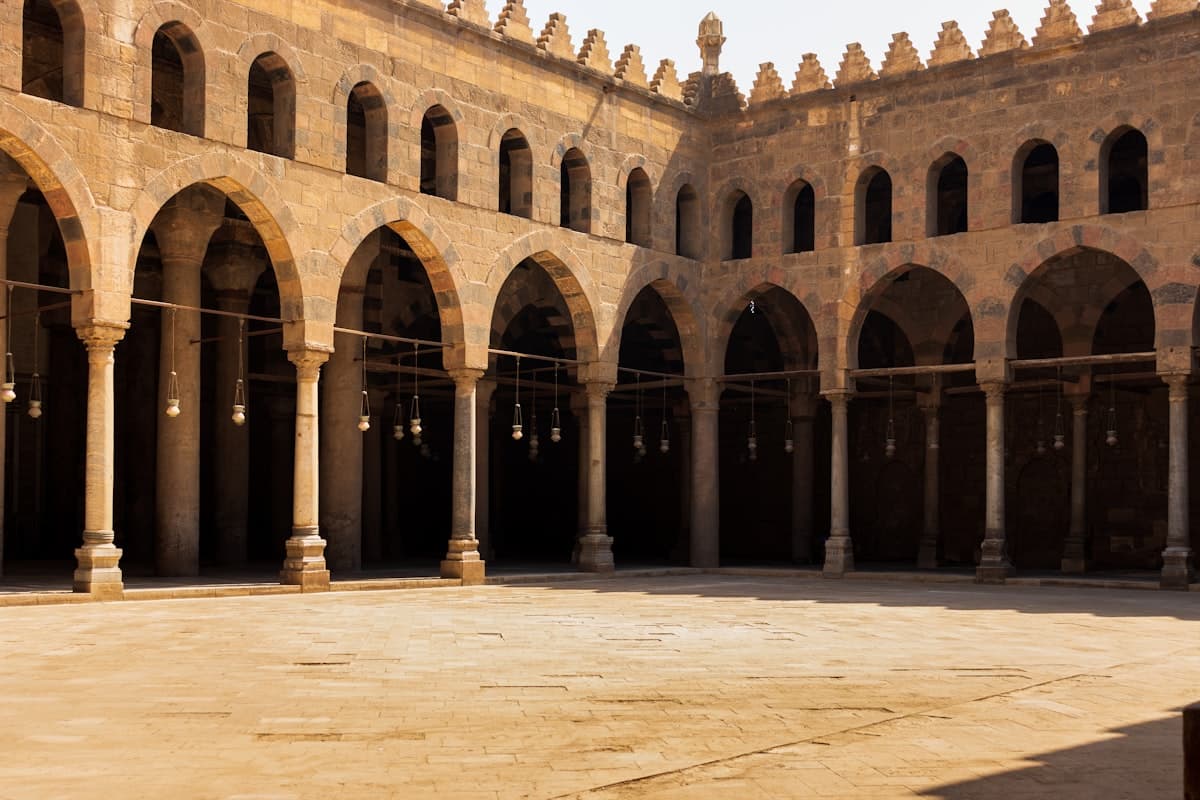
Skipping the Al-Nasir Muhammad Mosque. It is fifty meters from the Mohamed Ali Mosque and almost no general tourists enter it. Built between 1318 and 1335 by the Mamluk sultan Al-Nasir Muhammad ibn Qalawun, who ruled Egypt three separate times across four decades, it contains columns looted from Pharaonic temples in Upper Egypt and from a Crusader church in Acre. The courtyard is cooler and quieter than the Mohamed Ali Mosque and the architectural honesty of mixed-origin columns is more interesting than any uniform Ottoman interior.
Paying for a private guide at the gate without checking credentials. The unregistered guides near the Citadel entrance vary enormously in quality. A registered guide hired through a hotel or a certified agency will know the difference between the Al-Nasir mosque and the Hawash mosque. Many of the informal ones will not.
The sound and light show at the Citadel. It costs EGP 300 and runs on weekends. It tells you nothing that a single attentive hour inside the complex during daylight will not teach you more vividly. Skip it without guilt.
Wearing shoes that cannot be removed easily. You will remove your shoes at the mosque entrance. Sandals or slip-ons make this faster and less awkward. The stone floor inside is smooth and cold; socks are worthwhile in winter.
Assuming the alabaster is marble. Almost every visitor and a surprising number of guides call it marble. It is Egyptian alabaster, a calcite-based stone, softer and more translucent than marble. The distinction matters because it explains the particular glow of the interior light.
Spending your entire Citadel visit inside the Mohamed Ali Mosque and leaving. The Citadel contains the remnants of at least twelve distinct historical periods, from Ayyubid to Mamluk to Ottoman to Khedival to British colonial-era additions. The Military Museum in the former Harim Palace, built by Muhammad Ali's son Abbas I, has unexpectedly good maps of the 19th-century Egyptian army campaigns and is almost always empty.
---
Practical Tips
Dress modestly. The mosque is an active place of worship, not only a monument. Women will be offered an abaya at the entrance if needed; bringing your own scarf is faster. Men in shorts are sometimes turned away, particularly during prayer times.
The Citadel's main entrance is on Salah Salem Street. There is a secondary entrance from the Al-Azhar Park side that is less congested. Taxis will generally know the main gate; specify "Bab al-Gadid" if you want the secondary entrance.
Photography is permitted inside the mosque but flash photography disturbs worshippers during prayer. The terrace outside the mosque offers the best light for exterior shots in the morning, when the sun is behind you and the city spreads westward.
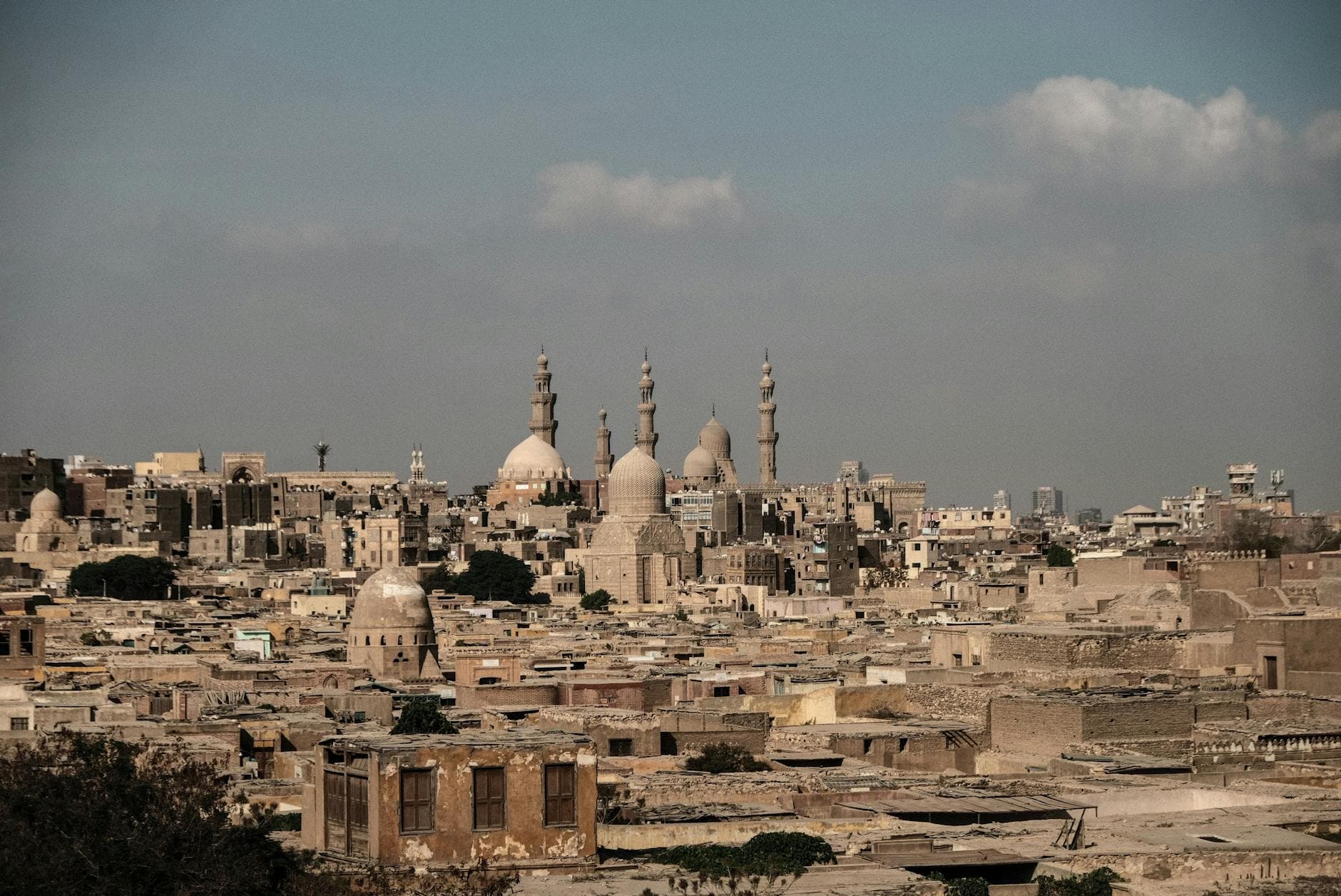
The Citadel sits adjacent to the historic cemetery district of Cairo, the City of the Dead, where an estimated half a million people live in and around the mausolea of Mamluk sultans. A walk through the northern cemetery before or after the Citadel adds an entirely different layer to the afternoon. It is safe, it is walkable from the Citadel's east gate, and it is one of the least touristed significant sites in all of Cairo.
For coffee or food after the visit, the cafes on Salah Salem Street are functional but not interesting. Walk ten minutes north into the Khan al-Khalili quarter for better options, including Naguib Mahfouz Cafe and the older coffeehouse El-Fishawy, which has been operating continuously since 1773.
Frequently Asked Questions
The Weekly Dispatch
More on Egypt, every Friday.
Cultural depth and places most guides never mention.
No spam. Unsubscribe anytime.