Napoleon's Egypt Campaign Sites: A Field Guide
Napoleon brought 167 scientists to Egypt and accidentally discovered the Rosetta Stone. The sites where his campaign unraveled are still walkable. Most tourists never find them.

Quick Facts
- Best time to visit
- October to February. The Delta sites are humid in summer and Cairo is hot. Winter light is ideal for photography and the crowds at all non-Pyramids sites are manageable.
- Entrance fee
- Cairo Citadel EGP 450 (approx $9 USD), students EGP 225. Bibliotheca Alexandrina EGP 70 ($1.50 USD). Fort Qaitbay Rashid EGP 100 ($2 USD). Rashid National Museum EGP 50 ($1 USD). Abukir headland free.
- Opening hours
- Cairo Citadel daily 8am to 5pm. Fort Qaitbay Rashid daily 9am to 4pm. Bibliotheca Alexandrina Sunday to Thursday 11am to 7pm, Friday to Saturday 3pm to 7pm.
- How to get there
- Cairo Citadel: EGP 35 to 50 by Uber from central Cairo. Rashid from Alexandria: microbus from Moharam Bey station EGP 15 to 20 one way, 75 to 90 minutes. Abukir from Alexandria: taxi EGP 80 to 120 return.
- Time needed
- Minimum 3 days for a serious itinerary covering Cairo, Alexandria, Abukir, and Rashid. Add a fourth day if combining with Greco-Roman Alexandria sites.
- Cost range
- Budget EGP 600 to 900 per day including transport, entry fees, and food. Mid-range with private specialist guide EGP 2,000 to 3,500 per day.
Quick Facts
Best time to visit: October to February, when Cairo and Alexandria are cool enough to walk the sites without losing your mind. The Delta battlefields in summer are genuinely punishing.
Entrance fees: Cairo Citadel (which holds the key French-era layer) EGP 450 (approx $9 USD), students EGP 225. Bibliotheca Alexandrina EGP 70 ($1.50 USD) for the main library. Rashid (Rosetta) Fort Qaitbay EGP 100 ($2 USD). Abukir coastal area is free to walk.
Opening hours: Cairo Citadel daily 8am to 5pm. Fort Qaitbay in Rashid daily 9am to 4pm. Bibliotheca Alexandrina Sunday to Thursday 11am to 7pm, Friday and Saturday 3pm to 7pm.
Getting there: Cairo Citadel is a EGP 35 to 50 Uber from central Cairo. Rashid (Rosetta) is 65km east of Alexandria: take a microbus from Alexandria's Moharam Bey station for EGP 15 to 20. Abukir is 25km east of Alexandria by taxi for EGP 80 to 120.
Time needed: A serious Napoleon Egypt campaign sites guide itinerary requires at minimum three days: one in Cairo tracing the occupation, one in Alexandria and Abukir, one in Rashid for the Rosetta Stone context.
Cost range: Budget EGP 600 to 900 per day. Mid-range with private guides EGP 2,000 to 3,500 per day.
---
Why This Campaign Still Rewrites What You Think You Know
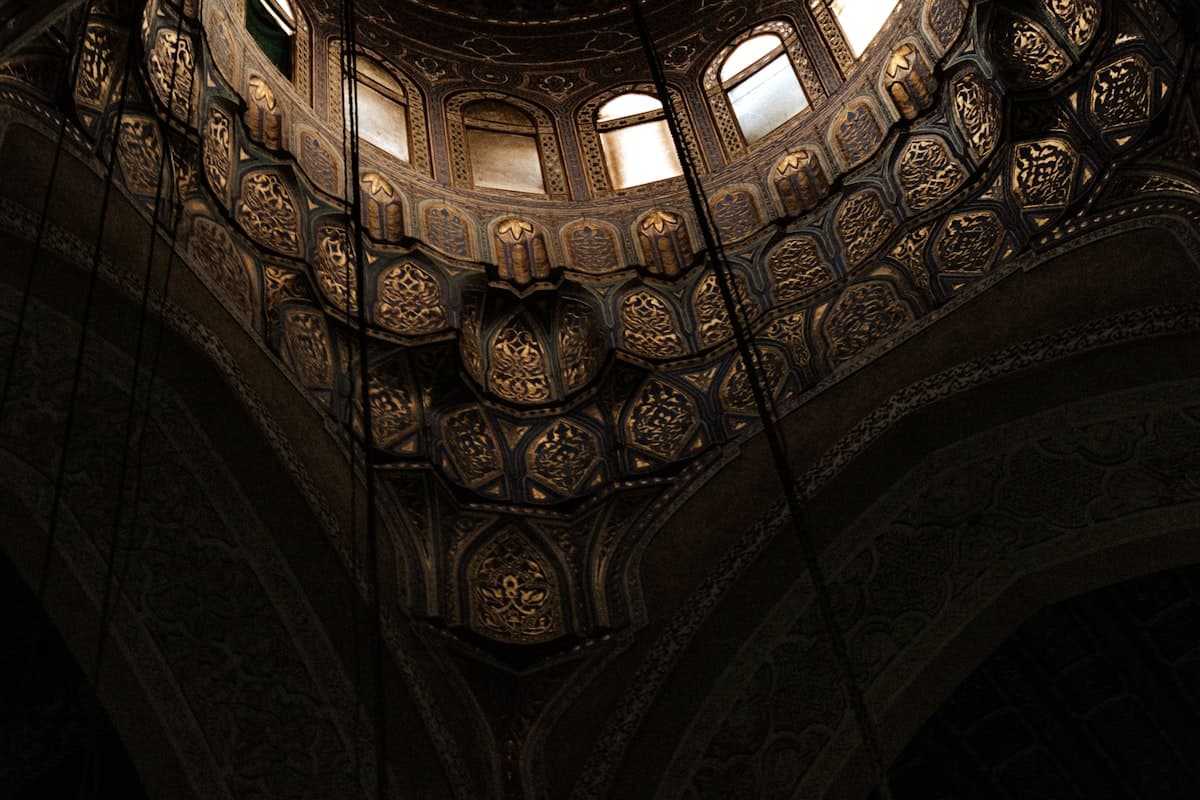
Napoleon arrived in Egypt in July 1798 with 400 ships, 54,000 men, and 167 scientists, mathematicians, naturalists, and artists he called the Commission des Sciences et Arts. He lost the campaign in three years. The scientists changed the world in a generation.
The Description de l'Égypte, the 23-volume encyclopedia his scholars produced, contained 837 copperplate engravings and effectively invented Egyptology as a discipline. Every Western archaeologist who followed, including Howard Carter and Auguste Mariette, worked in a framework that Commission member Vivant Denon built from scratch between 1798 and 1801. That is the strange paradox at the center of this story: France lost the war and won the intellectual century.
But the Egyptian side of this campaign is almost never told in the sites. The Mamluks, who had ruled Egypt as an Ottoman semi-autonomous power for centuries before the French arrived, were not simply swept aside. Their cavalry at the Battle of the Pyramids in July 1798 reportedly carried their entire personal wealth in gold sewn into their saddles. When they broke and fled, some drowned in the Nile trying to swim their horses to the far bank, and the gold dragged them under. Divers were reportedly pulling Mamluk coins from the riverbed near Embaba as late as the nineteenth century.
Napoleon called this the land where glory is multiplied. He was thinking about Alexander. He should have been thinking about the Nile Delta in August.
---
Cairo: Where the Occupation Left Its Deepest Marks
The French used the Cairo Citadel as their headquarters, a choice that tells you something about how they saw themselves. Saladin built the Citadel in 1176 on a spur of the Muqattam Hills, specifically because the site channeled winds that kept it cooler than the city below. The French recognized a defensible position when they saw one.
What most visitors do not know: the Citadel they walk through today is not primarily Saladin's Citadel or even the French Citadel. It is Muhammad Ali's Citadel. Muhammad Ali Pasha, an Albanian Ottoman commander who rose to power precisely in the vacuum created by the French departure in 1801, demolished most of the Mamluk and medieval structures inside the Citadel walls between 1811 and 1848 and rebuilt it as his personal seat of power. His Ottoman Baroque mosque, finished in 1848 and modeled on the Sultan Ahmed mosque in Istanbul, sits where the French garrison once camped.
The layer that survives from the French period in Cairo is mostly cartographic and institutional rather than architectural. Institut d'Égypte, the research body Napoleon founded in Cairo in August 1798, occupied a confiscated Mamluk palace near what is now Qasr al-Aini Street. The original building burned during the 2011 revolution, and roughly 200,000 books and manuscripts were lost. A rebuilt Institut reopened in 2017, but the collection cannot be replaced. Walking the neighborhood around the Qasr al-Aini hospital today, you are moving through successive wreckages: French occupation, Muhammad Ali's reconstruction, Khedival urbanization, twentieth-century neglect, and the specific violence of January 2011.
The Al-Azhar Mosque, which the French initially closed and then strategically reopened when they realized shutting down the city's intellectual center was making governance impossible, is seven minutes' walk from the Institut site. Napoleon's general Kléber was assassinated near Al-Azhar in June 1800 by a Syrian student named Suleiman al-Halabi, who was then executed in a manner that Egyptian chronicler Abd al-Rahman al-Jabarti documented with meticulous, horrified precision. Al-Jabarti's chronicle, Aja'ib al-Athar, is the most important Egyptian account of the French occupation and is still in print in Arabic. Read it before you come.
---
Rashid: Where the Stone Was Found and Why the Story Is More Complicated Than You Think
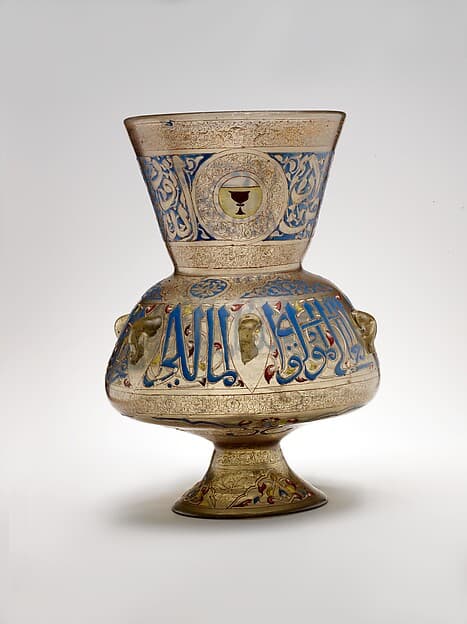
The Rosetta Stone was found in July 1799 by a French engineering officer named Pierre-François Bouchard at a site near Rashid, the port city the French called Rosette. Bouchard was overseeing the reinforcement of Fort Julien, a medieval fort the French had renamed, when his soldiers uncovered the stone incorporated into an old wall as building material.
Here is the part most accounts omit: the stone had already been reused at least once before Bouchard found it. The decree it records, issued by priests at Memphis in 196 BC in support of Ptolemy V, was carved when Rashid did not yet exist as a city. The stone was originally probably displayed at a temple in the Delta, then at some point removed, moved to Rashid, and used as fill in a wall, then found, shipped to Alexandria, captured by the British when they defeated the French in 1801, and shipped to London. It has been in the British Museum since 1802. Egypt has asked for its return repeatedly. The British Museum has declined repeatedly.
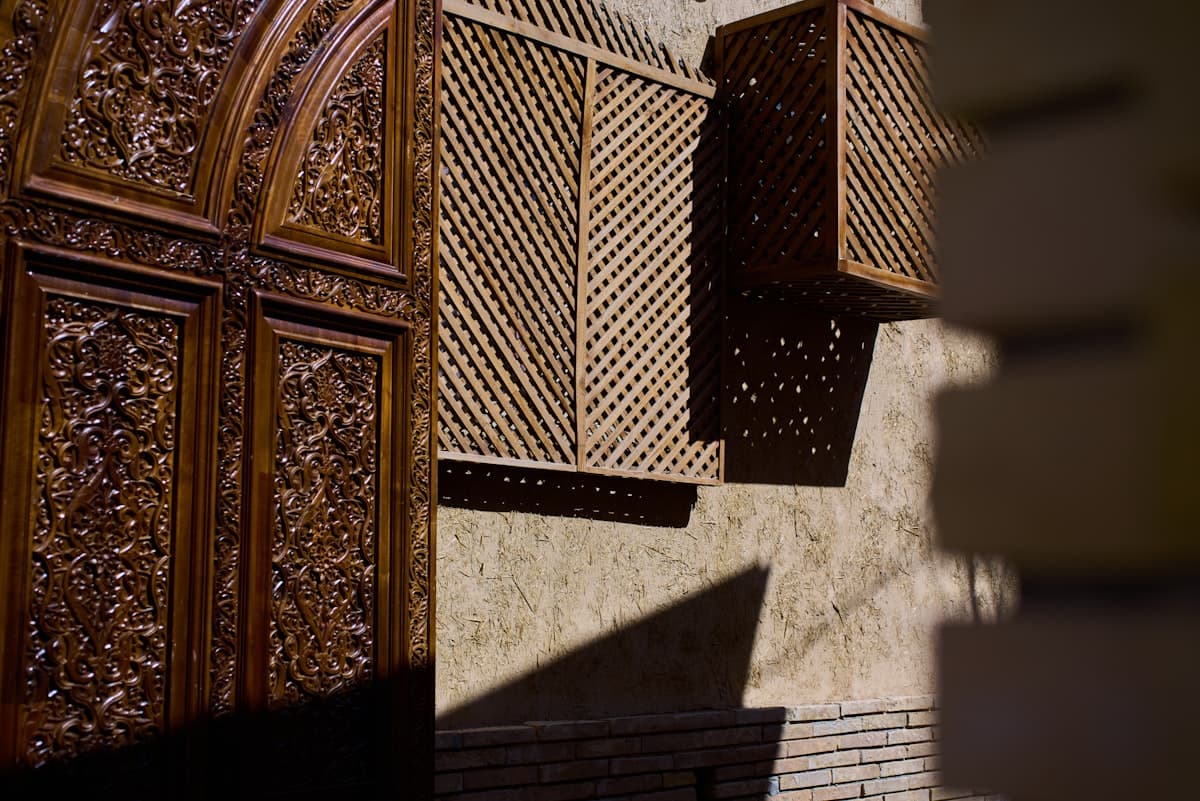
Fort Qaitbay in Rashid is what survives of the French-era Fort Julien site. The Mamluk fort was built in 1479, reconstructed by the Ottomans, reinforced by the French, and is now one of the better-preserved coastal forts in the Delta. Admission is EGP 100 and the crowds are almost nonexistent. The town of Rashid itself, a fifteen-minute walk from the fort, has seventeen Ottoman merchant houses with characteristic mushrabiya woodwork. Twelve are theoretically open to visitors. In practice, ask at the tourist office near the central square: a caretaker will unlock whichever ones are accessible that day for a tip of EGP 20 to 30.
The light in Rashid in the late afternoon is particular: Delta light is softer than Upper Egypt, filtered through humidity from the Mediterranean, and it hits the carved wooden screens of the Ottoman houses in a way that makes them glow amber from inside. This is a two-hour bus ride from Alexandria and almost no one goes. That is not a recommendation for the sake of emptiness. It is a recommendation because the site genuinely rewards the time.
---
Abukir: Where Napoleon Won on Land and Nelson Destroyed Him at Sea
Abukir is two battles compressed into one small coastal headland 25 kilometers east of Alexandria. In August 1798, just weeks after Napoleon's land victory at the Battle of the Pyramids, British Admiral Horatio Nelson found the French fleet anchored in Abukir Bay and attacked at dusk, a time when naval convention assumed no engagement would begin. In the Battle of the Nile, Nelson destroyed or captured eleven of thirteen French ships of the line. The flagship L'Orient, carrying the treasury of Malta and part of Napoleon's Egyptian campaign fund, exploded at approximately 10pm. The explosion was heard in Alexandria.
With his fleet gone, Napoleon was trapped. He won a second land battle at Abukir in July 1799 against an Ottoman force, which he used as propaganda to obscure the strategic disaster, but the strategic situation never recovered. He left Egypt secretly in August 1799, abandoning his army, and did not announce his departure to his own generals until he was already at sea.
Abukir today is a fishing village with a fish restaurant strip along the seafront and a small Ottoman fort on the headland. The fort is locked more often than not. The bay itself is the site of ongoing underwater archaeology: the French wrecks, including parts of L'Orient, have been partially excavated since the 1980s. Objects recovered from the site are in the Bibliotheca Alexandrina's antiquities museum, which has a small but serious Napoleonic-era display that most visitors skip in favor of the main library floors. Do not skip it.
The honest assessment of Abukir as a destination: the surface visit is thin. There is no interpretive center, the fort is usually closed, and the fish restaurants are the main draw for Alexandria day-trippers. But standing at the headland at dusk, looking out at the bay where L'Orient went down, knowing that the explosion scattered gold and bronze and the personal possessions of 1,000 men across the seabed where fishing boats now drag their nets, is one of those moments where Egypt refuses to be only ancient.
---
The Connections: What the Campaign Built After It Failed
Muhammad Ali Pasha understood something Napoleon did not: Egypt could not be governed from a European cultural framework imposed by force. Muhammad Ali modernized Egypt on his own terms, using French military advisers, French educational models, and French engineering expertise while remaining entirely outside French political control. The Cairo School of Medicine he founded in 1827 at the Qasr al-Aini hospital was staffed initially by French doctors but taught in Arabic, translated by an Egyptian scholar named Rifa'a al-Tahtawi, who had been sent to Paris to study and returned to build the intellectual bridge Muhammad Ali needed.
Al-Tahtawi is buried in Cairo. His translation school, the School of Languages he founded in 1835, eventually became Ain Shams University. The French campaign created the conditions for Muhammad Ali's Egypt, which created the conditions for Khedival Egypt, which created the conditions for the 1952 revolution. Nothing in this country exists without its previous incarnation underneath.
The Coptic connection is less obvious but present: when Napoleon arrived, he made specific public statements protecting Coptic Christians and their churches, partly as genuine policy and partly as a way of distinguishing himself from the Mamluks who had periodically imposed restrictions on Coptic worship. The Coptic Patriarch at the time, Anba Markos VIII, cautiously welcomed the French. The subsequent Ottoman and then Muhammad Ali period was more complicated for Copts. But the French period briefly opened a window that the Copts used to begin negotiating their political position in a changing Egypt. That negotiation is still ongoing.
---
Common Mistakes
Treating this as a single-site itinerary. The Napoleon Egypt campaign sites are spread across 220 kilometers from Cairo to the Delta coast. Anyone who tells you this is a day trip is selling you a very partial story. Budget three days minimum and accept that you are assembling a picture from fragments.
Visiting the Pyramids primarily as a Napoleon site. Yes, Napoleon's officers climbed them. Yes, he may or may not have said that forty centuries looked down upon his soldiers from their heights. But the Pyramids are not a French campaign site. They are a Pharaonic site that the French happened to fight near. The battlefield at Embaba is a residential neighborhood now. There is nothing to see there. Do not waste your Pyramids visit on Napoleonic context when the Pharaonic context is incomparably richer.
Paying for the sound and light show at the Cairo Citadel. It costs EGP 300, runs 45 minutes, and contains roughly the same information as the first three paragraphs of this article. Skip it without guilt.
Skipping the Bibliotheca Alexandrina antiquities museum. Almost everyone does. The underground Antiquities Museum within the Bibliotheca complex has a direct Napoleon-era display and the best collection of Greco-Roman Alexandria material outside the Greco-Roman Museum (currently under renovation). The admission is folded into the general library ticket. The crowds are a fraction of what you find at the Egyptian Museum in Cairo.
Expecting interpretive signage in English at the Delta sites. Rashid's Ottoman houses have minimal English explanation. Abukir has essentially none. Download the French Institute in Cairo's free PDF guide to Napoleonic sites in the Delta before you leave home. It is better than anything you will find on-site.
Going to Rashid without calling ahead. The Ottoman merchant houses are managed by a combination of local government and private families. Some require advance notice to open. The Rashid National Museum (EGP 50 entry) has reliable hours and is a useful orientation point.
Assuming this story is primarily French. The most important accounts of the French occupation were written in Arabic by Egyptians. Al-Jabarti's chronicle, available in English translation as Napoleon in Egypt: Al-Jabarti's Chronicle of the French Occupation, costs about EGP 400 at Diwan bookshop in Zamalek. Buy it. The French sources tell you what Napoleon thought he was doing. Al-Jabarti tells you what it felt like to be occupied.
---
Practical Tips
Book a private guide for at least the Cairo leg. The publicly available guides at the Citadel have no particular knowledge of the French occupation period and will default to their standard Ottoman and Islamic Cairo script. A specialist guide who works in Islamic Cairo and knows the French period costs EGP 800 to 1,200 for a half day and is worth every pound.
For the Alexandria and Delta leg, the best base is central Alexandria, specifically the Corniche area. Abukir and Rashid are both day trips. The microbus to Rashid from Moharam Bey station is the cheapest and most reliable option at EGP 15 to 20 each way. The journey takes 75 to 90 minutes depending on Delta traffic, which in the afternoon can be considerable.
Carry cash throughout. No sites on this itinerary accept cards reliably. ATMs in Rashid town exist but are sometimes out of service. Withdraw enough in Alexandria before you go.
The Delta in October and November is genuinely pleasant: cooler than Cairo, green from the irrigation, and running at a slower pace that suits the kind of walking and reading this itinerary requires. Avoid July and August entirely. The humidity in the Delta in summer is a physical presence.
If you read Arabic, the Egyptian National Library in Cairo holds digitized copies of al-Jabarti's original manuscripts and some French-era maps that have never been translated. Access requires a reader's card, which foreign researchers can obtain with a passport and a letter of introduction from a university or publication.
Frequently Asked Questions
The Weekly Dispatch
More on Egypt, every Friday.
Cultural depth and places most guides never mention.
No spam. Unsubscribe anytime.