Napoleon's Egypt: A Field Guide to the Campaign Sites
Napoleon brought 167 scientists to Egypt alongside his army. The soldiers mostly failed. The scientists rewrote what the world knew about civilisation. Here is where it all happened.
Quick Facts
- Best time to visit
- October to February. Most campaign sites involve outdoor terrain with no shade; summer temperatures make Abu Qir and the Rosetta fort genuinely punishing by mid-morning.
- Entrance fee
- Egyptian Museum EGP 400 (approx $8 USD); Citadel of Cairo EGP 450 (approx $9 USD); Rashid National Museum EGP 100 (approx $2 USD); Abu Qir waterfront free.
- Opening hours
- Egyptian Museum and Citadel daily 9am to 5pm. Arrive at Egyptian Museum by 8:45am to queue before crowds build. Rashid Museum roughly 9am to 4pm; confirm locally as hours vary seasonally.
- How to get there
- Cairo sites by Uber or Careem (EGP 60 to 100 from central Cairo to Citadel). Abu Qir by microbus from Sidi Gaber station in Alexandria (EGP 5 to 10) or taxi (EGP 150 to 200 return). Rosetta by private taxi from Alexandria (EGP 400 to 600 return); no reliable direct public transport.
- Time needed
- Two days in Cairo for the full Napoleonic circuit. One day from Alexandria for Abu Qir combined with lunch. One full day from Alexandria for Rosetta fort and museum. Minimum four days for the complete guide.
- Cost range
- Budget EGP 600 to 900 per day covering transport, entry fees, and street food. Mid-range EGP 1,800 to 2,500 per day with a private driver and restaurant meals. Add EGP 400 to 600 for the Rosetta private taxi day.
Quick Facts
Best time to visit: October to February. The battle sites outside Cairo involve long stretches of open desert and unshaded terrain. Summer heat makes them genuinely dangerous for slow walkers.
Entrance fees: Citadel of Cairo (includes Mosque of Muhammad Ali and several museums): EGP 450 adults, EGP 225 students (approx $9 / $4.50 USD) Egyptian Museum, Tahrir Square: EGP 400 adults (approx $8 USD); the Rosetta Stone cast exhibit inside costs no extra Abu Qir coastal site: free to walk, no formal entrance infrastructure Institut d'Égypte (Cairo): free exterior, interior access limited and by appointment Rashid (Rosetta) city and the Rashid National Museum: EGP 100 adults (approx $2 USD)
Opening hours: Most Cairo sites open daily 9am to 5pm. The Egyptian Museum opens at 9am and becomes unbearable by 11am; arrive at 8:45am and queue at the gate.
How to get there: Cairo sites: Uber or Careem from central Cairo to the Citadel costs EGP 60 to 100. The Egyptian Museum is walkable from Tahrir Square. Abu Qir (Battle of the Nile site): 25km east of Alexandria. Microbus from Sidi Gaber station in Alexandria costs EGP 5 to 10. Taxi costs EGP 150 to 200 return. Rashid / Rosetta: 65km east of Alexandria. Private taxi from Alexandria costs EGP 400 to 600 return. No reliable direct public transport.
Time needed: Cairo's Napoleonic circuit (Egyptian Museum, Institut d'Égypte exterior, Citadel neighbourhood) takes a full day. Abu Qir and Rosetta together require a separate day based out of Alexandria.
Cost range: Budget EGP 600 to 900 per day covering transport, entry, and street food. Mid-range EGP 1,800 to 2,500 per day with a private driver and sit-down meals.
---
Why This Place Matters
Napoleon's Egyptian campaign lasted three years and three months, from 1798 to 1801. It failed almost completely as a military operation. The French were defeated at Acre, trapped by the British navy after the Battle of the Nile, and eventually surrendered to a combined Ottoman-British force. Napoleon himself slipped away secretly in August 1799, leaving his army behind.
None of that is why the campaign matters.
He brought 167 scholars, scientists, artists, and engineers with him, a group called the Commission des Sciences et Arts. They measured every temple, copied every inscription, dissected every crocodile, and mapped the entire country with a precision it had never had before. Their findings were published over twenty years in the Description de l'Égypte, a twenty-three volume work that effectively invented Egyptology as a discipline and triggered a Europe-wide obsession with ancient Egypt that reshaped art, architecture, fashion, and furniture design for the next fifty years.
The soldiers fought. The scientists changed history.
For travellers following the Napoleon Egypt campaign sites guide, the point is not to chase battlefield markers. Most of the battles happened in open terrain with no standing monuments. The point is to understand how a short, failed foreign occupation produced one of the longest cultural aftershocks in recorded history, and to see the physical places where that happened: the Institut d'Égypte where the scholars worked, the coastal waters where Nelson destroyed the French fleet, the city of Rosetta where a conscripted French engineering officer found a stone that unlocked all of ancient Egypt's writing.
And underneath all of it, to understand what Egypt itself was in 1798: not a pharaonic ruin but a living Ottoman province, governed by competing Mamluk factions, with a population that regarded these pale European soldiers as baffling, occasionally useful, and ultimately unwelcome.
---
Cairo: The Institut d'Égypte and the City Napoleon Found
When Napoleon entered Cairo in July 1798, he found a city of roughly 300,000 people, one of the largest in Africa and the Middle East, organised around a medieval Islamic street grid that had not changed substantially since the Fatimid caliphate laid it out in the tenth century. He based himself at Azbakiyya, then a wealthy lakeside quarter in the north of the city. The lake has since been filled in. The neighbourhood is now a mid-century commercial district you pass through without noticing.
He founded the Institut d'Égypte in August 1798, modelled on the Institut de France, and housed it in a confiscated Mamluk palace near what is now Tahrir Square. The original building partially survived until 2011, when it was set on fire during the revolution. A reconstruction is ongoing. The iron gates and outer walls are visible from the street on Sheikh Rihan Street, and the intellectual legacy of what happened inside is present throughout the Egyptian Museum 600 metres away.
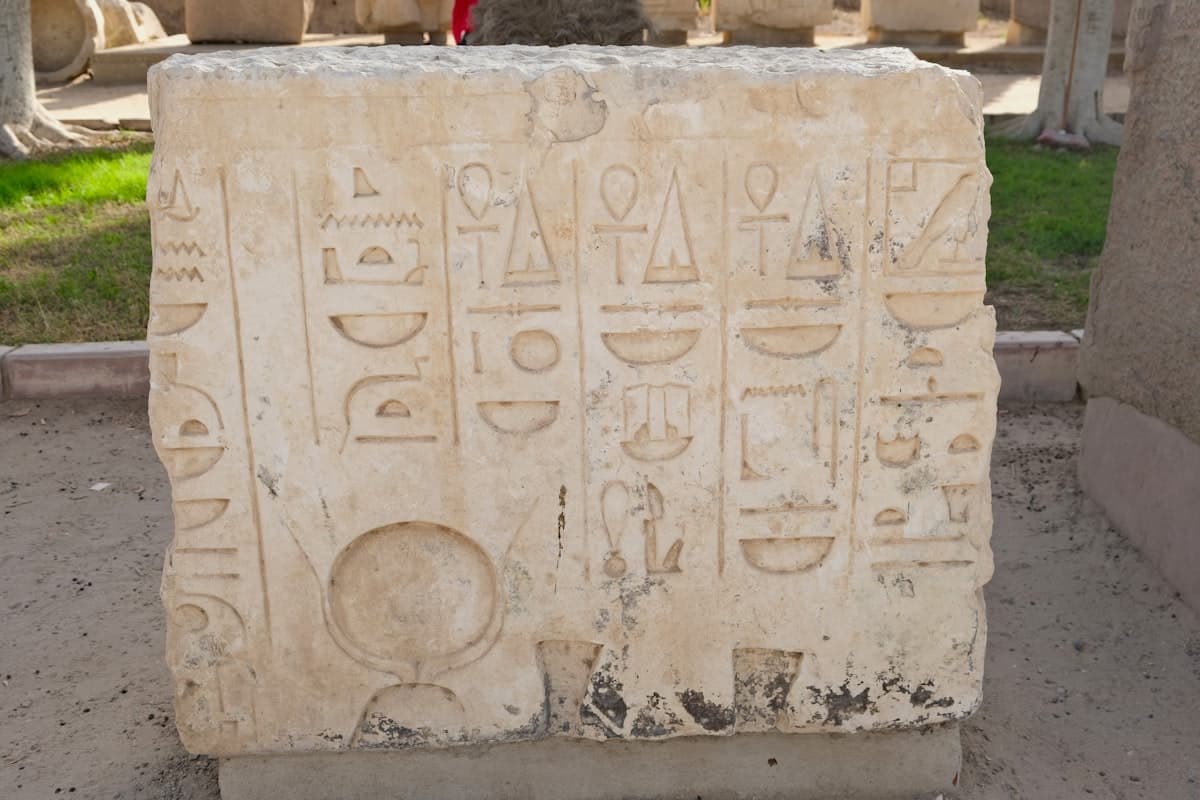
The Egyptian Museum holds one object whose presence there is a direct result of the campaign: a cast of the Rosetta Stone. The original was captured by the British after the French surrender and has been in the British Museum since 1802. The cast in Cairo is rarely visited because most tourists walk past it without realising what they are looking at. The Rosetta Stone was not found by an archaeologist. It was found in July 1799 by a French military officer named Pierre-François Bouchard during the construction of a fort near the town of Rosetta. He recognised that it bore the same text in three scripts and sent it to Cairo. The scholars there understood immediately that it was the key to deciphering hieroglyphics. They made copies. Champollion cracked the code twenty-three years later using those copies.
The museum's ground floor also contains several objects documented in the Description de l'Égypte before they were excavated or moved, which means the French illustrations are sometimes the only record of what these objects looked like before nineteenth-century handling damaged them.
What to skip in Cairo
The so-called "Napoleon's house" in Azbakiyya that some guides mention does not exist as a visitable site. The building is gone. Any guide who offers to take you there is taking you to a neighbourhood, not a monument. Save the hour and walk through the Fatimid city instead, which Napoleon's scholars mapped in extraordinary detail and which is largely intact.
---
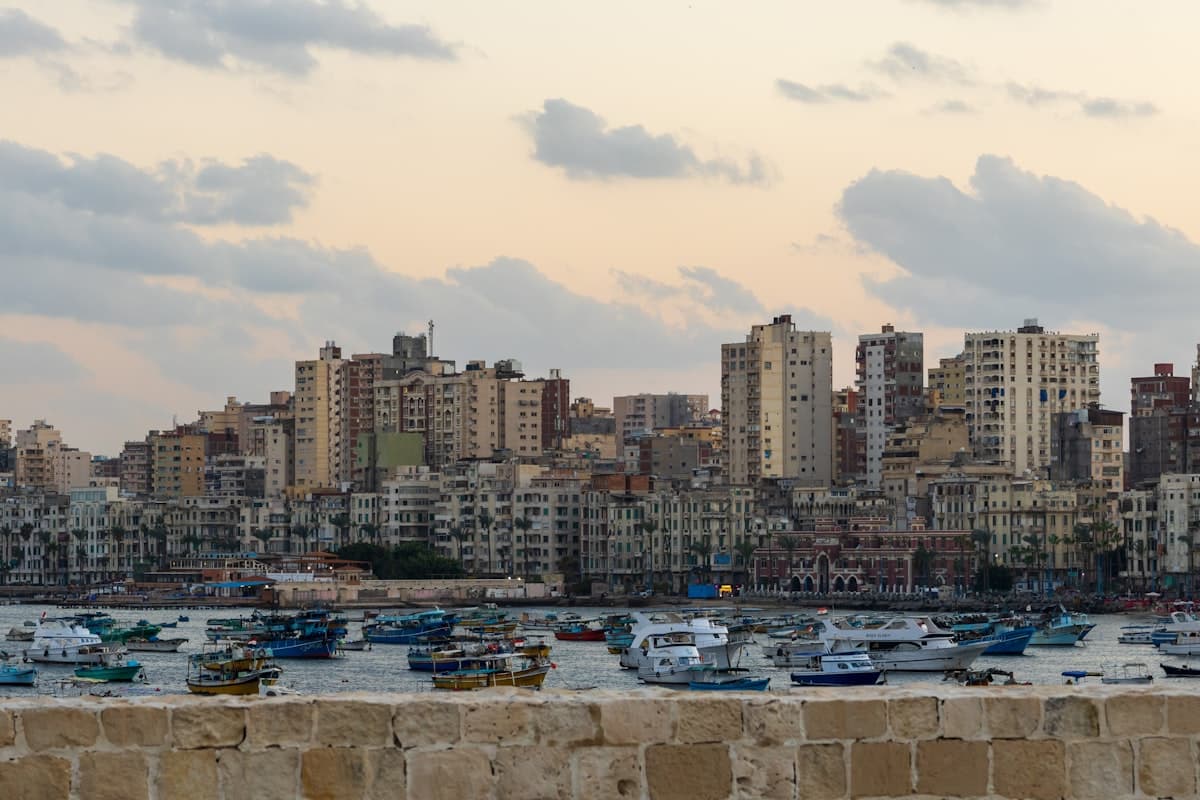
Alexandria and the Battle of the Nile at Abu Qir
On August 1, 1798, Admiral Horatio Nelson found the French fleet anchored in Abu Qir Bay, 25 kilometres east of Alexandria. The French admiral had made a critical error: he had anchored his ships close enough to shore that Nelson gambled on sailing between the fleet and the sandbanks, attacking from both sides simultaneously. The gamble worked. By the following morning, eleven of thirteen French ships of the line had been captured or destroyed. The French flagship L'Orient, carrying the treasures looted from Malta, exploded in an explosion heard in Alexandria. Napoleon's army was now stranded in Egypt with no naval support.
The bay today is a working fishing and resort town. There is no formal memorial on the waterline. Local fishermen will tell you the seabed still has wreckage if you ask in Arabic and mean it. The actual site of the battle is offshore, and in 1998 the French marine archaeologist Franck Goddio located and partially excavated the wreck of L'Orient, finding bronze cannon, gold coins, and personal objects of sailors still in the mud.
Abu Qir is worth visiting precisely because it asks nothing of you. There are no ticket booths. You stand at the edge of the Mediterranean and do the arithmetic: this is where Egypt's fate as a French colony ended before it properly began. The seafood restaurants along the waterfront are among the best in the Alexandria region. The fried calamari at the open-air restaurants near the old fort costs EGP 80 to 150 per person. This is not a footnote. Eating lunch where Nelson ended Napoleon's Egyptian ambitions is the entire point.
---
Rosetta: The City That Named a Stone
The city of Rashid, which Europeans called Rosetta, is 65 kilometres east of Alexandria and almost nobody goes there. This is a mistake, though a forgivable one given the transport difficulty.
Rashid in 1799 was a prosperous Ottoman port city, one of the main export points for Egyptian rice and linen. The French had garrisoned it lightly. Fort Julien, where Bouchard found the stone, sits outside the city and is maintained as a minor national monument. The stone itself is a granite stele, 114 centimetres tall and 72 centimetres wide, and it was carrying a priestly decree from 196 BC, during the reign of Ptolemy V, written in hieroglyphic, Demotic, and Greek. The fact that the same text appeared in all three scripts made the comparison possible. The fact that Greek was already understood made it eventually solvable.
The Rashid National Museum, housed in an Ottoman merchant's house in the city centre, tells this story well and without crowds. Entry costs EGP 100. The Ottoman domestic architecture of the house, with its mashrabiyya wooden screens and high-ceilinged qa'a reception rooms, is itself worth the journey. Rashid has more intact Ottoman-era townhouses than almost anywhere else in Egypt, because the city declined economically after Alexandria superseded it in the nineteenth century and nobody could afford to tear them down and build new ones.
Decay as preservation. This is a pattern Egypt repeats across every era.
---
The Connections
Napoleon's campaign does not sit outside Egyptian history. It accelerated it.
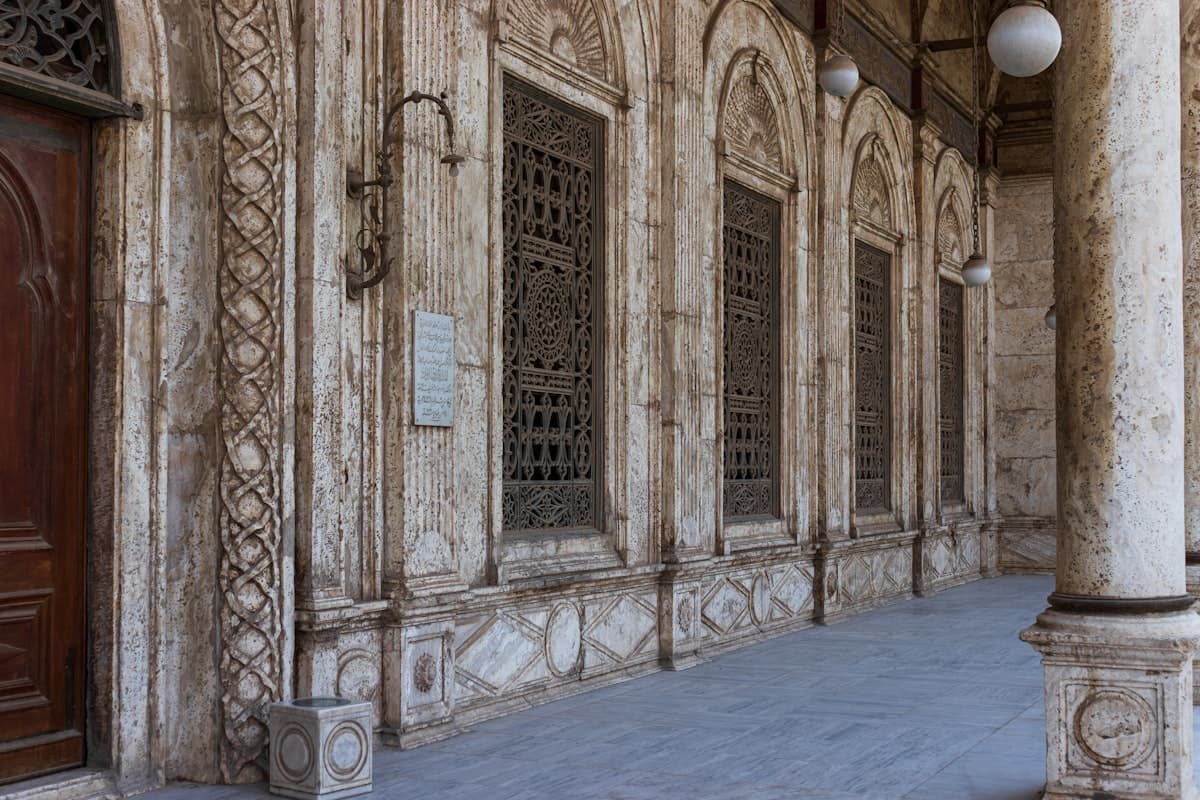
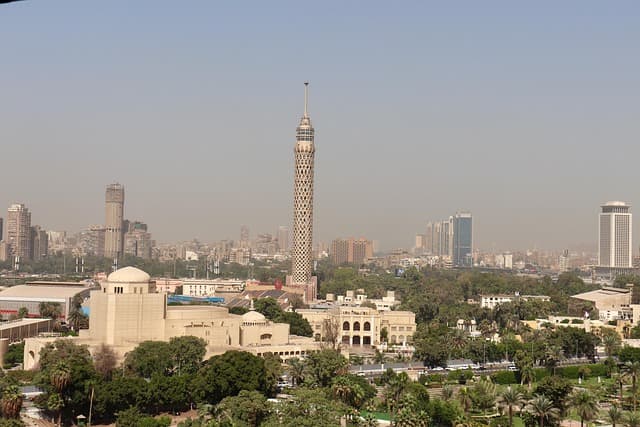
Muhammad Ali, the Albanian-born Ottoman commander who eventually seized power in Egypt in 1805 and founded the dynasty that ruled until 1952, rose to prominence partly because the chaos created by the French invasion weakened the Mamluk factions that had controlled Egypt for five centuries. Muhammad Ali massacred the remaining Mamluk leaders in 1811 in the Citadel of Cairo, in the courtyard you walk through today to reach the mosque that bears his name. The mosque is a nineteenth-century Ottoman Baroque structure that looks nothing like classical Islamic architecture and is frequently dismissed by architecture purists. They are not wrong, but the view of Cairo from its terrace, across a skyline whose layers include Pharaonic, Coptic, Fatimid, Mamluk, Ottoman, colonial, and Soviet-era buildings simultaneously, is one of the more clarifying experiences available in this city.
The Description de l'Égypte's detailed documentation of Pharaonic monuments also triggered the era of European looting that stripped many sites of their best portable objects. The obelisk in the Place de la Concorde in Paris, the Luxor obelisk given by Muhammad Ali to France in 1833, arrived partly because French interest in Egyptian antiquities was intense enough that Muhammad Ali found it politically useful to cultivate. The gift was the result of the campaign's scholarly aftermath, a transaction that began in the mud of Abu Qir Bay on the night of August 1, 1798.
---
Common Mistakes
Treating this as a battlefield tour. The actual battle sites of the Pyramids, Shubra Khit, and Abu Qir have almost no on-site interpretation. If you go expecting Gettysburg-style monuments, you will be confused and disappointed. The campaign's physical legacy is intellectual, not martial.
Paying for the Cairo sound and light show at the Pyramids. Multiple tour operators market this as a Napoleonic experience because Napoleon visited the Pyramids. He visited them for one afternoon. He almost certainly did not say the thing he is famously quoted as saying about forty centuries looking down on his soldiers. The show costs EGP 350, runs 45 minutes, and tells you nothing about the campaign or the Pyramids that reading this article will not. Skip it without guilt.
Missing the Rashid Museum to save time. Almost every Egypt itinerary skips Rosetta. This is understandable given the transport logistics and inexcusable given that it is one of the few places in Egypt where you can stand in the physical location where a specific, consequential discovery was made, surrounded by architecture that looks almost exactly as it did in 1799. Budget a full day from Alexandria.
Conflating the Description de l'Égypte with what you see in the Egyptian Museum. The Museum contains objects the French documented but did not remove (mainly because the British arrived before they could). It does not contain objects from the Description as a coherent collection. Ask a guide to show you the Rosetta Stone cast specifically. Most will not volunteer it.
Going to Abu Qir without eating. The bay has no formal tourist infrastructure but very good seafood. The absence of an organised visit structure is the point. Combine the historical stop with lunch and an hour at the waterline.
Ignoring what Egypt's own historians say about the period. Egyptian historiography of the campaign is substantially different from the French version. The Egyptian chronicler Abd al-Rahman al-Jabarti wrote a detailed Arabic account, Aja'ib al-Athar, that describes the French as disruptive, occasionally impressive in their technology, ritually impure, and ultimately irrelevant to Egyptian daily life. His account is available in English translation and changes everything about how you read the sites.
Spending money on a dedicated Napoleon tour package. Several Cairo operators offer Napoleon-themed tours at a premium. They visit the same sites listed here, with a guide who has usually read the same three English-language books on the campaign. The sites are publicly accessible. Use the money for a private driver to Rosetta instead.
---
Practical Tips
For the Cairo portion of this Napoleon Egypt campaign sites guide, two days is the minimum that does the subject justice. Spend the first at the Egyptian Museum and the Institut d'Égypte neighbourhood. Spend the second in the Citadel area and the Fatimid city, walking the streets the French cartographers measured and which the Description de l'Égypte preserves in extraordinary eighteenth-century detail.
For Alexandria and the delta sites, base yourself in Alexandria for two nights. The city has good mid-range hotels in the Corniche area for EGP 1,200 to 2,000 per night. Day one to Abu Qir by microbus, afternoon at the seafront. Day two by private taxi to Rosetta, with the fort and the museum.
Bring water to all outdoor sites. The delta in winter is mild but the sites have no shade. In summer, Abu Qir and the fort at Rosetta are brutal by 10am.
Al-Jabarti's chronicle is the single best companion text for this journey. The historian Khaled Fahmy's work on the period, particularly his book on Napoleon in Egypt, is the clearest modern account in English and is available as a paperback.
Do not attempt to do the Cairo sites and the Alexandria sites on the same day. It is 220 kilometres and the drive through the delta is not scenic. The time is better spent slowly.
Frequently Asked Questions
The Weekly Dispatch
More on Egypt, every Friday.
Cultural depth and places most guides never mention.
No spam. Unsubscribe anytime.