Napoleon's Egypt Campaign Sites: The Complete Field Guide
Napoleon arrived in Egypt in 1798 with 167 scientists and lost his fleet within days. The sites where his campaign unravelled are still there. Most tourists never find them.

Quick Facts
- Best time to visit
- October to February. Alexandria and the Delta sites are manageable year-round but summer heat above 35C makes the circuit uncomfortable. November light in Alexandria is particularly good for photography.
- Entrance fee
- Cairo Citadel: EGP 450 (approx $9 USD), students EGP 225. Rosetta Fort Julien: EGP 100 (approx $2 USD). Alexandria Qaitbay Citadel: EGP 100 (approx $2 USD). Aboukir bay area: no formal fee.
- Opening hours
- Most sites daily 8am to 5pm (winter), 8am to 6pm (summer). Cairo Citadel closes to casual visitors during Friday midday prayers, approximately 11:30am to 1:30pm.
- How to get there
- Cairo Citadel: Uber or Careem from downtown Cairo EGP 60 to 100. Alexandria: train from Cairo Ramses station EGP 90 to 180, 2.5 hours. Rosetta from Alexandria: microbus EGP 25, 90 minutes. Aboukir from Alexandria: local bus EGP 10, 45 minutes, or taxi EGP 150 return.
- Time needed
- Cairo Citadel alone: 3 hours minimum. Full Napoleon circuit (Cairo, Alexandria, Aboukir, Rosetta): 3 days with one overnight in Alexandria.
- Cost range
- Budget EGP 800 to 1,200 per day covering transport, entry fees, and food. Mid-range with private driver for the Delta loop EGP 2,000 to 3,500 per day.
Napoleon brought 167 scientists to Egypt and lost his entire fleet in a single night. The Battle of the Nile, fought on August 1, 1798 in Aboukir Bay, saw Admiral Horatio Nelson destroy eleven of thirteen French ships of the line while the French soldiers were already ashore, stranded in a country they couldn't leave. That detail rewrites everything you thought you knew about the Egyptian campaign. It wasn't a conquest. It was a three-year occupation by an army that had no way home.
The sites where this campaign played out are among the most historically layered in Egypt, and among the least visited by anyone following a standard itinerary. Cairo, Alexandria, Rosetta, Aboukir: each holds a piece of a story that shaped modern Egyptology, modern Arab nationalism, and the career of a general who would become emperor. This Napoleon Egypt campaign sites guide takes you to all of them, in the order they make sense geographically and narratively.
Quick Facts
Best time to visit: October to February. The northern Delta and Alexandria sites are bearable year-round, but Cairo battle sites and the citadel quarter bake in summer. The light in Alexandria in November is extraordinary: flat, grey, Mediterranean, nothing like Upper Egypt.
Entrance fees: Cairo Citadel complex (includes several sites): EGP 450 (approx $9 USD), students EGP 225 Rosetta (Rashid) Fort Qaitbay: EGP 100 (approx $2 USD) Aboukir area (no formal entrance fee for the bay itself; local guides negotiate separately) Alexandria Qaitbay Citadel: EGP 100 (approx $2 USD)
Opening hours: Most sites open daily 8am to 5pm in winter, 8am to 6pm in summer. The Cairo Citadel closes to casual visitors during Friday prayers (roughly 11:30am to 1:30pm).
How to get there: Cairo sites: Uber or Careem from downtown Cairo to the Citadel runs EGP 60 to 100. Avoid the tourist minibuses. Alexandria: Express train from Cairo Ramses station, EGP 90 to 180 depending on class, 2.5 hours. Rosetta: Microbus from Alexandria's Mou'af al-Gedid (new garage) takes 90 minutes, costs EGP 25. Aboukir: Local bus from Alexandria's Raml station, EGP 10, 45 minutes. Taxis negotiate around EGP 150 return.
Time needed: Cairo Napoleon sites alone, half a day minimum. Alexandria plus Aboukir plus Rosetta, two full days. The full circuit with overnight in Alexandria, three days.
Cost range: Budget EGP 800 to 1,200 per day covering transport, entry, food. Mid-range EGP 2,000 to 3,500 with a private driver for the Delta loop.
Why This Place Matters
The French arrived on July 1, 1798, and within three weeks Napoleon had defeated the Mamluk cavalry at the Battle of the Pyramids, fought not near the Pyramids at all but at the village of Embaba, several kilometers away. He chose that name for the dispatch because it sounded better in Paris. The Mamluks lost twelve thousand men. The French lost approximately twenty-nine.
What followed was more complicated. Napoleon established the Institut d'Egypte in Cairo, housing 167 scholars, scientists, and artists who would eventually produce the twenty-three-volume Description de l'Egypte, the founding document of modern Egyptology. The building they worked in, near the current Tahrir area, no longer stands, but the intellectual project it housed changed how the entire world understood ancient civilizations. The Rosetta Stone, found by French soldiers in July 1799 while reinforcing a fort at Rosetta, was seized by the British under the terms of the Capitulation of Alexandria in 1801 and has sat in the British Museum ever since. Egypt has formally requested its return every decade since independence. The answer has always been no.
The campaign also introduced Arabic-language printing to Egypt for the first time. Napoleon brought a press with Arabic type from Rome specifically to print proclamations. Egyptians used it to print the Quran after the French left. That press is now considered the ancestor of the Egyptian publishing industry.
Cairo: The Citadel and the Battle of Embaba
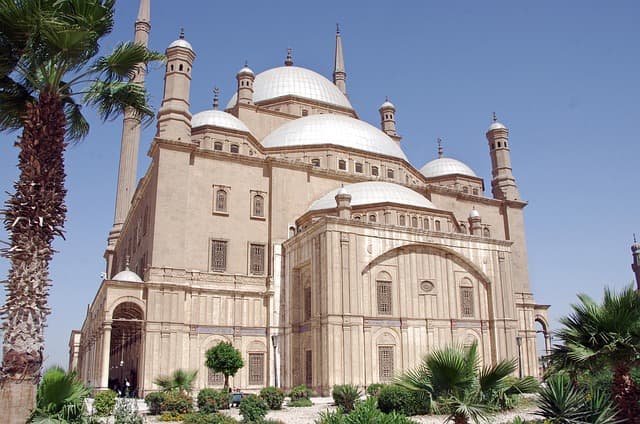
The Cairo Citadel that Napoleon occupied had been the seat of Egyptian power since Saladin began building it in 1176 on a spur of the Muqattam Hills. By the time the French arrived, it was Mamluk territory, a fortress city within a city. Napoleon used it as his military headquarters. He also used the mosque of Muhammad al-Nasir, a fourteenth-century Mamluk structure inside the citadel walls that remains one of the finest buildings in Cairo, as a stable. Egyptian historians do not let this go, and they shouldn't.
The mosque's tiling is Andalusian, brought from Spain by craftsmen who fled the Reconquista. Its minaret is encrusted with faience decoration that has no parallel in Cairo. It was built between 1318 and 1335, survived the Ottoman conquest of 1517, survived Napoleon, survived the Khedival modernization projects that demolished most medieval Cairo, and it is open to visitors most mornings for EGP 0 if you are already inside the Citadel complex.
The actual battlefield of Embaba is now a neighborhood of apartment blocks across the Nile from Zamalek. There is no marker. Local residents know vaguely that something happened there once. The French victory here effectively ended six centuries of Mamluk military dominance, though the Mamluks continued to exist as a political and social force until Muhammad Ali had sixty-four of their leaders massacred at the Citadel in 1811, in the event known as the Massacre of the Citadel. He locked them in, and shot them. The walls where this happened are visible from the main courtyard.
What to See at the Citadel
Go first to the Muhammad Ali Mosque, the Ottoman-style dome that dominates the Cairo skyline and was built between 1830 and 1848. It is intentionally modeled on Istanbul's Sultan Ahmed Mosque, which tells you something about Muhammad Ali's ambitions. Then walk to the military museum in the Harim Palace, which contains a room dedicated to the French campaign that most visitors skip entirely. It has maps, engravings from the Description de l'Egypte, and a timeline that explains, in Arabic and English, exactly how the campaign ended. Read it. It reframes everything.
Alexandria and Aboukir: Where the Fleet Died
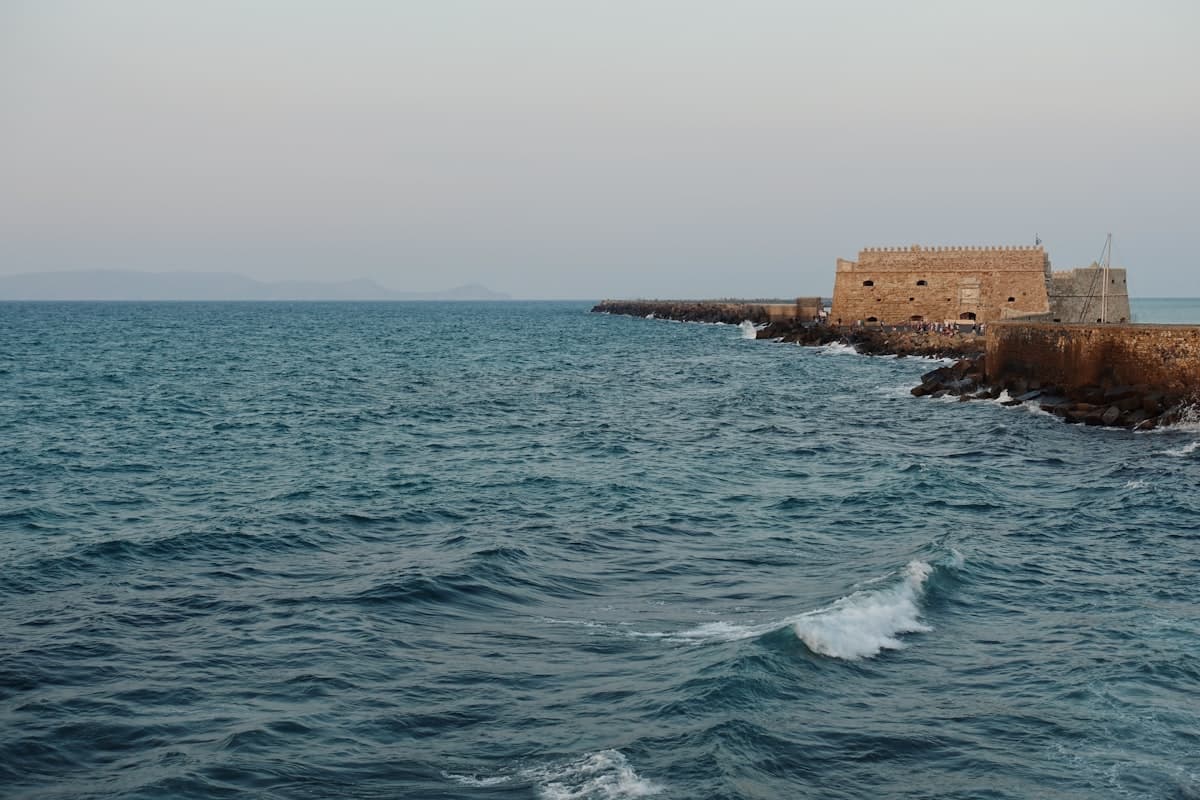
Aboukir Bay sits eighteen kilometers east of Alexandria. On the night of August 1, 1798, Nelson attacked the French fleet at anchor, approaching from the shallower inshore side that the French admiral had assumed was impassable. It wasn't. The French flagship L'Orient, carrying much of the treasure looted from Malta, exploded at around 10pm. The explosion was heard in Alexandria. Nelson himself was wounded in the head during the battle and spent the night below decks. When the sun rose on August 2, the French army in Egypt had no naval support, no resupply line, and no exit.
The bay today is a small resort town. There are fish restaurants along the waterfront that serve the best grilled mullet in Egypt, EGP 150 to 250 per kilo. The water is shallow and warm. On certain days when the visibility is good and you are eating lunch and staring out toward where L'Orient went down, the gap between 1798 and now closes in a way that is hard to explain without sounding overwrought.
Alexandria's Qaitbay Citadel, built in 1477 on the foundations of the ancient Lighthouse of Alexandria, was one of the sites the French fortified during their occupation. The lighthouse had already been gone for centuries, destroyed by earthquakes in the fourteenth century, but its stone blocks were incorporated into the citadel's walls. The French military engineers made detailed surveys of the fortifications that survive in the Description de l'Egypte. You can read those engravings and look at the same walls. Very little has changed.
Rosetta: The Stone's Origin
The town of Rosetta, called Rashid in Arabic, is not on most tourist itineraries, and this is a mistake made by everyone who plans a Napoleon Egypt campaign sites guide without actually going there. The fort where French soldiers found the Rosetta Stone on July 19, 1799 is Fort Julien, named by the French after a soldier who died there. The Egyptians call it Qaitbay Fort of Rosetta, distinguishing it from the one in Alexandria. It sits on the Nile bank a short walk from the town center.
The stone itself was a decree issued by priests in 196 BC affirming the divine status of Ptolemy V, written in ancient Egyptian hieroglyphics, Demotic script, and Greek. The French lieutenant Pierre-Francois Bouchard recognized immediately that the triple inscription might be a key to deciphering hieroglyphics. He was right. Thomas Young in England and Jean-Francois Champollion in France spent the next two decades racing to crack it. Champollion succeeded in 1822. The fact that the stone now sits in London rather than Cairo, or at minimum Rosetta, is not an archaeological technicality. It is a political choice that continues to be made every year.
The town of Rosetta itself is worth the trip independent of the Napoleonic connection. It contains twenty-two Ottoman merchant houses from the seventeenth and eighteenth centuries, most of them built from the distinctive red and black brick pattern of the Delta, and most of them either poorly signposted or locked. The Ramadan House and the Arab Killy House are accessible through the local antiquities office. Ask at the fort.
The Connections
The French campaign did not happen in an Egyptian vacuum. The Mamluks Napoleon defeated had ruled Egypt as an Ottoman province since 1517, though they exercised real power independently of Istanbul. The man who replaced them, Muhammad Ali, an Albanian Ottoman officer who arrived in Egypt as part of the force sent to reclaim it from the French, learned from the French campaign's administrative methods and used French advisors extensively in building the modern Egyptian state after 1805. He sent Egyptian students to Paris beginning in 1826. One of them, Rifaa al-Tahtawi, returned having read Montesquieu and Rousseau, translated French political thought into Arabic, and is now considered the father of Egyptian liberal nationalism. The French occupation lasted three years. Its intellectual consequences lasted two centuries and are still in motion.
The Institut d'Egypte, the scientific body Napoleon founded in Cairo, was reestablished by Egyptian decree in 1859 and still exists. Its library, which contained irreplaceable manuscripts from the Napoleonic period, was partially destroyed by fire during the 2011 revolution when a petrol bomb hit the building. Scholars managed to save approximately forty percent of the collection.
Common Mistakes
Skipping Rosetta entirely. Every Napoleon Egypt campaign site guide that focuses only on Cairo and Alexandria is telling half a story. Rosetta is where the most consequential find of the entire campaign was made, and the town is genuinely lovely and almost entirely without other tourists.
Visiting the Cairo Citadel without going inside the Muhammad Ali Mosque. The exterior photographs well. The interior is where you understand why the Ottomans dominated Islamic architecture for four hundred years. Covered shoes or socks are required; a pair of disposable socks is sold at the door for EGP 5.
Taking an organized Napoleon tour from a hotel. The tours that market themselves using terms like this napoleon egypt campaign sites guide exist and cost EGP 1,500 to 2,500 per person. They visit the Pyramids (where the battle was not fought), the Citadel (which they rush through), and sometimes Alexandria. They do not go to Aboukir or Rosetta. Hire a private driver for the Alexandria leg for EGP 800 to 1,000 for the full day and go where you actually want to go.
The sound and light show at the Pyramids. It costs EGP 350, runs in English on certain nights, and contains approximately zero information about the French campaign despite mentioning Napoleon briefly. Skip it. The Description de l'Egypte's engravings, available as a facsimile reprint for EGP 200 at the Egyptian Museum gift shop, tell you more in an hour than the show tells you in its entire runtime.
Expecting the Embaba battlefield to be marked. It is not. Go to the citadel instead and read the military museum display. This is the more honest experience.
Arriving at Aboukir without arranging lunch. The fish restaurants on the waterfront fill up by 1pm on Fridays. If you are arriving from Alexandria in the morning, call ahead (your hotel in Alexandria can help) or arrive before noon.
Treating the Rosetta Stone as simply a London problem. Understanding why it isn't in Egypt requires knowing the terms of the 1801 Capitulation of Alexandria, under which the French surrendered the stone to the British. The French themselves had it listed as French national property. Egyptian legal scholars argue this makes it doubly stolen. Reading this debate before you visit any of these sites changes what you see.
Practical Tips
The best base for the entire circuit is Alexandria, not Cairo. Cairo is easier to reach, but Alexandria puts you equidistant from Aboukir (forty minutes east) and Rosetta (ninety minutes west), and the city itself is saturated with French-period architecture along the Corniche that most visitors don't recognize as such. The Cecil Hotel on the Corniche, where the French military staff stayed during the occupation, is now operated under a different brand but the building is original.
For the Cairo section, two mornings is the minimum: one for the Citadel, one for the Egyptian Museum's collection from the Description de l'Egypte period, which includes the original Zodiac of Dendera before the French cut it from the ceiling of the Dendera temple in 1820 and shipped it to Paris. The copy now at Dendera is a cast. The original is in the Louvre. This is a pattern.
Dress conservatively for all mosque and citadel visits. Women should carry a scarf. The Citadel requires removing shoes in the mosque interiors; a bag for your shoes is useful. Water in all these sites is sold at marked-up prices, EGP 20 to 30 per bottle. Bring your own from a kiosk outside.
If you read French, the Description de l'Egypte is available in a digitized full edition through the Bibliotheque nationale de France website at no cost. Download several volumes before the trip. Reading Denon's sketches of a site while standing in it is a disorienting and completely worthwhile experience.
Frequently Asked Questions
The Weekly Dispatch
More on Egypt, every Friday.
Cultural depth and places most guides never mention.
No spam. Unsubscribe anytime.