Napoleon's Egypt Campaign Sites: A Field Guide to 1798
Napoleon brought 167 scientists to Egypt alongside his army. The scientists stayed longer, rewrote history. Here is where it all happened.

Audio Guide: Napoleon's Egypt Campaign Sites: A Field Guide to 1798
Quick Facts
- Best time to visit
- October to February. Cairo and Upper Egypt are cooler and more comfortable; Alexandria avoids summer resort crowds. March and April are acceptable but can be windy.
- Entrance fee
- Cairo Citadel EGP 450 (approx $9 USD), students EGP 225. Fort Qaitbay Alexandria EGP 180 (approx $3.50 USD). Fort Julien Rosetta EGP 100 (approx $2 USD). Institut d'Égypte Cairo: free for public events.
- Opening hours
- Cairo Citadel daily 8am-5pm. Fort Qaitbay Alexandria daily 9am-5pm (closes 4pm Fridays). Fort Julien Rosetta daily 9am-4pm. Institut d'Égypte: event-dependent, check schedule.
- How to get there
- Cairo: Metro to Al-Malek al-Saleh then 20-min walk or EGP 20 tuk-tuk to Citadel. Alexandria: train from Cairo Ramses Station, first class EGP 120-170, 2-2.5 hrs. Rosetta from Alexandria: microbus EGP 30-40, 90 min. Abu Qir from Alexandria: taxi EGP 150-200 return.
- Time needed
- Cairo Napoleon sites alone: 4-5 hours. Full three-city circuit (Cairo, Alexandria, Rosetta plus Abu Qir): minimum 3 days. Rosetta as a day trip from Alexandria: 5-6 hours comfortable.
- Cost range
- Budget EGP 600-900 per day using microbuses and street food. Mid-range EGP 2,000-3,500 per day with taxis, sit-down meals, and private guides.
Quick Facts
Best time to visit: October to February, when Cairo temperatures drop below 25°C and Alexandria is not yet a furnace.
Entrance fees: Cairo Citadel (which contains the Mosque of Muhammad Ali, built directly because of Napoleon's invasion) EGP 450 (approx $9 USD), students EGP 225. The French Institute in Cairo (Institut d'Égypte, rebuilt after the 2011 fire) is free to visit for events and exhibitions. Rosetta's Fort Qaitbay EGP 100 (approx $2 USD). Abu Qir battlefield area has no entry fee since it is now a coastal suburb.
Opening hours: Cairo Citadel daily 8am to 5pm. Fort Qaitbay in Rosetta daily 9am to 4pm. The Institut d'Égypte at 101 Qasr al-Aini Street holds irregular public programming; check their Facebook page before going.
How to get there: Cairo sites are accessible by Cairo Metro (Citadel is a 20-minute walk from Al-Malek al-Saleh station, or a tuk-tuk for EGP 20). Alexandria to Rosetta by microbus from Al-Qaed Ibrahim Square costs around EGP 35 and takes 90 minutes. Abu Qir is 24km east of Alexandria's centre; a taxi costs EGP 150-200 return and drivers will wait.
Time needed: Cairo Citadel and surroundings: half a day minimum. A dedicated Napoleon campaign circuit across Cairo, Alexandria, Rosetta, and Abu Qir requires three full days. Combined with other priorities, budget one serious day per city.
Cost range: Budget EGP 600-900 per day (microbuses, street food, cheap entry sites). Mid-range EGP 2,000-3,500 per day (taxis, sit-down meals, guided context).
---
Napoleon Bonaparte was in Egypt for three years and four months. He left after fourteen months, quietly, without telling his army. The soldiers he abandoned stayed until 1801, fighting a losing war against the Ottomans and the British, many dying of plague in a country they never understood. What they left behind, however, was not defeat. The 167 scientists, engineers, artists, and scholars Napoleon brought with him produced the Description de l'Égypte, a twenty-three volume encyclopaedia of everything they observed, from temple inscriptions to bird species to canal measurements. Modern Egyptology, as a discipline, begins with that document. The French came as conquerors and left as cataloguers, and Egypt absorbed both roles without flinching.
This is what a Napoleon Egypt campaign sites guide is really about: not military tourism, but the archaeology of a collision between civilizations, visible today in specific streets, buildings, and coastlines if you know what you are looking at.
Why This Place Matters
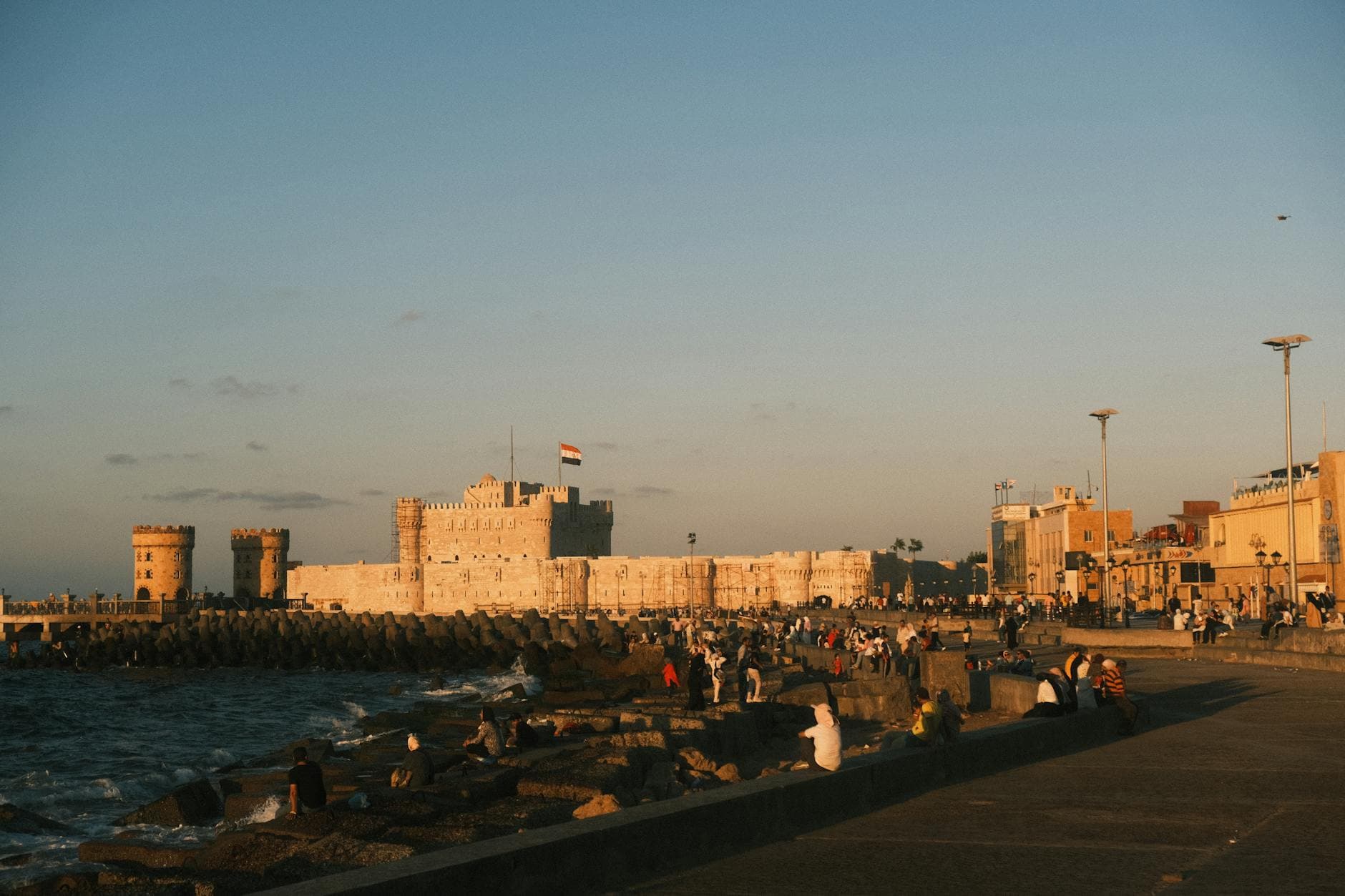
Before Napoleon landed at Alexandria on July 1, 1798, Egypt had not been conquered by a Western European power since the Romans. It was an Ottoman province run by Mamluk beys who had essentially been ignoring Constantinople for decades. The French arrival broke something loose in Egyptian political history that never quite closed again.
The Battle of the Pyramids on July 21, 1798 is misnamed. It was fought at Embaba, near present-day Giza, close enough to see the pyramids but 15km away from them. Napoleon's pre-battle speech, in which he allegedly told his troops that forty centuries looked down upon them from the heights of the pyramids, may have been invented by his memoirs-writers. What is documented is the tactical reality: the Mamluk cavalry charged the French infantry squares repeatedly and was destroyed. The Mamluks carried their personal wealth into battle, as was custom, and the French soldiers reportedly waded into the Nile to strip gold from floating corpses.
The political consequence of that afternoon took decades to fully play out. Muhammad Ali, the Albanian-born Ottoman officer who eventually expelled the French, then massacred the Mamluks in 1811 in the very citadel you can visit today, and then built the mosque that now defines Cairo's skyline. Every one of those events is a direct domino from July 21, 1798.
Cairo: The Citadel and the Institut d'Égypte
The Saladin Citadel was the seat of Egyptian power when Napoleon arrived. The Mamluks used it, the French occupied it, Muhammad Ali rebuilt it, and the Egyptian military used it until 1983. You walk through a thousand years of contested authority in a single afternoon.
The Mosque of Muhammad Ali inside the Citadel is not Mamluk or Pharaonic; it is Ottoman Baroque, completed in 1848, and its architect was Yusuf Boshnak, who modelled it on the Sultan Ahmed Mosque in Istanbul. Muhammad Ali built it over the demolished remains of earlier Mamluk structures as an explicit statement of erasure. He wanted no visual reminders of the people he had slaughtered thirty-seven years earlier. The mosque's alabaster exterior, quarried from Beni Suef, glows a particular amber in afternoon light, around 3pm.
Three hundred metres south of the Citadel entrance is the area where Napoleon's chief scientist Gaspard Monge established the Institut d'Égypte in August 1798, modelled on the Institut de France in Paris. The original building burned during the revolution of December 2011, destroying thousands of irreplaceable documents and maps. The rebuilt Institut reopened in 2018. It sits on Qasr al-Aini Street in Garden City and holds periodic exhibitions. This is not a major tourist site and most Napoleon Egypt campaign guides do not mention it, but it is the physical address where Egyptology was invented, and that deserves ten minutes of your attention.
The Rosetta Stone was found by a French soldier named Pierre-François Bouchard in July 1799, not by a scholar, while digging fortifications at Fort Julien near Rosetta. The British seized it after the French surrender in 1801. It has been in the British Museum ever since. Egypt has formally requested its return. The British Museum has formally declined. This exchange has repeated approximately every decade.
Alexandria and Abu Qir: Where the Campaign Was Won and Lost
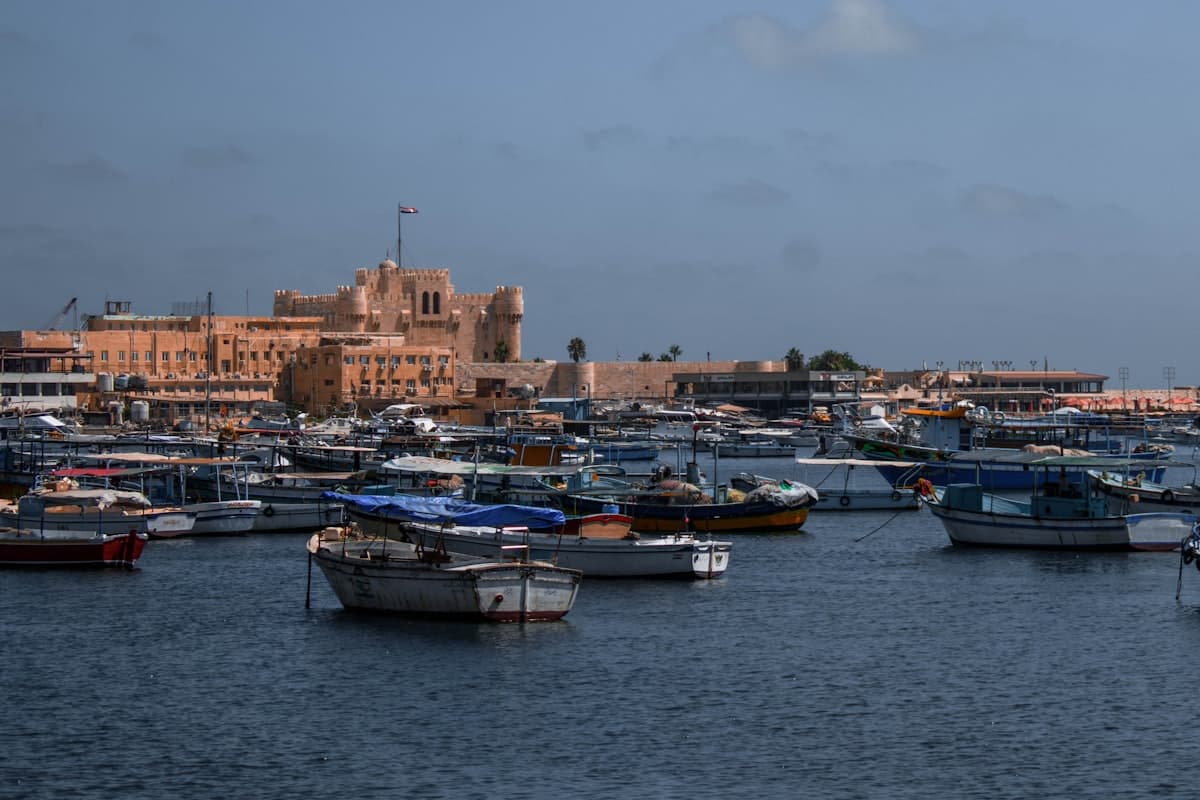
Napoleon took Alexandria on his first day in Egypt, July 1, 1798. The city's defenders had approximately 8,000 men against 36,000 French troops; the battle lasted four hours. What Napoleon could not take was the harbour. Admiral Brueys anchored the French fleet in Aboukir Bay, 24km east of Alexandria, and told Napoleon he was in a defensible position. He was wrong.
On August 1, 1798, Rear-Admiral Horatio Nelson attacked at dusk, a time when fleet engagements were not supposed to happen because of the navigational risk in shallow water. Nelson calculated that the risk was lower than the alternative of letting Brueys resupply and regroup overnight. The Battle of the Nile, fought entirely in Aboukir Bay, destroyed eleven of thirteen French ships of the line. The flagship L'Orient, 120 guns and the largest warship in the world at the time, exploded when fire reached her powder magazine. The explosion was heard in Alexandria. Napoleon's army was now stranded in Egypt with no navy and no supply line.
Abu Qir today is a fishing town and summer resort. The bay is absolutely unremarkable from the shore. You stand at the water's edge and look out at flat brown water and think: that is where France lost Egypt. In 2000, underwater archaeologist Franck Goddio found the wreck of L'Orient in about 9 metres of water, along with cannon, gold coins, and personal effects of the crew. The site is marked on nautical charts but not open to recreational divers without permits.
Fort Qaitbay in Alexandria, a 15th-century Mamluk fort built on the exact site of the ancient Lighthouse of Alexandria, was held by Napoleon's forces briefly and shows French military engineering modifications if you look at the lower exterior walls carefully. The fort is worth visiting as a combined Mamluk and Napoleonic site, though the main hall's restoration in 1994 was heavy-handed.
Rosetta: The Fort and the Stone That Changed Everything
Rosetta (Rashid in Arabic) is a 90-minute microbus ride from Alexandria and most travellers never make it. This is a mistake of prioritisation, not practicality.
Fort Qaitbay in Rosetta (not to be confused with the Alexandria fort of the same name) was renamed Fort Julien by the French, and it was here in July 1799 that Bouchard found the granodiorite stele now known as the Rosetta Stone. The stone is a priestly decree from 196 BC, during the reign of Ptolemy V, written in three scripts: Ancient Egyptian hieroglyphs, Demotic script, and Greek. Jean-François Champollion used the Greek as the key to decode the hieroglyphic script in 1822, after twenty-three years of scholarship. Every hieroglyph you read anywhere in Egypt, every inscription you photograph, every translated wall text you rely on traces back to that decoding work, which traces back to a soldier digging a foundation in a provincial fort.
The fort itself is small, atmospheric, and almost always empty of foreign visitors. Entry costs EGP 100. The room where the stone was found has a modest plaque. The view from the roof over the Nile delta estuary is worth the climb.
Rosetta's Ottoman merchant houses, some of which still stand in the old town, are genuinely undervisited. The town was a major trading port before Alexandria's 19th-century expansion made it irrelevant. Seventeen of the old brick mansions are now listed monuments. Walk fifteen minutes from the fort and you are in a streetscape that has not been substantially altered since Napoleon's soldiers walked through it.
The Connections
The French occupation lasted three years and catalysed two centuries of consequence. Muhammad Ali, who came to power in the power vacuum Napoleon left, sent Egyptian students to Paris in 1826, beginning an educational exchange that shaped modern Egyptian intellectual life. One of those students, Rifa'a al-Tahtawi, translated Montesquieu into Arabic and became the father of Egyptian liberal thought. The thread from the Battle of the Nile to the Egyptian constitution of 1882 is shorter than most people assume.
The Description de l'Égypte was published between 1809 and 1829, in twenty-three volumes, and included the first accurate survey of the Giza plateau. It is the reason 19th-century Europe became obsessed with Egyptomania, which is the reason obelisks were removed from Egypt to Paris, London, and New York, which is a conversation about colonial extraction that Egypt is still having today. The Place de la Concorde obelisk in Paris is from Luxor Temple. It was a gift from Muhammad Ali to France in 1829. He also offered one to Britain, which went to London's Embankment. Both removals were facilitated by the cartographic and logistical knowledge generated by Napoleon's scientists.
The plague that killed thousands of French soldiers in Egypt also killed Jean-Baptiste Kléber, Napoleon's successor in command, though he was actually assassinated by a Syrian student named Suleiman al-Halabi in Cairo in June 1800. The French executed al-Halabi by impalement. His skull was kept in a French museum until Egypt formally requested its return in 1992, when it was repatriated and buried at Al-Azhar.
Common Mistakes
Treating Abu Qir as optional. Most Napoleon Egypt campaign packages stop at Cairo and Alexandria. Abu Qir is the site where the campaign was strategically decided, and the 45-minute taxi ride from Alexandria is trivial. Skip it and you understand Napoleon's Egypt as a land story when it was always also a sea story.
Taking the sound and light show at the Pyramids as historical context. It costs EGP 300-450 and presents the Napoleonic period as a romantic footnote to Pharaonic grandeur. It tells you nothing you will not learn in twenty minutes of reading. The actual Battle of the Pyramids site at Embaba, now a residential neighbourhood, is more historically instructive, even though there is nothing to see there, because it forces you to understand that this was a real place where real cavalry charges happened, not a backdrop.
Expecting Fort Julien in Rosetta to have explanatory signage. It has almost none in English. Bring your own research or hire a local guide in Rosetta for EGP 150-200 for two hours. The guides who specialise in Rosetta's Ottoman and French heritage are genuinely knowledgeable and underemployed.
Visiting the rebuilt Institut d'Égypte without checking their schedule first. The building exterior is unremarkable and the interior is not a permanent museum. It hosts lectures and temporary exhibitions. Arriving without checking their programme means you may find a locked door.
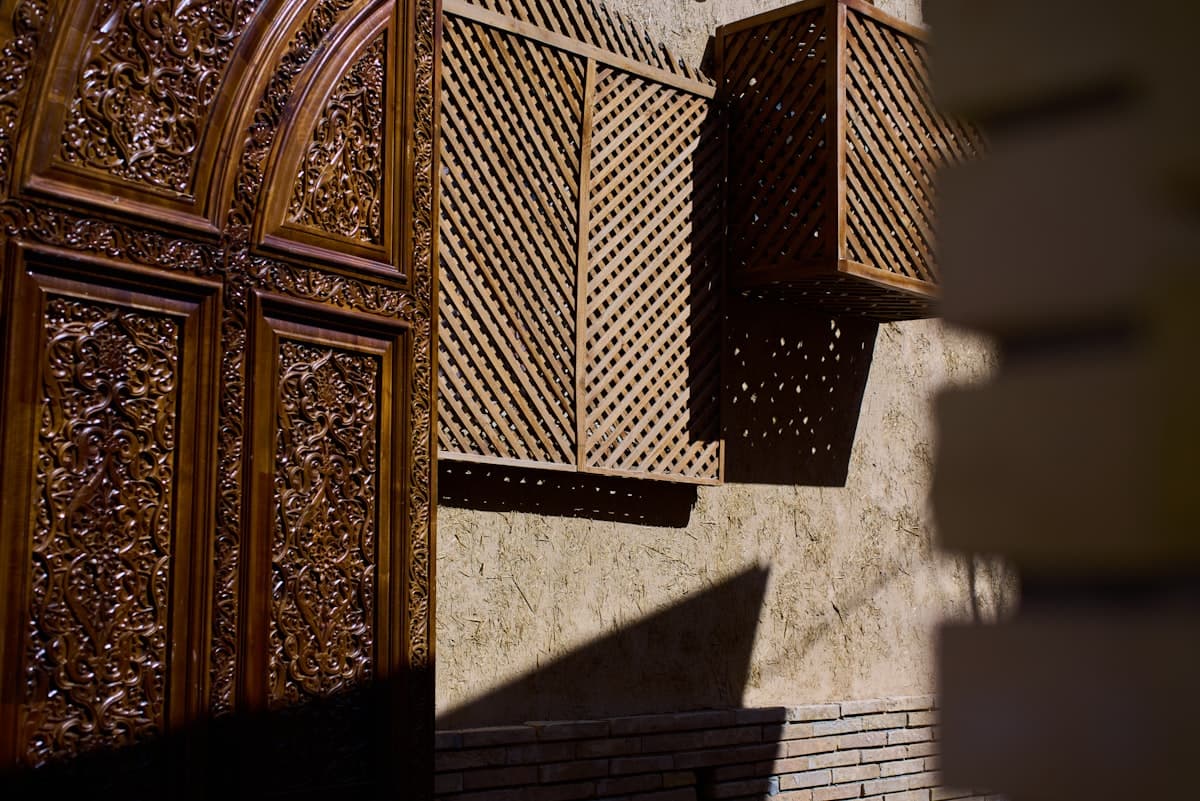
Underestimating Rosetta's old town. Tourists spend forty minutes at the fort and leave. The Ottoman houses a ten-minute walk north of the fort are some of the best-preserved examples of 17th and 18th-century Nilotic merchant architecture in Egypt. Two of them, Beit Amasyali and Beit Killi, are open to visitors for EGP 30-50 each and have been partially restored. The wooden mashrabiya latticework on the upper floors is extraordinary.
Booking a general Egypt tour that mentions Napoleon. Most mainstream tours reference the campaign in passing as Pyramids context. If the campaign is your focus, you need a specialist guide or a self-directed itinerary. The sites are spread across 250km of coastline and delta.
Arriving in Alexandria in July or August. The city becomes a domestic Egyptian resort in summer, with hotel prices tripling and every beach and corniche overwhelmed. The historical sites are technically open but the experience is miserable. October through March is the correct window.
Practical Tips
The Cairo-to-Alexandria train from Ramses Station is the most comfortable inter-city link: first class costs EGP 120-170 and takes two to two and a half hours. Book at the station or through the Egyptian National Railways website, which works intermittently.
For the Rosetta day trip from Alexandria, microbuses from Al-Qaed Ibrahim Square leave when full and cost EGP 30-40. They drop you at Rosetta's main square, from which Fort Julien is a fifteen-minute walk or EGP 15 tuk-tuk. Return microbuses run until around 6pm.
For Abu Qir, negotiate a return taxi fare before departure. EGP 200 for the return trip with a two-hour wait is a fair rate from Alexandria's central districts. The driver will want to show you fish restaurants; that is their business model, and the Abu Qir seafood is, in fact, excellent.
Arabic script for key requests: if you want to find Fort Julien specifically, say "Qal'at Qaitbay fi Rashid" (the fort in Rosetta) rather than the French name, which will confuse most locals.
Photography inside Fort Qaitbay in both Alexandria and Rosetta requires paying an additional camera fee, currently EGP 20-50 depending on the guard's interpretation of the day's policy. Have small bills ready.
Frequently Asked Questions
The Weekly Dispatch
More on Egypt, every Friday.
Cultural depth and places most guides never mention.
No spam. Unsubscribe anytime.