Napoleon's Egypt Campaign Sites: A Field Guide to the Invasion
Napoleon brought 167 scientists to Egypt in 1798. They discovered the Rosetta Stone. His soldiers lost the country in three years. The sites tell both stories.

Quick Facts
- Best time to visit
- October to March. November is ideal for Delta and coastal sites. Summer heat makes outdoor locations like Abu Qir Bay and the Pyramids area very difficult after 10am.
- Entrance fee
- Rosetta National Museum: EGP 80 (approx $1.50 USD). Citadel of Qaitbay, Alexandria: EGP 100 (approx $2 USD). Saladin Citadel, Cairo: EGP 450 (approx $9 USD). Abu Qir Bay: free. Camera permits at Rosetta Museum: EGP 50 extra.
- Opening hours
- Most sites 9am to 5pm daily. Rosetta Museum closed Fridays at midday. Saladin Citadel open 8am to 5pm. Citadel of Qaitbay open 9am to 4pm but subject to naval zone restrictions without notice.
- How to get there
- Cairo to Rosetta: shared microbus from Torgoman station, EGP 40 total, 3 hours. Cairo to Abu Qir: train to Alexandria (EGP 50 to 200) then local bus to Abu Qir for EGP 10. Pyramids area from central Cairo: taxi EGP 80 to 120 return with waiting time.
- Time needed
- Rosetta and Abu Qir together: one full day from Alexandria. Cairo Napoleon sites (Citadel, Institut d'Égypte exterior, Pyramids area): one half-day. Two days total to cover the campaign seriously.
- Cost range
- Budget EGP 400 to 700 per day including transport and entrance fees. Mid-range EGP 1,200 to 2,000 per day with private driver and restaurant meals. Private driver for Rosetta to Abu Qir day from Alexandria: EGP 600 to 900.
Quick Facts
Best time to visit: October to March, when Cairo and the Delta sites are bearable on foot. The Battle of the Pyramids site and Rosetta (Rashid) are outdoor experiences. July heat at Abu Qir will end your afternoon early.
Key entrance fees: Citadel of Qaitbay, Alexandria: EGP 100 (approx $2 USD) Rosetta/Rashid National Museum: EGP 80 (approx $1.50 USD) Abu Qir coastal area: free, with optional felucca or motorboat hire at approx EGP 150 Institut d'Égypte building, Cairo: not publicly open; exterior viewing only Saladin Citadel, Cairo (where the French occupation left its deepest administrative mark): EGP 450 (approx $9 USD)
Opening hours: Most Delta and coastal sites run 9am to 5pm daily. The Rosetta Museum closes on Fridays for midday prayer. The Citadel of Qaitbay is open daily but can be restricted without notice during naval zone operations.
How to get there: Cairo to Rosetta: shared microbus from Torgoman station toward Damanhour, then connection to Rashid; approx EGP 40 total. Taxi from Alexandria is around EGP 350 one way. Cairo to Abu Qir: bus from Alexandria's Mahatta Square to Abu Qir for EGP 10. From Cairo, take the train to Alexandria (EGP 50 to 200 depending on class) then connect. The Pyramids plateau (Battle of the Pyramids site): taxi from central Cairo, EGP 80 to 120 return with waiting time.
Time needed: Abu Qir and Rosetta together make one very full day from Alexandria. The Cairo-based sites (Pyramids area, Citadel quarter, Institut d'Égypte ruins) require a separate half-day. Budget two days total if you want to trace the campaign seriously.
Cost range: Budget EGP 400 to 700 per day including transport; mid-range EGP 1,200 to 2,000 if using private drivers and eating in sit-down restaurants.
---
Why Napoleon's Egypt Still Matters
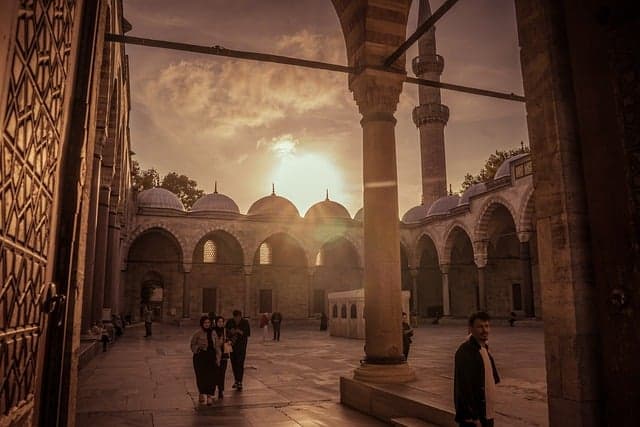
Napoleon Bonaparte arrived in Egypt on July 1, 1798, with 400 ships, 54,000 soldiers, and, unusually for a military invasion, 167 scientists, artists, mathematicians, and linguists. He called them the Commission des Sciences et des Arts. They would go on to produce the Description de l'Égypte, a 23-volume encyclopedic survey of everything from Pharaonic temples to Egyptian customs to the flora of the Delta, published between 1809 and 1828. Modern Egyptology, as a formal discipline, begins here, not in the tombs themselves.
The campaign lasted three years and two months. It failed militarily: the British Navy under Admiral Horatio Nelson destroyed the French fleet at Abu Qir Bay on August 1 and 2, 1798, in a battle so decisive it is still taught in naval academies as a case study in the use of coastal shallows to outflank an anchored fleet. Napoleon slipped back to France in August 1799, leaving his army behind. His successor, General Kléber, was assassinated in Cairo in June 1800 by a Syrian student named Suleiman al-Halabi. The French surrendered to the British in 1801.
And yet what they left behind changed everything. The scientists measured, drew, and catalogued a civilization that Egyptians had largely stopped reading. When the Rosetta Stone, found by French soldiers near the Delta town of Rashid in July 1799, was eventually decoded by Jean-François Champollion in 1822, it broke open 1,400 years of hieroglyphic silence. The French discovered the stone. The British took it. An Egyptian never formally participated in decoding it. That particular irony runs through every site on this guide.
---
Rosetta (Rashid): Where the Stone Was Found and Taken
The town of Rashid sits where the Nile's western branch meets the Mediterranean. It is one of the few Delta towns with a coherent Ottoman architectural character still intact, roughly 22 houses from the 17th and 18th centuries built in distinctive red-and-black brick, many of them open to visitors as museums. The Napoleonic connection sits quietly within this older city.
In July 1799, French soldiers under Lieutenant Pierre-François Bouchard were reinforcing Fort Julien, a medieval structure on the Nile bank, when they uncovered a granodiorite stele covered in three scripts: ancient Greek, Demotic, and hieroglyphic. Bouchard recognized its significance immediately and sent it to Napoleon's scholars in Cairo. The French made plaster casts before the British claimed the original in 1801 under the Treaty of Alexandria. The stone has been in the British Museum since 1802 and has never been returned despite repeated Egyptian requests, including a formal claim in 2022.
Fort Julien itself is not open to the public. You can see its exterior from the Nile bank, a crumbling rectangular fortification that the Ottomans built and the French modified, now administered by the Egyptian military. What you can visit is the Rosetta National Museum inside the House of the Arab Governor, a layered Ottoman mansion with a collection that includes a replica of the Rosetta Stone and material on Delta history from the Pharaonic through the modern period. The replica is dismissed by most visitors as a consolation prize. It should not be. At 112 cm tall and 76 cm wide, standing in front of it in that particular half-light is the only way most people will ever understand the actual physical scale of the object.
Spend time in the town itself. The Ottoman houses use a mashrabiya screen design that has direct antecedents in Fatimid Cairo, and the waterfront quarter where French soldiers were stationed in 1798 is still recognizably the same street grid. Buy a bag of Rashid oranges from the market near the bus station. This is the variety that French botanists described in the Description de l'Égypte. Most people don't know that.
---
Abu Qir: The Bay That Ended the French Dream
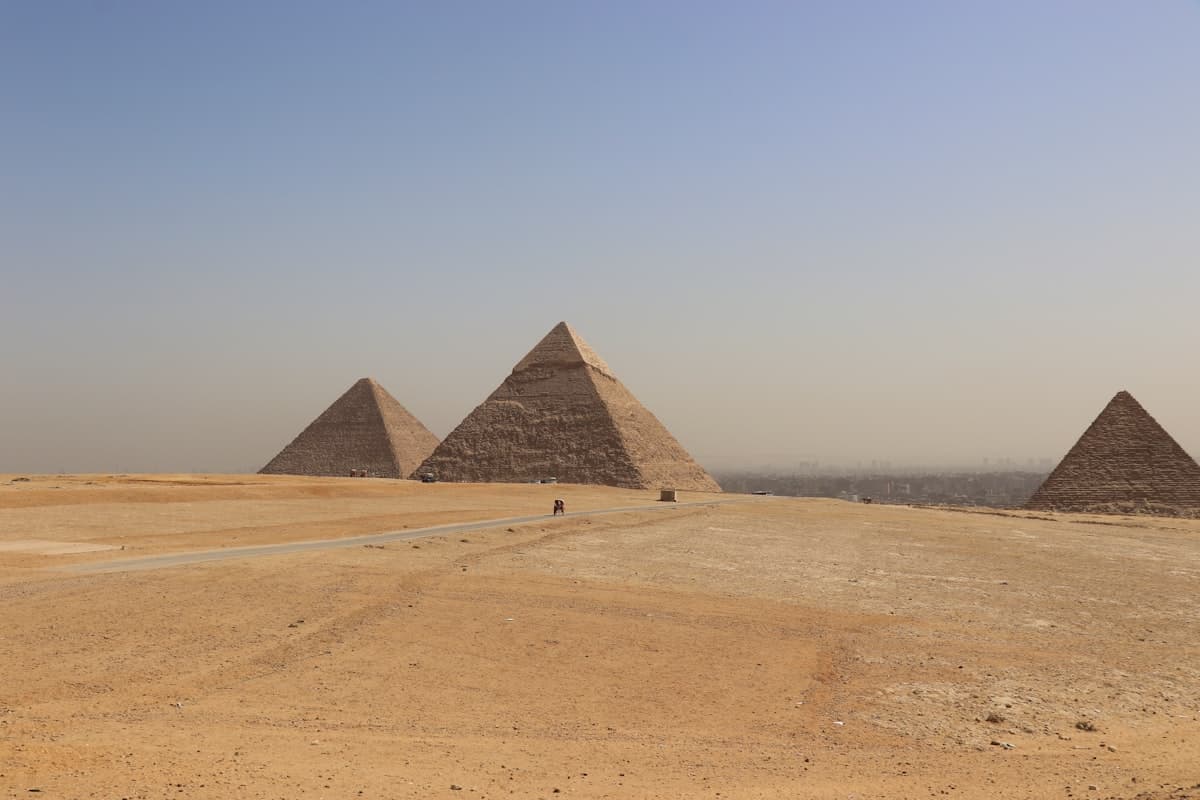
The coastal town of Abu Qir sits about 25 km east of Alexandria and looks like every other Egyptian seaside town: concrete apartment blocks, fishing boats, grilled fish restaurants, children on bicycles. Nothing about it announces that this bay was the site of arguably the most consequential naval battle of the 18th century.
On the evening of August 1, 1798, the French fleet of 17 ships was anchored in a line along the eastern shore of the bay, Admiral François-Paul Brueys in command of the flagship L'Orient. Brueys believed his northern flank was protected by shoal water too shallow for British ships to navigate. Nelson's captains, sailing blind into the bay in fading light, calculated that if the French ships could float in the water, so could theirs. They sailed between the French fleet and the shore, attacking from both sides simultaneously. L'Orient caught fire and exploded at around 9pm with a detonation reportedly heard in Alexandria. Brueys was killed. Eleven of seventeen French ships were sunk or captured. Napoleon's strategic connection to France was severed.
What you actually see at Abu Qir today requires some imagination. The bay is calm and unremarkable. Local fishermen work the same waters. There is a small Napoleonic-era fort on the headland, Fort Tewfik, in poor repair and closed to visitors. Divers have located wreck fragments in the bay, and the Bibliotheca Alexandrina has led underwater archaeology projects here; some recovered items are displayed in Alexandria's Maritime Museum (EGP 30 entrance). The museum is small and under-visited, which is itself instructive. Egypt does not particularly memorialize a French defeat, and Alexandria has bigger archaeological concerns.
The fish restaurants along the Abu Qir waterfront are the real reason most Egyptians come here. Order the sea bass, eat it at a table that overlooks the water, and consider that somewhere below the surface are the cannons of L'Orient. This is not a tourist presentation. It is just a fact sitting under a very ordinary stretch of Mediterranean.
---
Cairo: The Occupied City
Napoleon entered Cairo on July 24, 1798, three days after the Battle of the Pyramids, a cavalry engagement that took place near the village of Embaba, across the Nile from Giza, not at the pyramids themselves. The name is a piece of Napoleonic propaganda, calculated to invoke ancient glory for a battle fought in scrubby flatland. The actual engagement lasted roughly 90 minutes. The Mamluk cavalry, who charged the French infantry squares on horseback with swords, lost somewhere between 2,000 and 6,000 men. The French lost 29.
In Cairo, Napoleon occupied the Azbakeya quarter, then the most fashionable neighborhood in the city, and established his Institut d'Égypte in a series of confiscated mansions near what is now downtown. The Institut is where the 167 scholars worked, where the printing press was set up (the first Arabic-language press in Egypt), and where, in 1798, an Egyptian religious scholar named Abd al-Rahman al-Jabarti was given access to the French library. Al-Jabarti left a chronicle, Aja'ib al-Athar, that remains one of the most precise accounts of the occupation from an Egyptian perspective. He was fascinated and appalled in roughly equal measure.
The building that housed the Institut was destroyed during the 2011 revolution, when a fire spread from clashes in Tahrir Square. A 2003 copy of the Description de l'Égypte that was inside was saved by Egyptian scholars who formed a human chain to pass it out of the burning building. The scorched facade still stands near Tahrir. You can walk past it. You cannot go inside.
The Citadel of Saladin, which the French garrison occupied from 1798 to 1801, is still very much visitable, and the Mohammed Ali Mosque inside it was built specifically to erase any trace of French occupation and reassert Ottoman and then Egyptian authority. Mohammed Ali, the Albanian-born commander who outmaneuvered everyone after the French left and became Egypt's effective founder as a modern state, massacred the last Mamluk leaders at the Citadel in 1811. He understood better than anyone that the French campaign, however briefly, had cracked open Egyptian political structures. He walked through the gap.
---
The Connections
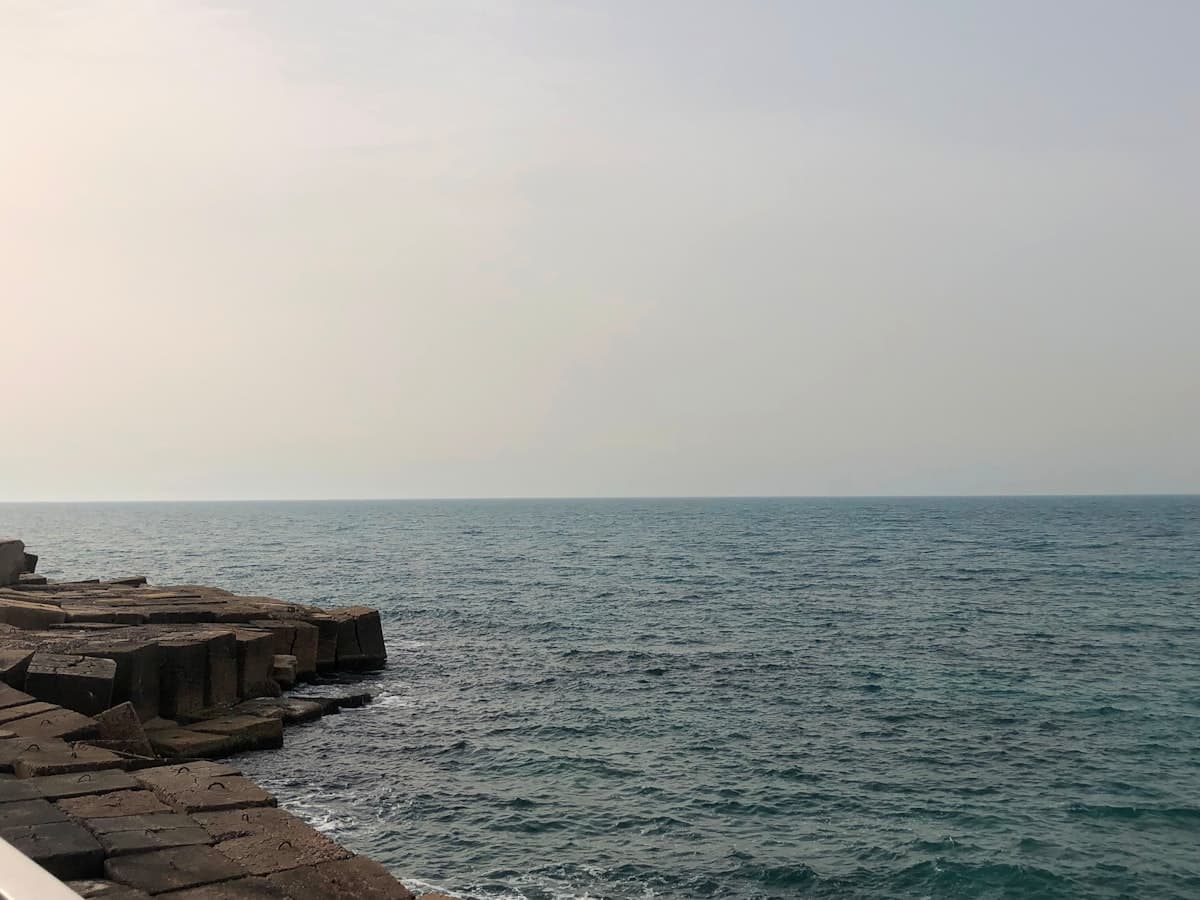
Tracing the Napoleon Egypt campaign sites guide means confronting the density of Egyptian history's layers in a very concentrated way. The Citadel of Qaitbay in Alexandria, where Napoleon's forces briefly held the waterfront, was built in 1480 by the Mamluk Sultan Qaitbay on the exact site of the Pharos, one of the Seven Wonders of the ancient world. The lighthouse had collapsed in a 14th-century earthquake. Qaitbay used its stones as building material. Napoleon's engineers surveyed the Fort and found Roman-era column fragments inside Mamluk walls. Every physical site in this guide is doing that kind of palimpsest work.
The Rosetta Stone itself connects to an even longer chain. The decree it records was issued in 196 BC by Ptolemaic priests loyal to Ptolemy V, a Greek-dynasty king who spoke no Egyptian. The priests wrote their loyalty oath in three scripts to reach every literate audience in their kingdom. The French found it, the British seized it, a Frenchman decoded it, and the world learned to read a civilization that had been silent since approximately 400 AD. No Egyptian government controlled any step of that process. That remains a live political question.
---
Common Mistakes
Treating the Battle of the Pyramids as a Pyramids experience. The battle site near Embaba has no markers, no museum, and no visitor infrastructure. You are looking at urban Cairo sprawl. Go to the Pyramids for the Pyramids. Understand the battle from a book.
Skipping Rosetta for Alexandria. Alexandria gets the visitors. Rosetta has the architecture, the Ottoman streetscape, the museum, and the actual site where the stone was found. It is 65 km from Alexandria and most tourists never go. This is a mistake.
Paying for the Alexandria Sound and Light Show at Qaitbay. It costs EGP 200 and tells you almost nothing about Napoleon's presence there. The fort in daylight, with a local guide who knows the Pharos connection, is worth three of those evenings.
Assuming the Bibliotheca Alexandrina's Napoleon exhibition is permanent. The Bibliotheca rotates its collection. Call ahead (03-4839999) or check their website before making it central to your itinerary.
Missing al-Jabarti. If you are serious about understanding the campaign from an Egyptian perspective rather than a European one, read Abd al-Rahman al-Jabarti's chronicle before you go. An English translation by Thomas Philipp and Moshe Perlmann is available. Nothing else you read will reframe Cairo as effectively.
Hiring a general tour guide for this itinerary. Standard Egyptological guides know the Pharaonic sites. The Napoleon campaign is a specialist subject. The Egyptian Center for Economic and Social Rights has a list of licensed heritage guides; ask specifically for someone with Ottoman-period and 19th-century expertise.
Underestimating Abu Qir logistics. The town is easy to reach but the Maritime Museum in Alexandria, which holds the recovered underwater material, requires a separate half-day. Combining Abu Qir bay with the Maritime Museum and the Citadel of Qaitbay in one day is aggressive. Pick two.
---
Practical Tips
November and February are the optimal months for the Delta and coastal sites. The light in Rosetta in November has a particular grey-gold quality that the French artists who came here in 1798 documented in their watercolors; seeing those paintings alongside the town itself is a small, precise pleasure.
For the Cairo sites, mornings are essential. The Citadel fills with school groups after 10am. Arrive when it opens at 8am and you will have the Mohammed Ali Mosque almost alone for the first 45 minutes. The mosque's interior, its alabaster columns sourced from ancient Pharaonic sites in Upper Egypt, is a three-civilization story in one building.
Carry cash everywhere. Card readers exist at larger sites but reliability is inconsistent. Budget EGP 200 in small bills for a day covering multiple sites.
A private driver for the Rosetta-Abu Qir day from Alexandria will cost EGP 600 to 900 for a full day. This is worth it. Public transport works but the connections between these specific sites involve multiple changes and can consume 90 minutes of the day each way.
Photography inside the Rosetta National Museum requires a camera permit (EGP 50 extra). Phone photography is generally tolerated without comment. Do not photograph military installations, including Fort Julien's exterior from close range. This is enforced.
Frequently Asked Questions
The Weekly Dispatch
More on Egypt, every Friday.
Cultural depth and places most guides never mention.
No spam. Unsubscribe anytime.