Napoleon's Egypt Campaign Sites: A Field Guide to Where It Happened
Napoleon brought 167 scholars to Egypt in 1798. They produced the Description de l'Égypte. The soldiers mostly died. Here is where all of it happened.
Audio Guide: Napoleon's Egypt Campaign Sites: A Field Guide to Where It Happened
Quick Facts
- Best time to visit
- October to February. The campaign's summer heat genuinely compromised Napoleon's army. Visiting Giza in July replicates the suffering without adding insight.
- Entrance fee
- Giza complex EGP 540 (approx $11 USD), Great Pyramid interior EGP 900 extra (approx $18 USD). Citadel of Cairo complex EGP 180 (approx $3.50 USD). Qaitbay Fort Alexandria EGP 100 (approx $2 USD). Rashid National Museum EGP 60 (approx $1.20 USD).
- Opening hours
- Giza plateau 8am to 5pm daily. Citadel of Cairo 9am to 5pm daily. Qaitbay Fort 9am to 4pm daily. Rashid National Museum 9am to 5pm, closed Tuesdays.
- How to get there
- Cairo to Giza by Uber or taxi EGP 80 to 120. Cairo to Alexandria by bus EGP 250 to 350 or train EGP 50 to 150. Alexandria to Abu Qir by taxi EGP 150 to 200 return. Alexandria to Rashid by minibus from Misr station EGP 25.
- Time needed
- Two days Cairo (Giza, Citadel, Egyptian Museum), two days Alexandria and Rashid (Qaitbay, Abu Qir, Rashid National Museum and Fort Julien). Four days total for full coverage.
- Cost range
- Budget EGP 600 to 900 per day covering transport, tickets, and local food. Mid-range EGP 1,800 to 2,800 per day including a specialist guide and better accommodation.
Quick Facts
Best time to visit: October to February. The Battle of the Pyramids was fought in July heat and soldiers collapsed before a shot was fired. You do not need to replicate this.
Key sites and entrance fees: Citadel of Qaitbay, Alexandria: EGP 100 (approx $2 USD) Abu Qir battlefield (open access, no ticket) The Pyramids plateau (Giza): EGP 540 for the complex (approx $11 USD), interior of the Great Pyramid EGP 900 extra (approx $18 USD) Mosque of Muhammad Ali, Citadel of Cairo: EGP 180 (approx $3.50 USD), included in Citadel complex ticket Egyptian Museum, Cairo (Rosetta Stone context): EGP 450 (approx $9 USD)
Opening hours: Most Cairo sites open 9am to 5pm daily. The Giza plateau opens at 8am. Abu Qir is an open coastal area with no formal hours.
How to get there: Cairo to Giza by Uber costs EGP 80 to 120. Cairo to Alexandria by air-conditioned bus (GoBus or Blue Bus from Turgoman station) costs EGP 250 to 350 each way, journey roughly 2.5 hours. Taxi from Alexandria's Ramla station to Abu Qir costs EGP 150 to 200 return.
Time needed: Two full days minimum if you are serious about this. One day in and around Cairo (Giza, the Citadel, the Egyptian Museum), one day in Alexandria (Qaitbay, Abu Qir, the Corniche where the French fleet burned).
Cost range: Budget EGP 600 to 900 per day covering transport, tickets, and food. Mid-range EGP 1,800 to 2,800 per day if you add a guide and better meals.
---
Why This Matters: Three Years That Changed Everything
Napoleon arrived in Egypt in July 1798 with 38,000 soldiers and, more consequentially, 167 civilian scholars he called his Commission des Sciences et Arts. The soldiers were mostly gone within three years, dead of plague, combat, or desertion. The scholars produced the Description de l'Égypte, a 23-volume work published between 1809 and 1828 that effectively invented Egyptology as a discipline and triggered a Europe-wide obsession with ancient Egypt that has not fully subsided.
Here is what the Napoleon Egypt campaign sites guide rarely tells you: Napoleon never got further south than Cairo. He saw the Pyramids. He did not see Luxor or Karnak or the Valley of the Kings. His scholars did, and what they drew and measured and catalogued remade the Western understanding of a civilization. The campaign was a military failure and an intellectual revolution simultaneously.
The other fact worth holding: the French found the Rosetta Stone at Rashid (Rosetta) in July 1799 while digging fortifications. A French officer named Pierre-François Bouchard recognized it was significant. The British took it in 1801 when the French surrendered. It has been in the British Museum since 1802. Egypt has been asking for it back ever since.
---
Cairo: The Battle, the Citadel, and the Aftermath
The Battle of the Pyramids
On July 21, 1798, Napoleon's army fought the Mamluk forces of Murad Bey at Embaba, a village on the west bank of the Nile near Giza. The famous line, reportedly spoken by Napoleon before the battle, "Soldiers, from the heights of these pyramids, forty centuries look down upon you," was written in his memoirs decades later and is almost certainly polished, if not invented. The Pyramids were not actually visible from the main engagement. The battle itself lasted less than two hours. The Mamluks, though fearless cavalry fighters, had no answer for French artillery squares.
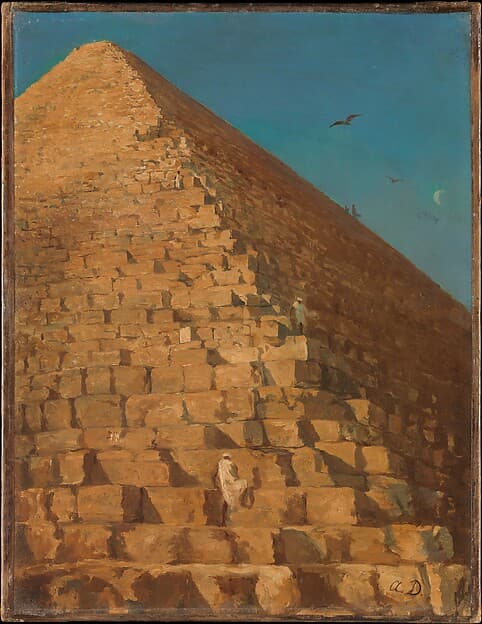
What you see at Giza today is not the battlefield. The battlefield at Embaba is now a dense residential district in northwest Cairo. The Pyramids plateau is where you go to understand what Napoleon's men saw when they arrived: a scale of monument that still produces genuine disorientation. The Great Pyramid contains an estimated 2.3 million stone blocks. Khufu's burial chamber is reached through the Grand Gallery, a corbelled passage 47 meters long and 8.5 meters high that no French soldier in 1798 would have been allowed to enter, since Mamluk authorities controlled the site.
Stand on the plateau at 8am before the tour groups arrive. The light comes in flat and orange from the east. In July it would already be 35 degrees and climbing. Think about marching here from Alexandria in that, carrying a musket.
The Citadel of Cairo
The French occupied the Citadel, which Saladin began building in 1176 on a spur of the Muqattam hills, using it as a military headquarters. After the French left, it was Muhammad Ali, an Albanian-born Ottoman commander who had arrived with the force sent to expel the French, who made the Citadel his seat of power and proceeded to massacre the remaining Mamluk leadership there in 1811. He invited 470 Mamluk beys to a ceremony and had them killed in the narrow passage known today as the Bab al-Azab. It is still there. You can walk through it.
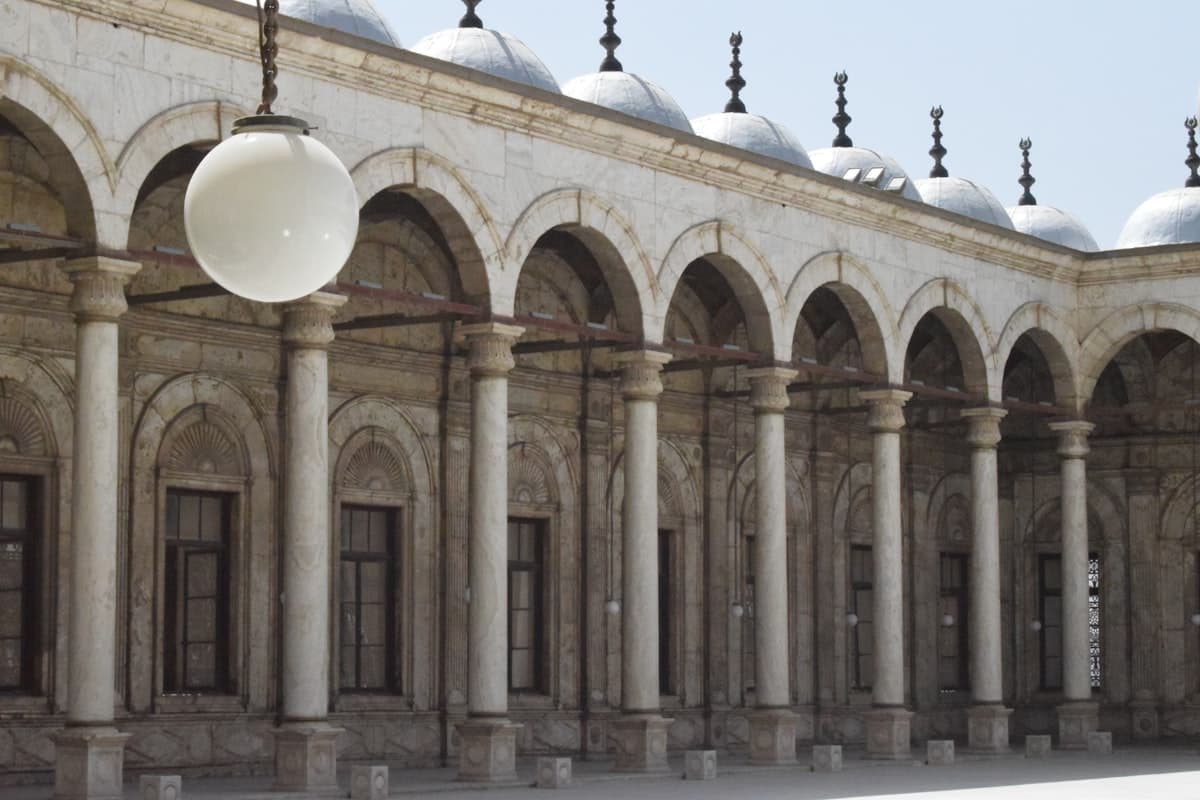
The Mosque of Muhammad Ali inside the Citadel was built between 1830 and 1848 and modeled on Ottoman mosques in Istanbul, which itself tells you something: Muhammad Ali was consolidating power by associating himself with Istanbul's imperial aesthetic while simultaneously building an independent Egyptian state. The mosque's alabaster exterior came from Beni Suef quarries that the Pharaohs had used. The clock tower in the courtyard was a gift from King Louis-Philippe of France, sent in exchange for the obelisk from Luxor Temple that now stands in the Place de la Concorde in Paris. The clock has never worked properly.
---
Alexandria: The Fleet, the Fort, and Abu Qir
Where Nelson Destroyed Napoleon's Exit
On August 1 and 2, 1798, Admiral Horatio Nelson found the French fleet anchored in Abu Qir Bay, east of Alexandria. What followed is called the Battle of the Nile, which is a misleading name since the engagement was in the sea. Nelson attacked at dusk, which the French did not expect because naval battles were conventionally fought in daylight. The French flagship, L'Orient, carrying the treasure looted from Malta and reportedly much of the loot from the Knights of St. John, exploded at around 10pm. The explosion was heard in Alexandria. Napoleon, inland, learned he was trapped in Egypt.
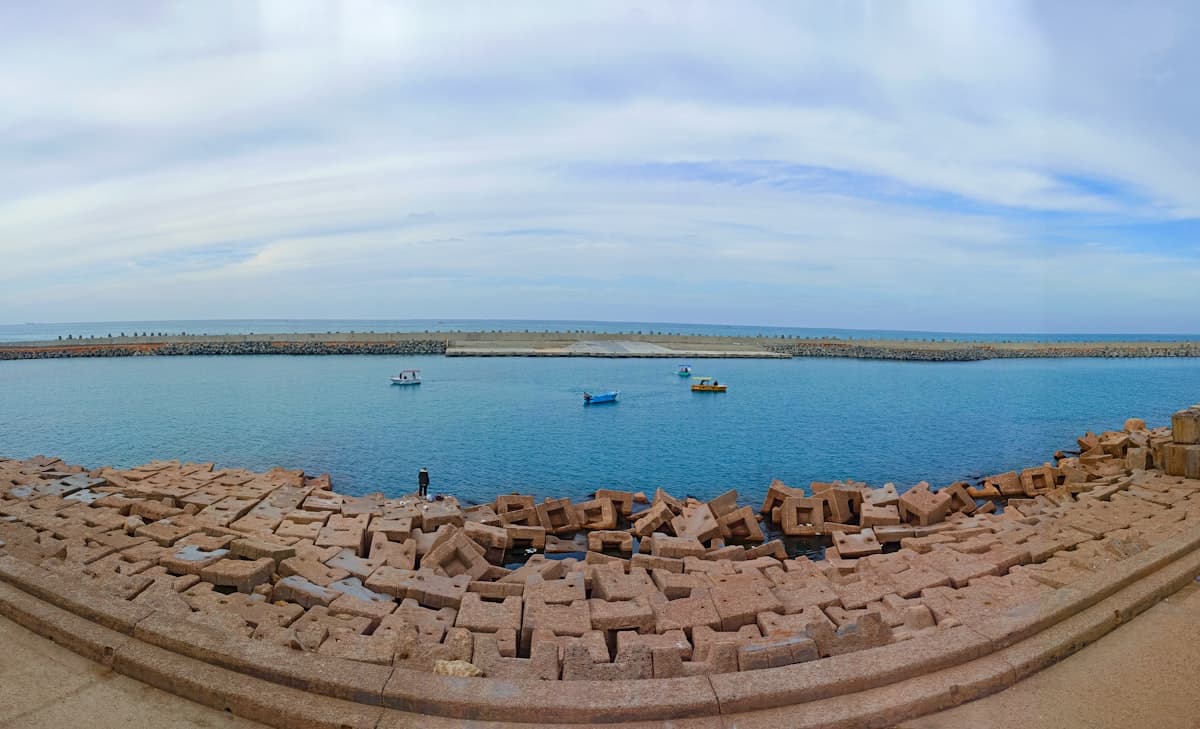
Abu Qir today is a fishing village with a decent seafood reputation and almost no acknowledgment of what happened offshore. The beach is pleasant and ordinary. The water is the particular flat blue-green of the Egyptian Mediterranean. There is no monument. You are standing on the edge of the bay where Napoleon's strategic options effectively ended, and the fish is good.
The Citadel of Qaitbay
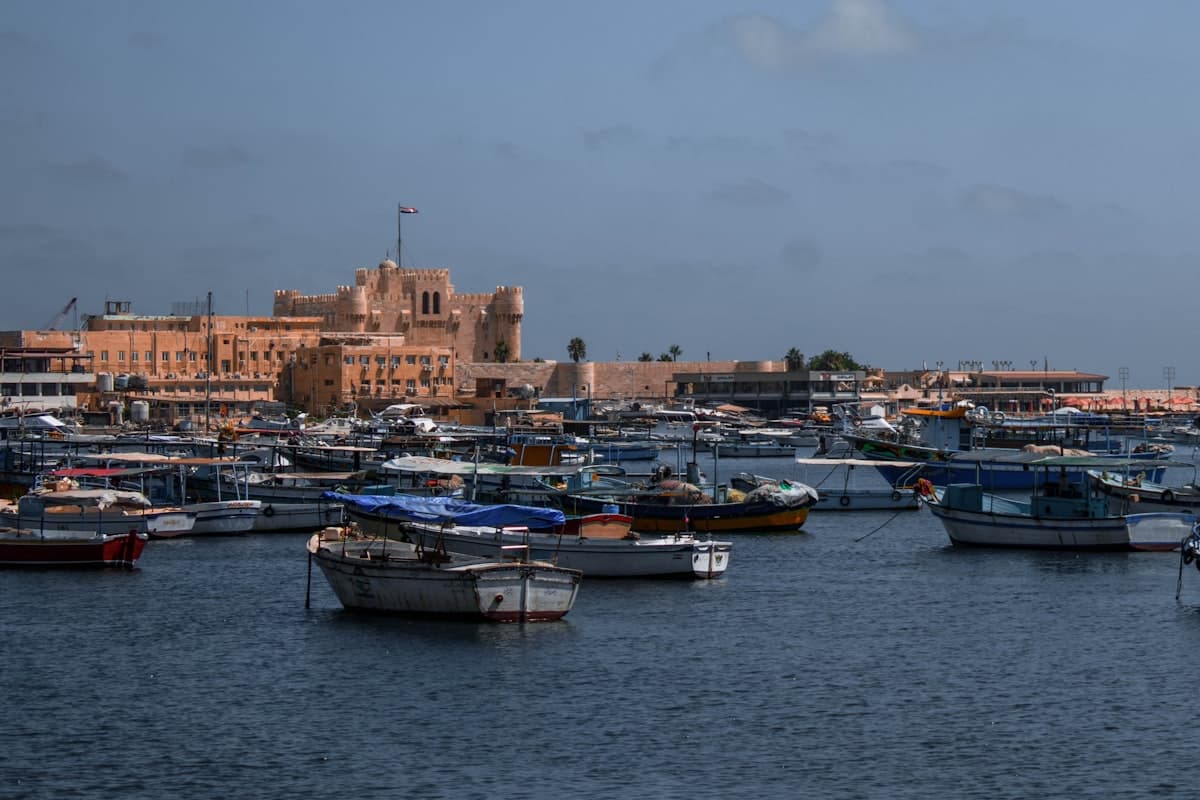
Napoleon's forces used Qaitbay's 15th-century fort, built on the exact site of the ancient Lighthouse of Alexandria, one of the Seven Wonders of the ancient world, as a coastal defense position. The fort itself was constructed by Sultan Qaitbay in 1477 using stones from the lighthouse ruins, which had been demolished by an earthquake in 1303. French military engineers assessed and modified its defenses. The fort that exists today is substantially a restoration from the 1980s, which matters if you are trying to understand what Napoleon's soldiers actually occupied. The bones of the structure are Mamluk. The surface is modern. The location, however, is exact: right where the lighthouse stood, on the eastern tip of Alexandria's harbor.
The view from the upper level looks directly across to where Nelson's fleet would have been anchored. On a clear morning, with the Mediterranean moving slow and green below you, the strategic logic becomes obvious. Control this point, and you control the harbor entrance.
---
The Rosetta Connection
The town of Rosetta, known in Arabic as Rashid, sits 65 kilometers east of Alexandria at the mouth of the western branch of the Nile. It takes about 90 minutes by minibus from Alexandria's Misr station, costs around EGP 25, and almost nobody goes. This is a mistake for anyone serious about the Napoleon Egypt campaign sites.
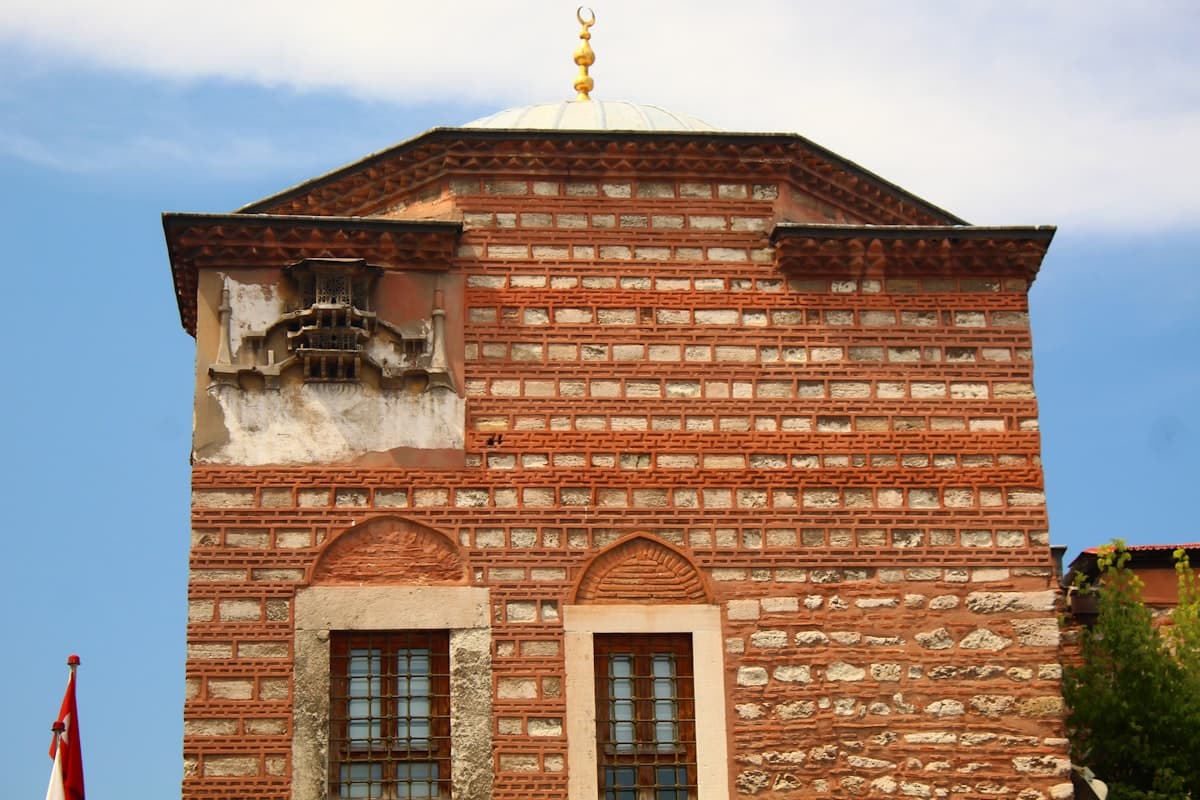
The stone itself was found by French soldiers digging the foundations of Fort Julien, which still exists in partial form outside town. Rashid is also a genuinely lovely Ottoman-era town, full of 18th-century merchant houses with the distinctive red-and-black brick patterns characteristic of the Delta. The Rashid National Museum, housed in a restored Ottoman house, has a replica of the Stone and a reasonably good account of the discovery. EGP 60 to enter, open 9am to 5pm, closed Tuesdays.
The actual fort where the stone was found, Fort Julien, is accessible but requires asking locally for directions. There is no significant signage. What remains are low walls and some reconstruction. The point is the act of standing where a French military engineer picked up a broken granodiorite stele and changed the history of how humanity reads its own past.
---
The Connections: What Came Before and After
The French occupation lasted from 1798 to 1801. Its immediate successor was Muhammad Ali, who ruled until 1848 and whose descendants governed Egypt until 1952. Muhammad Ali's transformation of Egypt, including building a cotton economy, establishing a modern military, and sending Egyptian students to Europe, was directly catalyzed by his observation of what French administrative and technical organization could accomplish. The French brought printing presses, which Muhammad Ali then used. They brought systematic land surveying, which he formalized into a cadastral system.
The Description de l'Égypte sparked a European Egyptomania that drove the 19th-century rush of archaeological excavation and, frankly, organized removal of artifacts. The obelisk in Paris, the Rosetta Stone in London, countless objects in the Louvre, all flow from the intellectual momentum the campaign generated. Modern Egypt lives with these absences and argues about them constantly.
At the Egyptian Museum in Tahrir Square, the ground floor contains objects recovered from excavations funded by institutions whose interest was ignited by the Description. The irony is architectural: the museum building itself, opened in 1902, was designed by a French architect, Marcel Dourgnon, who won an international competition.
---
Common Mistakes
Going to the Pyramids without understanding the battle site is elsewhere. The Battle of the Pyramids was not fought at the Pyramids. If you want the actual ground, you need Embaba, which is worth nothing as a destination. Go to Giza for what the French saw. Understand the distinction.
Skipping Abu Qir because it looks like a nowhere fishing town. It is a nowhere fishing town. It is also where Napoleon's campaign became irreversible. The two facts coexist. Go, eat fish, think about L'Orient exploding.
Paying for the Sound and Light Show at Giza. It costs EGP 400 and tells you almost nothing about the Napoleonic period or, honestly, anything else in a way that improves on reading quietly for an hour. The view of the pyramids at night from the plateau is not improved by a narrator calling them timeless.
Treating Rashid (Rosetta) as a day trip afterthought. If you allocate four hours, you will rush it and miss the Ottoman merchant houses, which are among the best-preserved examples in Egypt. Budget a full day or stay overnight. There are small guesthouses.
Going to the Citadel at midday. The light inside the Muhammad Ali Mosque is best in the morning. The crowds peak between 11am and 2pm. Arrive at 9am and you will often have the interior nearly to yourself.
Assuming the Egyptian Museum has good Napoleonic-era material. It largely does not. The museum's strength is Pharaonic. For the French campaign specifically, the Rashid National Museum is more relevant. Manage your expectations accordingly.
Hiring a guide without asking specifically about the French period. Most Citadel and Giza guides are trained for Pharaonic and Islamic history. The Napoleonic layer requires specifically requesting it, and many guides will improvise rather than admit the limit of their knowledge. Ask before you pay.
---
Practical Tips
For Alexandria, base yourself near the Corniche or in the Raml district. Trains from Cairo's Ramses station to Alexandria's Misr station run frequently and cost EGP 50 to 150 depending on class. The Spanish Fort (Fort Qaitbay) gets busy on Friday mornings with local families. Go Thursday afternoon or Saturday.
For the Rashid detour, the minibus from Alexandria's Misr station takes you to Rashid's central square. The museum is a ten-minute walk. Fort Julien is three kilometers out; take a tuk-tuk for EGP 20 to 30.
In Cairo, the Citadel complex ticket covers multiple museums inside the walls. The Military Museum on the grounds has a small but genuine section on the French campaign with period weapons and maps. It is undervisited and worth 45 minutes.
Carry water everywhere between May and September. The French army's single greatest tactical vulnerability in Egypt was heat and disease, specifically plague, which killed more soldiers than combat. You will not get plague, but heat exhaustion at Giza in August is a real possibility.
If you are building an itinerary specifically around the Napoleon Egypt campaign sites, two days in Cairo and two days in Alexandria and Rashid gives you the full picture without rushing. Add a half day for the Egyptian Museum to understand the Rosetta Stone context and what the Description de l'Égypte recorded.
Frequently Asked Questions
The Weekly Dispatch
More on Egypt, every Friday.
Cultural depth and places most guides never mention.
No spam. Unsubscribe anytime.