Ottoman Cairo and Mohamed Ali: A Complete History Guide
Mohamed Ali built his famous Cairo mosque using stones stripped from the Giza pyramids. Egypt's 'modernizer' cannibalized 4,500-year-old monuments. The full picture is more complicated.

Audio Guide: Ottoman Cairo and Mohamed Ali: A Complete History Guide
Quick Facts
- Best time to visit
- October through March. The Citadel is exposed hilltop with no shade and becomes oppressive from May through September by mid-morning.
- Entrance fee
- EGP 450 (approx $9 USD) for the full Citadel complex. Students with ISIC card EGP 225. Al-Rifa'i Mosque separate at EGP 100. Sultan Hassan Mosque separate at EGP 100.
- Opening hours
- Daily 8am to 5pm. Mohamed Ali Mosque interior may close briefly during Friday prayers.
- How to get there
- Taxi or Uber from Downtown Cairo: EGP 80 to 150. Metro Line 1 to Sayyida Zeinab then taxi uphill: EGP 50 to 70 total. No reliable public bus routes for visitors.
- Time needed
- 2 hours for Citadel alone. 4 to 5 hours if combining with Sultan Hassan Mosque, Al-Rifa'i Mosque, and Darb al-Ahmar walk to Khan el-Khalili.
- Cost range
- Budget EGP 600 to 900 covering entry, transport, and street food. Mid-range EGP 1,500 to 2,500 adding a sit-down lunch near Khan el-Khalili.
Quick Facts
Best time to visit: October through March. Summer heat makes the exposed hilltop Citadel genuinely punishing by 10am.
Entrance fees: The Citadel complex (which includes the Mohamed Ali Mosque, the Military Museum, and the Carriage Museum) costs EGP 450 for foreigners (approximately $9 USD). Students with a valid ISIC card pay EGP 225. The Al-Rifa'i Mosque across the street, which is not part of the Citadel ticket, charges EGP 100 separately and is worth it.
Opening hours: Daily 8am to 5pm. The Mohamed Ali Mosque interior closes briefly during Friday prayers.
Getting there: A taxi from Downtown Cairo should cost EGP 80 to 120 depending on traffic. The metro to Sayyida Zeinab station (Line 1), then a microbus or taxi uphill saves time in congested mornings. Uber and Careem are reliable from most Cairo neighborhoods and typically cost EGP 100 to 150 from Zamalek or Garden City.
Time needed: The Citadel alone warrants 2 hours minimum. Add an hour for Al-Rifa'i Mosque and another 90 minutes to walk the length of Sharia al-Muizz if you are combining this with Islamic Cairo. A serious half-day is 4 hours. A full day is possible if you also take in the Gayer-Anderson Museum at the base of the hill.
Cost range: Budget EGP 600 to 900 for entry, transport, and a street lunch. Mid-range EGP 1,500 to 2,500 if adding a sit-down meal in the Khan el-Khalili area.
---
Why This Place Matters
Mohamed Ali Pasha came to Egypt in 1801 as an Albanian soldier in an Ottoman army sent to dislodge the French. He left as its ruler. By 1811, he had invited the entire Mamluk leadership to a dinner at the Citadel and massacred them in the narrow gate passage on the way out. Three hundred years of Mamluk power, the same force that had stopped the Mongols at Ain Jalut in 1260, ended in a single afternoon on a hill above Cairo.
This is the frame through which to understand Ottoman Cairo and Mohamed Ali's place within it. The Ottomans had controlled Egypt since 1517, when Sultan Selim I defeated the last Mamluk sultan, Tuman Bey, and hanged him at one of Cairo's city gates. They inherited not just a territory but a civilization: the accumulated Islamic architecture of five centuries, the Fatimid, Ayyubid, and Mamluk layers that still define Cairo's medieval core. Ottoman rule added its own texture, its own bureaucrats and pashas and coffee houses, but it was a lighter administrative touch than what came before. Egypt was a province, not a capital.
Mohamed Ali changed that calculation. Technically a vassal of the Ottoman sultan in Istanbul, he functioned as an independent ruler from roughly 1805 until his death in 1849. He sent Egyptian armies into Sudan, Arabia, Greece, and Syria. He built the first modern Egyptian military, the first secular schools, the first state-owned textile factories. He also conscripted fellahin farmers into his army and his projects with a brutality that emptied villages across the Delta. Egypt's modernization was not a gift. It had a body count.
The Ottoman Cairo history Mohamed Ali represents is therefore a story about what happens when an empire's periphery outgrows the center, and what gets destroyed in the process of building something new.
---
The Citadel: Layers You Are Standing On
Salah al-Din began building the Citadel in 1176 as a fortification against the Crusaders, using stone quarried from small pyramids at Giza rather than the large ones, though Mohamed Ali's builders later contributed their own acts of quarrying. The hill itself, the Muqattam spur, was chosen because it catches a northerly breeze that the suffocating medieval city below rarely enjoyed. Salah al-Din never actually lived in it. His Ayyubid successors moved in, and then the Mamluks made it their seat of power for two and a half centuries.
When you walk into the Citadel's main courtyard today, the Mohamed Ali Mosque dominates everything: its Ottoman silhouette, its twin minarets, its lead-covered domes are impossible to ignore. This is deliberate. Mohamed Ali built it between 1830 and 1848 in a consciously Ottoman style, modeled loosely on the Sultan Ahmed Mosque in Istanbul, and positioned it to be visible from nearly every point in Cairo. It was an architectural declaration that he was the legitimate heir of Ottoman power even as he was functionally dismantling Ottoman authority in the region.
The alabaster cladding on the mosque's courtyard walls came from Beni Suef, not from Turkey. The French clock in the courtyard, a gift from King Louis-Philippe in exchange for the obelisk that now stands in the Place de la Concorde in Paris, has never worked properly. That exchange, one of Paris's most recognizable landmarks traded for a clock that doesn't function, is either a diplomatic comedy or a metaphor for the entire era, depending on your tolerance for irony.
Inside, the mosque is enormous and intentionally so. The central dome reaches 52 meters. The prayer hall can accommodate several thousand worshippers. What it does not have is the intimacy or the decorative sophistication of Cairo's great Mamluk mosques. The Sultan Hassan Mosque, built in 1356 and visible from the Citadel's southern terrace, is architecturally superior in almost every measurable way. If you stand on that terrace and look down at Sultan Hassan's coursed stone facade, you are looking at a building that was completed five centuries before Mohamed Ali's and has aged better.
What Most Visitors Miss
Behind the Mohamed Ali Mosque, the Citadel contains the Mosque of al-Nasir Muhammad, built in 1335 during the reign of the most prolific builder in Mamluk history. Al-Nasir Muhammad ibn Qalawun ruled Egypt three separate times, oversaw more than thirty construction projects, and imported marble from the ruins of Crusader churches in Palestine for his mosque's columns. The columns are still there. You can see the Crusader architectural details if you know to look. Almost no one does, because the tour groups stop at Mohamed Ali and turn around.
The Carriage Museum is also routinely skipped and is genuinely interesting: eighteen nineteenth-century royal carriages in a former military hall, including the one used by Khedive Ismail when he opened the Suez Canal in 1869. That opening ceremony, which cost Egypt roughly four million pounds sterling and helped bankrupt the country, leading directly to British occupation in 1882, was partly conducted from one of these carriages.
---
The Street Below: Sharia al-Muizz and What the Ottomans Left
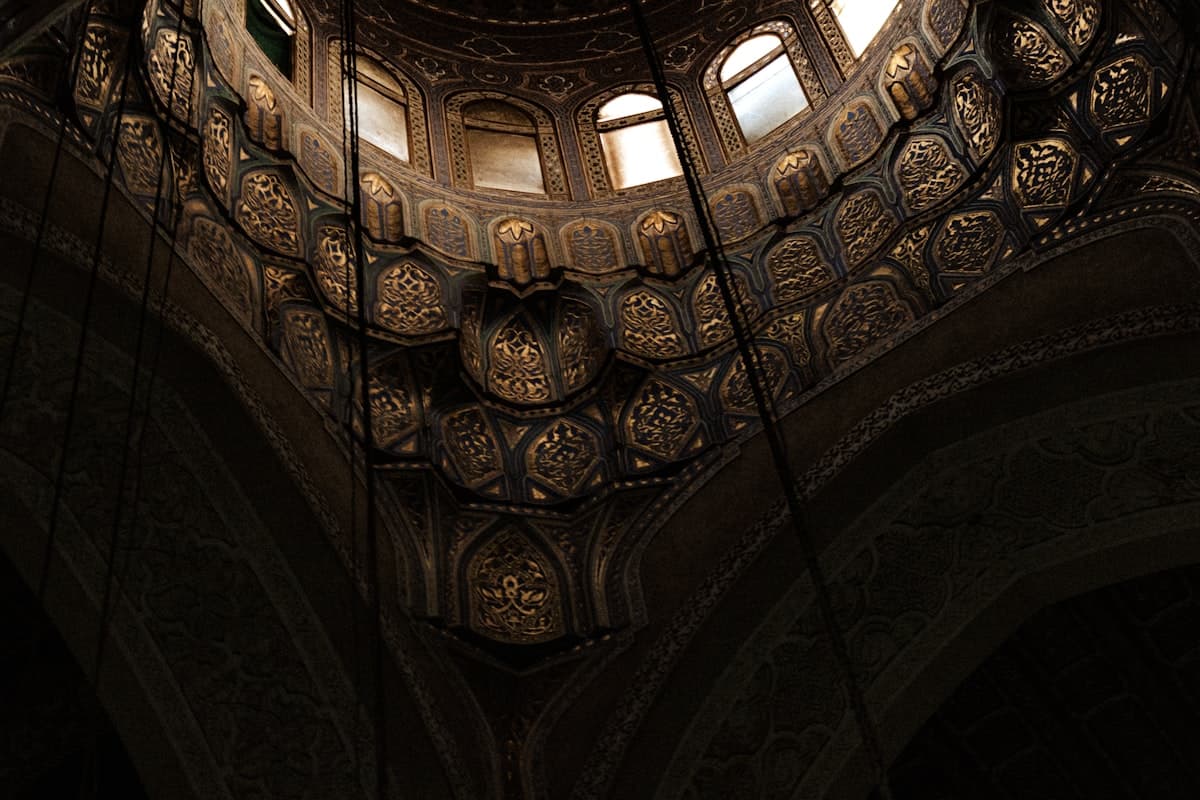
The Ottoman contribution to Cairo is not only on the Citadel hill. Walk north from the Citadel into the medieval city and you are inside the Fatimid walls, but the architecture you pass is mostly Mamluk and Ottoman layered on top of each other. The Ottomans who governed Cairo from 1517 onward built their own sabil-kuttabs (combined public fountains with Quranic schools on the upper floor) throughout the city. These are smaller and more functional than Mamluk monuments, often tucked into street corners, and they represent a different ambition: not the grand statement of a ruling dynasty but the civic infrastructure of an administrative class.
The Sabil-Kuttab of Abdel Katkhuda, built in 1744 at the junction of Sharia al-Muizz and the street leading to al-Azhar, is the best surviving example. Its projecting oriel windows, its tiled interior, and its position at an irregular street corner are entirely Ottoman in character. It was built by a man who was technically a Mamluk commander but operating within an Ottoman bureaucratic framework, which is exactly the kind of institutional ambiguity that defined Cairo for three centuries.
The Ottoman Cairo history Mohamed Ali guide cannot be complete without acknowledging that the city he inherited was already a palimpsest. Fatimid, Ayyubid, Mamluk, and Ottoman layers existed simultaneously, and Mohamed Ali added a nineteenth-century European veneer on top. The covered market of Khan el-Khalili, which tourists treat as an ancient bazaar, was established in 1382 by a Mamluk emir who demolished a Fatimid royal cemetery to build it. History in Cairo is always someone else's demolition site.
---
The Connections: What This All Links To
The Al-Rifa'i Mosque, directly across from the Sultan Hassan Mosque at the base of the Citadel hill, looks medieval but was completed in 1912 under Khedive Abbas II. It was built to house the tombs of Mohamed Ali's royal family and, eventually, of Egypt's last king, Farouk, who died in exile in Rome in 1965 and was brought back. Shah Mohammad Reza Pahlavi of Iran, deposed in 1979 and briefly sheltered by Anwar Sadat, is also buried here. A Mamluk-style mosque built in the early twentieth century contains the bodies of a deposed Egyptian king and an exiled Iranian shah. This is the kind of detail that makes Cairo's history feel genuinely novelistic rather than textbook.
The Sultan Hassan Mosque opposite was stripped of some of its marble by a later Mamluk sultan to decorate a different building across town. Mohamed Ali's builders removed stone from the Citadel's earlier structures. The Al-Rifa'i builders recycled aesthetic vocabulary from the Mamluks. Nothing in Cairo is built from scratch. Every monument is in conversation with, or in debt to, what came before it.
Connecting the Ottoman period to the present: the neighborhood of Darb al-Ahmar, running along the eastern wall of Islamic Cairo just below the Citadel, has been continuously inhabited since the Fatimid period. The Aga Khan Trust for Culture spent over a decade restoring its monuments and fabric beginning in the late 1990s. The Abu Khudra house they restored dates to the Ottoman period and gives a clearer picture of how Cairo's merchant class actually lived than any of the mosques do.
---
Common Mistakes
Arriving after 10am in summer. The Citadel is exposed hilltop stone. By mid-morning from May through September, it becomes genuinely uncomfortable and the light for photography is flat and harsh. Arrive at 8am when it opens.
Buying a Citadel ticket and ignoring the al-Nasir Muhammad Mosque. It is included in your ticket and is superior in its decorative detail and historical complexity to the Mohamed Ali Mosque. The Portuguese-Gothic column capitals looted from Crusader sites are worth ten minutes of close looking.
Skipping the Sultan Hassan and Al-Rifa'i mosques because they are outside the Citadel ticket. The combined EGP 150 or so to enter both is the best money you will spend in Cairo. Sultan Hassan's entrance portal is 38 meters high and was the tallest in medieval Islamic architecture. Standing inside it resets your sense of scale.
The sound and light show at the Citadel. It runs at night and costs EGP 400. It tells you nothing you will not learn from reading this article. The same money buys dinner for two at a decent restaurant in the Khan el-Khalili area. Skip it without guilt.
Hiring a guide inside the Citadel complex without checking credentials first. The unlicensed guides who approach visitors at the gate often have good stories and poor facts. Egypt's Ministry of Tourism issues official guide badges. Ask to see one, or book through a licensed agency in advance.
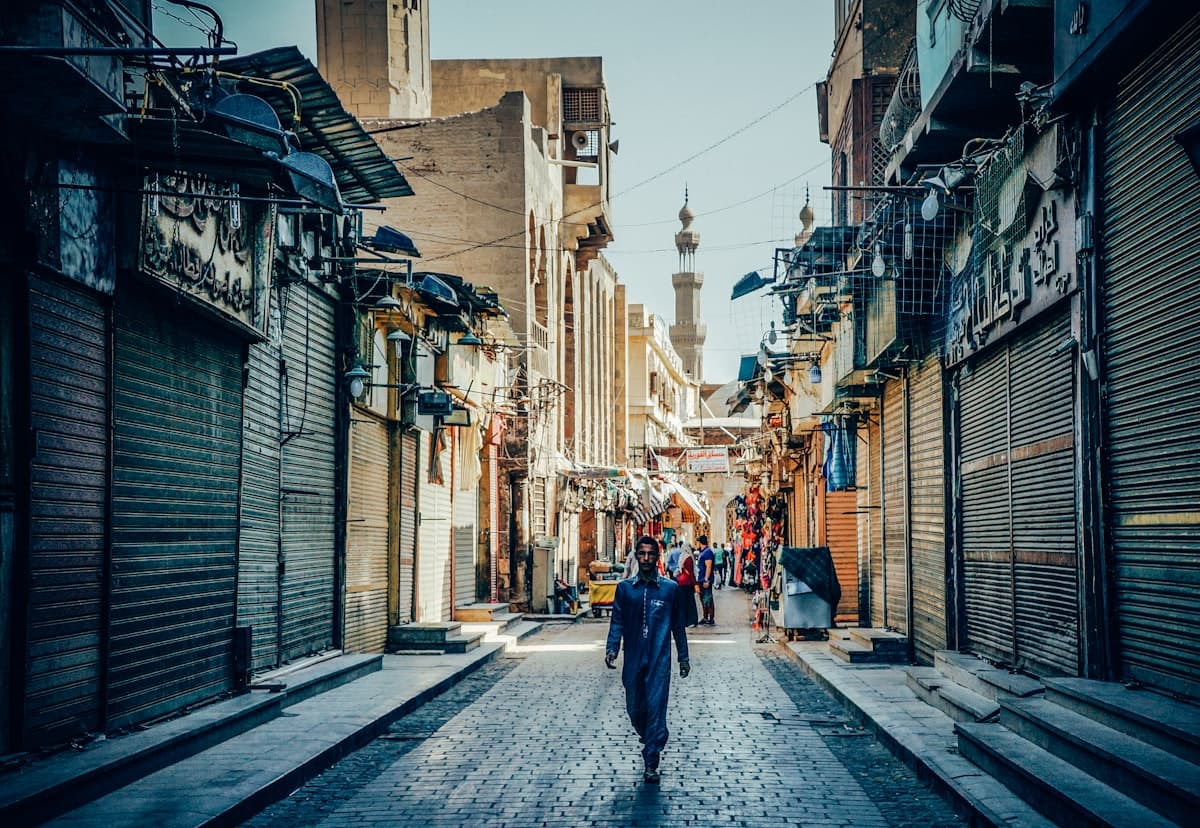
Treating Khan el-Khalili as a separate trip. It is a 20-minute walk from the base of the Citadel through Darb al-Ahmar. Combining them into one morning, starting at the Citadel at 8am and ending at the bazaar by noon before the tour groups arrive, is far more efficient than two separate journeys.
Assuming the Mohamed Ali Mosque is the oldest or most important thing on the hill. It is the most visible. That is not the same thing.
---
Practical Tips
Dress covers shoulders and knees at all mosques. The Citadel provides coverings at the Mohamed Ali Mosque entrance but they are unwieldy. Wear appropriate clothing from the start.
The water sellers inside the Citadel charge roughly three times the street price. Bring a bottle.
Friday mornings before 11am are local worship time, particularly at Mohamed Ali Mosque. Visiting then means sharing the space with Cairenes who have come to pray, which is a more honest experience than an empty tourist attraction but means reduced interior access.
The Citadel's northern enclosure, which contains the police and military museum section, occasionally closes without notice for official functions. Check with your accommodation the day before.
For the Darb al-Ahmar walk between Citadel and Khan el-Khalili: this neighborhood is safe and interesting but the streets are narrow and the navigation is genuinely confusing. Download an offline map before you go. The Aga Khan-restored Ayyubid city wall garden runs along part of this route and is free to enter.
If you are serious about Ottoman Cairo history and the Mohamed Ali period, the Museum of Islamic Art on Bab al-Khalq Square, a 15-minute taxi ride away, holds the single best collection of Mamluk and Ottoman decorative arts in the world. It reopened after restoration in 2017 and remains under-visited to a degree that is frankly baffling. Budget two hours there.
Frequently Asked Questions
The Weekly Dispatch
More on Egypt, every Friday.
Cultural depth and places most guides never mention.
No spam. Unsubscribe anytime.