Ottoman Cairo and Mohamed Ali: The Citadel Guide You Actually Need
Mohamed Ali built his mosque using stones stripped from three of Giza's smaller pyramids. Cairo's Ottoman layer runs deeper and stranger than any tour will tell you.

Quick Facts
- Best time to visit
- October to March for cooler temperatures and clearer light. Avoid midday in any season. Friday afternoons offer atmosphere but larger local crowds.
- Entrance fee
- EGP 450 (approx $9 USD), students EGP 225. Carriage Museum inside requires separate EGP 100 ticket.
- Opening hours
- Daily 8am to 5pm. Mohamed Ali Mosque closed to non-Muslim visitors during Friday prayers, approximately 11:30am to 1:30pm.
- How to get there
- Taxi from Downtown Cairo: EGP 60 to 100. Uber: approximately EGP 70. City bus 64 or 72 from Midan Tahrir: EGP 5. No metro station nearby.
- Time needed
- 2 to 3 hours for the Citadel alone. Half a day if combining with Darb al-Ahmar and the Mosque of Ibn Tulun.
- Cost range
- Budget EGP 600 to 900 including admission, transport, and street food. Mid-range EGP 1,500 to 2,000 with a licensed guide and a sit-down meal.
Quick Facts
Best time to visit: October to March, when the light on the alabaster mosque is cold and sharp rather than bleached white. Friday mornings bring intense atmosphere but larger crowds.
Entrance fees: The Citadel complex costs EGP 450 (approximately $9 USD) for adults, EGP 225 for students. This covers the Mohamed Ali Mosque, the Military Museum, and the Police Museum. The Carriage Museum inside requires a separate EGP 100 ticket that nobody tells you about at the gate.
Opening hours: Daily 8am to 5pm. The Mohamed Ali Mosque closes to non-Muslim visitors during Friday prayers, roughly 11:30am to 1:30pm.
Getting there: A taxi from Downtown Cairo costs EGP 60 to 100 depending on traffic and your negotiating energy. The 64 and 72 buses run from Midan Tahrir to the Citadel area for EGP 5. Uber is available and usually lands around EGP 70 from central Cairo. Do not let any driver take you to a papyrus shop on the way.
Time needed: Three hours minimum for the mosque, the National Military Museum, and the walls. Half a day if you plan to walk into the surrounding neighborhood of Darb al-Ahmar afterward, which you should.
Cost range: Budget EGP 600 to 900 for admission, transport, and a meal nearby. Mid-range EGP 1,500 to 2,000 if you add a guide.
---
Why This Place Matters
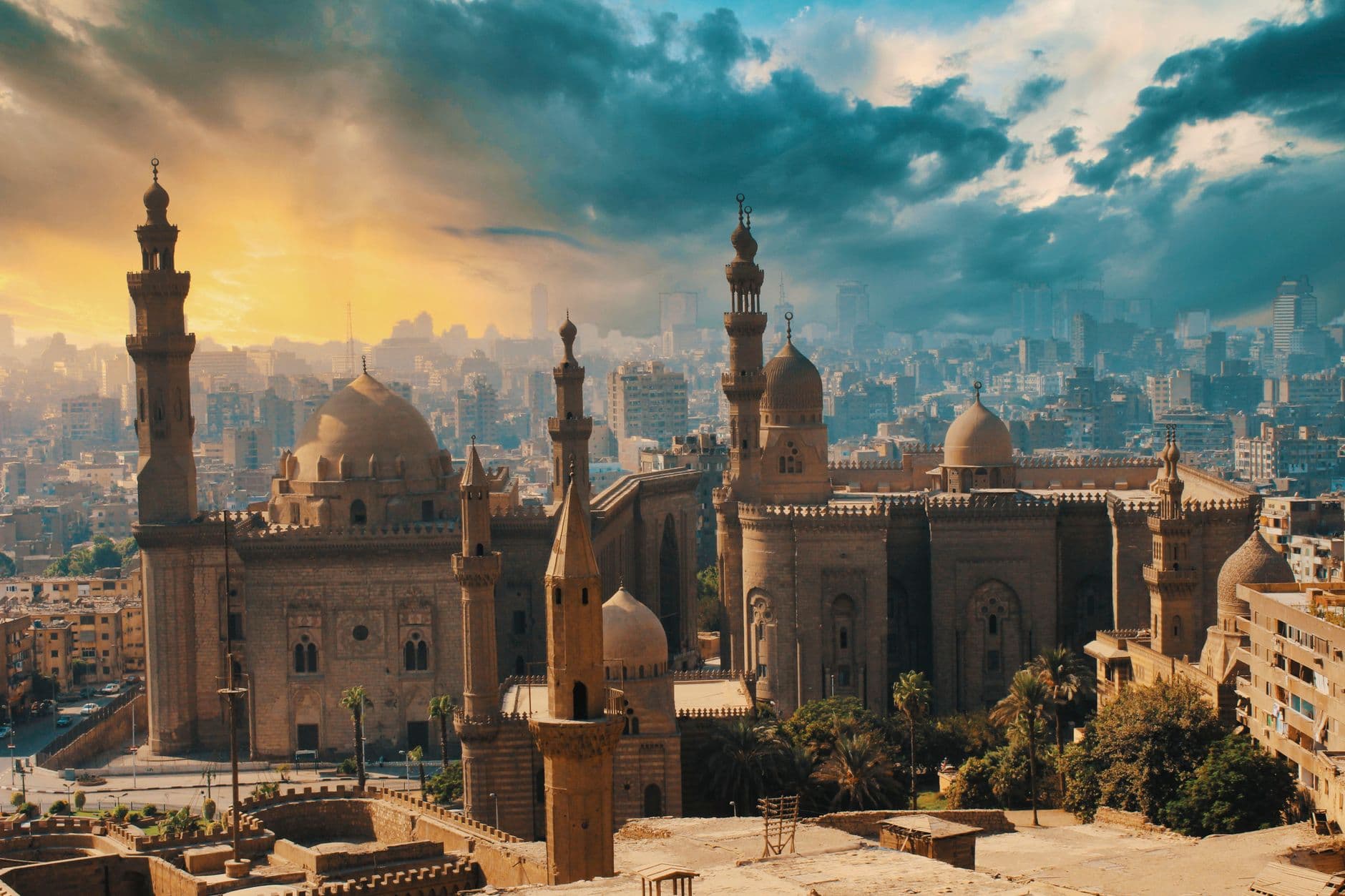
Mohamed Ali Pasha was not Egyptian. He was an Albanian soldier from the Ottoman town of Kavala, in what is now northern Greece, who arrived in Egypt in 1801 as part of an Ottoman force sent to expel Napoleon's army. Within four years he had outmaneuvered every rival, including the Mamluks who had governed Egypt for five centuries, and by 1805 he was effectively the ruler of the country. He held that position for forty-three years, during which he industrialized Egyptian agriculture, conscripted a modern army, sent educational missions to France and Italy, and nearly broke the Ottoman Empire he nominally served.
The mosque he built at the summit of the Citadel between 1830 and 1848 tells you exactly what he thought of himself. It is modeled not on any Egyptian precedent but on the great Ottoman mosques of Istanbul, specifically the Sultan Ahmed Mosque, known in the West as the Blue Mosque. The twin minarets are Ottoman pencil minarets, needle-sharp against the Cairo sky. The dome is Ottoman. Even the clock tower in the courtyard is European: a gift from French King Louis-Philippe in 1846, sent in exchange for the obelisk now standing in the Place de la Concorde in Paris. The clock has never worked reliably. The obelisk has stood in Paris for nearly two centuries without incident.
The Citadel itself predates all of this by six hundred years. Salah al-Din, the Kurdish general who defeated the Crusaders and became sultan of Egypt, began building it in 1176 on a spur of the Muqattam Hills. He chose the location because of a phenomenon he had noticed: meat left in the Citadel area stayed fresh longer than meat left anywhere else in Cairo. He correctly deduced this was caused by a consistent cool breeze, and built his fortification accordingly. What he could not have known was that his successors would turn his military fortress into the seat of Egyptian power for seven unbroken centuries, from the Ayyubids through the Mamluks through the Ottomans through Mohamed Ali's dynasty, right up until King Farouk moved the royal residence to Abdeen Palace in 1874.
---
What You Are Looking At, and What It Actually Is
The Mohamed Ali Mosque is officially called the Mosque of Muhammad Ali Pasha, and it is often called the Alabaster Mosque because its lower interior walls are sheathed in a pale, translucent alabaster quarried from Beni Suef, about 120 kilometers south of Cairo. Stand inside and look at the walls in the afternoon: the stone does not just reflect light, it absorbs and diffuses it, so the interior seems to glow from within rather than from above. This is not an accident. Egyptian alabaster has been used for exactly this quality since the Old Kingdom, when craftsmen carved canopic jars and temple floors from the same stone three thousand years before this mosque existed.
Mohamed Ali did not complete the mosque. He died in 1849, one year after construction finished, and his son Abbas I oversaw the final details. Mohamed Ali is buried inside, in a marble cenotaph on the right side of the prayer hall, enclosed in an ornate bronze screen. Visitors often photograph the cenotaph without registering whose it is. The man who transformed Egypt into a modern state, abolished the Mamluks by massacring their leaders at a banquet inside this very Citadel in 1811, and forced the Ottoman Empire to grant his family hereditary rule over Egypt lies in a corner that most tour groups walk past in under thirty seconds.
The 1811 massacre is a story the Citadel does not advertise. Mohamed Ali invited approximately 470 Mamluk leaders to a celebration and then had them ambushed in the narrow passageway that leads down from the Citadel gate. Only one Mamluk, a man named Amim Bey, reportedly survived by leaping his horse from the Citadel walls. Some historians believe the jump story is embellished. What is not embellished is that Mamluk power in Egypt ended that day, permanently.
---
The Military Museum and the Hidden Architecture of the Citadel
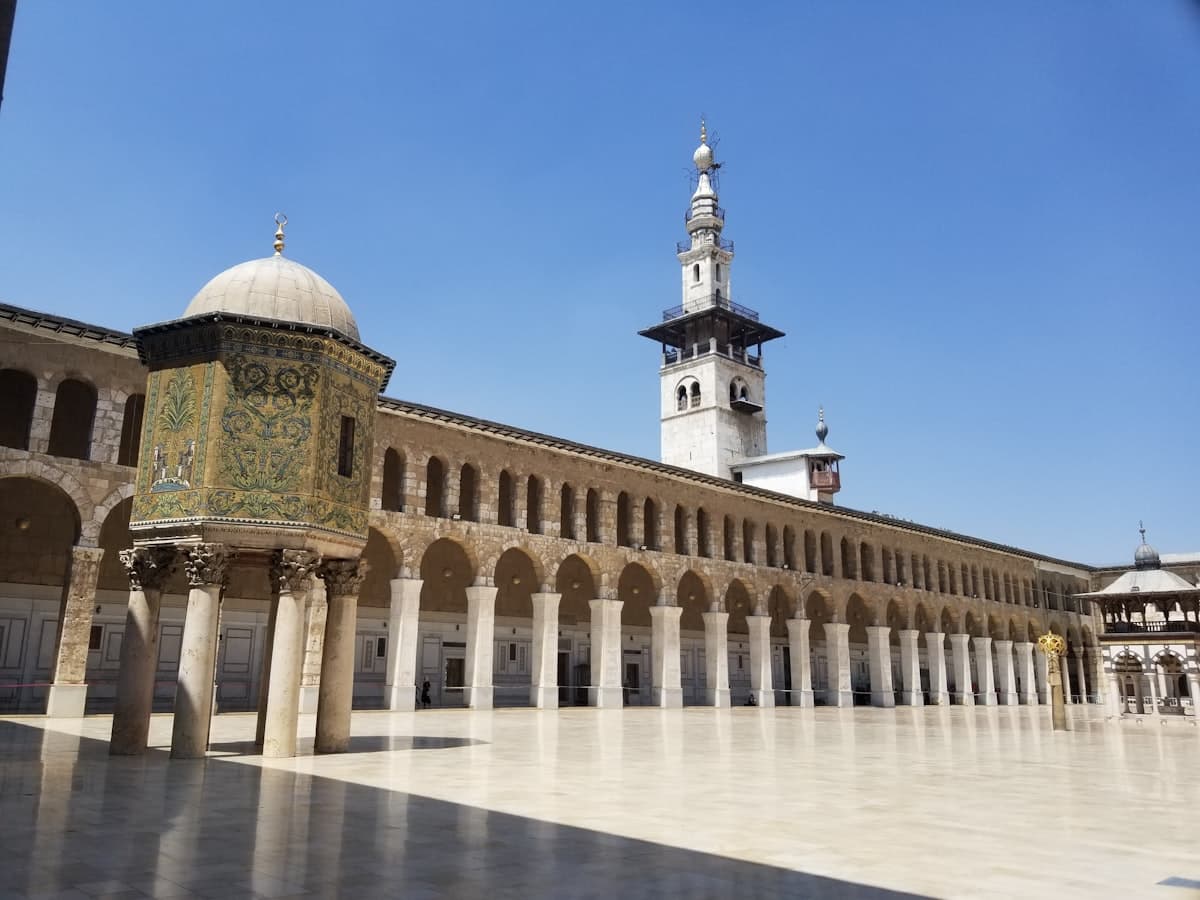
The National Military Museum occupies the palace that Mohamed Ali built as his official residence inside the Citadel complex, before his successor Abbas I moved the royal seat elsewhere. The palace was converted into the museum in 1949. Most visitors skip it entirely because the official tour narrative funnels everyone toward the mosque. This is a mistake, not because the museum is excellent (it is uneven) but because the building itself is the point.
The palace interior preserves some of the most intact European-influenced decorative work from the Mohamed Ali period in all of Egypt. Gilt ceilings, mirrored reception halls, and painted panels in a style that mixes French Empire with Ottoman ornament. It looks like someone rebuilt Versailles with a Cairo accent. This was entirely intentional. Mohamed Ali was building a court designed to be legible to European diplomats as a sophisticated, modern state. The aesthetic was political.
The Citadel walls themselves are layered history in stone. Salah al-Din's original Ayyubid construction used blocks taken from the outer casing of the Giza pyramids, the smooth white Tura limestone that once covered the pyramids before medieval Cairo stripped them for building material. Look at the lower courses of the northern walls and you can sometimes still see remnants of hieroglyphic inscription on individual stones. The Mohamed Ali Mosque was not the first structure in Cairo built using pyramid stone. It was part of a tradition stretching back to the twelfth century.
---
The Connections
The Citadel sits at the hinge of three Cairos. To the north and east is Islamic Cairo, the medieval city founded by the Fatimid dynasty in 969 CE, now a UNESCO World Heritage Site containing more medieval Islamic monuments per square kilometer than any city on earth except possibly Fez. To the south is the Mosque of Ibn Tulun, built in 879 CE by Ahmed ibn Tulun, an Abbasid governor of Turkish origin who, like Mohamed Ali a thousand years later, used his distance from the imperial center to build something closer to an independent state. Ibn Tulun's mosque is the oldest mosque in Egypt to survive in its original form. It costs EGP 100 to enter, takes twenty minutes to walk to from the Citadel, and is visited by perhaps one in fifty tourists who come to the Citadel. Go.
Below the Citadel, the neighborhood of Darb al-Ahmar contains a continuous thread of Mamluk architecture that Mohamed Ali's modernization program somehow failed to demolish entirely. The Mosque of Aqsunqur, built in 1346, has an interior tiled in the seventeenth century by a Mamluk amir who had spent time in Iznik and imported the blue tile aesthetic directly. It is known locally as the Blue Mosque, not to be confused with Istanbul's. It is also almost never visited, costs nothing to enter, and is kept by a caretaker who will bring you tea if you sit long enough. This is the Egypt that exists once you stop following the route on your tour operator's printed sheet.
The Ottoman Cairo history Mohamed Ali guide most tour operators offer covers the mosque, the courtyard clock, and the view. The view is good. The Nile bends south through the city and on a clear winter morning you can see as far as the Giza plateau. But the view is not why this place matters. It matters because every stone is a negotiation between Egyptian, Mamluk, Ottoman, and European ambition, and none of those negotiations ended cleanly.
---
Common Mistakes
Arriving by tour bus between 10am and noon. This is when every group in Cairo arrives simultaneously. The mosque courtyard, which holds the clock tower and the ablution fountain, becomes genuinely unpleasant. Come at 8am when the gates open, or after 2pm when the groups have moved to their next stop.
Paying for the sound and light show. It costs EGP 400, runs most evenings, and tells you a simplified version of what this article already told you, set to dramatic music. The Citadel at night, seen from outside its walls on the road below, is more atmospheric than any narrated show inside it. Save the EGP 400 for dinner in Darb al-Ahmar.
Spending all your time in the mosque. The Mohamed Ali Mosque is the centerpiece, but the Citadel complex is large and most of it is uncrowded. The Mosque of al-Nasir Muhammad, built in 1318 by the Mamluk sultan who ruled Egypt three separate times, sits a hundred meters from the Mohamed Ali Mosque and is visited by almost nobody. Its two minarets are tiled in green and blue faience. It is free to enter within your Citadel ticket. It is better, architecturally, than the mosque everyone photographs.
Not going to Darb al-Ahmar afterward. The neighborhood below the Citadel's eastern walls is where the Ottoman Cairo history Mohamed Ali's dynasty tried to erase actually survives. Mamluk madrasas, Fatimid walls, Coptic workshops, and one of the better ful restaurants in southern Cairo all exist within a twenty-minute walk.
Wearing shoes that require effort to remove. You will remove your shoes at the mosque entrance. You may remove them several more times if you continue into the neighborhood. Slip-on shoes are not a style recommendation, they are a time-saving one.
Hiring a guide inside the Citadel without checking credentials. Unlicensed guides attach themselves to foreign visitors at the gate. Some are genuinely knowledgeable. Others will tell you the Citadel clock tower was a gift from Cleopatra. Ask for the official license card, which Egyptian licensed guides are required to carry.
Skipping the Citadel walls entirely. The northern walls offer a long view over the City of the Dead, the vast Mamluk and Ottoman necropolis that stretches north from the Citadel and where several hundred thousand Cairenes still live among the tombs. Nobody mentions it on the standard tour. It is one of the most complex urban landscapes in the world and you can see its scale from the Citadel ramparts at no additional cost.
---
Practical Tips
Dress conservatively. The mosque is active and receives Muslim worshippers throughout the day, not just tourists. Women will be offered a robe at the entrance if needed; bringing your own scarf is more comfortable. Men in shorts will be asked to cover up, which means wearing a wrap that is less comfortable than simply wearing trousers.
Bring cash. The ticket office accepts EGP only. There is no reliable ATM inside the Citadel complex. The nearest reliable ATM is on Salah Salem Street at the base of the Muqattam Hills, about 500 meters before the main gate.
The Citadel is on a hill. The paths between buildings involve uneven paving, steps, and significant gradients. For anyone with mobility limitations, the Mohamed Ali Mosque courtyard is accessible but the walls and the Mosque of al-Nasir Muhammad involve more physical effort.
Friday is the most atmospheric day to visit but requires patience. The midday prayer draws local worshippers in significant numbers and the mosque becomes genuinely full. If you time your visit to coincide with the call to prayer, which echoes off the Citadel stones in a way that reminds you this is a working city and not a museum, the crowd is worth tolerating.
Frequently Asked Questions
The Weekly Dispatch
More on Egypt, every Friday.
Cultural depth and places most guides never mention.
No spam. Unsubscribe anytime.