Suez Canal History, British Egypt, and What the Waterway Cost
Britain occupied Egypt in 1882 to protect a canal it didn't build, didn't own, and didn't pay for. The full story is stranger than that.

Quick Facts
- Best time to visit
- October to March. Winter temperatures in the Canal Zone stay between 15 and 22 degrees Celsius. Summer combines heat with high humidity from the lakes and is genuinely uncomfortable for outdoor exploration.
- Entrance fee
- Ismailia Museum EGP 60 (approx $1.25 USD). Port Said National Museum EGP 80 (approx $1.70 USD). Canal embankment viewing is free.
- Opening hours
- Ismailia Museum: Saturday to Thursday 9am to 4pm, closed Friday. Port Said National Museum: daily except Tuesday, 9am to 4pm. Confirm De Lesseps House locally before visiting.
- How to get there
- Buses from Cairo Turgoman terminal to Ismailia: EGP 45 to 60 (approx $1 to $1.25 USD), roughly 2 hours. Buses to Port Said: EGP 80 to 100 (approx $1.70 to $2 USD), roughly 3 hours. Microbuses between Ismailia and Port Said: EGP 20 to 30, about 90 minutes.
- Time needed
- Ismailia warrants a full day minimum. Adding Port Said requires an overnight stay. The full Canal Zone circuit (Ismailia, Port Said, Suez city) takes two to three days.
- Cost range
- Budget EGP 600 to 900 per day including bus transport, museum entry, and budget accommodation. Mid-range EGP 1,800 to 2,800 per day with private driver and a mid-range hotel in Ismailia.
Quick Facts
Best time to visit: October to March. The Canal Zone cities of Ismailia and Port Said are tolerable in winter; summer humidity off the Great Bitter Lake is punishing.
Entrance fees: The Suez Canal Authority Museum in Ismailia costs EGP 60 (approx $1.25 USD). The De Lesseps House Museum in Port Said costs EGP 50 (approx $1 USD). Watching ship transits from the canal embankment is free.
Opening hours: Ismailia Museum, Saturday to Thursday 9am to 4pm, closed Friday. De Lesseps House varies; confirm locally before visiting.
How to get there: Ismailia is 120km from Cairo. Buses from Cairo's Turgoman terminal run every 30 to 45 minutes, cost EGP 45 to 60 (approx $1 to $1.25 USD), and take roughly two hours. Port Said is 220km from Cairo; direct buses cost EGP 80 to 100 (approx $1.70 to $2 USD) and take three hours. Service taxis are faster and cost slightly more.
Time needed: Ismailia alone warrants a full day. Combining Port Said and the Canal Zone requires an overnight stay.
Cost range: Budget EGP 600 to 900 per day including transport; mid-range EGP 1,800 to 2,800 per day with a private driver and decent hotel.
---
Britain occupied Egypt in 1882 to protect a canal it had spent seventeen years opposing, built largely on Egyptian forced labor, financed by French capital, and dug through land that had been a transportation corridor since the reign of Pharaoh Necho II in 600 BC. The occupation was supposed to last a few months. It lasted 74 years.
The Suez Canal is the hinge on which modern Egypt swings. It is the reason Cairo looks the way it does, the reason Ismailia exists at all, the reason a British army fought at a place called Tel el-Kebir in 1882 and killed over 2,000 Egyptian soldiers in 35 minutes, and the reason Gamal Abdel Nasser became the defining Arab political figure of the twentieth century by doing nothing more dramatic than standing at a microphone in Alexandria on July 26, 1956, and saying: it's ours now.
Most visitors to Egypt never come near the Canal Zone. They fly into Cairo, take a train to Luxor, and leave believing the country's essential story is carved into limestone. The Canal tells a different story: about debt, sovereignty, infrastructure as a weapon, and what it means for a country to own the thing that everyone else needs.
Why This Place Matters
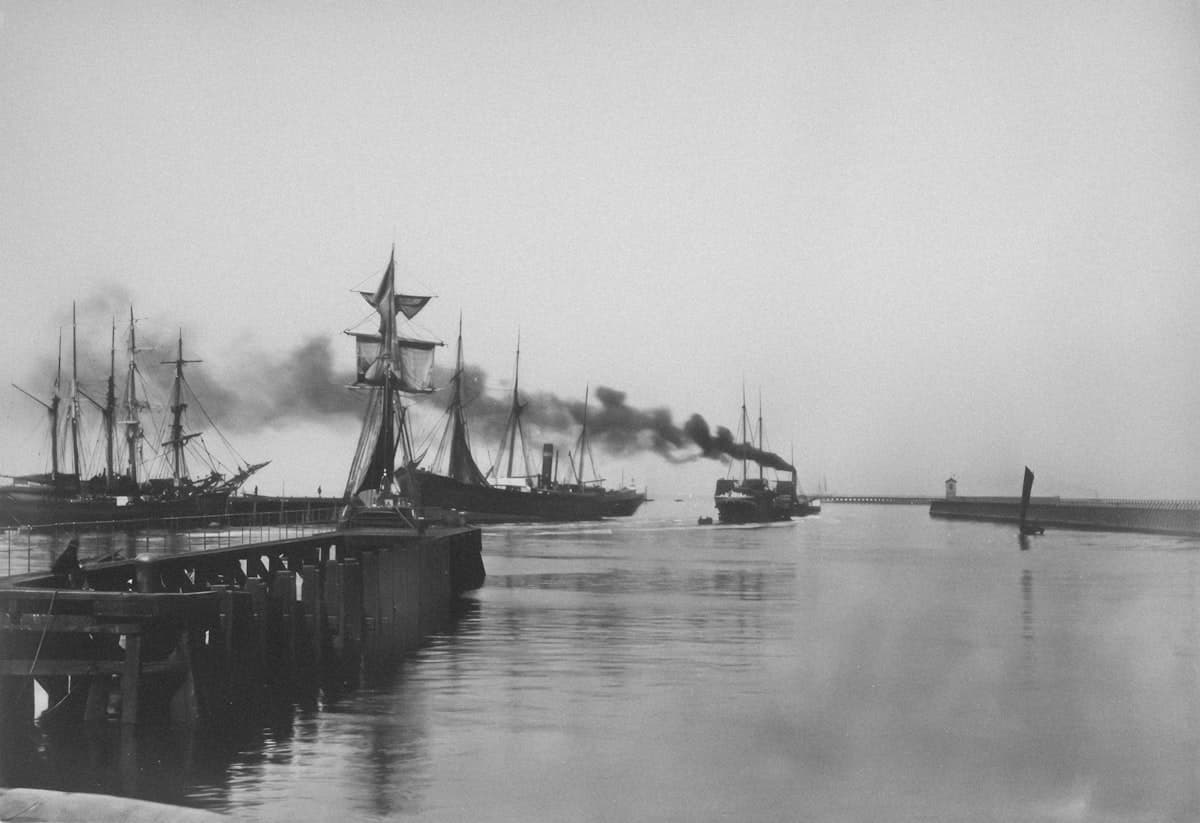
The ancient Egyptians understood what the isthmus between the Mediterranean and the Red Sea was worth. Necho II began a canal connecting the Nile to the Red Sea around 600 BC. Darius I of Persia completed it. It silted up, was reopened by Trajan, silted up again, and was finally abandoned in the eighth century AD. For twelve centuries, the idea sat dormant, which means Ferdinand de Lesseps did not invent anything. He industrialized a very old concept.
De Lesseps broke ground in April 1859. What followed was ten years of construction that consumed an estimated 1.5 million Egyptian laborers under a system called corvée, the same forced-labor mechanism the Pharaohs had used for their own monuments. The Egyptian government of Khedive Said Pasha had agreed to supply 20,000 workers per month, rotating every three months. They were paid, technically, but at rates set by the Suez Canal Company and with deductions for food and transport that often left workers with almost nothing. When pressure from European powers forced Egypt to abolish corvée labor in 1864, the Canal Company sued Egypt for breach of contract and won a judgment of 84 million francs, paid by a government that did not have it.
Egypt's share of the Canal company was 44 percent, acquired at great cost. In 1875, Khedive Ismail, drowning in debt, sold all 176,602 Egyptian shares to the British government for £4 million sterling, a transaction arranged in 72 hours by the banker Lionel de Rothschild after Disraeli asked if the money could be found without waiting for Parliamentary approval. It could. Britain now owned 44 percent of the most strategically important waterway on earth without having contributed a single worker or a single franc to its construction.
The Canal opened on November 17, 1869 with a ceremony so expensive it accelerated the bankruptcy that would eventually lead to the British occupation. Verdi was commissioned to write an opera for the occasion. He was late. Aida was not performed at the opening; the opera premiered in Cairo in December 1871, two years after the Canal opened.
The British Occupation and What It Built
When Egyptian army officers under Ahmed Urabi revolted against Khedive Tewfik and European financial control in 1881, Britain saw a threat to the Canal and acted. The bombardment of Alexandria on July 11, 1882, was followed by the Battle of Tel el-Kebir on September 13, 1882, where a British force under General Garnet Wolseley executed a night march across the desert and overran Egyptian defensive positions in less than an hour. Urabi was exiled to Ceylon. Egypt became, in everything but name, a British possession.
The British did not call it a colony. They called it a protectorate, then a veiled protectorate, then denied it was any such thing while their Consul-General, Evelyn Baring, Lord Cromer, ran the country for 24 years from 1883 to 1907. Cromer made the trains run on time, balanced the budget, expanded cotton cultivation for British mills, and consistently blocked the development of Egyptian industry and higher education on the grounds that educated Egyptians might start asking inconvenient questions. He was spectacularly right about that.
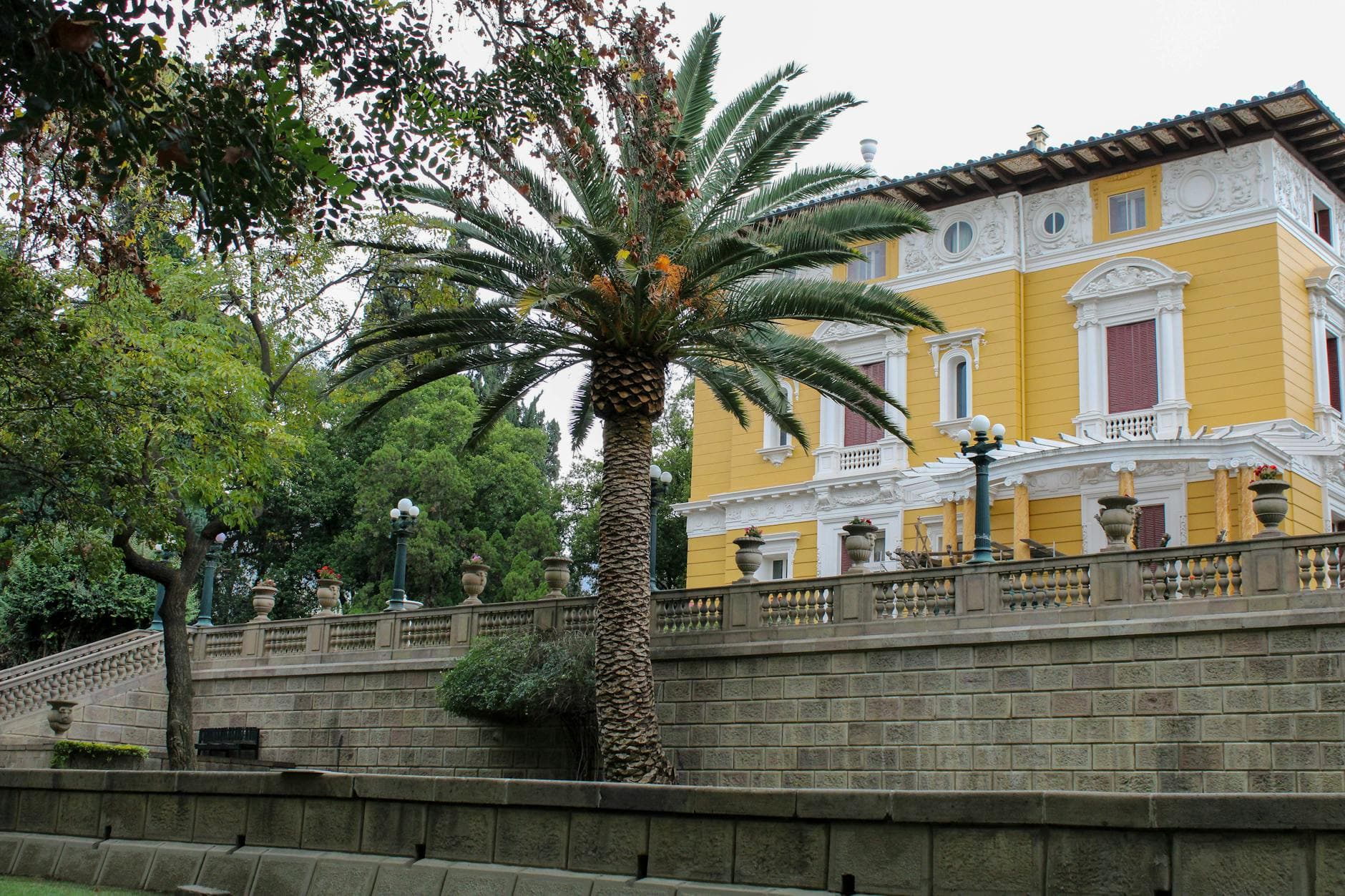
Ismailia, built to house Canal Company employees, tells you what British Egypt looked like. The French quarter has colonnaded villas and tree-lined boulevards that feel like a displaced corner of Provence. The British administrative buildings are sturdier and less graceful. The Egyptian workers' neighborhoods are smaller and further from the water. The geography of the city is the social history of the occupation made physical.
The Ismailia Museum, opened in 1934, holds one of the more dissonant collections in Egypt: Pharaonic and Greco-Roman artifacts excavated during Canal construction, sitting in a building that would not exist without the labor that found them. A limestone sphinx of Ramesses II was dug up near the canal's northern terminus. It is displayed a few meters from European architectural details. Everything about the room is a collision.
Nasser, 1956, and the Canal That Changed Direction
The nationalization of the Suez Canal on July 26, 1956 was not improvised. Nasser embedded the signal in his speech. He mentioned Ferdinand de Lesseps repeatedly, and every time he said the name, Egyptian military units moved to seize Canal Authority buildings in Ismailia, Port Said, and Suez simultaneously. By the time the speech ended, Egypt controlled the Canal. The whole operation took less time than the average guided tour of the Giza plateau.
The response was the Tripartite Aggression, as it is known in Egypt: a coordinated attack by Britain, France, and Israel in October and November 1956. Israeli forces crossed Sinai. British and French aircraft bombed Egyptian airfields. The plan was to retake the Canal and, the British and French hoped quietly, remove Nasser. The United States refused to support the operation and threatened financial sanctions against Britain. The Soviet Union threatened rocket attacks on London and Paris. Britain and France withdrew in humiliation. Nasser, who had lost militarily, won politically with a completeness rarely seen in modern history.
Port Said took a heavy bombardment in November 1956. The city has never forgotten it. The date November 5 still appears on local calendars as a day of commemoration. In the canal cities, 1956 is not history in the way that 1869 is history. It is still a position.
The Connections
The Canal did not create Egypt's relationship with external powers. It intensified a pattern as old as the Pharaohs. The Ptolemies exploited the isthmus trade routes. The Arab conquest of 641 AD was partly motivated by Alexandria's position as the Mediterranean's most important commercial port. Napoleon's 1798 expedition studied the feasibility of a canal connecting the two seas (his engineers miscalculated the sea level difference between the Mediterranean and Red Sea, incorrectly concluding the project was impossible, and thereby delayed construction by sixty years).
The Cotton Exchange in Alexandria, which drove Egypt's economy during the British period, was itself tied to the Canal: faster access to Asian markets meant Egyptian long-staple cotton became a global commodity. The wealth of Garden City and Zamalek in Cairo, those ornate early twentieth-century neighborhoods of Beaux-Arts villas, was built on cotton profits that flowed through a Canal built by forced labor.
The Bitter Lakes, which the Canal passes through, were salt flats in antiquity and are now the resting place of one of the strangest footnotes in naval history. In 1967, after the Six-Day War, Egypt closed the Canal to shipping. Fourteen cargo ships from eight nations were caught in the Great Bitter Lake when the Canal closed and could not leave. They sat there for eight years, until 1975, becoming a miniature floating community with its own postal service, Olympic games, and newspaper. The crews rotated home on leave, but the ships themselves were stuck. They were called the Yellow Fleet because of the desert sand that accumulated on their decks.
Common Mistakes
Skipping Ismailia entirely. Almost every Suez Canal history British Egypt guide funnels visitors to Port Said because of the striking colonial-era architecture and the waterfront. Ismailia is the more coherent city for understanding what the Canal Zone actually was. It has the better museum, the De Lesseps family villa, and the canal embankment where you can watch container ships pass at close range. Port Said is worth a half-day. Ismailia is worth a full one.
Taking the organized "Canal crossing" tourist ferry from Port Said as if it constitutes experiencing the Canal. It does not. It takes ten minutes, crosses a narrow section with no ship traffic visible, and costs more than the bus from Cairo. Watch ships from the Ismailia embankment instead. They are enormous and they pass close enough that you can read the hull text.
Treating the Canal Museum in Ismailia as optional. The labels are in Arabic and French with minimal English translation. Bring a translation app or hire a local guide for two hours. The artifacts inside include objects excavated during construction that have no parallel display anywhere else in Egypt, including tools and personal items belonging to workers whose names were never recorded anywhere else.
Conflating the 1869 opening ceremony with the Canal's actual history. Every popular account focuses on the khedival excess of the opening party. The more important date is 1864, when corvée labor was abolished and Egypt was immediately handed a debt that compounded into the fiscal crisis that led to the 1875 share sale that led to the British occupation. The party is a distraction from the mechanism.
Visiting in July or August. The Canal Zone has no elevation and no desert breeze. High summer temperatures combined with humidity from the lakes make outdoor exploration genuinely unpleasant. The container ships do not look better in 40-degree heat.
Paying for a private boat tour marketed as a "Suez Canal experience" from Port Said's tourist pier. These tours show you a stretch of water. The Canal is best understood from land, in the cities it created, not from a boat that keeps you at a distance from everything that matters.
Practical Tips
Ismailia is the logical base. Hotels cluster near Forsan Island, which sits in Lake Timsah. Mid-range options run EGP 900 to 1,400 per night. The embankment area north of the island gives the best unobstructed view of ship transits; large vessels pass every 30 to 90 minutes in convoy.
Port Said is a day trip from Ismailia, 90km north on a direct road with frequent microbuses costing EGP 20 to 30 (approx $0.40 to $0.60 USD). The city's waterfront corniche and the National Museum of Port Said (EGP 80, approx $1.70 USD) are the two things worth your time there.
The Canal Authority headquarters in Ismailia is not open to the public, but the surrounding administrative district, built in the 1860s and 1870s, is intact enough to walk through. The De Lesseps House, where the engineer lived during construction, is in this zone. Verify opening status before visiting as hours shift seasonally.
For the Suez city itself, at the southern end of the Canal, the story is primarily the 1973 October War. The city was almost entirely evacuated and heavily shelled between 1967 and 1975. It was rebuilt afterward, which means it has less colonial-era fabric than Ismailia or Port Said but a different kind of weight. The war memorial and the Canal Authority offices in Suez city are accessible. The city warrants half a day if you are doing the full Canal Zone circuit.
A guide who knows the Canal Zone's modern political history is worth finding. The standard Pharaonic-specialist guides who operate out of Cairo and Luxor generally have limited depth here. Ask your Ismailia hotel to recommend someone local. Rates run EGP 400 to 700 for a half-day, and the difference in what you understand afterward is not marginal.
Frequently Asked Questions
The Weekly Dispatch
More on Egypt, every Friday.
Cultural depth and places most guides never mention.
No spam. Unsubscribe anytime.