Syrian Community Egypt History Guide: Cairo's Hidden Quarter
Syrians have been reshaping Cairo since the 7th century. The neighborhood they built in medieval times still trades in the same goods, on the same streets, for the same reasons.

Quick Facts
- Best time to visit
- October through April. The lanes of Islamic Cairo are narrow and offer little shade; summer temperatures above 35C make sustained walking unpleasant. Friday mornings before noon are the quietest time of the week.
- Entrance fee
- Most streets are free to walk. Beit el-Suhaymi: EGP 100 (approx $2 USD). Qalawun complex: EGP 100 (approx $2 USD). Coptic Museum in Old Cairo: EGP 200 (approx $4 USD).
- Opening hours
- Neighborhood streets: all hours. Beit el-Suhaymi: daily 9am to 5pm. Mosque complexes: accessible outside the five daily prayer times; early morning 7 to 9am is quietest.
- How to get there
- Metro Line 2 to El-Ataba station, then 12-minute walk east (free after metro fare of EGP 10 to 15). Uber or Careem from Downtown Cairo: EGP 40 to 80. Taxi: EGP 30 to 60. For Nasr City Syrian district: Uber from Downtown approximately EGP 60 to 100.
- Time needed
- 2 to 3 hours for the core Syrian quarter walk. Full day if combining with Beit el-Suhaymi, the Qalawun complex, lunch, and an afternoon visit to the Nasr City restaurant district.
- Cost range
- Budget EGP 200 to 500 per person (entry fees plus street food). Mid-range EGP 800 to 1,500 with a specialist guide and a sit-down Syrian meal.
Quick Facts
Best time to visit: October through April, when the air in the old city is cool enough to walk slowly. Summer heat in Khan el-Khalili and the surrounding lanes makes sustained exploration exhausting by 10am.
Entrance fees: The streets and neighborhoods described here are public. Entry to Beit el-Suhaymi costs EGP 100 (approx $2 USD). The Mosque of Sultan Qalawun complex costs EGP 100 (approx $2 USD) for non-Muslims during non-prayer hours. The Coptic Museum in Old Cairo is EGP 200 (approx $4 USD).
Opening hours: Neighborhood streets are accessible at all hours. Beit el-Suhaymi is open daily 9am to 5pm. The Qalawun complex can be entered outside the five daily prayer times; early morning (7 to 9am) is quietest.
How to get there: Metro Line 2 to El-Ataba station, then a 12-minute walk east toward the Muski. Taxis from Downtown Cairo cost EGP 30 to 60. Uber and Careem are reliable from most Cairo neighborhoods; expect EGP 50 to 100 depending on origin.
Time needed: A serious walk through the Syrian quarter around Al-Muski and Sharia al-Mu'izz takes two to three hours. Add another two hours if you visit Beit el-Suhaymi and the Qalawun complex. A full day if you extend to Old Cairo's Coptic and Roman layers.
Cost range: Budget EGP 200 to 500 per person including entry fees and street food. Mid-range EGP 800 to 1,500 if you add lunch at a traditional restaurant and a guide.
---
Cairo absorbed Damascus slowly, then all at once. The Syrians who arrived after the 7th-century Arab conquest of Egypt were administrators, scholars, and merchants. Those who followed over the next fourteen centuries were refugees from Crusader sieges, Ottoman tax collectors, Napoleonic chaos, and the particular violence of the early 21st century. Each wave settled in almost exactly the same part of the city: the zone radiating east and north from Bab Zuweila, in the lanes that Cairenes still call, without historical irony, Al-Sham. The word means Syria. It also means, in classical Arabic, the north. In Cairo, it has always meant both.
What makes this remarkable is not the migration itself but the continuity. The Syrian community in Egypt did not fade into the general population and vanish. It maintained identifiable trades, distinct religious practices, specific architectural preferences, and a culinary tradition that you can still trace, if you know where to eat and what to ask. This is not a heritage trail constructed for tourists. It is a living commercial and residential district that happens to be thirteen centuries old.
Why This Place Matters
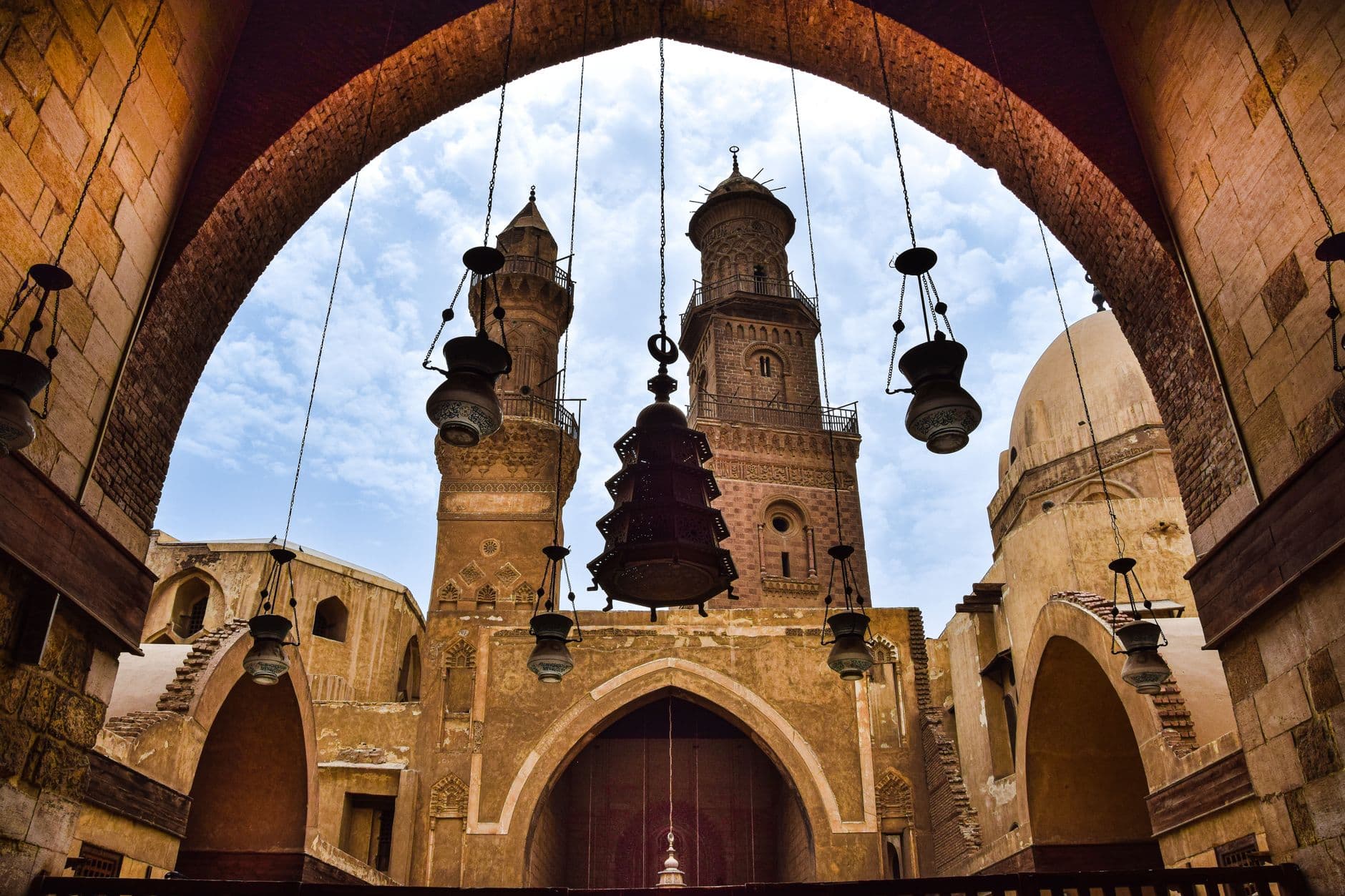
The Syrian presence in Egypt predates Islam. Coptic sources from the 4th and 5th centuries mention Syriac-speaking Christian merchants in Alexandria trading textiles and spices along the same routes that their successors would use for another millennium. But the decisive moment came in 641 CE, when the Arab general Amr ibn al-As completed his conquest of Byzantine Egypt. Among his soldiers and their families were large numbers from Syria and the Levant. They settled in Fustat, the garrison city that would eventually grow into Cairo, and they brought their craft traditions with them.
By the Fatimid period (969 to 1171 CE), the Syrian connection had become structural. The Fatimid Caliphate, which built Cairo proper and named it Al-Qahira, maintained deep administrative and commercial ties with Syrian cities. Merchants from Aleppo and Damascus were given dedicated streets in the new city. The perfume traders of Aleppo, who had refined their craft over centuries, settled in what is now the Muski area and established a soap and perfume trade that continues today. The same street still smells of similar things.
The most consequential Syrian migration to Egypt came not through commerce but through war. When the Mongols destroyed Aleppo in 1260 and sacked Damascus shortly after, tens of thousands of Syrian craftsmen, scholars, and merchants fled south. Cairo absorbed them. The Mamluk sultans, who had just defeated the Mongols at the Battle of Ain Jalut (the first major military defeat of a Mongol army in history, fought in what is now northern Israel), actively recruited Syrian expertise for their building projects. The exquisite stone inlay work visible on Mamluk mosques throughout Cairo, including the Mosque of Sultan Hassan and the Qalawun complex on Sharia al-Mu'izz, was executed largely by Syrian craftsmen who had carried their tools and techniques south from cities the Mongols had just destroyed.
The Streets That Remember
Start at the northern end of Sharia al-Mu'izz li-Din Allah, Cairo's medieval spine, and walk south. The street has been described as the world's largest open-air museum of Islamic architecture, which is true but undersells the specific Syrian contribution to what you are looking at.
At the Qalawun complex (built between 1284 and 1285), pause at the facade. The alternating voussoirs, the ablaq stone technique that creates a striped arch pattern in black and white or red and white stone, is Syrian in origin. It arrived in Cairo carried by architects who learned it in Damascus and Aleppo. Sultan Qalawun himself was a Kipchak Turkish former slave who became Sultan of Egypt, but the men who built his monument came from the Levant. The hospital that formed part of the complex, the Bimaristan al-Mansuri, was the most advanced medical facility in the medieval world and remained operational for six hundred years, only closing in 1856.
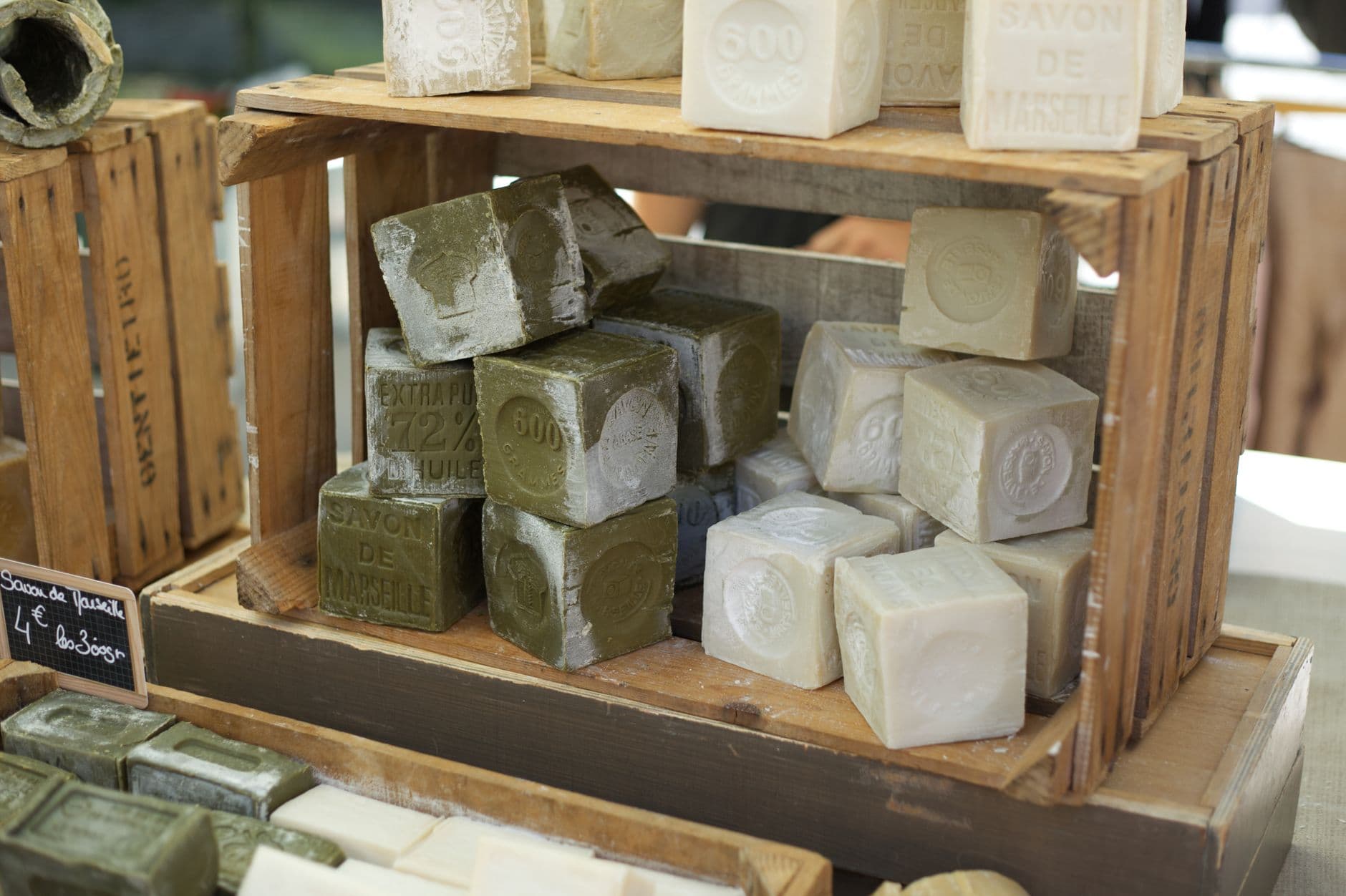
Walk south toward the Muski intersection and you enter the commercial district that Syrian merchants organized in the medieval period. The soap sellers are still here. The perfume stalls still stock Aleppo-style products, though now the genuine Aleppo soap, made with laurel berry oil, is imported from Turkey and Syria alongside Egyptian imitations. Ask a vendor to show you the difference. The authentic version is dark green inside, cut from a large block, and smells of bay. The Egyptian substitute is uniform and paler. This is not a minor distinction. Aleppo soap is one of the world's oldest continuously manufactured cosmetic products, with production documented to at least the 8th century, and it reached Egypt through the same trade routes that brought its makers.
Beit el-Suhaymi, a 17th-century merchant's house on Darb al-Asfar lane, is worth the EGP 100 entry. The house belonged to a sheikh of Al-Azhar, but its architecture shows heavy Levantine influence: the central courtyard design, the mashrabiya screens, and the reception hall orientation all reflect the hybrid Cairo-Damascus domestic style that wealthier Syrian-Egyptian families preferred. The house was built in 1648 and expanded in 1796. It survived because it was used as a school, then a police station, then nothing at all, which is often how Cairo's best buildings survive.
The Modern Wave and What It Changed
The Syrian community Egypt has known since the Arab Spring began in 2011 is different in scale from anything that preceded it. By 2015, Egypt hosted an estimated 400,000 to 500,000 Syrian refugees, according to UNHCR figures, though the actual number including undocumented arrivals was likely higher. They settled primarily in Cairo, with concentrations in the neighborhoods of 6th of October City, Nasr City, and, significantly, in the older parts of the city near the historic Syrian quarter.
The culinary impact was immediate and visible. Syrian restaurants opened across Cairo with a speed that surprised even longtime residents. The good ones brought dishes that Cairenes had not encountered before, or had encountered only in diluted form: proper kibbeh made by women from Homs who had been making it since childhood, muhammara (a roasted red pepper and walnut paste from Aleppo) served as it should be rather than as a novelty, Syrian-style sweets that use more semolina and less sugar than their Egyptian equivalents.
For travelers engaging with this Syrian community Egypt history guide, the most honest advice is this: the intersection of old and new Syrian Cairo is most visible in the area around Abbasiya and in parts of Heliopolis where new Syrian-owned businesses operate within walking distance of older Levantine-influenced mosques and schools. A Syrian pastry shop in Nasr City selling ma'amoul (date-filled shortbread cookies) is engaging in exactly the same trade that Syrian confectioners pursued in the Muski eight hundred years ago. The product, the technique, and the demographic logic are nearly identical.
The Connections
The Syrian footprint in Cairo is not confined to the Islamic city. In Old Cairo, the Coptic quarter contains churches that maintained liturgical ties with the Syriac Christian tradition well into the medieval period. The Hanging Church (Al-Muallaqah), built over the southern gate tower of the Roman fortress of Babylon, used Coptic and Syriac interchangeably in its liturgy until the 12th century. The Syriac and Coptic Christian communities traded manuscripts, clergy, and theological arguments for centuries. Several of the icons in the Coptic Museum's collection show iconographic conventions that came directly from Syrian Christian workshops in Antioch.
At Al-Azhar University, founded by the Fatimids in 970 CE and still one of the world's preeminent centers of Islamic scholarship, Syrian scholars have held senior positions in almost every century since the institution's founding. The current curriculum still teaches texts written by Syrian-born scholars in the 12th and 13th centuries. The thread is unbroken.
The Ottoman period (1517 to 1798) brought a new administrative Syrian connection. Many of Egypt's provincial governors under Ottoman rule came from Syrian-origin families, and the architectural style of late Ottoman Cairo shows clear Damascus influence in its domestic buildings: inlaid marble floors, painted wooden ceilings, and central courtyard arrangements that are more common in Syrian houses than in the earlier Cairene style.
Common Mistakes
Skipping the back lanes for Sharia al-Mu'izz. The main street is genuinely important but genuinely crowded after 10am. The Syrian-influenced quarter runs through side lanes: Darb al-Asfar, Sharia al-Gamaliya, and the area around the Mosque of al-Aqmar. These are quieter, less photographed, and more commercially authentic.
Treating the Khan el-Khalili bazaar as the whole story. Khan el-Khalili was built in 1382 by the Mamluk emir Jarkas el-Khalili on land that was previously a Fatimid royal cemetery. It is interesting historically but commercially it is now almost entirely oriented toward tourist goods. The Syrian soap and spice trade happens two blocks north, not inside the Khan.
Buying 'Aleppo soap' in tourist shops without checking the label. Most of what is sold as Aleppo soap in Khan el-Khalili is Egyptian-made with added coloring. Genuine imported Aleppo soap is sold in the Muski district by vendors who deal in bulk, not by shopkeepers who also sell papyrus and scarab magnets.
Taking the sound and light show at the Citadel. It costs EGP 350, lasts forty-five minutes, and contains historical errors. The Citadel itself is worth visiting for the Muhammad Ali Mosque and the view, but the show is a waste of an evening that could be spent eating Syrian food in Nasr City.
Assuming the Syrian refugee presence is invisible or marginal. Some guides to Cairo present the city as unchanged. The new Syrian community has altered Cairo's restaurant culture, its pastry offerings, its textile market, and parts of its Arabic dialect (younger Cairenes have absorbed Syrian slang from Syrian soap operas that have been popular in Egypt for twenty years). This is worth paying attention to rather than filtering out.
Going only in the afternoon. The lanes around Sharia al-Mu'izz are most alive before 9am and after 4pm. Midday is crowded with tour groups and the light is harsh. Early morning is when the fruit sellers, bread vendors, and regular Cairenes use these streets for actual life rather than tourism.
Missing the food entirely. There are two Syrian restaurants near the Muski worth finding: ask any resident of the area to direct you to a Syrian fatteh or Syrian-style shawarma vendor. The shawarma in this district uses Syrian-style marinated lamb on a vertical spit, a technique that differs from the Egyptian version (which is usually chicken), and it is considerably better.
Practical Tips
Dress modestly when entering the mosque complexes: shoulders and knees covered for both men and women. Women will be offered a headscarf at the entrance to most mosques; bring your own if you prefer.
A guide who specializes in Islamic Cairo (not a general Pyramids guide repurposed for the old city) makes a significant difference. The going rate for a licensed specialist guide is EGP 400 to 700 for a half-day. This is worth it for a first visit.
For the modern Syrian community angle, the neighborhood of Nasr City, specifically the streets around Abbass el Akkad, has the highest concentration of Syrian-owned restaurants, bakeries, and shops. This is accessible by Uber from Downtown Cairo for approximately EGP 60 to 80, and it requires no historical preparation, only an appetite.
Carry small denomination cash. Most vendors in the old lanes do not use cards, and the ATMs near Khan el-Khalili frequently run out of cash on weekends. Withdraw from a bank ATM in Downtown Cairo before heading east.
Friday morning is the single best time to visit the old city. Many tourists assume Friday will be crowded because it is the main day of Islamic communal prayer. The opposite is true before noon: the streets are quieter, the mosques are preparing for the Friday sermon rather than receiving visitors, and the residential character of the neighborhood is more visible. After Friday prayers (around 1pm), it becomes crowded again.
Frequently Asked Questions
The Weekly Dispatch
More on Egypt, every Friday.
Cultural depth and places most guides never mention.
No spam. Unsubscribe anytime.