Syrian Community in Egypt: Cairo's Living History Guide
Cairo absorbed over 1.5 million Syrians after 2011. They didn't start from scratch. Syrians have shaped this city for seven centuries. Here's where to find that history.

Quick Facts
- Best time to visit
- October through April for comfortable temperatures. Ramadan evenings in Ain Shams and Hadayek el-Qubba are particularly atmospheric and worth planning around specifically.
- Entrance fee
- Neighborhood exploration is free. Connected Mamluk monuments: EGP 100 to EGP 300 (approx $2 to $6 USD). Al-Azhar Mosque is free for all visitors.
- Opening hours
- Syrian-owned businesses in Ain Shams typically open 9am to midnight. Friday mornings are quiet; Friday evenings after prayers are the most social. Best exploration window is 10am to 10pm any day except Friday morning.
- How to get there
- Metro Line 1 to Ain Shams or El-Marg stations, EGP 7 from central Cairo. Minibus from Ramses EGP 3 to EGP 5. Uber or Careem from Downtown EGP 80 to EGP 140, 20 to 35 minutes depending on traffic.
- Time needed
- Half a day for the neighborhood walk in Ain Shams. Full day if combining with Mamluk monuments in Islamic Cairo, which adds essential historical context.
- Cost range
- Budget EGP 200 to EGP 400 for food, transport, and monuments. Mid-range EGP 600 to EGP 1,000 with a sit-down Syrian meal and taxi transport.
Quick Facts
Best time to visit: October through April, when Cairo's heat is manageable and the neighborhoods are at their most social. Ramadan evenings in Ain Shams and Hadayek el-Qubba are worth planning around specifically.
Entrance fees: Most Syrian-run cultural sites, restaurants, and community spaces are free to enter. The Mamluk mosques and monuments connected to this history charge between EGP 100 and EGP 300 (approximately $2 to $6 USD). Al-Azhar Mosque, free for all visitors.
Opening hours: Neighborhood exploration is best done between 10am and 10pm. Syrian-owned businesses in Ain Shams are typically open from 9am to midnight. Friday mornings are quieter; Friday afternoons after prayer are lively.
How to get there: Ain Shams, now the densest Syrian neighborhood in Cairo, is accessible by metro to El-Marg or Ain Shams stations on Line 1, approximately EGP 7 from central Cairo. Minibuses from Ramses run regularly for EGP 3 to EGP 5. Uber or Careem from Downtown takes 20 to 35 minutes depending on traffic and costs EGP 80 to EGP 140.
Time needed: Half a day for the neighborhood walk. A full day if you combine it with the Mamluk sites in Islamic Cairo that carry the older layers of this story.
Cost range: Budget EGP 200 to EGP 400 for food, transport, and a monument or two. Mid-range EGP 600 to EGP 1,000 if you sit down for a proper Syrian meal and take a taxi.
---
Somewhere around 1.5 million Syrians live in Egypt, most of them in Cairo, most of them having arrived after 2011. Tour operators don't know what to do with this fact. It doesn't fit the Pharaonic itinerary. It doesn't have a ticket booth or a UNESCO plaque. But if you want to understand how Cairo actually works, how it has always worked, this is essential material. Because Syrians have been arriving in Egypt, shaping it, being absorbed by it, and leaving their mark on its architecture, food, language, and religion for roughly 700 years. The post-2011 wave is the newest chapter of a very old story.
Why This Place Matters
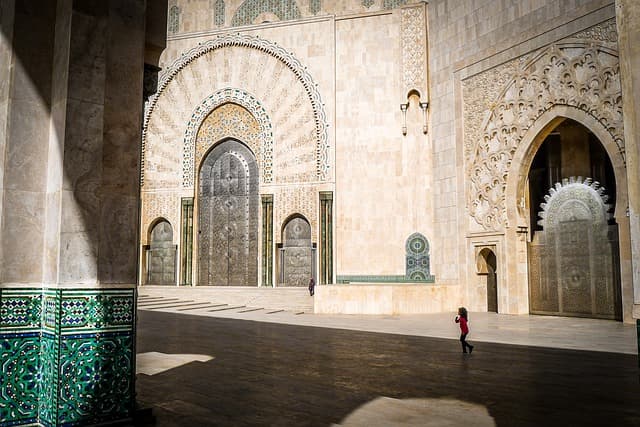
The Mamluk sultanate, which ruled Egypt from 1250 to 1517 and built the skyline of Islamic Cairo that you see today, was a Syrian-Egyptian hybrid project from its very beginning. The word Mamluk means "owned," referring to the slave soldiers, many of them from the Levant and Central Asia, who overthrew the Ayyubid dynasty and took power for themselves. Several of the most important Mamluk sultans, including Baybars I, who stopped the Mongol advance at the Battle of Ain Jalut in 1260, came from or through Syrian territory. Baybars later controlled both Egypt and Syria as a unified state, moving his court between Cairo and Damascus with a regularity that made the two cities functionally linked for generations.
The result is visible in stone. The mosque of Sultan Hassan, completed in 1363 and widely considered the greatest example of Mamluk architecture anywhere, was built by craftsmen whose design vocabulary came as much from Aleppo and Damascus as from Cairo. The muqarnas ceilings, the proportional logic of the minarets, the specific geometry of the carved stone screens: these are Levantine as much as Egyptian. When you stand in that courtyard, you are standing inside a conversation between two civilizations.
Then came 2011, and the conversation resumed at enormous scale.
The Neighborhoods: Ain Shams and Beyond
Ain Shams was a lower-middle-class Cairo neighborhood before the Syrian wave. It remains one now, except that its commercial streets have been reorganized around Syrian tastes, Syrian prices, and Syrian working hours. Walk along Gamal Abdel Nasser Street in Ain Shams on any evening and you will find bakeries selling ka'ak bi-anise and mamoul with walnut, butchers cutting meat in the Aleppan style, and fruit stands stocked with items that Cairo's older markets don't regularly carry, including Syrian varieties of fig and dried apricot that come north through the Sinai supply chain.
What you won't find is a designated "Syrian quarter" with a gate and a sign. That's not how Cairo absorbs people. The Syrian presence in Ain Shams is real and dense, but it sits alongside Egyptian families who have lived there for three generations, Sudanese households who arrived in the 1990s, and Palestinian families whose presence in Cairo dates to 1948. This is the Cairo pattern: not segregation but layering. Each community occupies the same streets at different hours, using the same infrastructure for different purposes.
Hadayek el-Qubba, a slightly more middle-class neighborhood to the southwest, attracted Syrian families with more financial resources. Several Syrian-owned restaurants there have become institutions in under a decade: places serving Aleppan kebab with pomegranate molasses, or Damascus-style falafel made with broad beans rather than the chickpeas Cairo uses, small differences that regulars notice and debate the way Cairenes debate everything.
For the Syrian community Egypt history guide to make sense, you have to visit both areas, because they show you two economic registers of the same displacement.
The Food as Historical Document
Syrian food in Cairo is not simply an ethnic restaurant trend. It is a historical record of what Syrians brought with them and what Egypt already had waiting. Kibbeh exists in Egyptian cooking, but the Syrian version in Cairo's new restaurants uses a spice ratio, specifically the balance of allspice to cinnamon to black pepper, that is distinctly Levantine. Egyptian chefs have started adapting their recipes in response. Within one generation, these dishes will be "Egyptian" in the way that ta'amiya was once foreign and is now definitional.
The coffee culture is similar. Syrian men in particular maintained the tradition of the ahwa (coffeehouse) as a working space and a social institution. The ahwas that Syrian men have established or taken over in Ain Shams look physically identical to old Cairo coffeehouses, with the same backgammon boards and tea glasses, but the conversations inside are in a Syrian dialect that Egyptian regulars are slowly learning to parse. Language borrowing is already happening. Certain Syrian expressions have entered the Cairene street vocabulary of the younger generation, particularly among the delivery drivers and market workers who interact daily across communities.
The Connections: Seven Centuries of Levantine Cairo
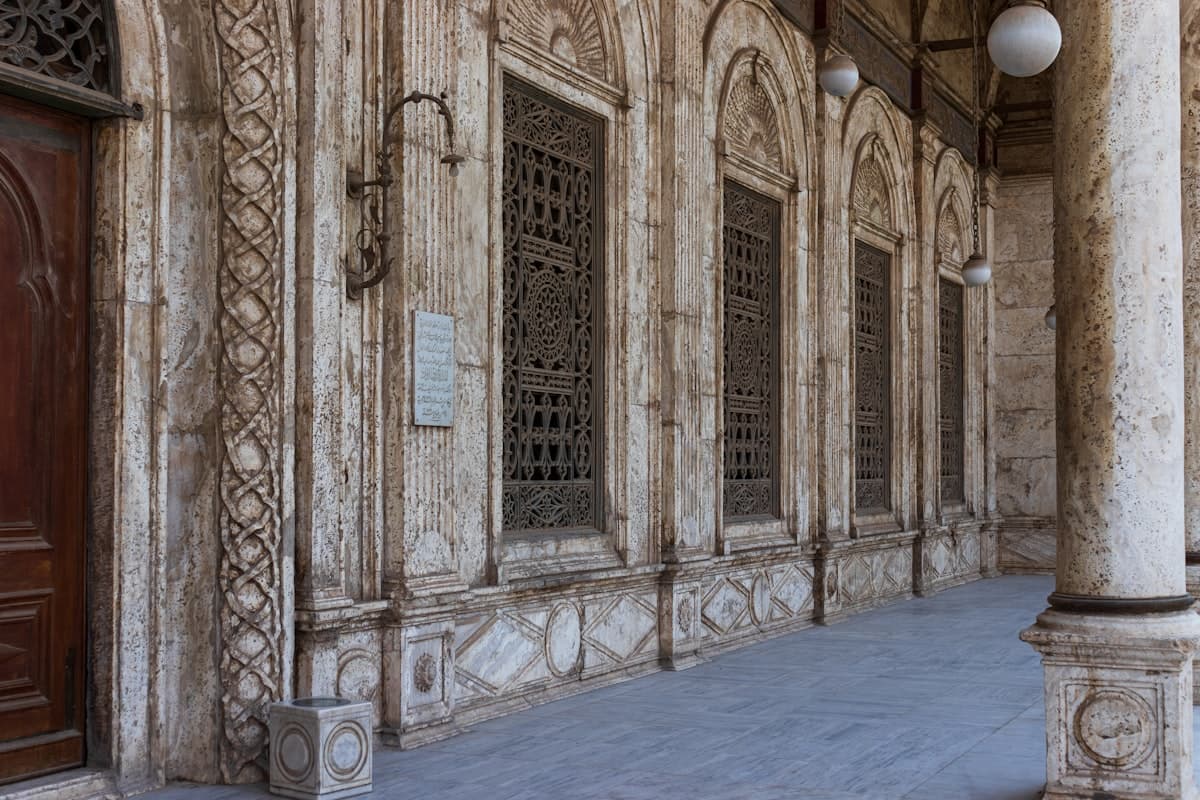
The history of Syrians in Egypt doesn't begin with the Mamluks, though that's where the architectural evidence becomes undeniable. The Fatimid caliphate, which founded Cairo in 969 CE, was based in North Africa but its intellectual elite were largely Syrian and Lebanese scholars who relocated to the new capital. Al-Azhar University, founded in 970 CE and now the most important Sunni Islamic institution in the world with 90,000 enrolled students, was shaped in its early centuries by Syrian theological traditions that the Fatimids imported along with their court.
Move forward to the Ottoman period. After Selim I defeated the Mamluks in 1517 and incorporated Egypt into the Ottoman Empire, Cairo became a waystation on the pilgrimage route between Istanbul and Mecca, passing through Damascus. Syrian merchants settled in Cairo's Khan el-Khalili market, the same market that exists today, and established the trade in spices, textiles, and glassware that the market still nominally specializes in, though most of what you'll find there now is imported tourist merchandise. The original Syrian merchant families who built their warehouses in that district in the 16th century left family names that survive in Cairo to this day.
The 19th century brought another wave. When Egypt's cotton economy boomed under Khedive Ismail, Syrian Christian merchants arrived in large numbers, establishing themselves in the trading houses of Alexandria more than Cairo, bringing printing presses, newspapers, and the literary Arabic renaissance known as the Nahda. Many of the Arabic-language newspapers that shaped Egyptian political culture in the early 20th century were founded or co-founded by Syrian emigres.
What you see in Ain Shams today is the latest wave of a tide that has been moving in the same direction for centuries.
Common Mistakes
Treating this as a refugee story only. The post-2011 Syrian presence in Egypt is real and carries real suffering, but framing the entire Syrian-Egyptian relationship as a humanitarian crisis erases seven centuries of mutual influence. Arrive with the longer timeline in mind.
Skipping the Mamluk monuments because "you've seen Islamic Cairo already." You probably haven't seen them with this context. Go back to the mosque of Sultan Hassan or the complex of Sultan Qalawun specifically looking for Levantine design elements. The carved stone minbar in Sultan Hassan's mosque is almost certainly the work of Syrian craftsmen. This changes what you're looking at.
Eating at the Syrian restaurants on Mohammed Mahmoud Street in Downtown. These are fine, but they are optimized for Egyptian professionals who want a novelty dinner. The food in Ain Shams is cheaper, more authentic, and eaten by people for whom it is home cooking, not a restaurant concept. Take the metro.
Expecting a museum. There is no Syrian cultural center open to the general public in Cairo, no heritage trail, no organized tour. What exists is a living neighborhood. Respect it accordingly. This means not photographing people without asking, not treating the market as a spectacle, and being prepared to simply walk, eat, and observe without any curated interpretation.
Going on a Friday morning. Most Syrian-owned businesses are closed or operating minimally until after Friday prayers. Go Friday evening instead, when the streets are at their most social and the food stalls run late.
Buying "Syrian" crafts in Khan el-Khalili. Most are made in Chinese factories. If you want actual Syrian craft work, there are a handful of Syrian artisans in Ain Shams selling embroidery and copperwork out of small workshops. Ask at the bakeries; they know who is there.
The contrarian take: Most Syria-related cultural programming in Cairo, when it exists at all, happens through NGOs and is aimed at Egyptian policymakers rather than curious visitors. There is currently no guided tour of the Syrian community in Egypt that I would recommend, because the ones that exist treat the community as a problem to be explained rather than a civilization to be understood. This guide is a better starting point than any organized tour currently on offer.
Practical Tips
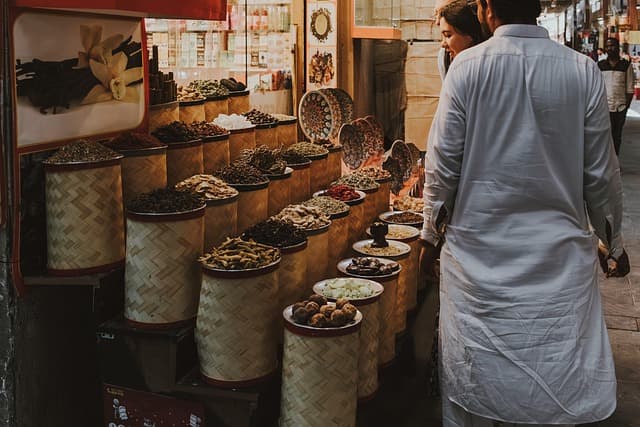
Learn five words of Syrian Arabic before you go. Cairene Arabic and Syrian Arabic are mutually intelligible but distinct. Saying "shu" (what) instead of "eh," or "marhaba" instead of "ahlan," signals to Syrian shopkeepers that you're paying attention. The response will be warmer.
Bring cash. The economy in Ain Shams runs on EGP notes. A full meal at a good Syrian restaurant in the neighborhood costs EGP 150 to EGP 300 per person. Bakery items are EGP 5 to EGP 25. Budget for more food than you think you need.
Go with a local introduction if you can get one. Cairo has a community of Egyptian journalists and academics who study the Syrian-Egyptian relationship and will sometimes walk a serious visitor through the neighborhood in exchange for a coffee and a conversation. Post in the Egypt expat forums or contact Feluccas directly; we maintain a network.
Don't visit only Ain Shams. Combine it with a morning in Islamic Cairo, specifically the Qalawun complex on Muizz Street, to feel the historical continuity. The Qalawun complex, built between 1284 and 1285, contains a mausoleum, a madrasa, and a hospital, the hospital served Cairo for 600 years and is a direct import of the Levantine bimaristan tradition. The Syrian community Egypt history that you're tracing runs directly through this building.
The best single hour you can spend on this subject costs nothing. Walk from the Ain Shams metro station to the main market street at around 7pm on a Thursday, buy a bag of Syrian ka'ak from the first bakery you find, sit on the low wall across from the mosque, and watch the street for an hour. Cairo doing what Cairo has always done: taking in the world and making it its own.
Frequently Asked Questions
The Weekly Dispatch
More on Egypt, every Friday.
Cultural depth and places most guides never mention.
No spam. Unsubscribe anytime.