The Italian Community of Alexandria: A Vanished City Within a City
At its peak, Alexandria had 100,000 Italians. Today, fewer than 200 remain. The city they built is still standing. Almost nobody knows how to read it.

Quick Facts
- Best time to visit
- October to April. Cooler temperatures and lower humidity make walking the city's neighborhoods possible without exhaustion. The light in November and March is particularly good for architecture.
- Entrance fee
- Latin Cemetery: free. Cavafy Museum: EGP 60 (approx $1.25 USD). Royal Jewelry Museum: EGP 120 (approx $2.50 USD). Most Italian-heritage buildings: exterior only, free.
- Opening hours
- Most sites 9am to 4pm daily. Latin Cemetery: accessible daylight hours, caretaker present most mornings. Italian Cultural Institute: Sunday to Thursday 10am to 3pm, confirm schedule before visiting.
- How to get there
- Cairo to Alexandria by express train from Ramses Station: EGP 75 to 120, approx 2 hours 15 minutes. Within Alexandria: Raml Tram along the Corniche EGP 3 per ride; microbus to Ibrahimia EGP 5; taxi across downtown EGP 25 to 40.
- Time needed
- Two full days minimum. Three days if you want to combine with the Catacombs of Kom el-Shoqafa, which show the Greco-Roman-Egyptian cultural layering that preceded the Italian chapter.
- Cost range
- Budget EGP 400 to 700 per day including accommodation in a downtown pension and street food. Mid-range EGP 1,500 to 2,500 per day with a Corniche hotel, restaurant meals, and a specialist guide for half a day.
At its peak in the 1920s and 1930s, Alexandria had a larger Italian population than many Italian cities. More than 100,000 Italians lived, worked, loved, and died in a city on the Egyptian coast, and they left behind a skyline, a cuisine, a cemetery, and a particular quality of light that Alexandrians still call, without irony, European. Today, fewer than 200 people of Italian descent remain. The rest left in waves: after the 1952 revolution, after Nasser's nationalization decrees, after the Suez Crisis. They packed what they could and sailed for Genoa and Rome and Brindisi, and Alexandria became a different city. But not completely. The bones are still here.
Quick Facts
Best time to visit: October through April, when the Mediterranean humidity retreats and the city is cool enough to walk the Corniche without stopping every block. Alexandria in August is punishing.
Key sites entrance fees: The Latin Cemetery (Terraferma Catholic Cemetery) is free. The Greek Orthodox Patriarchate is free but requires modest dress. The Royal Jewelry Museum, housed in a villa that belonged to Princess Fatima al-Zahra and reflects the cosmopolitan tastes of the era, charges EGP 120 (approx $2.50 USD). The Cavafy Museum, essential context for understanding the Italian-Greek-Jewish-Levantine world the Italians inhabited, charges EGP 60 (approx $1.25 USD).
Opening hours: Most relevant sites open daily 9am to 4pm, with Friday closures or shortened hours at some. The Latin Cemetery is accessible during daylight hours; ask the caretaker family at the gate.
How to get there: From Cairo, take the Egyptian National Railways express to Misr Station Alexandria (EGP 75 to 120 depending on class, approx $1.50 to $2.50 USD, two hours fifteen minutes). From Misr Station, the Raml Tram runs along the Corniche and connects most relevant neighborhoods for EGP 3 per ride. A microbus from Misr Station to Ibrahimia, where much of the Italian bourgeoisie built their villas, costs EGP 5.
Time needed: A focused two-day itinerary covers the essential sites. Three days lets you eat properly, which matters here.
Cost range: Budget EGP 400 to 700 per day (accommodation in a downtown pension, street food, tram rides). Mid-range EGP 1,500 to 2,500 per day (a restored hotel in the Corniche district, restaurant meals, a private guide for half a day).
Why This Place Matters
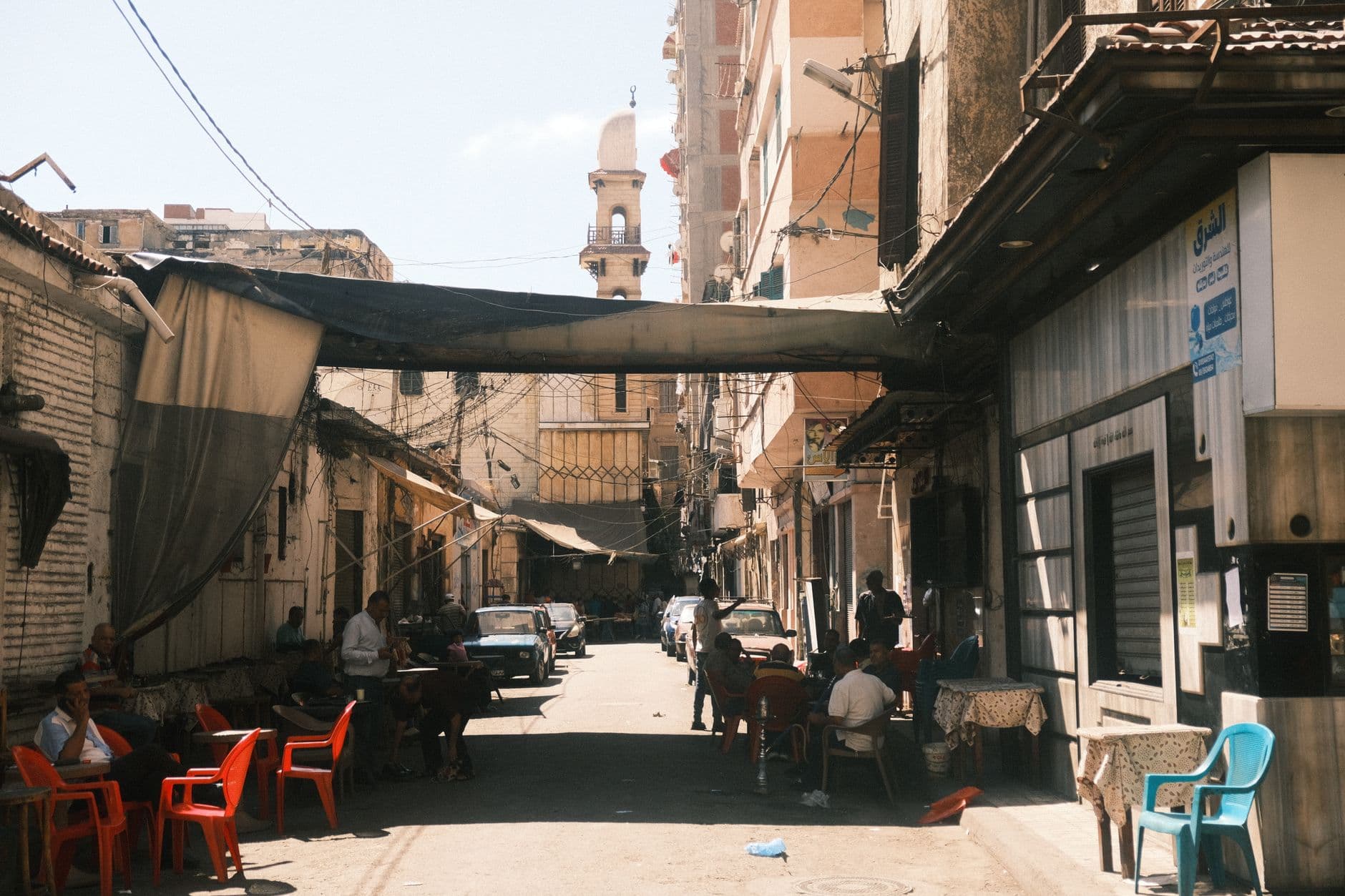
The Italian presence in Alexandria was not colonial in the way the British presence was. Italians came not as administrators or officers but as workers, craftsmen, merchants, and a particular class of Mediterranean hustler who understood that Alexandria, for roughly a century between 1850 and 1952, was one of the most genuinely cosmopolitan cities on earth. They arrived alongside Greeks, Jews, Armenians, Syrians, Maltese, and French, forming what the Alexandrian Greeks called the "foreign communities" and what the historian Michael Reimer called a city of overlapping diasporas.
What makes this specific to the Italian community Alexandria Egypt history guide is the particular niche Italians filled. They dominated the construction trades. The marble floors in the old villas of Ibrahimia and Zizinia, the wrought iron balconies on downtown buildings, the terrazzo in the lobbies of banks and department stores, the elaborate stonework of the Latin Cemetery: Italian hands made almost all of it. An Italian engineer named Luigi Mancini designed the original tramway system in 1863, the first electric tram line in Africa. The stone facades of Saad Zaghloul Square, named for the Egyptian nationalist who expelled the British, were carved by Italian masons paid by Egyptian cotton merchants who wanted to feel, briefly, like they lived in Milan.
Nasser's nationalization laws of 1956 to 1961 effectively ended it. Foreigners could no longer own property or businesses above a certain size. The Italian community, like the Greek and Jewish communities, liquidated what it could and left. The Egyptian government took the rest.
What the City Still Holds
The Latin Cemetery, Chatby
The Latin Cemetery in Chatby is the place to begin, and almost no tourist goes there. It sits behind the Greek Orthodox Cemetery in a neighborhood that was once the exclusive address of Alexandria's foreign bourgeoisie and is now a working-class district of apartment blocks and mechanic workshops. The cemetery holds roughly 5,000 graves, many of them Italian, dating from the 1840s onward.
The quality of the stonework is remarkable and specific: you are looking at the work of the same craftsmen who built the villas, the churches, and the public buildings of the city. A stonemason named his craft into permanence here because there was no other way to sign a building. Family mausoleums in the Italian section display the surnames of dynasties that ran cotton trading houses, shipping companies, and pharmacies: Pernigotti, Bonfiglio, Comino. The Pernigottis, a family that arrived from Novi Ligure in Piedmont in the 1880s, founded what became one of Egypt's most successful confectionery businesses before they were eventually forced to relocate. A branch of the family eventually returned to Italy and operates to this day.
Bring water. Bring patience. Bring the ability to read Italian, even poorly, because the inscriptions are worth reading.
The Architecture of Downtown and Ibrahimia
Walking the streets between Saad Zaghloul Square and the Ibrahimia district is an exercise in reading a language most visitors do not know they are encountering. The buildings speak Italian Liberty style, the Egyptian interpretation of Art Nouveau that arrived via Italian architects and pattern books circulating around the Mediterranean in the 1890s and 1900s. Look at the upper floors, not the ground level, which has been almost universally destroyed by modern shop fronts. Above the chaos of contemporary commerce, Alexandria is still wearing its Italian-designed face.
The building at 3 Sharia Fouad, now occupied by a mobile phone retailer, was once the headquarters of the Societa Operaia Italiana di Mutuo Soccorso, the Italian workers mutual aid society founded in 1861, making it one of the oldest such organizations in Africa. The society ran a school, a hospital ward, and an employment bureau for newly arrived Italian immigrants. The interior is inaccessible, but the facade retains its original pilasters and cornice detail.
For the Ibrahimia villas: walk down Sharia Ismail Sarwat on a weekday morning when the light comes from the sea. The garden walls have mostly collapsed or been replaced. The villas behind them are subdivided into flats. But the proportion of the windows, the height of the ceilings visible through open shutters, the quality of the ironwork on gates that nobody has bothered to replace: all of it is still Italian, still 1910, still pointing back toward a world the revolution dismantled.
The Italian Hospital and the Schools
The Ospedale Italiano, the Italian Hospital, operated in Alexandria from 1881 until nationalization. Its building still stands in the Moharrem Bey district and now functions as a government medical facility. Getting inside requires persistence and a willingness to ask, in whatever language you have, whether you can see the old operating theater on the upper floor. The answer is sometimes yes. The original terrazzo floors survive, the hydraulic tiles in the corridors survive, and the chapel, deconsecrated and used for storage, still has its painted ceiling.
The Italian schools were even more significant as social infrastructure. By 1930, the Scuola Italiana di Alessandria enrolled over 3,000 students, not all of them Italian: the Italian school was considered academically rigorous and socially advantageous, and Egyptian, Greek, and Jewish families sent their children there alongside the Italian community. The school building on Sharia Gamal al-Din al-Afghani now operates as an Egyptian state school, and an Italian cultural institute continues to function nearby, a small institutional remnant of what was once a full parallel society.
The Connections
The Italian story in Alexandria cannot be separated from the larger cosmopolitan project that Mohammed Ali Pasha initiated when he began modernizing Egypt in the 1820s. Mohammed Ali, an Albanian-born Ottoman commander who seized power in Egypt and founded the dynasty that ruled until 1952, made a deliberate decision to import European expertise. He hired French military advisors, British engineers, and Italian craftsmen. The Italians who arrived in his wake found a city that was actively constructing itself along European lines and needed people who knew how to cut marble, lay pipe, and build facades.
The neighborhood of Attarine, now famous for its antique market, was once home to both Mamluk-era mosques and Italian-run furniture workshops where craftsmen repaired and copied the pieces that wealthy Egyptian families wanted to display alongside their imported European goods. A mosque on Sharia Attarine sits on Roman foundations, was rebuilt in the Mamluk period, was partially reconstructed during Mohammed Ali's modernization campaign, and had an Italian workshop operating across the street from it for sixty years. Nothing in Alexandria exists in isolation.
The Greek poet Constantine Cavafy, who lived in Alexandria from 1882 until his death in 1933, documented in his poems the specific texture of the world the Italians inhabited: a city of late nights, commercial ambition, religious layering, and erotic possibility. His apartment on Sharia Sharm el-Sheikh, now the Cavafy Museum, is not an Italian site but is essential Italian community Alexandria Egypt history context because Cavafy wrote about the Greeks and the Italians and the Jews and the ancient Alexandrians as a single continuous civilization, which is the only honest way to understand any of them.
Common Mistakes
Spending your Alexandria time at the Bibliotheca Alexandrina. The modern library is architecturally serious and institutionally important, but it tells you almost nothing about the city you are actually standing in. The EGP 70 entrance fee and two hours inside could be spent walking the downtown streets, which will teach you more about Alexandria's layered identity than any exhibit.
Expecting the Italian sites to be labeled. Almost nothing is signposted in English or Italian. No heritage trail exists. You will need either a local guide with specific knowledge or a printed map prepared in advance. The municipality has discussed an Italian heritage trail for fifteen years. It does not exist.
Going to the cemeteries on a Friday. Friday is the Muslim day of prayer and the caretakers of the Latin Cemetery are often absent or unavailable to open the locked interior sections. Go on a Tuesday or Wednesday morning.
Hiring a general Alexandria tour guide. Most general guides know Pompey's Pillar, the catacombs, and the library. They do not know which building on Sharia Fouad was the Societa Operaia Italiana or where to find the surviving terrazzo in the Moharrem Bey district. If you want this history, find a guide who specifically knows it, or contact the Italian Cultural Institute in Alexandria in advance. They occasionally facilitate visits and can recommend the two or three Alexandrians who carry this knowledge.
Eating at the Cecil Hotel. The Cecil is historically interesting, Somerset Maugham stayed there, but the restaurant is expensive and mediocre. Instead, eat at one of the fish restaurants on the Anfushi waterfront, where the preparation methods have changed very little since Italian fishermen worked this same coast and where a full meal of fried calamari, grilled mullet, and salad costs EGP 180 to 250 per person.
Treating the Italian story as separate from Egypt. The most common mistake of all: thinking of the Italian presence as an interruption in Egyptian history rather than a chapter of it. The Italians who built this city's facades and floors and hospitals were living Egyptian lives. They married into Egyptian families, learned Arabic, sent their children to Egyptian universities, and in many cases had roots in Alexandria going back four and five generations before they were expelled. The buildings they left are not European monuments on Egyptian soil. They are Egyptian monuments, made by people who happened to come from somewhere else, which is the oldest story Alexandria knows how to tell.
Practical Tips
The Italian Cultural Institute (Istituto Italiano di Cultura) on Sharia Maarouf in Alexandria occasionally hosts exhibitions and lectures on the history of the Italian community. Check their schedule before your visit and attend if anything coincides. The staff can sometimes arrange access to sites that are not publicly open.
For a private guide specializing in this history, budget EGP 800 to 1,200 for a half-day (approx $17 to $25 USD). This is money well spent. Ask specifically for someone who knows the cosmopolitan period.
For the Latin Cemetery, bring a small gift for the caretaker family: a bag of fruit or a box of biscuits is appropriate and will be warmly received. It will also result in the locked interior gates being opened for you.
The best light for photographing the downtown facades is between 8am and 10am, when the Mediterranean sun comes in low and flat from the east. By midday the glare is too harsh and the streets are too crowded.
Alexandria's winters are real. Pack a layer for evenings on the Corniche between November and March, when the sea wind is cold enough to surprise anyone who arrived expecting African warmth. The city's melancholy is most beautiful in this season, when the tourists have gone and the light goes grey and particular, and the buildings that the Italians built look exactly like what they are: monuments to a world that loved this place completely and was eventually asked to leave.
Frequently Asked Questions
The Weekly Dispatch
More on Egypt, every Friday.
Cultural depth and places most guides never mention.
No spam. Unsubscribe anytime.