The Italian Community of Alexandria Egypt: A Vanished World
At its peak, Alexandria had 100,000 Italians. Today fewer than 200 remain. The buildings, the cemeteries, and the pastry shops still hold their story.

Quick Facts
- Best time to visit
- October to April. Mediterranean winter light is sharp, temperatures are 15 to 22 degrees Celsius, and the city is not at summer capacity. March and April bring occasional rain but also the city at its most atmospheric.
- Entrance fee
- Latin Cemetery: free. Alexandria National Museum: EGP 120 (approx $3.90 USD). Greek Orthodox Patriarchate museum: EGP 50 (approx $1.60 USD). Most churches and exterior sites: free.
- Opening hours
- Alexandria National Museum: daily 9am to 4:30pm. Latin Cemetery: Saturday and Sunday 9am to 1pm (variable, confirm locally). Catholic Cathedral of St. Catherine: mass times only, posted at door.
- How to get there
- Train from Cairo Ramses Station to Alexandria Misr Station: EGP 100 to EGP 280 depending on class, approximately 2 hours. Within Alexandria: tram EGP 2 per ride along Fouad Street and toward Chatby. Taxi from Misr Station to Mansheya Square: EGP 40 to 60.
- Time needed
- Two full days minimum. Day one: Mansheya Square, Fouad Street, Attarine district. Day two: cemeteries at Chatby, Alexandria National Museum, San Stefano area.
- Cost range
- Budget EGP 600 to 900 per day including a pension near the city center. Mid-range EGP 1,500 to 2,500 per day at a Corniche hotel. Museum fees and tram transport add roughly EGP 200 to 300 per day.
Quick Facts
Best time to visit: October to April, when Mediterranean light is sharp and the heat is manageable. The city's European-era architecture photographs best in morning light before 10am.
Entrance fees: The Latin Cemetery on Kom el-Shoqafa street is free to enter during visiting hours. The Greek Orthodox Patriarchate museum (EGP 50, approx $1.60 USD) occasionally allows access to rooms connected to the city's Levantine history. The Alexandria National Museum (EGP 120, approx $3.90 USD) has a floor dedicated to the cosmopolitan era and is essential context before walking the streets.
Opening hours: The Alexandria National Museum is open daily 9am to 4:30pm. Most churches open for services only; the Catholic Cathedral of St. Catherine on Mansheya Square holds mass at times posted at the door. The Latin Cemetery: generally open Saturday and Sunday 9am to 1pm, though this varies. Arrive early and knock if the gate appears closed.
How to get there: Alexandria is two hours from Cairo by Spanish-built Talgo train (EGP 100 to EGP 280 depending on class, book at Ramses Station or online through Egyptian National Railways). Within Alexandria, trams still run through the old European quarters for EGP 2 per ride. A taxi from Misr Station to Mansheya Square costs roughly EGP 40 to 60.
Time needed: Two full days minimum to do this seriously. One day for the Corniche, Mansheya, and the old Italian quarter around Fouad Street. One day for the cemeteries, the National Museum, and what remains of the Attarine district.
Cost range: Budget EGP 600 to 900 per day including accommodation in a mid-century pension. Mid-range EGP 1,500 to 2,500 per day at a hotel on the Corniche.
---
At its absolute peak in 1927, Alexandria held more than 100,000 Italian citizens. They were not tourists, not colonial administrators in the British mold, and not temporary laborers. They were shopkeepers and architects, lawyers and jewelers, nuns running orphanages and socialists publishing newspapers. They built the city's tram system, designed its most important civic buildings, and buried their dead in a cemetery so elaborate it became an architectural monument in its own right. Today, fewer than 200 Italians remain in Alexandria. The buildings are still there. So are the cemeteries. So, if you know where to look, is almost everything else.
Why This Place Matters
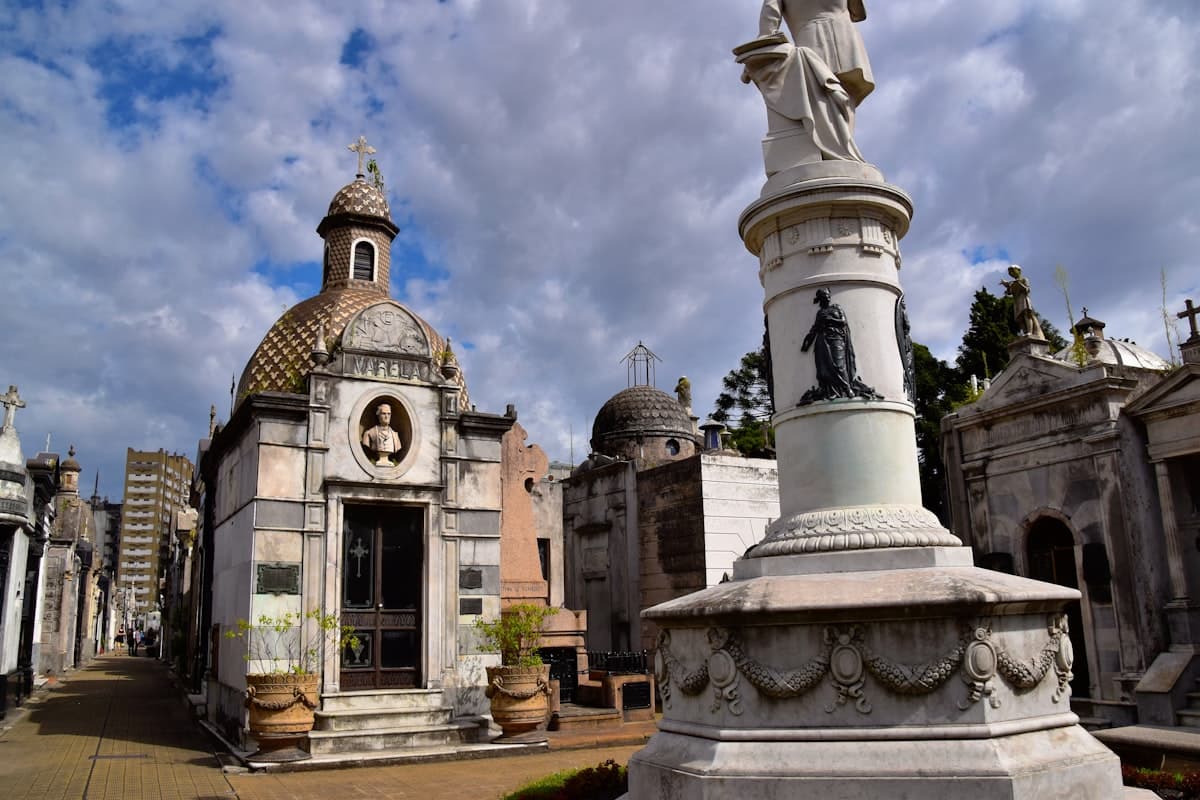
The Italian community in Alexandria was not an accident of empire. It was a consequence of Muhammad Ali's deliberate policy, beginning in the 1820s, of recruiting European technicians, merchants, and professionals to modernize Egypt. Italians came first from Livorno and Genoa, then in waves from Naples, Sicily, and Piedmont. By the time the Suez Canal opened in 1869, Alexandria was arguably the most cosmopolitan city on the Mediterranean, with quarters that were more Neapolitan than Egyptian in character.
What makes this history unusual in the context of Mediterranean colonialism is that the Italian presence in Alexandria was largely civilian and largely permanent. Unlike the British, who administered and left, or the French, who imposed and departed, Italians in Alexandria often stayed for three, four, and five generations. Families who had arrived as traders in the 1840s were still there in the 1940s, with grandchildren who spoke Arabic as their first language and regarded themselves as Alexandrian first, Italian second.
The Italians built or contributed to an estimated 40 percent of Alexandria's pre-1950 civic architecture, including the original Stock Exchange building, the Cecil Hotel, several wings of what is now the Greek Club, and the city's first reinforced concrete structure, the Toussoun Palace, completed in 1911 by the Roman-trained architect Antonio Lasciac, who served as chief architect to the Khedivial court.
The Italian community Alexandria Egypt history guide cannot be written without understanding what ended it. Egypt's 1952 revolution and the Suez Crisis of 1956 triggered a mass expulsion and departure of the city's European minorities. The Italian community, along with Greeks, Jews, Armenians, and Levantine French, was essentially dissolved within a decade. Most left with single suitcases. Property was nationalized. Apartments were redistributed. The newspapers closed. The clubs converted.
What Remains: Walking the Old Italian Quarter
Start at Mansheya Square, now called El-Tahrir Square, and look up. The Bourse building on the square's south side, with its colonnaded facade and neoclassical cornices, was designed by Italian architects and once housed the Alexandria Cotton Exchange, the financial instrument that made the city's fortune. Cotton from Upper Egypt flowed north along the Nile, was graded and priced here, and exported to the mills of Lancashire and Livorno. The building still functions as a government office. Nobody will stop you from standing in the entrance hall, which retains its original marble floors and iron balustrades.
Walk east along Fouad Street, the old Via de la Porte de Rosette. The scale of the buildings tells you everything about the ambition of the people who commissioned them. At street level, many of the Italian-founded shops survive in altered form: a pharmacy whose original terrazzo counter is still in use, a pastry shop selling the Egyptian version of sfogliatelle under a different name, a photography studio occupying premises that have sold film and developed prints since the 1920s.
The Attarine district, a ten-minute walk inland, is where the furniture and antique dealers now sell off the remnants of the cosmopolitan city: French clocks, Italian silverware, Greek icon fragments, entire dining room sets from the apartments of families who left in 1956 and never returned. This is not a curated museum. It is what happens when a civilization departs faster than its objects can follow. Prices are negotiable and the provenance is, to put it gently, complex.
San Stefano, now a suburb absorbed by the city's eastern sprawl, was the residential heart of the Italian community. The grand villas along the beach road have mostly been demolished or converted into apartment blocks, but the Italianate chapel of San Stefano still stands, though it receives almost no visitors and is often locked. The caretaker lives next door. Knock.
The Cemeteries: Where the History Is Most Legible
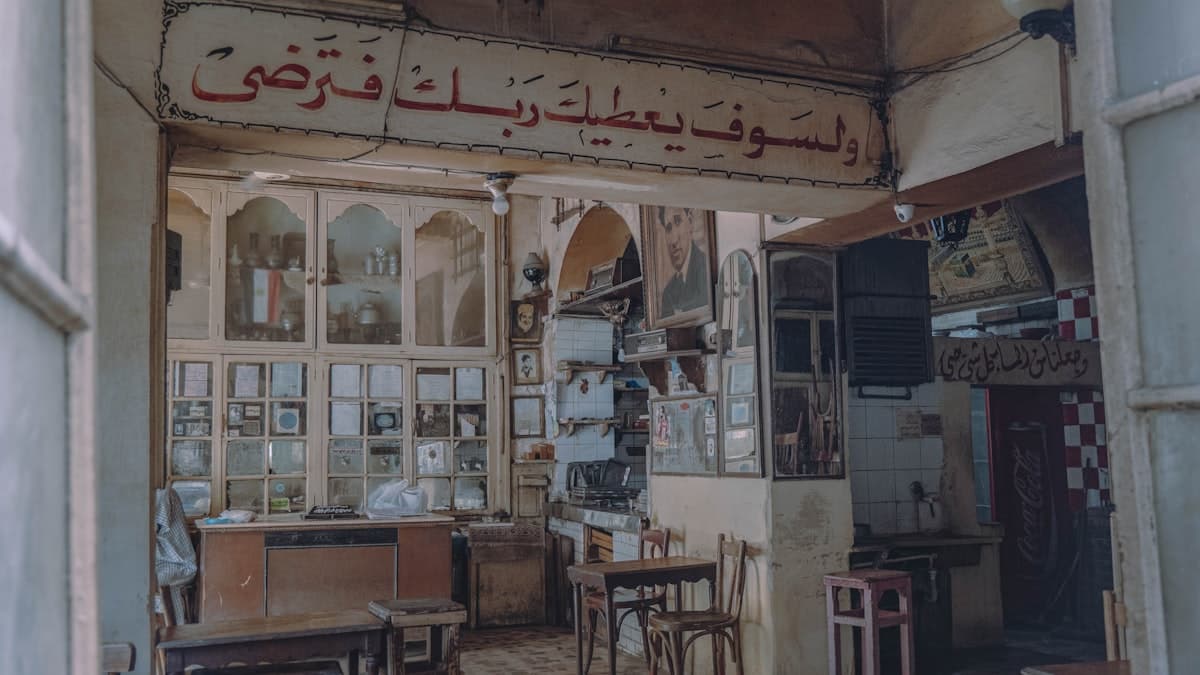
The Latin Cemetery at Chatby is where the Italian community Alexandria Egypt history is most honestly preserved. Established in the 1840s on a limestone ridge east of the city center, it contains the graves of families who were Alexandrian for five generations. The inscriptions move between Italian, French, Arabic, and occasionally Greek within a single family plot, which tells you something important about how these identities actually worked.
The architecture of the tombs is itself a document. The wealthiest families built elaborate mausoleums in the styles current in Rome and Turin: neo-Gothic canopies, art nouveau ironwork, marble portraits in high relief. The Zananiri family tomb, one of the largest, memorializes a merchant dynasty that arrived from Livorno in the 1830s and ran cotton export operations until 1957. The final inscription on the tomb notes a death in Cairo in 1974, suggesting at least one family member remained in Egypt long after the community's effective dispersal.
The cemetery is not well maintained. Vegetation has cracked some of the marble. Certain sections are genuinely difficult to navigate. This is part of what makes it important. A well-maintained, curated heritage site tells you what someone decided to remember. A semi-abandoned cemetery tells you what actually happened.
Walk the full perimeter before focusing on individual tombs. The eastern wall backs onto a Coptic cemetery of equal age, and beside that sits a Jewish section. This adjacency is not coincidental. Alexandria's city planning in the nineteenth century grouped its minority communities geographically, and even in death, the communities remained neighbors.
The Connections
The Italian quarter of Alexandria was built on top of a city that had already been built, demolished, and rebuilt several times. The street grid that Lasciac and his contemporaries laid out in the 1890s followed, in many places, the Roman-era grid that had been established when Alexandria was the second city of the Roman Empire and the largest city in Africa. Excavations under Italian-era buildings in the Anfushi district have repeatedly found Roman-period remains, including parts of the ancient Heptastadion, the causeway that connected the city to the island of Pharos.
The mosque of Abu al-Abbas al-Mursi, the great Andalusian shrine that anchors the western waterfront, was rebuilt in its current form in 1943 by Italian architects working for the Egyptian state, under a commission from King Farouk. The irony that Italian craftsmen were rebuilding an Andalusian Islamic shrine at the height of the Second World War, in a city founded by a Macedonian general and administered by Ottoman governors, is the kind of layered fact that Alexandria specializes in producing.
The connection runs forward too. The Bibliotheca Alexandrina, opened in 2002 on a site adjacent to where the ancient library stood, was partially funded by Italy and employs Italian conservation specialists. The library's collection of documents related to the city's cosmopolitan period, including Italian-language newspapers from 1880 to 1956, is one of the most complete archives of this community's existence.
Common Mistakes
Skipping the Alexandria National Museum entirely. Most visitors to the Italian quarter walk the streets without any framework for what they are seeing. The National Museum's third floor, dedicated to the modern era, contains photographs, documents, and objects from the cosmopolitan period that make the streets legible. Spend ninety minutes there before going anywhere else.
Assuming the churches are open. The Catholic Cathedral of St. Catherine and the Italian church of Santa Caterina both have restricted hours tied to services. Going without checking means finding a locked door. The Diocese of Alexandria (Catholic) posts hours on a board outside the cathedral and occasionally on social media.
Taking a guide for the Attarine antique district. The guides who approach tourists near Mansheya Square receive commissions from specific dealers. Walk alone, take your time, and make your own judgments about what you are looking at and what it is worth.
The heritage walking tour offered by several Alexandria hotels costs EGP 400 to 600 and covers only the most obvious sites at a pace that prevents you from actually reading a building. The map available from the Bibliotheca Alexandrina's information desk identifies 34 sites connected to the city's cosmopolitan communities and costs nothing. Use that instead.
Visiting on a Friday morning. Much of downtown Alexandria closes for Friday prayers, and the Attarine district in particular is largely shut. Saturday morning is the most productive time for serious exploration.
Underestimating how much is gone. If you come expecting a preserved European quarter in the style of Beirut's Gemmayzeh or Valletta's waterfront, you will be confused and disappointed. What survives in Alexandria is fragments: a cornice here, a tiled floor there, a surname on a mailbox. The Italian community's presence is real but it requires reconstruction in the imagination. That is actually more interesting, but it requires a different kind of attention.
Treating the cemeteries as photo locations only. The Latin Cemetery at Chatby requires some minimum of respect for the families buried there, many of whose descendants are still alive, scattered between Rome, Buenos Aires, and Sydney. Several descendants of Alexandrian Italian families visit regularly and are willing to talk if you approach with genuine interest rather than a camera.
Practical Tips
Alexandria's Mediterranean climate means the city is genuinely pleasant from October through April. Summer brings heat and humidity off the water that is not comparable to Cairo's dry heat: it is heavier and more tiring.
The tram system, derided by many Cairo-based travel writers as slow and unreliable, is actually the correct way to move through the old Italian quarter. The lines that run along Fouad Street and toward San Stefano pass the most important facades at the right speed for observation. The EGP 2 fare is exact change territory.
Arabic is essential for any serious engagement with the city's inhabitants, but Italian surnames and basic Italian phrases will occasionally produce surprising responses from older Alexandrians who remember the community, or whose families worked for Italian employers. This is not a tourist strategy. It is a genuine human connection that Alexandria still makes possible.
The Bibliotheca Alexandrina's archive and special collections are accessible to researchers with advance appointment. The collection of Italian-language newspapers, the community organization records, and the photographic archive of the cosmopolitan period are genuinely important primary sources. Tourists rarely know this is possible. It is.
Book accommodation in the city center rather than the eastern beach resorts. The neighborhood around the Cecil Hotel, which retains its original 1930 structure though the interior has been heavily renovated, puts you within walking distance of most of the key sites. The San Giovanni Hotel in Stanley is beloved by nostalgic Alexandrians and has the best breakfast in the city.
Frequently Asked Questions
The Weekly Dispatch
More on Egypt, every Friday.
Cultural depth and places most guides never mention.
No spam. Unsubscribe anytime.