Mohamed Ali Mosque: Albanian History Carved in Cairo Stone
Mohamed Ali was not Egyptian. He was an Albanian tobacco merchant who seized a country, massacred his rivals at a dinner party, and built Cairo's most recognizable skyline. Here is the full story.

Quick Facts
- Best time to visit
- October to April, arriving between 8am and 10am to avoid tour groups. Summer visits are possible but the Citadel hill offers little shade and midday temperatures reach 38 to 42 degrees Celsius.
- Entrance fee
- EGP 450 adults (approx $9 USD), EGP 225 students with valid ID. Ticket covers the full Citadel complex including the Mohamed Ali Mosque, Military Museum, and Police Museum.
- Opening hours
- Daily 8am to 5pm. Closed to non-Muslim visitors during Friday midday prayer, approximately 12pm to 1:30pm.
- How to get there
- Taxi from Downtown Cairo: EGP 50 to 80. Uber: EGP 60 to 90. Microbus from Sayeda Zeinab Metro station: EGP 4. The Citadel entrance is on Salah Salem Road on the eastern face of the hill.
- Time needed
- 2 to 3 hours for the mosque and courtyard alone. 4 to 5 hours for the full Citadel complex including al-Nasir Muhammad Mosque, Military Museum, and terrace views.
- Cost range
- Budget EGP 600 to 900 including entrance, taxi, and lunch nearby. Mid-range EGP 1,500 to 2,000 with a licensed guide, taxi, and a sit-down meal in Khan el-Khalili afterward.
Quick Facts
Best time to visit: October to April, early morning (8am to 10am) before group tours arrive
Entrance fee: Included in the Citadel of Saladin ticket: EGP 450 for adults (approx $9 USD), EGP 225 for students with valid ID. Photography inside the mosque is free.
Opening hours: Daily 8am to 5pm. The mosque is active for Friday prayers; non-Muslim visitors are asked to wait until after midday prayer concludes, usually around 1:30pm.
How to get there: From Tahrir Square, take a taxi to the Citadel (EGP 50 to 80 depending on traffic and your negotiation). The Cairo Metro does not reach the Citadel directly; the closest station is Sayeda Zeinab on Line 1, from which it is a 20-minute walk uphill or a 10-minute microbus ride for EGP 4. Uber is reliable and typically EGP 60 to 90 from Downtown Cairo.
Time needed: 2 to 3 hours for the mosque and immediate courtyard. A full half-day if you combine it with the Military Museum, the Police Museum, and the view terrace on the Citadel complex.
Cost range: Budget EGP 600 to 900 for the Citadel visit with lunch nearby in the Sayeda Aisha market. Mid-range EGP 1,500 to 2,000 including a guide, taxi, and a meal at a Khan el-Khalili restaurant afterward.
---
Why This Place Matters
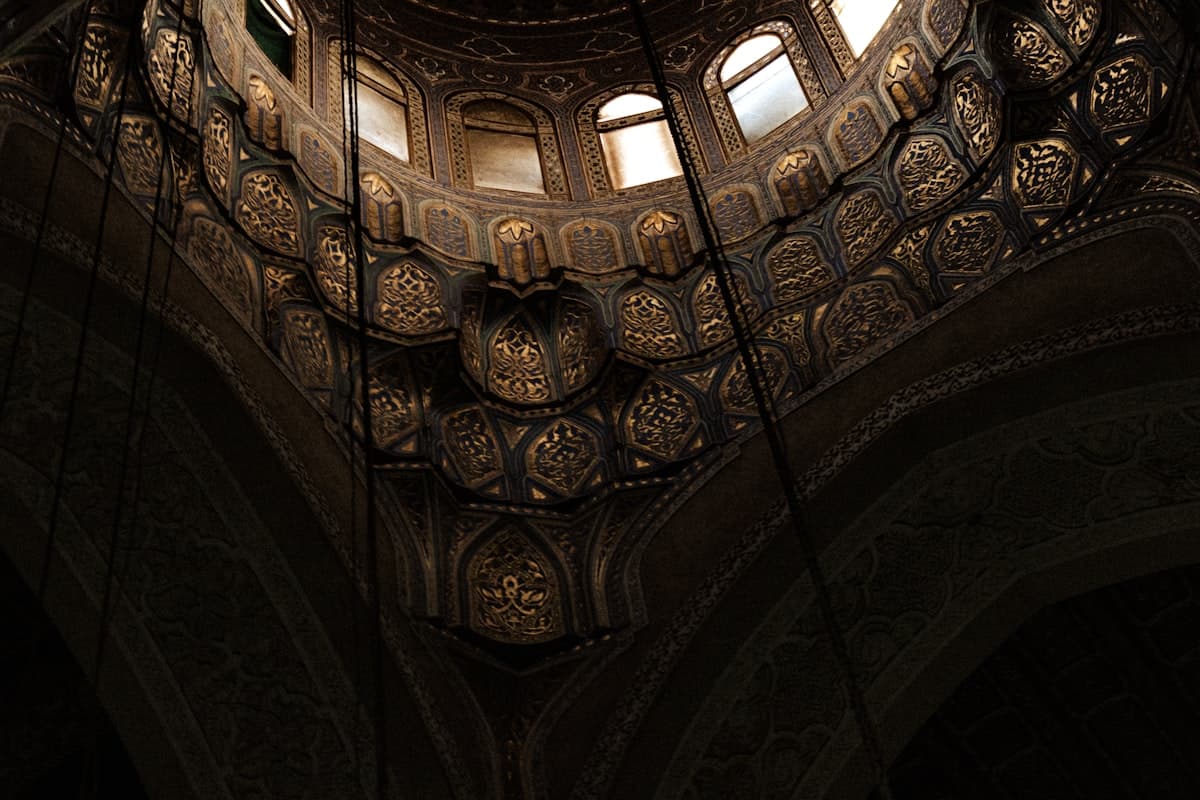
The man who built Cairo's most photographed mosque was born in Kavala, in what is now northern Greece, in 1769. Mohamed Ali Pasha was not a pharaoh, not an Arab, and not an Ottoman grandee. He was an Albanian soldier who arrived in Egypt in 1801 as part of an Ottoman force sent to expel Napoleon. He stayed because he understood, before almost anyone else, that the French departure had left a power vacuum large enough to build a dynasty in.
By 1805, he had outmaneuvered both the Ottomans and the Mamluks to become Wali of Egypt. He consolidated that power in 1811 with an act of calculated brutality that Egyptians still reference in conversation: he invited 470 Mamluk leaders to a banquet at the Citadel, sealed the gates, and had every one of them killed. It is known in Egyptian history as the Massacre of the Citadel, and it ended seven centuries of Mamluk political influence in a single afternoon. The mosque you are about to visit was built, in part, to signal that a new order had arrived and was not leaving.
The Albanian history Egypt Mohamed Ali guide most tour operators offer reduces this to a footnote. It should be the entire frame.
---
What You Are Actually Looking At
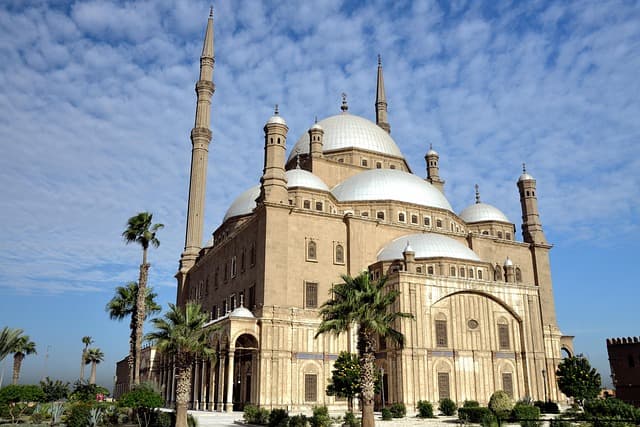
The mosque was begun in 1830 and completed, with Ottoman imperial grandeur as the explicit visual reference, in 1848. Mohamed Ali hired a Greek architect named Yusuf Bushnak, who modeled the structure on the Sultan Ahmed Mosque in Istanbul. This is not subtle. Mohamed Ali was signaling to the Ottoman Sultan, to Europe, and to Egypt simultaneously that he was a sovereign of consequence, building in the visual language of empire while quietly preparing to challenge Ottoman authority outright.
The exterior is covered in alabaster quarried from Beni Suef, which gives the mosque its pale, almost luminous quality in the late afternoon sun. Inside, the central dome rises 52 meters and is flanked by four smaller semi-domes, a design that floods the interior with diffuse light from the ring of windows at the dome's base. The effect is less meditative than theatrical, which is entirely appropriate for a man who governed theatrically.
The clock tower in the mosque's courtyard is one of Cairo's stranger objects. It was a gift from King Louis-Philippe of France in 1846, sent as reciprocal exchange for the obelisk Mohamed Ali gave France that now stands at the Place de la Concorde in Paris. The Cairo clock has never worked properly. It arrived broken and has remained approximately decorative ever since. The Luxor obelisk, for context, weighs 227 tonnes and is in perfect condition.
The Tomb You Might Walk Past
In the southeast corner of the mosque, behind a carved marble screen, sits the tomb of Mohamed Ali himself. It is understated to the point of being easy to miss, which is remarkable given that this is the man buried here. The tomb was moved from Istanbul after Egyptian independence, a deliberate act of historical reclamation. Spend a moment here. The Albanian tobacco merchant who became a pharaoh in everything but name is two meters away from you, under white marble, in a mosque he built to outlast his own ambitions.
---
The Citadel Beneath the Mosque
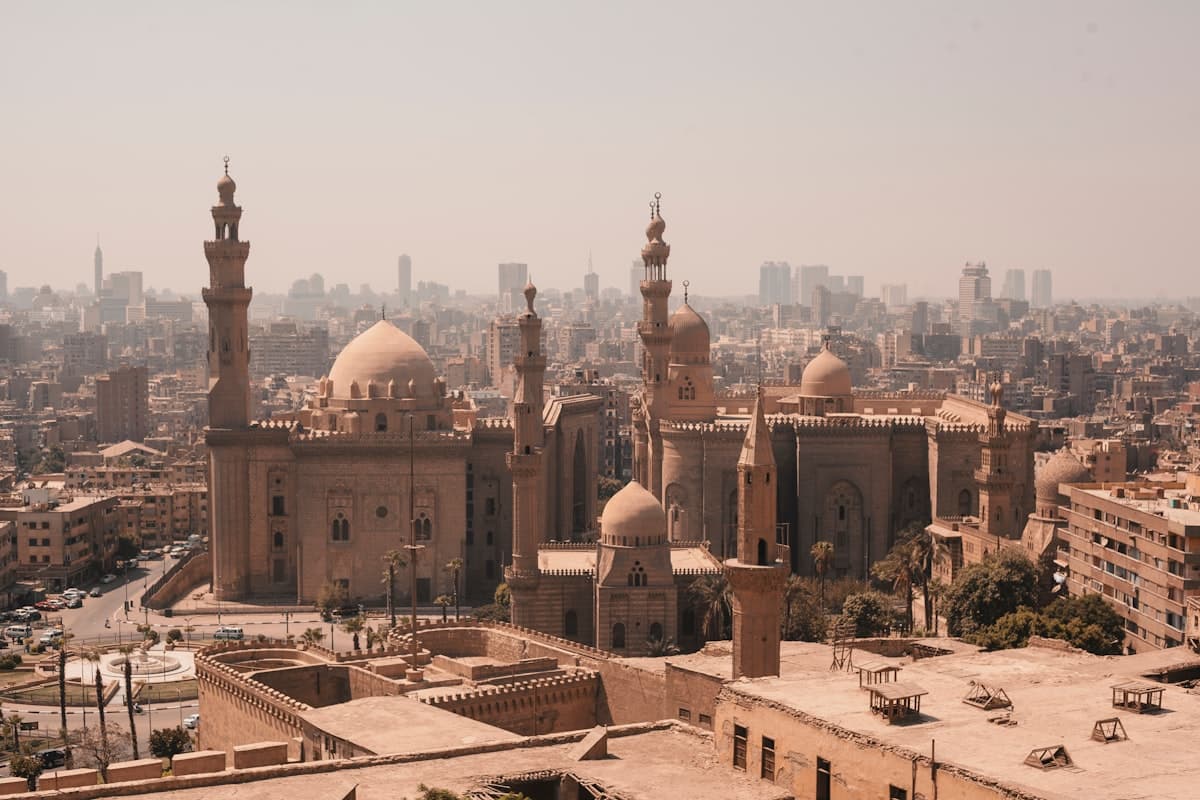
The Citadel of Saladin, on which the mosque sits, was begun in 1176 by Saladin (Salah ad-Din al-Ayyubi) using a labor force that included Crusader prisoners captured after his campaigns in the Levant. The site was chosen for military logic: the Muqattam Hills provide natural elevation over the city and, in the 12th century, caught a consistent breeze that made the air cleaner than the dense city below. An Arab traveler noted in the 13th century that meat left out in the lower city would rot in a day, while meat at the Citadel height would keep for longer. The Citadel functioned as Egypt's seat of government for nearly 700 years, from Saladin's time until Mohamed Ali himself moved the governmental seat to Abdeen Palace in 1874.
This means the ground you are standing on has been continuously political for over 800 years. Crusader prisoners built it. Mamluk sultans expanded it. An Albanian pasha demolished most of the Mamluk structures to build an Ottoman-style mosque. A French emperor failed to take it. Every layer is still here if you know where to press.
The Mosque of al-Nasir Muhammad, just north of the Mohamed Ali Mosque, is what the Mamluks built at their peak. Completed in 1335, it has a minaret decorated with faience tilework brought from Persia and a Gothic doorway taken, stone by stone, from a Crusader church in Acre after Acre fell in 1291. Nobody on most tours stops here. They should.
---
The Connections: Layers Most Visitors Miss
The Albanian history Egypt Mohamed Ali guide question points to something larger than one man or one mosque. Mohamed Ali's dynasty ruled Egypt until 1952, when his great-great-grandson King Farouk was deposed by Nasser's Free Officers movement. Every Egyptian ruler between Napoleon's departure and the revolution, including the Khedives who built modern Cairo's European boulevards and the kings who built the Abdeen Palace, was a direct descendant of an Albanian soldier who arrived in 1801 with no particular plan.
The cotton economy that funded the Suez Canal, the railways, and the neo-Baroque opera house where Verdi's Aida was commissioned for its opening in 1871: all of it traces back to Mohamed Ali's decision to convert Egyptian agriculture to long-staple cotton in the 1820s, a decision that made Egypt wealthy, strategically dependent on European markets, and eventually colonially vulnerable. The British occupation of 1882 was, in part, a consequence of the financial overextension that cotton monoculture created. The man in the tomb in the corner of the mosque set that entire chain in motion.
The view from the Citadel terrace shows you medieval Cairo's minarets, the Nile, and on a clear winter morning, the Giza pyramids. Mohamed Ali would have seen the same pyramids. He considered dismantling them for building material before an engineering survey determined it would be more expensive than quarrying fresh stone. Egypt has been saved from its own leaders as often as it has been built by them.
---
Common Mistakes
Arriving between 11am and 2pm on a Friday. The mosque closes to visitors during Friday prayer and the area around the Citadel becomes gridlocked. If Friday is your only option, arrive before 10am or after 2pm.
Paying for a guide at the gate. Unofficial guides outside the Citadel entrance will quote EGP 200 to 400 for a tour and deliver a script that is mostly wrong. The police museum guard who offers to show you around is similarly not accredited. If you want a guide, book one through a licensed agency in advance; expect to pay EGP 800 to 1,200 for a half-day with someone who actually knows the site.
Skipping the al-Nasir Muhammad Mosque to spend more time in the Mohamed Ali Mosque. The al-Nasir Muhammad Mosque is architecturally more interesting and completely uncrowded. The Gothic doorway from Acre alone is worth ten minutes of close attention. Most tour groups walk past it entirely.
The sound and light show at the Citadel costs EGP 400 and tells you nothing you will not learn from reading this article. The narration is melodramatic, the lighting is garish, and the historical content is thin. Skip it. Spend the equivalent time walking the Citadel walls at sunset instead, which is free and considerably more affecting.
Wearing shoes that require time to remove. You will take your shoes off at the mosque entrance and put them in a bag. Slip-on shoes or sandals save five minutes of fumbling and a significant amount of dignity.
Not crossing to the opposite side of the Citadel terrace. The view most photographs show is north toward medieval Cairo. The view south and east, toward the City of the Dead and the Muqattam Hills, is less photographed and more disorienting. The City of the Dead is a medieval cemetery where an estimated 500,000 people currently live among the tombs, a fact that the northern view does not prepare you for.
Assuming the Citadel is only one morning's business. If you combine the Mohamed Ali Mosque, the al-Nasir Muhammad Mosque, the Military Museum (which has a surprisingly good collection and almost no tourists), and the terrace views, you need four to five hours minimum. Build the half-day and do it properly.
---
Practical Tips
Dress conservatively. The mosque is an active place of worship. Women will be offered an abaya at the entrance if they need one; this is a courtesy, not a fine, and the abayas are clean. Shoulders and knees should be covered before you arrive regardless.
The Citadel complex has a cafe near the Military Museum that sells decent coffee and cold water. Prices are tourist-level but not offensive: EGP 60 for a coffee, EGP 30 for water. Bring a half-liter bottle anyway, especially between March and October.
The best light for photography inside the mosque is between 9am and 11am, when the eastern windows are catching direct sun and the interior achieves a quality that afternoon visits do not. The alabaster exterior photographs best in the hour before sunset, when the stone takes on a warm color that its midday white does not suggest.
For context before you arrive: read about Mohamed Ali's industrial reforms and his son Ibrahim Pasha's military campaigns in Syria and Anatolia. Ibrahim came within striking distance of Constantinople in 1833 before European powers intervened to prop up the Ottoman Sultan. Egypt, under an Albanian dynasty, nearly reconstituted the Arab Middle East two centuries ago. The mosque you are visiting was being built while that campaign was underway. These facts make the building mean something.
If you are combining this with Islamic Cairo, the Khan el-Khalili bazaar is 15 minutes by taxi from the Citadel. The Hussein Mosque, al-Azhar Mosque, and the Mosque of Ibn Tulun (the oldest in Cairo, completed in 879 AD) form a coherent half-day when added before or after the Citadel. Ibn Tulun in particular deserves its own visit: it is the best-preserved mosque in Cairo, the least visited of the major sites, and architecturally unlike anything else in the city.
Frequently Asked Questions
The Weekly Dispatch
More on Egypt, every Friday.
Cultural depth and places most guides never mention.
No spam. Unsubscribe anytime.