Best Time to Visit Egypt: A Season-by-Season Guide
August in Luxor hits 45°C. December in Alexandria feels like a damp London afternoon. Egypt has five distinct climates and most visitors plan for none of them.

Quick Facts
- Best time to visit
- October and November for the entire country; February and March as second choice. Avoid Upper Egypt (Luxor, Aswan) July-August. Alexandria is best June-August for cultural immersion.
- Entrance fee
- Grand Egyptian Museum general admission EGP 600 (approx $12 USD); Tutankhamun collection extra EGP 400 (approx $8 USD). Valley of the Kings EGP 700 (approx $14 USD) for three tombs.
- Opening hours
- Most major sites open daily 6am-5pm (summer) or 6am-6pm (winter). Grand Egyptian Museum open daily 9am-9pm. Verify Ramadan hours locally as they shift annually.
- How to get there
- Cairo International Airport: direct flights from London, Dubai, Frankfurt, New York. Domestic Cairo to Luxor flights EGP 800-2,500 (approx $16-50 USD). Watania sleeper train Cairo to Luxor EGP 700-900 (approx $14-18 USD) first class.
- Time needed
- Minimum 10 days to cover Cairo, Luxor, and Aswan meaningfully. Add 3 days for Alexandria or Sinai. Nile cruise from Luxor to Aswan: 4 nights minimum.
- Cost range
- Budget EGP 1,200-1,800/day ($24-36 USD); mid-range EGP 3,000-5,000/day ($60-100 USD); Nile cruise adds EGP 4,500-9,000/night per person all-inclusive depending on vessel grade.
Quick Facts
Best overall months: October, November, February, March Average high in Cairo: January 19°C / July 36°C Average high in Aswan: January 24°C / July 42°C Average high in Alexandria: January 18°C / July 30°C Peak season surcharge: Many Nile cruise operators charge 30-40% more November through January Ramadan 2026: Roughly late February to late March (shifts 11 days earlier each year) Getting there: Cairo International Airport receives direct flights from London, Frankfurt, Dubai, and New York. Domestic flights Cairo to Luxor cost EGP 800-2,500 (approx $16-50 USD) booked in advance. Sleeper train Cairo to Luxor runs EGP 700-900 (approx $14-18 USD) in first class. Time needed to plan around seasons: At minimum, understand that Upper Egypt (Luxor, Aswan) and Lower Egypt (Cairo, Alexandria) behave like different countries climatically. What is comfortable in one is often brutal in the other.
---
Most people planning a trip to Egypt ask the wrong question. They ask when the weather is best. What they should ask is: best for what, and for whom, and in which part of a country that spans 1,000 kilometers of latitude and three distinct climatic zones?
Egypt is not a single weather experience. August in Aswan, where temperatures regularly exceed 45°C, is genuinely dangerous for anyone unaccustomed to desert heat. That same August in Alexandria, where Mediterranean sea breezes keep highs around 30°C, is when Egyptian families from Cairo flood the Corniche for their annual holiday. The two cities are 220 kilometers apart. They might as well be in different hemispheres for how differently they behave in summer.
Then there is the human calendar layered over the meteorological one. Ramadan transforms Egypt more profoundly than any season. Eid al-Adha shuts down the country for four days. Coptic Christmas on January 7th fills the churches of Old Cairo with incense thick enough to see. Understanding the best time to visit Egypt means understanding all of these calendars at once.
---
Why Egypt's Climate Actually Works This Way
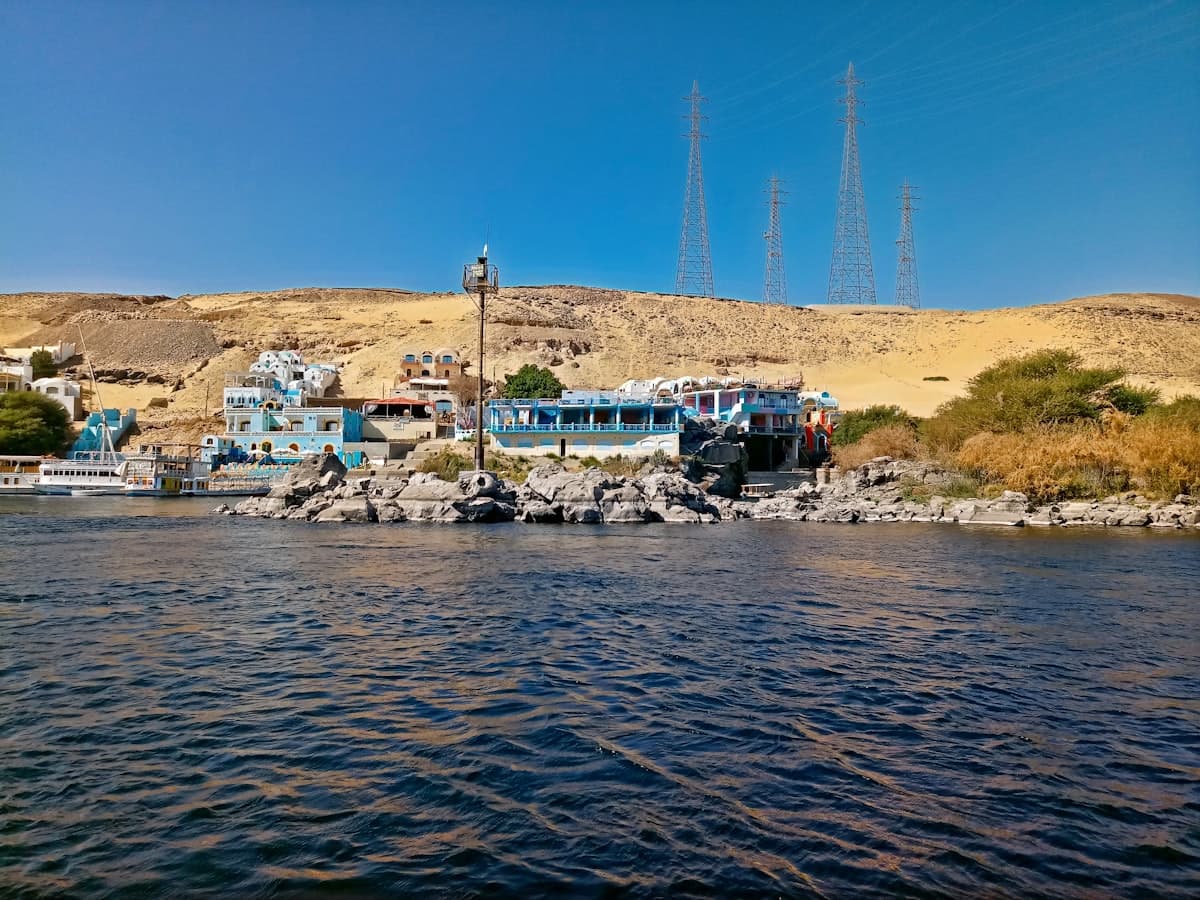
The Nile Valley is one of the narrowest inhabited strips of land on earth. For most of its length through Egypt, the cultivation belt is less than 20 kilometers wide on either side of the river. Beyond that: desert. The Eastern Desert and the Western Desert both behave as enormous heat reservoirs in summer and radiators in winter, which is why Upper Egypt (counterintuitively the south, because the Nile flows north) experiences temperature extremes that the Mediterranean-influenced north does not.
The khamsin is the fact most visitors do not plan for. This hot, dust-laden wind blows from the Sahara roughly between March and May, sometimes reducing visibility in Cairo to a few hundred meters, coating everything in fine orange dust, and pushing temperatures up by 10-15°C in a matter of hours. The word khamsin comes from the Arabic for fifty, referring to the approximately fifty days of the year when these winds are most likely. They do not arrive on a schedule. A perfect March morning can become an oppressive brown afternoon by noon.
What this means practically: spring is not the safe shoulder season many travel sites advertise. October and November are consistently the most reliable months across the entire country. The khamsin is finished, the heat has broken in Upper Egypt, and the Christmas-New Year peak has not yet arrived.
---
Upper Egypt (Luxor and Aswan): When to Go and When Not To
Luxor light at 6am in October is a specific, unrepeatable thing. The sky goes from black to indigo to a pale gold in about forty minutes, and the temperature is already 22°C and rising, and the air smells of river mud and woodsmoke from the east bank breakfast stands. By 10am the same day, you should be inside a tomb or back at your hotel. By 2pm, the stone of the Luxor Temple radiates heat you can feel from half a meter away.
This is the essential Upper Egypt discipline, and it applies from April through October: you see things at dawn, you rest during the middle hours, you return to sites around 4pm when the light turns amber and the crowds thin. Visitors who try to treat Luxor like a European city, with a leisurely 10am start and lunch at noon and an afternoon at the monuments, will find themselves genuinely unwell within two or three days in summer.
The honest assessment of summer in Luxor: July and August are not worth it for most people. Temperatures regularly hit 42-45°C. The Valley of the Kings, which sits in a limestone bowl that traps and amplifies heat, becomes uncomfortable by 9am. Tombs that are breathtaking in November become endurance exercises in August. The only people who visit Luxor in July are those with no other option, budget travelers combining it with work elsewhere, and the occasional European tourist who books without checking the temperature and arrives to discover that 42°C is not like 30°C. It is categorically different.
Aswan is hotter still. It sits at roughly the same latitude as Khartoum. The average high in July is 42°C; individual days regularly exceed 45°C. But Aswan in December and January is among the most pleasant places in Egypt: warm, dry, almost no humidity, highs around 24°C, and the Nile here is wide and calm and the Nubian villages on the west bank glow in the afternoon light. This is when Aswan repays every effort you made to get there.
---
Cairo and Lower Egypt: The City That Has Its Own Rules
Cairo does not follow the same seasonal logic as Upper Egypt. It is a city of 20 million people that generates its own heat, its own haze, its own weather microclimate over the eastern desert fringe where much of the metropolitan sprawl now sits.
In summer, Cairo is hot and humid in ways that Aswan, despite its higher temperatures, is not. The Nile Delta's moisture pushes inland, and July and August in Cairo feel thick and close in a way that Luxor's dry heat does not. That said, Cairo is livable in summer in a way that Luxor genuinely is not, because Cairo is a city: it has air conditioning, underground metro lines, covered markets, evening culture that does not start until 9pm and runs until well past midnight.
The Egyptian social calendar in Cairo is inverted from northern Europe. Summer is actually a time of intense cultural life: outdoor cinema, Nile-side restaurants, late dinners in Khan el-Khalili that stretch until 1am. If you visit Cairo primarily for its Islamic architecture, its Coptic churches, its extraordinary Egyptian Museum (the new Grand Egyptian Museum at Giza, which houses the complete Tutankhamun collection of 5,398 objects, opened in phases from 2021 onward), then October through March is your window. The light is better for photography. The air is clearer. The temperature in the medieval alleyways of Islamic Cairo, where the buildings lean toward each other overhead and block the sun, is genuinely comfortable.
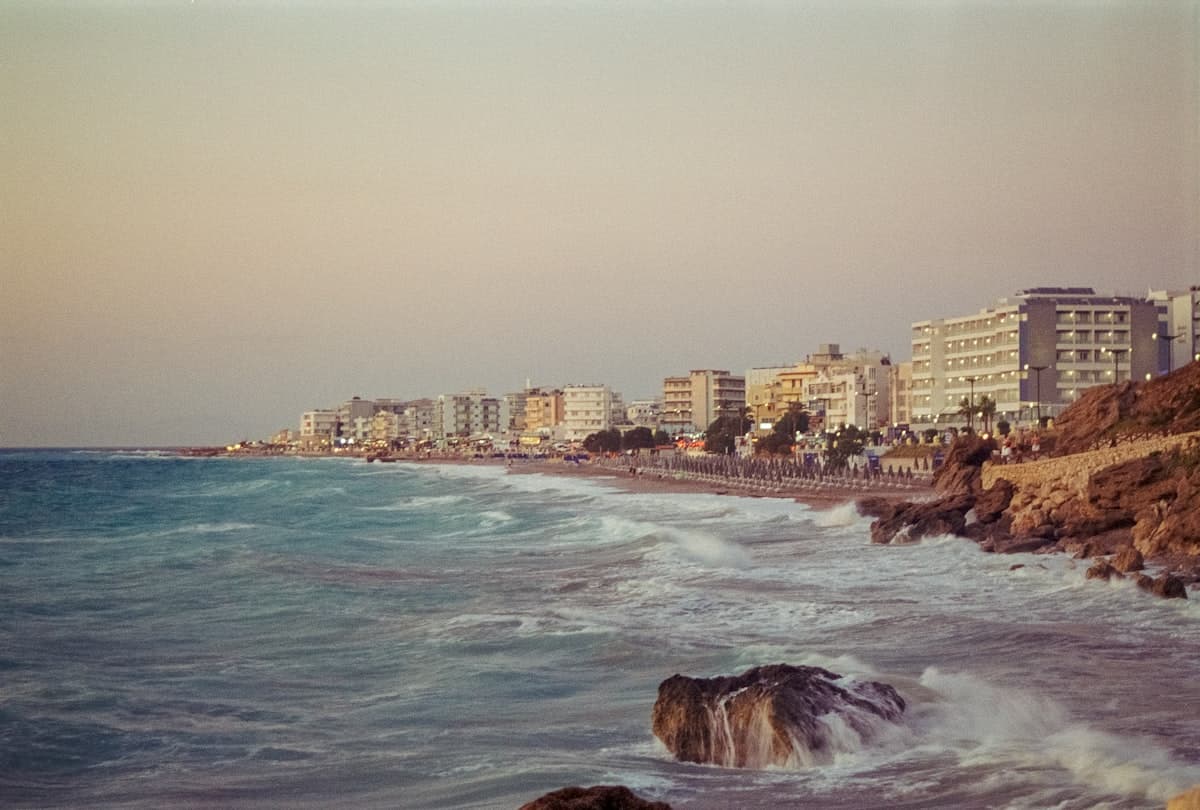
Alexandria is the most European-feeling Egyptian city in winter and the most Egyptian city in summer. In June, July, and August, it fills with Cairene families, the beaches are packed, the Corniche is alive at midnight, and the city has a pleasure-seeking energy that has not changed much since the Greek and Roman writers described it two thousand years ago. In January, when the Mediterranean dumps cold rain on it for days at a stretch, and the sea goes grey and rough, Alexandria is beautiful in a different register: the old cafes, the Greek-era catacombs, the remnants of its cosmopolitan past are all more accessible when you are not competing with half of Cairo for space.
---
Ramadan: The Complicated Truth
Every travel guide either tells you to avoid Ramadan or romanticizes it. Both are wrong.
The practical reality: during Ramadan, most Egyptian-owned restaurants are closed during daylight hours, government offices operate shorter hours, and many Egyptians are tired, especially in the final week before Eid al-Fitr. Arranging a private driver, hiring a guide, negotiating in a market, all of these require a little more patience and cultural awareness.
The other reality: Ramadan Cairo after sunset is one of the most extraordinary urban experiences in the Muslim world. The iftar meal at dusk, when the fast breaks, fills the streets with a collective exhale. Lanterns (fanous) hang from every balcony in Islamic Cairo. The food stalls in the lanes around Al-Azhar set up tables that stretch half a block. The mosques overflow for tarawih prayers at night and the sound carries across the rooftops. If you are willing to adjust your rhythm, to sleep later, eat later, move through the city at a different pace, Ramadan is not a reason to avoid Egypt. It is a reason to visit a different Egypt than the one in the photographs.
The honest contrarian take on high season: the period from Christmas through New Year is when Egypt is at its most expensive and most crowded, and the Nile cruise experience in this window is the worst version of itself. Boats that hold 40 people carry 40 people. The Valley of the Kings at 9am in late December has tour buses queued along both sides of the access road and guides shouting in six languages simultaneously. The site is not ruined by this, but it is not the contemplative experience that the same site offers on a Tuesday in late October. The premium you pay for the Christmas-New Year window is rarely worth it. Come in November instead.
---
The Connections: How Egypt's Seasons Are Written into Its History
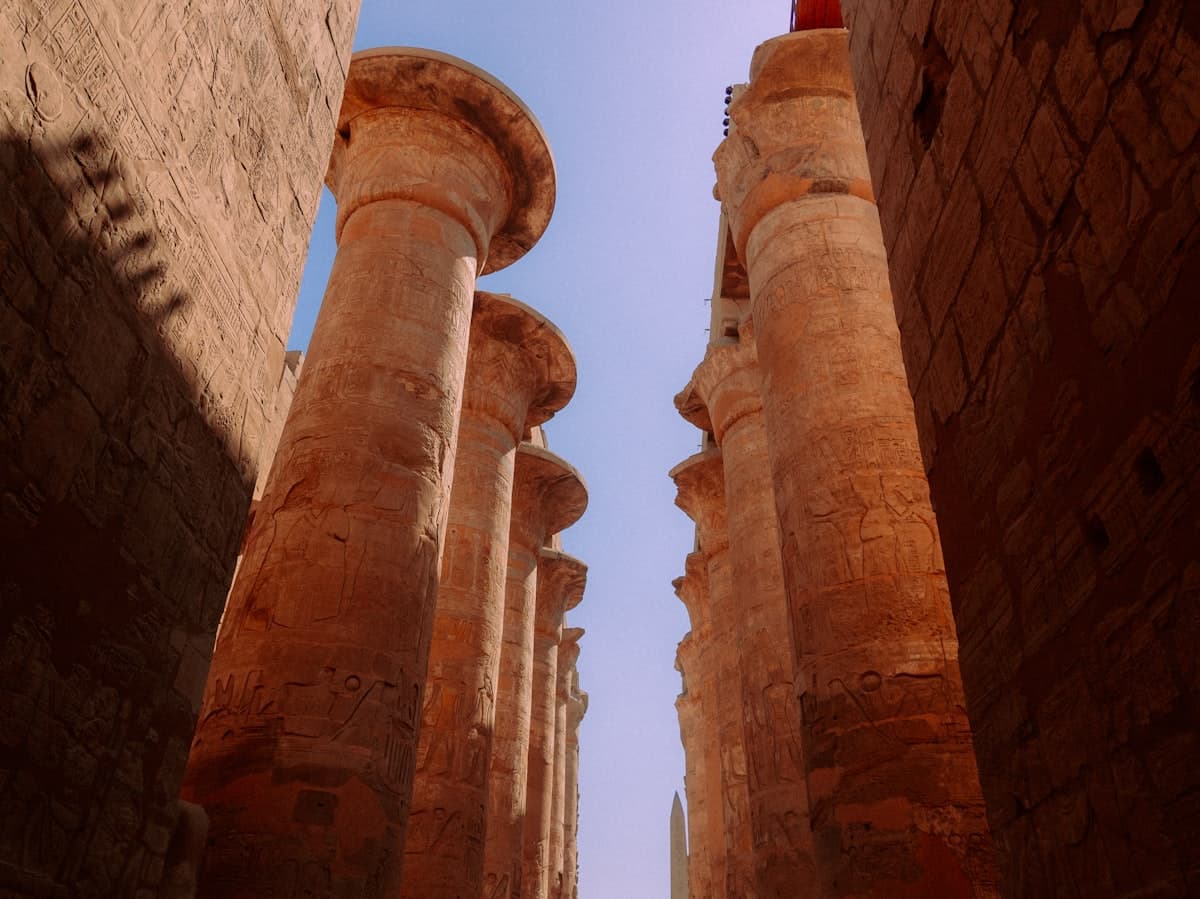
The ancient Egyptian calendar was organized around the Nile flood, which they called Akhet, the season of inundation, running roughly July through October. The flood deposited the black silt that made Egyptian agriculture possible; without it, the civilization did not exist. The two other seasons were Peret (growing season, October to February) and Shemu (harvest, February to June). The timing of the great temple festivals at Karnak and Luxor was calibrated to these agricultural rhythms. The Opet Festival, during which the statue of Amun was carried from Karnak to Luxor Temple in a river procession lasting 11-27 days, took place during the second month of Akhet, roughly our September. The flood made the river road between the two temples navigable and festive at once.
Now the flood does not come. The Aswan High Dam, completed in 1970, ended 7,000 years of annual inundation. The agricultural calendar shifted. But the human preference for cooler weather, for October harvests, for the particular quality of Egyptian light in November when the sky is clear and the dust has settled, those remain. The best time to visit Egypt is, in its way, a question the ancient Egyptians already answered. They built their grandest festivals for Akhet, the moment after the flood, when the land was renewed, the air was clear, and the river was high. October and November. Exactly when you should go.
---
Common Mistakes
Planning by Cairo's weather and ignoring Aswan. Cairo in April is pleasant, around 28°C, blue skies, comfortable evenings. Aswan in the same week is 38°C by 10am. Many travelers plan a single Egypt itinerary without accounting for the fact that adding Aswan in late April is adding a climate category they have not prepared for.
Booking a Nile cruise for December 26 to January 2. This is the single most expensive and crowded window for Nile cruises. Operators know that European and American travelers book their Egypt trips around Christmas and New Year, and pricing reflects this. The same four-night cruise from Luxor to Aswan that costs EGP 12,000-18,000 (approx $240-360 USD) per person in October can cost 40% more in this window, on a boat with twice as many passengers. Come in October or February instead.
Underestimating the khamsin. If a khamsin hits during your trip, the appropriate response is to stay inside. Not to push through to the Pyramids anyway. The fine sand particles that a khamsin carries are not the same as urban dust; they get into cameras, eyes, and lungs with real consequence. Have a flexible itinerary that allows for one or two indoor days in spring.
The Luxor Sound and Light Show. It costs EGP 450 (approx $9 USD), lasts one hour, tells you almost nothing specific about the temple, and forces you to see Karnak in artificial colored light instead of the extraordinary natural dusk light that the site offers for free every evening. Skip it. Walk to the Luxor Temple instead and watch the columns turn gold as the sun drops behind the west bank.
Missing Alexandria in summer because it 'sounds like off-season.' Alexandria in July and August is when it is most itself: crowded, loud, alive, full of Egyptians doing exactly what their Greek and Roman predecessors did here, which is come to the sea to escape inland heat. If you want to understand Egyptian culture rather than just Egyptian archaeology, a week in Alexandria in August will teach you more than a week of monument-hopping in Luxor.
Arriving in Ramadan without adjusting expectations. Do not arrive expecting the same logistical ease as non-Ramadan months and then be frustrated by the differences. Arrive knowing the rhythm, adjust your own hours accordingly, and you will find the experience richer than a standard tourist visit.
Ignoring elevation. Sinai, where Saint Catherine's Monastery sits at 1,570 meters above sea level, gets genuinely cold in winter. December nights at Saint Catherine's drop below freezing. Travelers who pack for Egypt's coastal heat and then drive up into Sinai in January have, on occasion, turned back. If Sinai is on your itinerary, pack layers regardless of month.
---
Practical Tips
Book domestic flights and Nile cruises at least 6-8 weeks in advance for the October-November and February-March windows. These are the two peak shoulder seasons when availability tightens fastest.
For the Grand Egyptian Museum, book tickets online in advance at the official GEM site. Walk-up tickets are available but the queue on busy days can exceed two hours. The complete Tutankhamun collection requires a separate ticket on top of the general admission; budget EGP 1,000-1,200 (approx $20-24 USD) total per person for both.
The overnight sleeper train from Cairo to Luxor, operated by Watania Sleeper, is genuinely comfortable in first class: private two-berth cabins, included dinner and breakfast, arrives in Luxor at dawn. At EGP 700-900 per person one way, it is cheaper than most flights and saves a hotel night. Book online at the Watania website or through your hotel concierge.
For Upper Egypt in any month from April through September, begin all outdoor site visits no later than 7am. Carry a minimum of 2 liters of water per person per hour of outdoor activity. This is not a suggestion.
Sunscreen sold in Egyptian pharmacies and supermarkets is widely available and reasonably priced: EGP 120-250 (approx $2.50-5 USD) for a standard bottle. There is no need to pack bulk supplies from home.
If your trip coincides with Coptic Christmas (January 7th) or Easter (date varies), and you are in Cairo, attend a service at the Hanging Church in Old Cairo or the Church of Saint Sergius, which was built, according to tradition, on the site where the Holy Family rested during the Flight into Egypt. The liturgy is in Coptic, a direct descendant of ancient Egyptian, the last living form of the language of the pharaohs. You do not need to be Christian to find this extraordinary.
Frequently Asked Questions
The Weekly Dispatch
More on Egypt, every Friday.
Cultural depth and places most guides never mention.
No spam. Unsubscribe anytime.