Greco-Roman Alexandria: The City That Remade the Ancient World
Alexandria once held the entire accumulated knowledge of the ancient world in a single building. That building burned. What survived is stranger than you'd expect.

Quick Facts
- Best time to visit
- October to April. Mediterranean humidity and overcast skies make summer (June to August) unpleasant for walking between sites. Spring and autumn offer cool mornings and clear light.
- Entrance fee
- Catacombs of Kom el-Shoqafa: EGP 180 (approx $3.50 USD), students EGP 90. Pompey's Pillar and Serapeum: EGP 180 (approx $3.50 USD), students EGP 90. Greco-Roman Museum: EGP 200 (approx $4 USD), students EGP 100. Bibliotheca Alexandrina exhibitions: EGP 50-120 (approx $1-2.50 USD).
- Opening hours
- Most Greco-Roman sites open daily 9am to 5pm. Catacombs close at 4pm. Some sites reduce hours on Friday midday. Confirm museum hours in advance as post-renovation schedules have varied.
- How to get there
- High-speed train from Cairo Ramses Station to Alexandria: EGP 175-350 (approx $3.50-7 USD), journey approx 2 hours 10 minutes. Within Alexandria: taxis EGP 40-80 per ride between sites. Blue tram along the Corniche: EGP 3.
- Time needed
- Minimum two full days for the main Greco-Roman sites at a pace that allows real engagement. One day is insufficient if arriving from Cairo by train.
- Cost range
- Budget EGP 600-1,000 per day including food, local transport, and entry fees. Mid-range EGP 1,800-3,000 per day with a Corniche hotel.
At its peak, the Library of Alexandria employed over a hundred scholars on state salaries and held between 400,000 and 700,000 papyrus scrolls. The ancient world had nothing else like it. When you walk through modern Alexandria today, past the concrete apartment blocks and the diesel-stained Corniche, that fact should feel violent. The distance between what this city was and what it looks like now is the central drama of every hour you spend here.
Most visitors to Egypt skip Alexandria entirely. Some come for a day trip from Cairo and see the Bibliotheca Alexandrina, eat fish on the waterfront, and leave having grazed the surface of a city that was, for three centuries, the most intellectually sophisticated place on earth. The Greco-Roman Egypt Alexandria history guide most people follow leads them to three or four landmarks. This one goes deeper, because the city rewards depth in ways that few Egyptian sites do.
Quick Facts
Best time to visit: October through April. Alexandria sits on the Mediterranean and summers are humid and gray in ways that Cairo's desert heat is not. Spring and autumn give you cool mornings and clear Mediterranean light.
Entrance fees: Greco-Roman Museum: EGP 200 (approx $4 USD), students EGP 100. Reopened after renovation in 2023; confirm current hours before visiting. Pompey's Pillar and Serapeum site: EGP 180 (approx $3.50 USD), students EGP 90 Catacombs of Kom el-Shoqafa: EGP 180 (approx $3.50 USD), students EGP 90 Royal Jewelry Museum: EGP 150 (approx $3 USD) Bibliotheca Alexandrina: free entry to main hall; exhibitions EGP 50-120 (approx $1-2.50 USD)
Opening hours: Most sites open daily from 9am to 4pm or 5pm. The Catacombs close at 4pm sharp. Fridays see reduced hours at some sites between noon and 1:30pm for prayers.
How to get there: From Cairo, the Spanish-built high-speed train runs from Ramses Station to Sidi Gaber or Alexandria's main station in about 2 hours and 10 minutes; tickets cost EGP 175-350 (approx $3.50-7 USD) depending on class. Book through the Egyptian National Railways app or at the station. From central Alexandria, taxis to the Catacombs or Pompey's Pillar should cost EGP 40-80 (approx $1-1.60 USD). The city's blue trams are EGP 3 and run east-west along the coast.
Time needed: The major Greco-Roman sites alone need a full day if you move at any pace that allows actual looking. Two days is honest if you want to understand what you are seeing.
Cost range: Budget EGP 600-1,000 per day including food, transport, and entry fees. Mid-range EGP 1,800-3,000 per day with a decent hotel on or near the Corniche.
Why This Place Matters
Alexander the Great founded the city in 331 BC, but he never saw it finished. He died in Babylon eight years later, and his general Ptolemy brought his body back to be buried in Alexandria in a gold sarcophagus that later emperors, including Julius Caesar and Augustus, came specifically to view. The sarcophagus has been lost. Nobody knows where Alexander's tomb is. Archaeologists have been searching for it, on and off, since the city existed.
What the Ptolemies built on that sand was unprecedented. The Mouseion, the institution attached to the Library, was not just a repository but a working research center where Eratosthenes calculated the circumference of the earth to within 1% accuracy around 240 BC, using shadows, a well in Aswan, and geometry. Euclid wrote the Elements here. Archimedes studied here before returning to Syracuse. Hypatia, the philosopher and mathematician, was murdered by a Christian mob in 415 AD, which most people read as a footnote in the story of late antiquity but which Alexandria still processes as a wound.
The city existed at the intersection of three great civilizations simultaneously. The Ptolemies were Macedonian Greeks who ruled as Egyptian pharaohs, built temples to Egyptian gods, and were worshipped as living deities in both traditions. The Serapeum, the great temple complex you can visit today, was dedicated to Serapis, a god invented specifically to appeal to both Egyptian and Greek populations. This is not religious syncretism as a modern concept. It was deliberate state policy.
What You Will Actually See: The Sites Worth Your Time
The Catacombs of Kom el-Shoqafa
These are the most important Greco-Roman site in Alexandria and the one most visitors rush through. Do not rush through them.
Discovered accidentally in 1900 when a donkey fell through the roof of the entrance shaft, the catacombs were built in the 2nd century AD and used for roughly two centuries. They contain, in a single underground space, one of the most honest visual records of how ancient cultures actually blended rather than simply coexisting. Descend the spiral staircase cut through the rock and you reach a series of burial chambers whose decorations belong to three worlds simultaneously: the architectural vocabulary is Roman, the gods depicted are Egyptian, and the style of carving is Hellenistic Greek. A figure wearing Roman military dress stands in relief while beside him, a priest performing funerary rites wears the ceremonial Egyptian costume of a priest of Anubis. This is not a museum exhibit explaining syncretism. It is syncretism, in limestone, 20 meters underground.
The catacombs also contain a triclinium, a Roman dining room where families would gather to eat with their dead on feast days. The benches cut into the walls are still there. The practice of communal meals with the deceased moved directly into early Christian funerary traditions, and then into the Coptic practice of eating at tombs on certain saints' days, which you can still observe in Egyptian cemeteries today.
Pompey's Pillar and the Serapeum
The column known as Pompey's Pillar has nothing to do with Pompey. He was killed nearby in 48 BC, but the pillar was erected in 293 AD in honor of the Emperor Diocletian. Medieval crusaders looked at the tallest standing column in the ancient world and needed a story to explain it, so they chose the famous Roman general. The name stuck for a thousand years.
At 26.85 meters, it remains the largest monolithic column of the ancient world outside Rome. The Aswan red granite shaft is a single piece of stone, which means someone, somewhere in Roman Egypt, quarried a block, shaped it, transported it hundreds of kilometers north by barge, and raised it using techniques we have not fully reconstructed. The column stands on the ruins of the Serapeum, the temple complex destroyed by a Christian mob in 391 AD under orders from the Bishop Theophilus, an event that marks one of the cleaner dividing lines between the ancient and medieval worlds.
In the ground around the pillar, you can walk through the underground galleries of the Serapeum itself, where the daughter library of Alexandria was kept. These long rock-cut corridors with their niches for scroll storage are not dramatic. They look like an empty warehouse. But they are where knowledge actually lived, and the emptiness is the point.
The Greco-Roman Museum
Reopened after a long renovation, the Greco-Roman Museum holds one of the most important collections of artifacts from Ptolemaic and Roman Egypt in the world, and it receives a fraction of the attention that the Cairo Museum does. This is an error on the part of most itineraries.
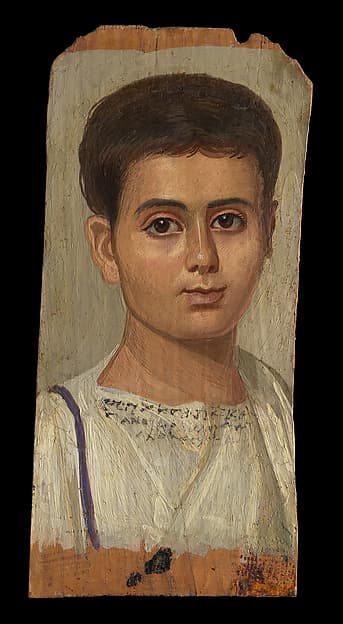
The collection includes mummy portraits, the painted wooden panels placed over the faces of mummified bodies from the Roman period, that are among the most psychologically immediate objects in Egyptian archaeology. These faces, painted in encaustic wax on wood, look directly at you with individual expressions, hairstyles, and jewelry that locate them in a specific decade of a specific century. They are not symbols. They are people. Many were found at Fayoum, 100 kilometers south of Cairo, but the museum's collection and the context Alexandria provides for understanding Greco-Roman Egypt makes this the right place to encounter them.
The Connections: Alexandria in the Longer Story of Egypt
The city Alexander founded was always layered. Beneath the Ptolemaic city lie older Egyptian settlements. The site was not empty sand when Alexander arrived. Rhakotis, an Egyptian fishing village, occupied the location, and the Egyptian population of Alexandria was always substantial, living largely in the western quarter of the city and maintaining their own temples and traditions throughout the Ptolemaic and Roman periods.
When the Arab general Amr ibn al-As took Alexandria in 641 AD, he reportedly wrote to the Caliph Omar: "I have taken a city of which I can only say that it contains 4,000 palaces, 4,000 baths, 400 theatres, 1,200 greengrocers, and 40,000 Jews." These numbers are certainly exaggerated, but the letter captures something real: even in the 7th century, Alexandria was a scale that the Arab world had not encountered.
The Arab conquest did not destroy what remained of Greco-Roman Alexandria. Time, earthquakes, rising sea levels, and centuries of construction did. Archaeologists estimate that roughly two thirds of ancient Alexandria now lies beneath the harbor and the modern city. The Bibliotheca Alexandrina, built in 2002 on the probable site of the ancient Library, is a monument to absence as much as to recovery. Go to understand what is gone. The modern building is architecturally serious and worth the hour. Its exhibitions on the history of the ancient Library are genuinely educational. But do not let it substitute for the older, stranger sites.
Alexandria's Coptic history runs parallel to its Greco-Roman history without most visitors noticing. According to tradition, St. Mark brought Christianity to Alexandria around 42 AD, making the Coptic Orthodox Church one of the oldest Christian institutions in the world. The Coptic neighborhood of ancient Alexandria sat directly over and beside Greek and then Roman districts. The Church of St. Mark, destroyed and rebuilt multiple times, sits today in the Anfushi neighborhood. The layering of Greek, Roman, Jewish, Coptic, and eventually Islamic Alexandria is not a sequence. It is a sediment.
Common Mistakes
Coming for only one day from Cairo. The train journey alone takes two hours each way. A single day leaves you with roughly five hours of actual visiting time, which is enough to see one or two sites superficially. The city is cheap to sleep in and the sites reward slowness. Stay at least one night.
Spending significant time at the Qaitbay Citadel for Greco-Roman history reasons. The 15th-century Mamluk fortress is built on the site of the Pharos, the ancient lighthouse, and its foundations incorporate granite blocks believed to have come from the lighthouse itself. It is worth walking past and it photographs well from the Corniche. But most of the Greco-Roman material associated with the Pharos is either underwater or gone. The citadel is a Mamluk building. Treat it as one.
Skipping the Catacombs because the description sounds minor. This is the most common and most damaging mistake. The Catacombs of Kom el-Shoqafa are the most important example of Greco-Roman-Egyptian religious synthesis you can physically enter anywhere in the country. They should be the first site on your list, not an afterthought.
The underwater archaeology tour at the harbor. Several operators offer glass-bottom boat tours over the sunken ruins of the ancient royal quarter. At EGP 400-600 per person, they show you murky water through murky glass. The Hellenic and Roman statues recovered from these waters are in the Maritime Museum and, more accessibly, documented in Franck Goddio's published research. Pay to see the objects. Skip the boat.
Arriving without booking the Greco-Roman Museum ahead of time. After its renovation, the museum has limited daily entry capacity. On weekends especially, it sells out. Check the Supreme Council of Antiquities website or call ahead.
Expecting Alexandria to look like its ancient self. This sounds obvious but it adjusts your entire experience. Modern Alexandria is a working Mediterranean port city of five million people. The ancient grid of streets survives in a few places, and the Kom el-Dikka Roman odeon sits literally surrounded by apartment buildings. If you spend your time trying to imagine away the present, you will miss how extraordinary it is that anything survives at all.
Assuming the waterfront restaurants are not worth the price because they are tourist-facing. The fish restaurants along the Corniche and around the fishing harbor at Anfushi are not cheap by Egyptian standards, but sea bass and red mullet landed that morning and cooked simply is one of the better meals you will eat in Egypt. It is part of the city. Budget for it.
Practical Tips
Alexandria's sites are spread across a long coastal city that is not easily walkable between locations. Budget for taxis between the Catacombs, Pompey's Pillar, Kom el-Dikka, and the Corniche sites. Each ride should cost EGP 40-80 if you confirm the price before getting in. Use the Corniche as your orientation axis: everything runs east or west of it.
The Greco-Roman Museum requires a separate ticket from other sites. None of the sites currently offer combined tickets, though this changes periodically. Carry cash. Card machines exist at some ticket offices and fail at others.
For a Greco-Roman Egypt Alexandria history guide to actually work, you need the right sequence. Start at the Catacombs in the morning when they open, before group tours arrive. Move to Pompey's Pillar late morning when the light is direct and useful for seeing the column's scale. The Greco-Roman Museum works well in early afternoon, away from the midday outdoor heat. End the day walking the Corniche east toward the Bibliotheca Alexandrina at the hour before sunset, when the sea turns a particular flat silver color and the city's contradictions feel most held together.
If you read Arabic, the street names of central Alexandria still carry the grid of the ancient city. El-Horreya Road follows the line of the ancient Canopic Way, the main east-west artery of Ptolemaic Alexandria. You are not imagining it. You are standing on 2,300 years of continuous urban geography.
Frequently Asked Questions
The Weekly Dispatch
More on Egypt, every Friday.
Cultural depth and places most guides never mention.
No spam. Unsubscribe anytime.