Islamic Golden Age Cairo: A History Guide to Medieval Islam
Al-Azhar University has been teaching continuously since 970 AD, making it older than Oxford by a century. Cairo's medieval core holds more than most capitals. Here is where to find it.

Quick Facts
- Best time to visit
- October to March. Temperatures stay below 25°C, making long walks between monuments manageable. January and February are the coolest months with fewest tourists.
- Entrance fee
- Al-Azhar Mosque: free. Ibn Tulun Mosque: EGP 80 (approx $1.60 USD). Gayer-Anderson Museum: EGP 200 (approx $4 USD). Sultan Hassan Mosque: EGP 100 (approx $2 USD). Citadel complex: EGP 450 (approx $9 USD).
- Opening hours
- Most mosques daily 9am to 5pm, closed to visitors during Friday prayer noon to 2pm. Ibn Tulun opens at 8am. Gayer-Anderson Museum daily 9am to 4pm.
- How to get there
- Taxi from Tahrir Square to Bab Zuweila: EGP 50 to 80. Metro to Sadat Station then taxi: EGP 30 to 40. Cairo Bus routes 72 and 911 pass through the area. Uber is reliable from most central neighborhoods for EGP 60 to 100.
- Time needed
- Ibn Tulun plus Gayer-Anderson: 3 hours. Full Al-Muizz Street walk including Al-Azhar: additional 3 to 4 hours. Citadel and Sultan Hassan: half day. Recommended across two separate days.
- Cost range
- Budget EGP 400 to 700 per day covering entry fees, street food, and local taxis. Mid-range EGP 1,200 to 2,000 per day with a licensed guide and a sit-down lunch.
Quick Facts
Best time to visit: October to March, when the air in Islamic Cairo drops below 25°C and the light through mashrabiyya screens turns amber rather than white.
Entrance fees: The Khan el-Khalili area and most street-facing mosques are free. The Mosque-Madrassa of Sultan Hassan costs EGP 100 (approx $2 USD). The Mosque of Ibn Tulun costs EGP 80 (approx $1.60 USD). The Gayer-Anderson Museum, attached to Ibn Tulun, costs EGP 200 (approx $4 USD). Al-Azhar Mosque is free but requires modest dress and a headscarf for women.
Opening hours: Most mosques open from 9am to 5pm, with closures during Friday prayer (noon to 2pm). Ibn Tulun is open daily 8am to 5pm.
Getting there: From Tahrir Square, take a taxi to Bab Zuweila for around EGP 50 to 80. The metro goes to Sadat Station, then a short ride north into medieval Cairo. Cairo Bus Company routes 72 and 911 pass through the area. Budget an hour if coming from Zamalek.
Time needed: Ibn Tulun and the Gayer-Anderson Museum alone deserve three hours. A full Islamic Cairo day, from the Citadel to Al-Azhar to the northern walls, needs seven to eight hours spread across two days.
Cost range: Budget EGP 400 to 700 per day covering entry fees, street food, and local transport. Mid-range EGP 1,200 to 2,000 per day if you add a guide and a sit-down meal.
---
Why This Place Matters
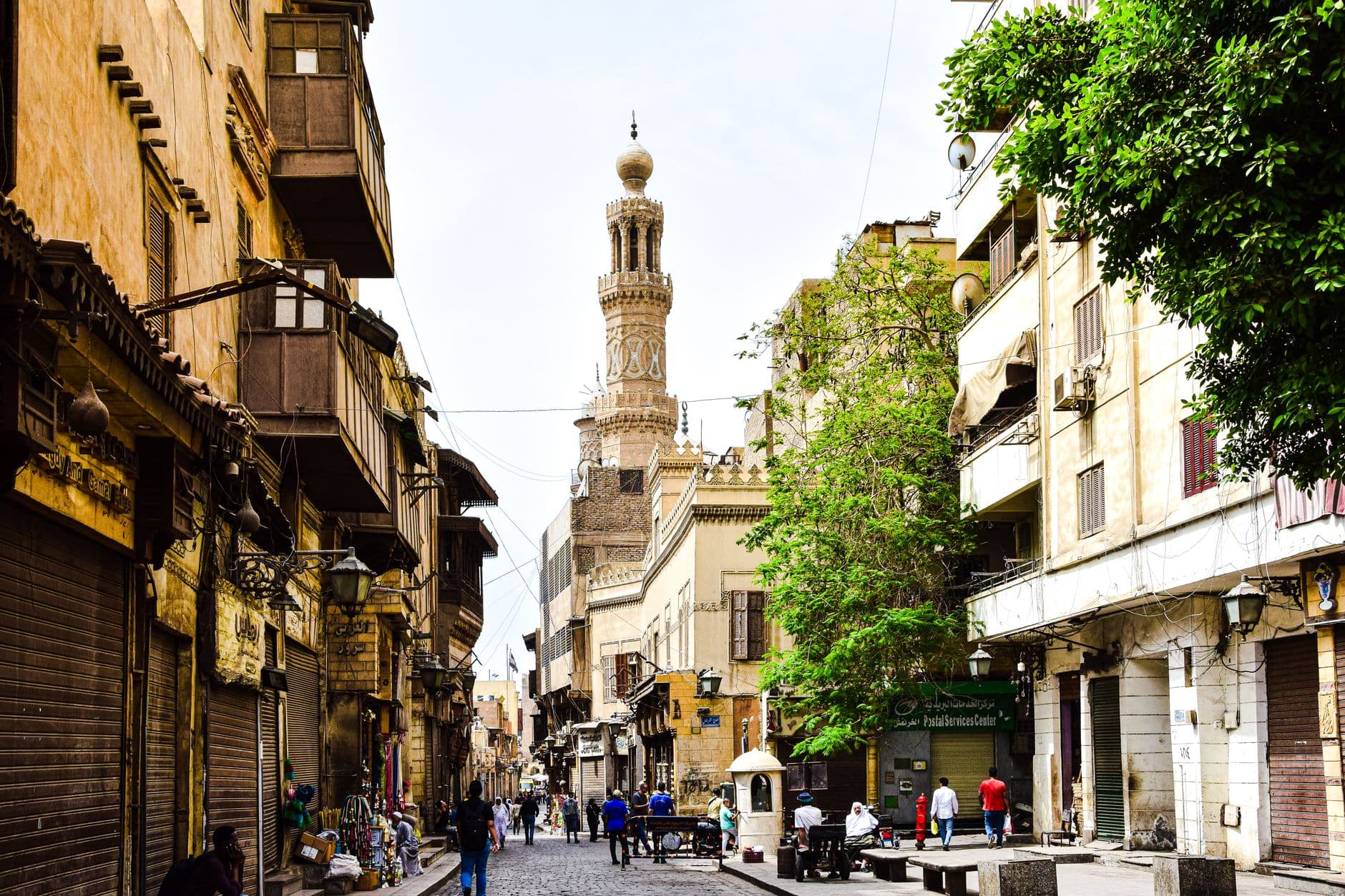
Cairo became a city in 969 AD when the Fatimid general Jawhar al-Siqilli marched in from Tunisia and drew a square in the desert north of the existing settlement of Fustat. He named it Al-Qahira, "The Victorious." Within a year, construction began on Al-Azhar Mosque. Within a decade, it had become a university. It is still operating. The institution that would eventually become Oxford began teaching around 1096 AD, more than a century later.
What this means, practically, is that when you stand in the courtyard of Al-Azhar, you are standing in what was once the intellectual center of the Mediterranean world. Scholars came from Andalusia, from Persia, from sub-Saharan Africa. The library at Cairo's House of Wisdom, the Dar al-Hikma founded in 1004 AD by the Fatimid caliph Al-Hakim, held 1.6 million volumes at its peak. The Library of Alexandria, so often cited as the world's great lost library, probably never held more than 700,000 scrolls. The Dar al-Hikma was larger, later, and almost entirely forgotten in Western historical memory.
This is why an Islamic Golden Age Cairo history guide cannot be written as a simple list of monuments. The monuments are secondary. What was built here was a system: law, medicine, astronomy, mathematics, philosophy. The buildings that survive are the containers. Understanding what they held changes how you walk through them.
---
Ibn Tulun: The Oldest Surviving Mosque in Cairo
Before the Fatimids arrived, before Al-Azhar existed, there was Ahmad ibn Tulun. He was an Abbasid governor sent from Samarra in modern Iraq to administer Egypt in 868 AD. He brought with him an architect and a memory of the great spiral-minareted mosque of his home city. The mosque he built in Cairo, finished in 879 AD, is the oldest in the city still standing in its original form. It is also the largest mosque in Cairo by footprint, covering 26,000 square meters.
The minaret is the detail that most visitors photograph without understanding. It has an external staircase that winds around the outside of the tower, not inside it. This design appears nowhere else in Egypt. It is directly copied from the Great Mosque of Samarra in Iraq, where Ibn Tulun grew up. He was homesick. He built his memory into the skyline.
Inside, the sycamore wood frieze that runs around the interior walls is original, 1,100 years old and largely intact. It contains over two kilometers of carved inscription. Most visitors walk a slow circle, look up at the courtyard fountain, and leave in forty minutes. The frieze takes ten minutes to read properly and contains verses from the Quran selected with a theological precision that repays attention.
The Gayer-Anderson Museum, two Ottoman houses from the 16th and 17th centuries attached to the mosque's eastern wall, is where Islamic Cairo reveals its domestic face. The British officer John Gayer-Anderson collected Mamluk and Ottoman objects and installed them here between 1935 and 1942, creating something between a house and a cabinet of curiosities. James Bond's "The Spy Who Loved Me" filmed a chase scene through these rooms in 1977. Ignore that. The collection itself includes a room whose ceiling was transplanted wholesale from a demolished Damascus merchant's house, and a bathroom with a two-way mirror that allowed the women of the house to observe male visitors in the reception room below without being seen.
---
The Fatimid City and the Street That Still Works
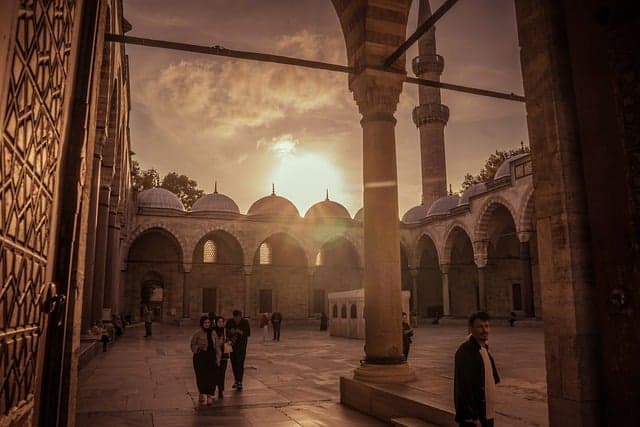
Al-Muizz Street is the spine of the original Fatimid city, running roughly north to south between the old gates of Bab al-Futuh and Bab Zuweila. It was completed around 970 AD as the main processional avenue of the new Fatimid capital. Today it is an open-air concentration of medieval Islamic architecture unlike anything else on earth, and UNESCO has described its stretch between the two gates as containing the world's largest surviving concentration of medieval Islamic monuments.
What the UNESCO description does not tell you is that roughly half of these buildings are still actively used. The mosque of Al-Aqmar, finished in 1125 AD, holds Friday prayers. The Qalawun complex, completed in 1285 AD and containing a hospital, a madrassa, a mausoleum, and a mosque, still functions as a hospital wing. The Bimaristan al-Qalawun was the most sophisticated medical institution in the medieval world at the time of its construction, offering separate wards for male and female patients, a pharmacy, a library of medical texts, and a music room for convalescent patients. Music as medical therapy, in a 13th-century Cairo hospital. That detail should stop you.
At the southern end, Bab Zuweila is one of only three surviving Fatimid gates and the only one whose twin minarets are still intact. The minarets belong to the Mosque of Al-Muayyad, added in 1420 AD, which was built directly over and around the existing gate structure. The sultan who commissioned them, Al-Muayyad Sheikh, had been imprisoned at this spot before he came to power, and he vowed that if he ever ruled Egypt he would build something beautiful where he had suffered. He did.
---
The Connections
The Citadel that sits above Islamic Cairo was begun by Salah ad-Din in 1176 AD using laborers who had recently finished dismantling some of the smaller pyramids of Giza for construction stone. There is a direct material line between Pharaonic Egypt and Islamic Cairo: the limestone in several Citadel walls was once a pyramid casing block.
The Mosque of Sultan Hassan, completed in 1363 AD at the base of the Citadel hill, was built by a Mamluk sultan who was killed before he saw it finished. The stone for its construction was partly quarried from a collapsed section of the Pyramid of Amenhotep II at Dahshur. Its four iwans, the great vaulted halls arranged around a central court, follow a Persian architectural plan that traveled from Isfahan to Cairo via Syrian intermediaries. The acoustics inside the main iwan are a consequence of that design: a single spoken phrase at the mihrab can be heard at the entrance arch forty meters away.
The Mamluks themselves were formerly enslaved soldiers, mostly of Circassian and Kipchak Turkic origin, purchased as boys and trained into the military elite of the Islamic world. They defeated the Mongols at Ain Jalut in 1260 AD, the first time the Mongols had been stopped. They then ruled Egypt for nearly three centuries, and the architectural evidence of that rule fills Islamic Cairo in layers: mosque over madrassa over hammam over wikala, building atop building the way Cairo always builds.
---
Common Mistakes
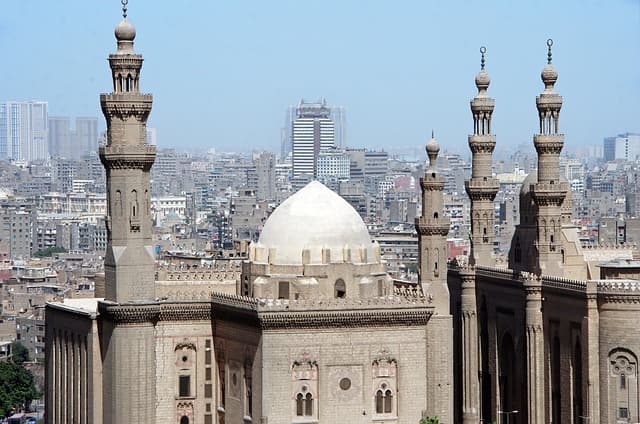
Skipping Ibn Tulun for Sultan Hassan. Sultan Hassan is architecturally extraordinary and appears in every guide. Ibn Tulun is a thousand years older, in better structural condition, and visited by a fraction of the crowd. If you have an hour for one mosque, choose Ibn Tulun.
Doing the Citadel in the morning. The Citadel faces west. The Muhammad Ali Mosque's interior is lit correctly in the afternoon, when the light enters the windows at an angle that illuminates the painted ceiling. Go after 2pm.
Hiring a guide at the gate. The self-appointed guides outside Khan el-Khalili and Al-Azhar are persistent and often misinformed. A licensed Egyptologist guide, booked through a reputable agency, costs around EGP 800 to 1,200 for a half-day and is worth every pound. The difference in what you learn is not small.
The sound and light show at the Citadel. It costs EGP 300 per person, runs forty-five minutes, and covers nothing that a one-hour read before your visit would not give you more accurately and with better atmosphere. Skip it without guilt.
Treating Al-Azhar Mosque as a tourist site. It is an active mosque and a functioning university. Walking through the courtyard is fine. Wandering into active teaching sessions or prayer rooms without invitation is not. Dress covered from wrist to ankle, collect a headscarf at the entrance if you do not have one, and move quietly.
Spending most of your time in Khan el-Khalili. The market is genuinely old, its layout dating to 1382 AD, but what is sold there today is largely mass-produced. The narrow streets west of Al-Muizz between Bab Zuweila and the Al-Ghouri complex, by contrast, have working artisans: tentmakers, copper beaters, bookbinders. Those streets take twenty minutes to reach and most tour groups never bother.
Arriving without cash. Almost nothing in Islamic Cairo accepts cards. ATMs in the area are scarce. Carry EGP in small denominations before you leave your hotel.
---
Practical Tips
The best way to experience this Islamic Golden Age Cairo history guide is on foot, but plan your route before you arrive. Islamic Cairo is not a compact tourist zone with clear signage. Streets change names mid-block. Monuments are not always labeled in English. Download an offline map and mark Ibn Tulun, Bab Zuweila, the Al-Muizz stretch, and Al-Azhar before you leave your accommodation.
Wear shoes that slip on and off easily. You will remove them at every mosque entrance. Sandals with buckles are a time cost you will resent by the fifth building.
Friday morning, when the area empties for prayer, is a good time to walk Al-Muizz Street with almost no other visitors. Friday afternoon, when families come out after prayer, gives you the street at its most alive. Both experiences are worth having.
The tentmakers' market, the Khayamiyya, sits just inside Bab Zuweila. The craft of appliqué textiles produced here has been continuous since the Mamluk period, when these makers produced ceremonial tents for the annual Hajj pilgrimage caravans. A small custom panel costs around EGP 300 to 500. It is one of the few genuinely local souvenirs available anywhere in Cairo.
For food, the restaurant inside the Naguib Mahfouz Hotel in Khan el-Khalili is overpriced and aimed at tourists. Walk five minutes west to the Fairouze restaurant near the Al-Ghouri complex, where a full koshary or ful lunch costs under EGP 60 and the room has not changed significantly since the 1970s.
Frequently Asked Questions
The Weekly Dispatch
More on Egypt, every Friday.
Cultural depth and places most guides never mention.
No spam. Unsubscribe anytime.