Armenian Community Egypt History Guide: Cairo's Forgotten Diaspora
At its peak, Egypt's Armenian community numbered 40,000. Today fewer than 5,000 remain. Their churches, schools, and cemeteries are still here. Most visitors never look.

Quick Facts
- Best time to visit
- October to April for comfortable walking temperatures across multiple Cairo districts. April 24 if you want to attend the Genocide Remembrance service.
- Entrance fee
- Free at all Armenian churches. Small donation welcomed at Saint Gregory the Illuminator (EGP 50 to 100 is appropriate). Armenian cemetery requires advance coordination with church administration, also free.
- Opening hours
- Saint Gregory the Illuminator: Saturday and Sunday 9am to 12pm for services, weekdays by appointment. Our Lady of the Annunciation: Friday mornings and by arrangement. Armenian Club Heliopolis: not open to general public without introduction.
- How to get there
- Ramses church: Metro Line 1 to Mubarak Station (EGP 7) then 10-minute walk, or taxi EGP 40 to 60. Sakakini cathedral: taxi EGP 40 to 60 from downtown. Heliopolis Armenian Club: Uber or Careem EGP 80 to 120 from central Cairo.
- Time needed
- One full day for the two main churches, Sakakini neighborhood, and Heliopolis exterior. Add a morning for the Armenian cemetery in Old Cairo. Two days for a thorough visit including Bab al-Nasr and Coptic Museum cross-references.
- Cost range
- Budget EGP 300 to 500 per day covering Metro, taxis, and lunch near Ramses. Mid-range EGP 1,200 to 2,000 with a specialist guide, cafe stops, and taxi day across all districts.
Quick Facts
Best time to visit: October to April, when the heat does not compete with the effort of walking between sites across several Cairo districts.
Entrance fees: The Armenian Catholic Cathedral of Our Lady of the Annunciation in Sakakini is free to enter during open hours. The Armenian Apostolic Church of Saint Gregory the Illuminator in Ramses is also free, though a small donation is welcomed. The Armenian Community Club in Heliopolis does not admit the general public without introduction. The Armenian cemetery in Old Cairo requires coordination with the church administration, also free.
Opening hours: Saint Gregory the Illuminator: Saturday and Sunday mornings 9am to 12pm for services; weekday visits by arrangement through the church office (+20 2 2574 0000). Our Lady of the Annunciation: Friday mornings and by appointment.
How to get there: The Ramses church sits a ten-minute walk from Ramses Square, reachable by Cairo Metro Line 1 (Mubarak Station, EGP 7 per journey). The Sakakini Cathedral is accessible by taxi from downtown Cairo, roughly EGP 40 to 60. The Armenian Club in Heliopolis is best reached by Uber or Careem, EGP 80 to 120 from central Cairo.
Time needed: A focused single-day itinerary covers the two main churches, the Sakakini neighborhood, and the community club exterior. Add a morning for the cemetery. Two days if you intend to visit the Armenian quarter traces in Old Cairo and cross-reference sites with the Coptic Museum.
Cost range: Budget EGP 300 to 500 per day covering transport and lunch in a local restaurant near Ramses. Mid-range EGP 1,200 to 2,000 if you add a guide, cafe stops in Heliopolis, and a taxi day.
---
Why This Place Matters
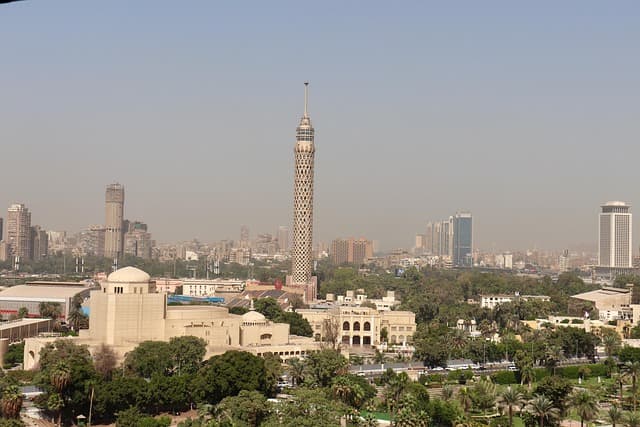
The first Armenians documented in Egypt arrived not as refugees but as merchants and diplomats serving the Fatimid Caliphate. Badr al-Jamali, the Fatimid vizier who effectively ran Egypt from 1074 to 1094, was an Armenian. He built the northern gates of Islamic Cairo, including Bab al-Futuh and Bab al-Nasr, which still stand today. The man who designed and commissioned some of the most important surviving medieval architecture in Cairo was an Armenian Christian serving a Shia Muslim caliph. This is the opening frame for understanding the Armenian community in Egypt: never marginal, never merely tolerated, consistently central to Egyptian power structures across a thousand years.
The wave most visible in physical traces today came later. Following the Armenian Genocide of 1915 to 1923, in which the Ottoman government killed an estimated 600,000 to 1.5 million Armenians, survivors moved in large numbers to Egypt, then under British administration and relatively stable. Alexandria and Cairo absorbed tens of thousands. By the 1940s, the Armenian community had established churches, schools, a press, social clubs, hospitals, and a distinct neighborhood presence in districts like Heliopolis, Zamalek, and the area around Ramses Square.
At its numerical peak in the late 1940s, Egypt's Armenian community is estimated at between 35,000 and 40,000 people. The 1952 revolution, followed by Nasser's nationalization policies, drove the first large wave of emigration. The 1956 Suez Crisis accelerated it. By 1970, the community had shrunk to roughly 10,000. Today, credible estimates place it at under 6,000, the majority elderly, concentrated in Cairo.
This Armenian community Egypt history guide is ultimately a record of what survives when a civilization-within-a-civilization compresses itself into its institutions, its churches, and its stone.
---
What You Will Actually See
The Church of Saint Gregory the Illuminator, Ramses
Saint Gregory the Illuminator is the patron saint of Armenia, the bishop who converted the Armenian king Tiridates III to Christianity in 301 AD, making Armenia the first nation to adopt Christianity as a state religion, a full decade before Constantine legalized it in the Roman Empire. That fact matters when you stand inside the Cairo church named for him, because the Armenians here were maintaining a distinct Christian tradition older than the Byzantine church, older than the Roman Catholic church as a formal institution.
The Ramses church, completed in the early twentieth century, is an Apostolic church, meaning it falls under the Armenian Apostolic Church, the world's oldest national church. The liturgy is performed in Grabar, Classical Armenian, a language no longer spoken natively but preserved in religious use the way Latin functions in certain Catholic rites. If you attend a Saturday service, you will hear a language that has not changed substantially since the fifth century.
The interior is modest by Egyptian church standards. There are no gilded altarpieces or Coptic iconostasis screens. What you find instead are khachkars, the distinctively Armenian cross-stones, carved with interlocking geometric patterns that have no direct parallel in any other Christian tradition. Two khachkars inside the Ramses church were brought from Armenia itself. The carpets are deep red, a color so culturally embedded in Armenian textile tradition that nineteenth-century European traders called a specific shade of red "Armenian red."
The church office maintains a registry of baptisms going back over a century. If you ask, and if you explain you are researching the community rather than tourism, the priest or administrator will sometimes show you these records. The names shift over the decades, early entries densely Armenian, later entries mixing with Arabic-Egyptian surnames as intermarriage grew more common.
The Sakakini District and the Cathedral of Our Lady of the Annunciation
The Sakakini neighborhood takes its name from Habib Sakakini Pasha, a Lebanese-Egyptian Catholic magnate who built the extraordinary Sakakini Palace in 1897, now badly deteriorated but still standing as one of Cairo's most surreal architectural monuments. The Armenian Catholic cathedral nearby is less visited than the Apostolic church at Ramses but arguably more important for understanding the community's internal complexity.
Armenian Catholics are not the same as Armenian Apostolics. The split dates to 1742, when a portion of the Armenian community entered communion with Rome. In Egypt, both communities maintained parallel institutions, sometimes cooperative, sometimes competitive. The existence of two Armenian churches in Cairo serving a community that now numbers under 6,000 is a visible trace of this centuries-old theological division, compressed into a city that both communities now struggle to sustain.
The Sakakini cathedral contains a small archive of photographs from the community's mid-century height. Ask to see it. You will find images of community balls, school graduations, football teams, and newspaper front pages from the Armenian-Egyptian press. The Arev newspaper, meaning "Sun" in Armenian, was published in Cairo from 1915 until the 1970s. It was one of the longest-running Armenian diaspora newspapers in the world, and it was written and printed in Cairo.
The Heliopolis Armenian Club and the Quarter That Was
Heliopolis, the planned suburb built by the Belgian entrepreneur Edouard Empain from 1905 onward, attracted a heavily Levantine and Mediterranean professional class. Armenians settled here in significant numbers from the 1920s onward, and the Armenian Club became a social anchor. The building still exists, still functions, and still hosts cultural events for what remains of the community.
You cannot simply walk in as a tourist. This is not a museum and it does not function as one. But you can stand outside on the broad Heliopolis street and observe the building, and then walk the surrounding blocks, where a half-dozen family-run Armenian businesses once operated. A few traces remain: a jeweler whose family name is recognizably Armenian, a framing shop whose founder came from Yerevan in 1922. Ask the older shopkeepers in the area about the community. Several remember it when it was larger.
The most honest thing to say about Heliopolis as an Armenian site is this: what you are visiting is an absence as much as a presence. You are reading the negative space of a community that was here, was large, was creative and commercially successful, and then was pushed or pulled away by forces that had nothing to do with Egypt's attitude toward Armenians specifically and everything to do with Egypt's mid-century political and economic convulsions.
---
The Connections
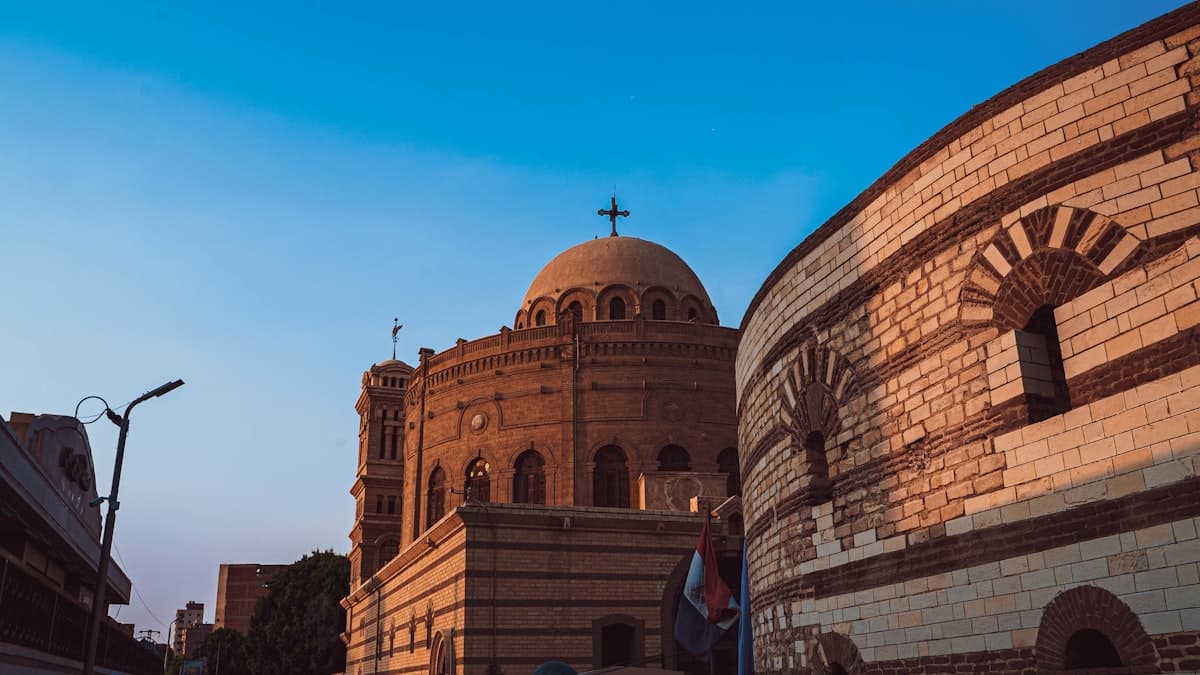
To follow the Armenian community Egypt history guide seriously is to move constantly between layers of Cairo that most visitors treat as separate.
Badr al-Jamali's gates at the northern end of Islamic Cairo, Bab al-Futuh and Bab al-Nasr, were built by Armenian craftsmen and an Armenian vizier and have been maintained and studied largely within the context of Fatimid Islamic architecture. The Armenian origin of their builder appears in academic literature but almost never in tour group commentary. Walk through Bab al-Nasr on any morning and you are walking through a gate built by an Armenian Christian for an Ismaili Muslim state, constructed of stone taken partly from earlier Pharaonic and Roman structures. Cairo does not do clean categories.
The Coptic Orthodox community and the Armenian Apostolic community have a formal theological relationship that most visitors do not know: both belong to Oriental Orthodoxy, the family of churches that rejected the Council of Chalcedon in 451 AD. The Coptic Pope and the Armenian Catholicos maintain communion. When you visit the Hanging Church in Old Cairo and then the Armenian Apostolic church in Ramses, you are visiting two expressions of the same ancient theological tradition, separated by language, ethnicity, and history but united in doctrine. The Coptic Museum in Old Cairo holds several Armenian manuscript fragments, a physical marker of this connection.
The Egyptian Jewish community, the Greek community, the Italian community, the Syrian-Lebanese community, and the Armenian community all participated in the same mid-century exodus, driven by the same political pressures after 1952. Walking the Armenian sites in Cairo is also, implicitly, a way of understanding what Cairo lost when it lost its cosmopolitan minority communities: the commercial energy, the multilingual press, the professional networks, the architectural patronage. The buildings are still there. The communities are mostly gone.
---
Common Mistakes
Treating this as a single-site visit. The Armenian community in Egypt has no single monument the way the Pyramids or the Citadel do. The story is distributed across several Cairo districts. Attempting to understand it by visiting one church and leaving misses the point entirely. Budget at least a full day, ideally two.
Arriving without contact. The churches and club are maintained by a small and sometimes stretched community. Showing up unannounced on a weekday expecting full access is not realistic. Email or call the church offices in advance. The community is generally welcoming to researchers and curious visitors, but they need notice.
Skipping the cemetery. The Armenian cemetery in Old Cairo is one of the most concentrated records of the community's presence. The inscriptions are in Armenian, Arabic, French, and English across different generations of stones. The shift in languages across the rows is itself a history of assimilation and displacement. Most visitors on an Armenian community Egypt history tour never visit it. Go.
The Egyptian Museum Armenian collection: The Egyptian Museum in Tahrir Square does not have an Armenian-specific display. Do not go there looking for one. Your time is better spent at the Coptic Museum, which has contextual material on Oriental Christianity relevant to understanding the Armenian church tradition.
Taking photographs inside churches during services. This is unwelcoming and frankly rude anywhere, but particularly so in a small community where every worshipper knows every other worshipper. Attend the service to attend the service. Photographs of the interior can be requested after the service ends.
Relying on standard tour operators. No mainstream Cairo tour operator runs an Armenian community circuit. If a company claims to offer one, ask specific questions about which sites they include, whether they have community contacts, and whether the guide speaks Armenian or has specific knowledge of the community's history. Most do not. Hire a specialist guide through the church community directly, or contact the Armenian General Benevolent Union (AGBU) Cairo chapter.
The sound and light show at the Citadel: This has no connection to Armenian history and will waste an evening you could spend in Heliopolis having coffee with someone who actually remembers the community in its larger form. Skip it entirely.
---
Practical Tips
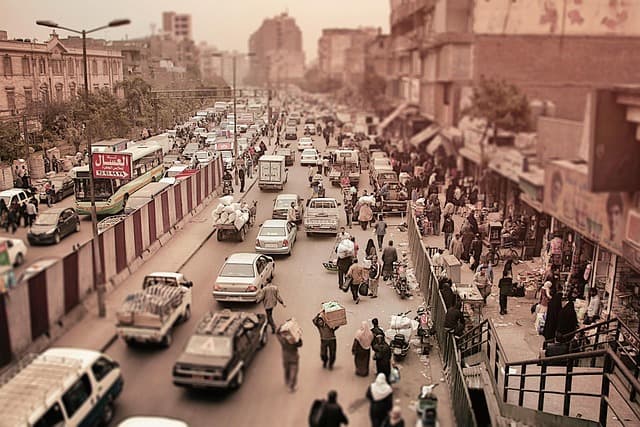
The best entry point to this community is through the AGBU Cairo chapter, which maintains cultural programs and can connect serious visitors with community members willing to share their family histories. Contact them before your trip.
If you read French, the archives of the Egyptian Armenian press are partially digitized and accessible through the Bibliothèque nationale de France's Gallica platform. Reading even a few issues of Arev before visiting gives you names, events, and a sense of community scale that no guidebook provides.
Dress conservatively for church visits. The Armenian Apostolic tradition does not require head covering for women, but shoulders and knees should be covered.
The best lunch near the Ramses church is not Armenian but is deeply local: the fuul and ta'meya shops on the side streets south of Ramses Square serve the working breakfast and lunch that has been eaten in this neighborhood for generations, by Egyptians of every background including Armenians who were here when these shops were younger.
If you visit in April, the community commemorates the Armenian Genocide on April 24. A memorial service is held at the Apostolic church. This is not a tourist event, and you should treat it accordingly, as a solemn community observance that you may respectfully attend but should not photograph or treat as spectacle. It is, however, one of the few times you will see the community assembled in significant numbers, and the experience of standing in that church, hearing the Grabar liturgy, and understanding what this community has survived, in Armenia and then again in Egypt, is not something any guidebook can fully prepare you for.
Frequently Asked Questions
The Weekly Dispatch
More on Egypt, every Friday.
Cultural depth and places most guides never mention.
No spam. Unsubscribe anytime.