Cairo Geniza Jewish Heritage Egypt Guide: The Full Picture
A single Cairo attic held 400,000 Jewish manuscript fragments spanning 1,000 years. Most of them are now in Cambridge. Here is what remains in Egypt, and why it still matters.

Quick Facts
- Best time to visit
- October to April. Cairo heat from June through August makes the stone compound uncomfortable and the synagogue's limited ventilation noticeable. October and March offer the best light and manageable temperatures.
- Entrance fee
- Ben Ezra Synagogue: free (donations welcomed). Coptic Museum: EGP 200 (approx $4 USD), students EGP 100. Hanging Church and other compound churches: free.
- Opening hours
- Ben Ezra: Saturday to Thursday 9am to 4pm, Friday 9am to 12pm. Coptic Museum: Daily 9am to 5pm. Hours can vary; arrive before noon to guarantee access.
- How to get there
- Metro Line 1 to Mar Girgis station, EGP 10, three-minute walk to compound. Taxi from Downtown Cairo: EGP 60 to 100. Uber or Careem app is reliable and often cheaper than negotiated taxis.
- Time needed
- Two hours minimum for Ben Ezra and the immediate compound. Four hours for a full Coptic Cairo visit including the museum. A half-day from 9am to 1pm covers everything without rushing.
- Cost range
- Budget half-day: EGP 300 to 500 including transport and museum entry. Mid-range with licensed guide: EGP 900 to 1,400. No expensive meals or accommodation needed for a day visit.
Quick Facts
Best time to visit: October to April, when Cairo is cooler and the synagogue's modest ventilation system is bearable.
Entrance fee: Ben Ezra Synagogue: free entry (donations appreciated). The Coptic Museum, which sits directly adjacent and shares the compound wall: EGP 200 (approx $4 USD), students EGP 100. If you want to see the full Coptic Cairo complex including the Hanging Church, budget EGP 200 additional.
Opening hours: Ben Ezra Synagogue is nominally open Saturday through Thursday 9am to 4pm, Friday 9am to 12pm, though hours can shift with staffing. Arrive before noon to be safe.
How to get there: Take the Cairo Metro Line 1 to Mar Girgis station (fare: EGP 10). The synagogue is a three-minute walk from the exit, inside the walled Coptic Cairo compound. A taxi from Downtown Cairo runs EGP 60 to 100 depending on traffic and your negotiating. Avoid driving yourself; parking in Old Cairo is a bureaucratic and spatial nightmare.
Time needed: Two hours minimum for the synagogue and surrounding compound. Add two more hours if you visit the Coptic Museum. A full morning, from 9am to 1pm, covers everything without rushing.
Cost range: Budget EGP 300 to 500 for the half-day including transport and museum entry. Mid-range EGP 800 to 1,200 if you add lunch at one of the Coptic Cairo restaurants and a guide.
---
Why This Place Matters
In 1896, two Scottish sisters, Agnes Lewis and Margaret Gibson, traveled to Cairo and purchased a bundle of manuscript fragments from a dealer in the old Jewish quarter. They brought them to Solomon Schechter at Cambridge, who recognized within minutes that one fragment was a portion of the original Hebrew text of the Book of Ben Sira, a work known only through Greek translation for over a thousand years. Schechter returned to Cairo, negotiated access to the attic storeroom of Ben Ezra Synagogue, and shipped roughly 193,000 fragments to Cambridge in sacks. He later called it a "battle with the dust of centuries."
Those fragments, and the additional hundreds of thousands that followed from various dealers and expeditions, became known as the Cairo Geniza, the single largest cache of medieval Jewish manuscript material ever discovered. A geniza is a storeroom where Jewish communities deposit worn sacred texts rather than destroy them, since documents bearing the name of God cannot simply be thrown away. What made the Cairo Geniza extraordinary was not just its size, 400,000 fragments spanning roughly 870 to 1880 CE, but what it contained: not only Torah scrolls and religious commentaries but letters, legal contracts, medical recipes, shopping lists, children's alphabet exercises, and personal correspondence from Jewish merchants operating across the medieval Mediterranean trade network. Scholars have reconstructed entire commercial relationships from Cairo to Palermo to Aden through fragments of letters found in what was essentially a communal recycling bin.
The attic they came from still exists. It is now a locked room above the women's gallery of Ben Ezra Synagogue, and you cannot enter it. But you can stand inside the synagogue and look up at the area where it sits, which is more than most visitors know to do.
This is not a minor Jewish historical footnote. The Cairo Geniza is to medieval Jewish studies what the Dead Sea Scrolls are to biblical studies, and it has been called, without exaggeration, the most important documentary discovery in the history of the Jewish people. Almost none of it remains in Cairo.
---
What the Ben Ezra Synagogue Actually Is
The building you walk into today is handsome and somewhat bare, its pale stone walls and wooden ark framing a quiet interior that looks more like a restored monument than a working house of prayer. That is precisely what it is. Egypt's Jewish population numbered around 80,000 in 1948. By 1979, following two decades of Nasserist nationalization, the 1956 Suez Crisis, and the 1967 war, that number had fallen to roughly 400. Today, fewer than ten Jews are believed to remain in Egypt, most of them elderly women in Alexandria. Ben Ezra is maintained by the Egyptian government's Supreme Council of Antiquities and functions as a heritage site. Prayer services no longer take place here.
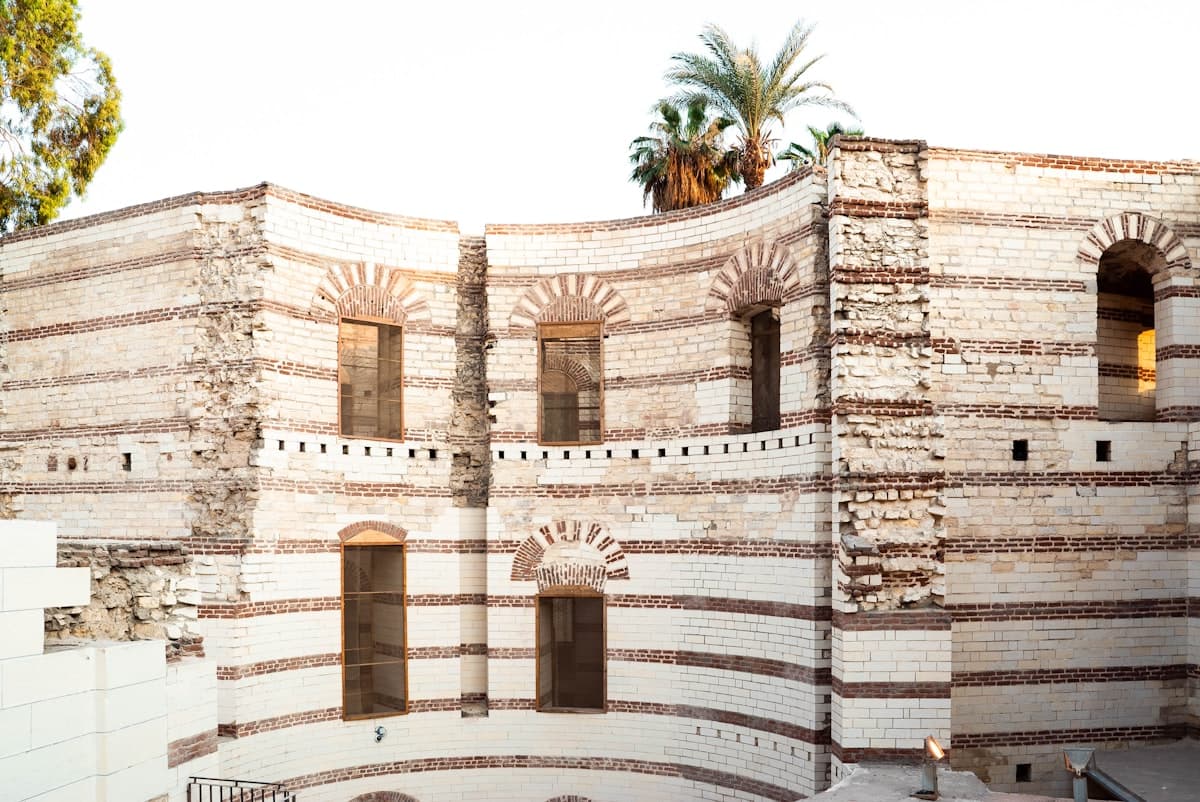
The synagogue's origins push it far deeper into history than its 19th-century renovated form suggests. According to tradition, the site marks where the infant Moses was drawn from the Nile, a claim shared by several spots along the river, but more verifiably, the building occupies a space that was sold to the Jewish community in 882 CE by the Coptic Christian patriarch of Alexandria, who needed funds to pay a tax levied by the Abbasid governor of Egypt. The price was 20,000 dinars. An earlier church dedicated to Saint Michael had stood on the same ground. Beneath that church were the foundations of a Roman fortress, the Babylon Fortress, whose walls you can see emerging from the earth just meters away inside the Coptic Cairo compound. The fortress itself was built by the Romans in the first century CE, possibly on the site of an older Egyptian settlement.
You are therefore standing in a place that has been continuously inhabited and considered sacred, under different religions, for at least two thousand years.
The current structure dates largely from a late 19th-century restoration by the Egyptian Jewish community, which at that point was prosperous, cosmopolitan, and deeply integrated into Cairo's commercial life. The ornate wooden bimah (reading platform) and the gilded ark reflect that prosperity. The community that restored this building produced department store magnates, financiers, and cabinet ministers. Most of their descendants now live in Paris, São Paulo, and Brooklyn.
---
The Geniza Itself: What Scholars Found and What It Changed
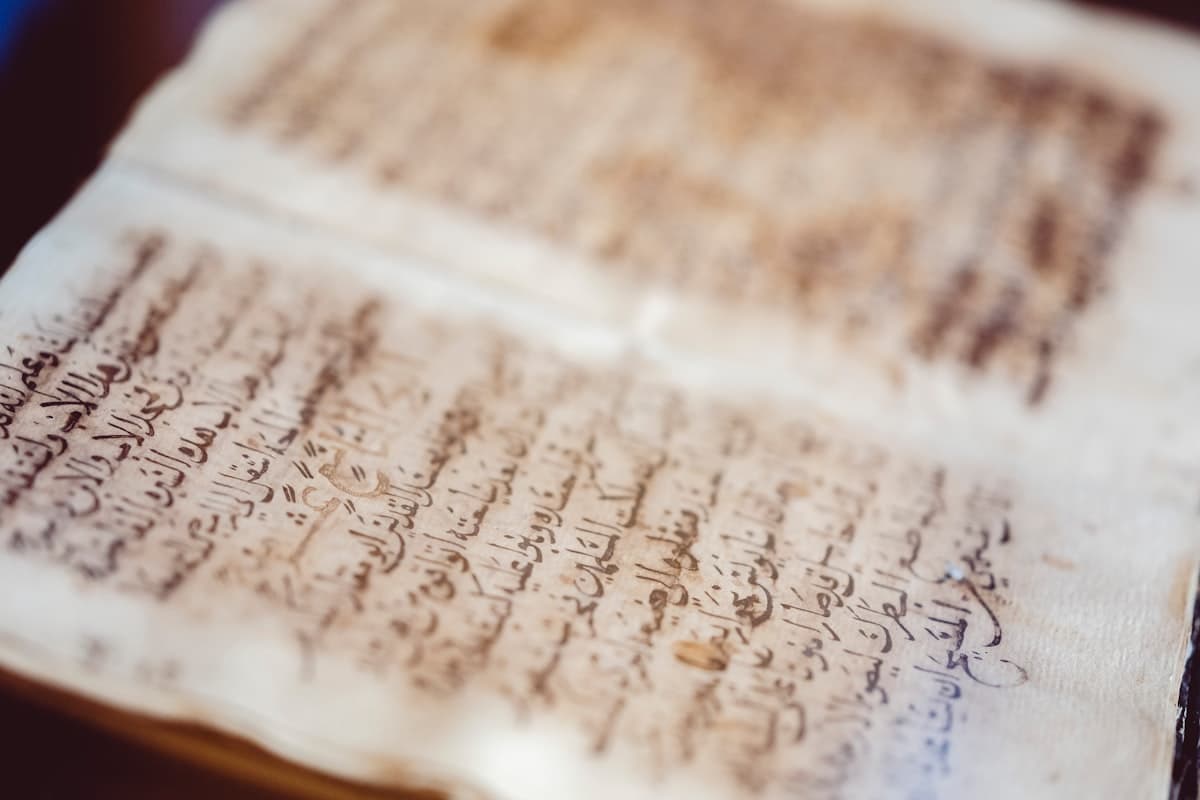
Solomon Schechter's Cambridge haul was only the beginning. After the initial rush, Egyptian antiquities dealers sold additional fragments to libraries across Europe and the United States. The fragments now reside in 67 collections worldwide, with the largest holdings at Cambridge, the Jewish Theological Seminary in New York, the Bodleian in Oxford, and the Alliance Israélite Universelle in Paris. The entire collection has been digitized and is searchable through the Princeton Geniza Project and the Friedberg Genizah Project databases, meaning any person with an internet connection can now read a document written by a Jewish merchant in Fustat in 1085 CE.
What those documents reveal is remarkable. The scholar S.D. Goitein spent forty years studying the Geniza and published a six-volume work titled "A Mediterranean Society," completed posthumously in 1988, which reconstructed the daily life of the Jewish communities of the medieval Islamic world with a level of detail historians of any other medieval society could only envy. He found evidence that Jewish women in 11th-century Cairo could own property, initiate divorce proceedings, and dictate their own marriage contracts. He found price indexes for commodities including pepper, flax, and indigo. He found a letter from a Jewish trader apologizing to his business partner for a late shipment because his ship had been attacked by pirates near Sicily.
The fragments also include what is believed to be the oldest surviving document written in Judeo-Arabic, the Arabic-language vernacular written in Hebrew script that served as the everyday language of Jewish communities across the medieval Islamic world. Several fragments contain the handwriting of Maimonides himself, the 12th-century philosopher and physician who lived in Fustat and served as a court doctor to Saladin's vizier. Maimonides wrote his major philosophical works, including the "Guide for the Perplexed," in Judeo-Arabic. His community prayed in the predecessor of the building you are visiting.
---
The Connections: Fustat, Coptic Cairo, and the District That Holds Everything
Ben Ezra Synagogue sits inside a walled compound that also contains the Hanging Church (Al-Muallaqah), the Church of St. Sergius and Bacchus (Abu Serga), the Church of St. Barbara, and the entrance to the Coptic Museum. Directly outside the compound walls stand the remains of Babylon Fortress. Five minutes' walk north is the great mosque of Amr ibn al-As, the first mosque built on African soil, constructed by the Arab general who conquered Egypt from the Byzantines in 641 CE.
This entire neighborhood was Fustat, Egypt's first Islamic capital, built by Amr ibn al-As adjacent to the Roman fortress he had besieged. For three centuries, Fustat was one of the largest cities in the world, a cosmopolitan trading center where Arab Muslims, Coptic Christians, Byzantine Greeks, and Jewish merchants lived in close quarters and, frequently, close commercial partnership. The Geniza documents record exactly these partnerships: Jewish traders writing in Arabic to Muslim business associates, Christians and Jews sharing the same market regulations, everyone navigating the same Nile flood cycles and the same tax collectors.
Fustat was largely abandoned after the Fatimid caliph al-Muizz founded Cairo, Al-Qahira, to the north in 969 CE, and what remained was mostly destroyed by fire in 1168 CE when the Crusaders threatened the city and the Fatimid vizier ordered it burned to prevent capture. What you are walking through is the ghost of a medieval city that most visitors to Cairo do not know existed, and that makes Ben Ezra not just a synagogue but an access point to an entire vanished civilization.
---
Common Mistakes
Not going at all because you assume it requires Jewish heritage to be relevant. The Cairo Geniza Jewish heritage Egypt guide does not write itself for a niche audience. The Geniza is one of the most significant archival discoveries in human history, full stop. If you care about medieval trade, women's legal history, Islamic-Jewish coexistence, or the transmission of philosophical texts, this is your site.
Spending your whole time in the synagogue and missing the compound. Ben Ezra takes twenty minutes to see properly. The Hanging Church, which suspends its nave over two Roman towers of the Babylon Fortress, takes another thirty. The Church of Abu Serga, built over a crypt where the Holy Family is said to have sheltered during their flight into Egypt, is a ten-minute walk and contains one of the oldest surviving wooden iconostases in Egypt. Budget two hours for the compound, not one.
Hiring a guide from outside the compound gates. The men who approach you at the Mar Girgis metro exit are not licensed. They will take you inside, tell you fabricated history with great confidence, and charge EGP 200 to 400 for the privilege. A licensed Coptic Cairo guide, booked through a reputable agency, costs more but knows the difference between tradition and documentation.
Visiting the Coptic Museum without a plan. The museum is genuinely important: it holds the Nag Hammadi codices, the Gnostic texts discovered in Upper Egypt in 1945 that rewrote understanding of early Christianity. But it has over 16,000 artifacts and poor English labeling on many items. Download the museum's English-language guide PDF before you go, or the collection will blur into a series of anonymous crosses and icons.
Expecting the Geniza attic to be accessible. It is not. It has never been open to the public in any organized sense. No amount of asking, tipping, or polite persistence will get you inside. Save the energy.
The sound and light show at nearby sites. Skip it. The historical connection between the sites in this neighborhood is better understood from reading twenty pages of Goitein than from any theatrical presentation. The money is better spent on a used copy of "A Mediterranean Society" from one of the Azbakeya book market stalls.
Going on a Friday. The synagogue closes early on Fridays, the Coptic Museum can be crowded with Cairo families on their day off, and the surrounding streets fill with post-prayer foot traffic that makes the narrow lanes of Coptic Cairo genuinely difficult to navigate. Wednesday or Thursday morning, before 11am, is the clearest time.
---
Practical Tips
Dress conservatively for all sites in the compound. Shoulders and knees covered for both men and women; this is not optional and is enforced at the church entrances. Bring water: the compound has no reliable café inside the walls, and the heat between the stone buildings is significant from May through September.
Photography is permitted inside Ben Ezra but not always inside the Coptic churches. Ask before shooting, and respect a no. The synagogue staff are accustomed to researchers and curious visitors and will generally answer questions if approached respectfully.
If you are serious about the Geniza, the Friedberg Genizah Project (genizah.org) allows you to browse digitized fragments before your visit. Knowing what you are looking at, even from a distance, changes the experience of standing in the room where the originals were found.
The Egyptian Museum in Tahrir Square, forty-five minutes by metro, holds artifacts from the same Fustat period. The Islamic Art Museum in Bab al-Khalq, twenty minutes by taxi, holds the most important collection of medieval Islamic material culture in the world, including objects contemporary with the Geniza merchants. Neither is technically part of the Jewish heritage circuit, but both complete the picture that Ben Ezra begins.
Frequently Asked Questions
The Weekly Dispatch
More on Egypt, every Friday.
Cultural depth and places most guides never mention.
No spam. Unsubscribe anytime.