Napoleon's Egypt Campaign Sites: A Field Guide to the Forgotten War
Napoleon brought 167 scientists to Egypt alongside his army. They invented Egyptology. The battle sites where his soldiers died are almost entirely unmarked.

Quick Facts
- Best time to visit
- October to February. The Delta and Mediterranean coast sites are humid and very hot from May through September.
- Entrance fee
- Abu Qir Bay area: free. Rashid National Museum: EGP 100 (approx $2 USD). Cairo Citadel: EGP 200 (approx $4 USD). Fort Julien Rashid: EGP 30 (approx $0.60 USD).
- Opening hours
- Rashid National Museum: daily 9am to 5pm, closed Tuesdays. Cairo Citadel: daily 8am to 5pm. Fort Julien: daylight hours, informal access.
- How to get there
- Cairo to Alexandria by fast train: EGP 80-150. Alexandria to Abu Qir by microbus: EGP 10-15. Alexandria to Rashid by bus from Moharam Bek station: EGP 25. Cairo city sites by metro: EGP 8 flat fare.
- Time needed
- Full itinerary across Cairo, Abu Qir, and Rashid: 3 to 4 days. Cairo French-era sites alone: one full day. Abu Qir: half day minimum, full day with diving.
- Cost range
- Budget EGP 400-700 per day outside Cairo including transport and food. Mid-range EGP 1,200-2,000 per day including accommodation and intercity travel.
Quick Facts
Best time to visit: October to February. The battle of the Nile was fought in August heat that would defeat most modern visitors before they reached the site.
Entrance fees: Citadel of Cairo (which holds the mosque Napoleon's engineers surveyed): EGP 200 (approx $4 USD). Rosetta (Rashid) city: free to walk, EGP 100 (approx $2 USD) for the Rashid National Museum. Abu Qir Bay coastal area: free access.
Opening hours: Rashid National Museum, daily 9am to 5pm. Cairo Citadel daily 8am to 5pm.
Getting there: Abu Qir is 24km east of Alexandria, accessible by microbus from Misr train station in Alexandria for EGP 10-15. Rosetta is 65km east of Alexandria; direct buses run from Alexandria's Moharam Bek station for EGP 25. Cairo's French-era sites are reachable by metro to Sadat station (Line 1 or 2), EGP 8 flat fare.
Time needed: A serious Napoleon Egypt campaign sites guide itinerary across all major locations requires three to four days split between Cairo, Alexandria, and the Delta.
Cost range: Budget EGP 400-700 per day outside Cairo. Mid-range EGP 1,200-2,000 per day including transport between cities.
---
Why This Place Matters
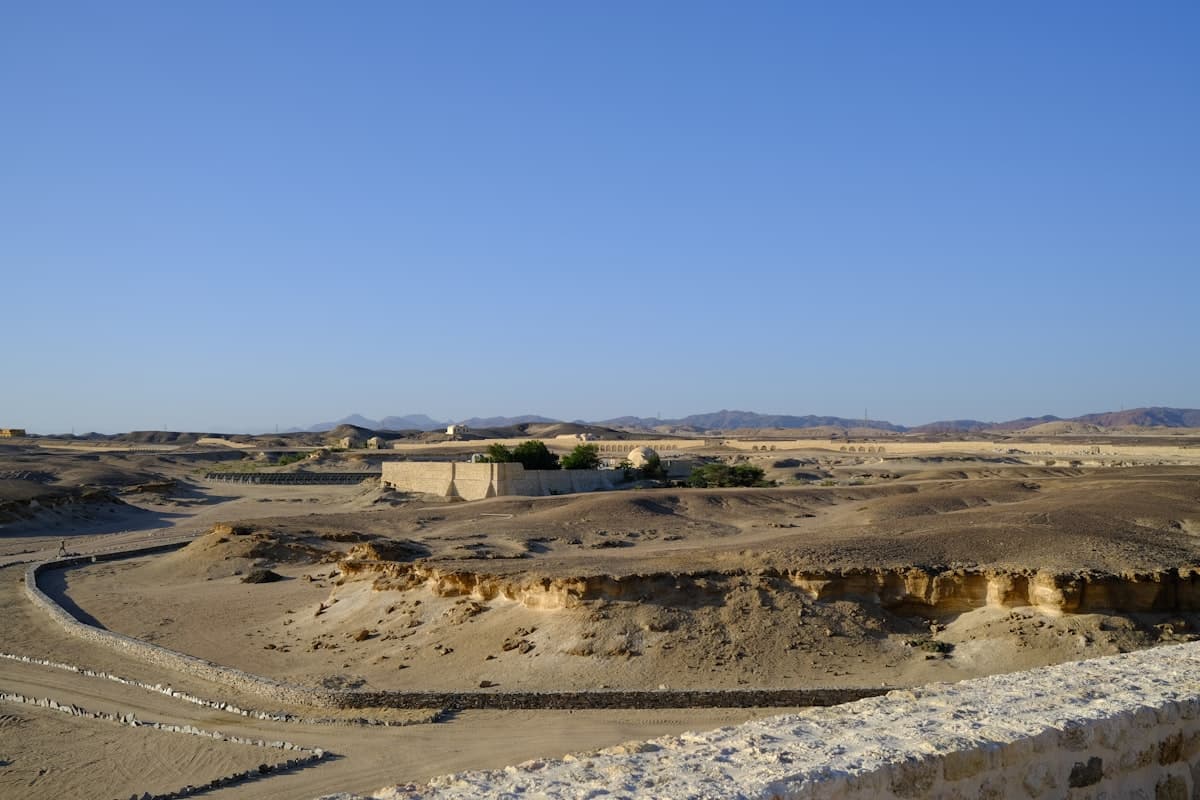
Napoleon arrived in Egypt in July 1798 with 54,000 soldiers and 167 civilian scholars he called the Commission des Sciences et Arts. The soldiers mostly died or went home sick. The scholars accidentally invented modern Egyptology, produced the 23-volume Description de l'Egypte, and found the Rosetta Stone. That ratio of military failure to intellectual consequence is almost perfectly inverted from every other campaign in history.
He told his troops, before landing near Alexandria, that from the heights of the pyramids, 40 centuries looked down upon them. It is the most famous sentence ever spoken on Egyptian soil by a foreign invader. He had not yet seen the pyramids. He was looking at a flat, marshy Delta coastline.
The campaign lasted three years and four months. France gained nothing territorial. But the Description de l'Egypte, published between 1809 and 1828, filled nine volumes of text and eleven of plates, and the illustrations of temples Egypt's own educated classes had never systematically catalogued became the foundation for everything that followed. Jean-François Champollion used the Rosetta Stone, found by French soldiers at Fort Julien near Rashid in 1799, to decode hieroglyphics in 1822. The British, who seized the stone as a spoil of war in 1801, now display it in the British Museum, where it remains the most visited object in the building.
This is the context in which you should visit every French-era site in Egypt: a campaign that failed militarily and transformed human knowledge.
---
Cairo: The Institut d'Egypte and What Replaced It
Napoleon established the Institut d'Egypte on August 22, 1798, in two confiscated palaces in the Nasriyya quarter of Cairo, near what is now the grounds of Cairo University's downtown neighborhood. The Institut held a library, a laboratory, an astronomical observatory, and a collection of antiquities. Scholars worked alongside soldiers. Gaspard Monge, who invented descriptive geometry, was there. So was Claude Berthollet, one of the founders of modern chemistry. Étienne Geoffroy Saint-Hilaire, later a key figure in evolutionary biology, caught Nile fish and wrote the first scientific descriptions of several species.
The original Institut building no longer exists in its French form. In December 2011, during post-revolution clashes near Tahrir Square, a fire destroyed the rebuilt Institut d'Egypte, which had been re-established in 1859 on Mohamed Ali Street. An estimated 200,000 documents burned. Scholars and ordinary citizens formed human chains to pass manuscripts out of the building. The restored Institut reopened in 2017 on the same street, and it is technically open to researchers, though not generally to casual visitors.
What you can visit, and should, is the area around the old Ezbekiyya gardens, where French headquarters were established. The gardens are now a scrubby public park that smells of roasted corn in the evening and hosts old men playing backgammon near a bandstand no one has repainted in decades. The French built a printing press here, the first Arabic-language printing press in Egypt, which they used to produce proclamations trying to convince Egyptians that Napoleon was a friend of Islam. The press was more consequential than the proclamations.
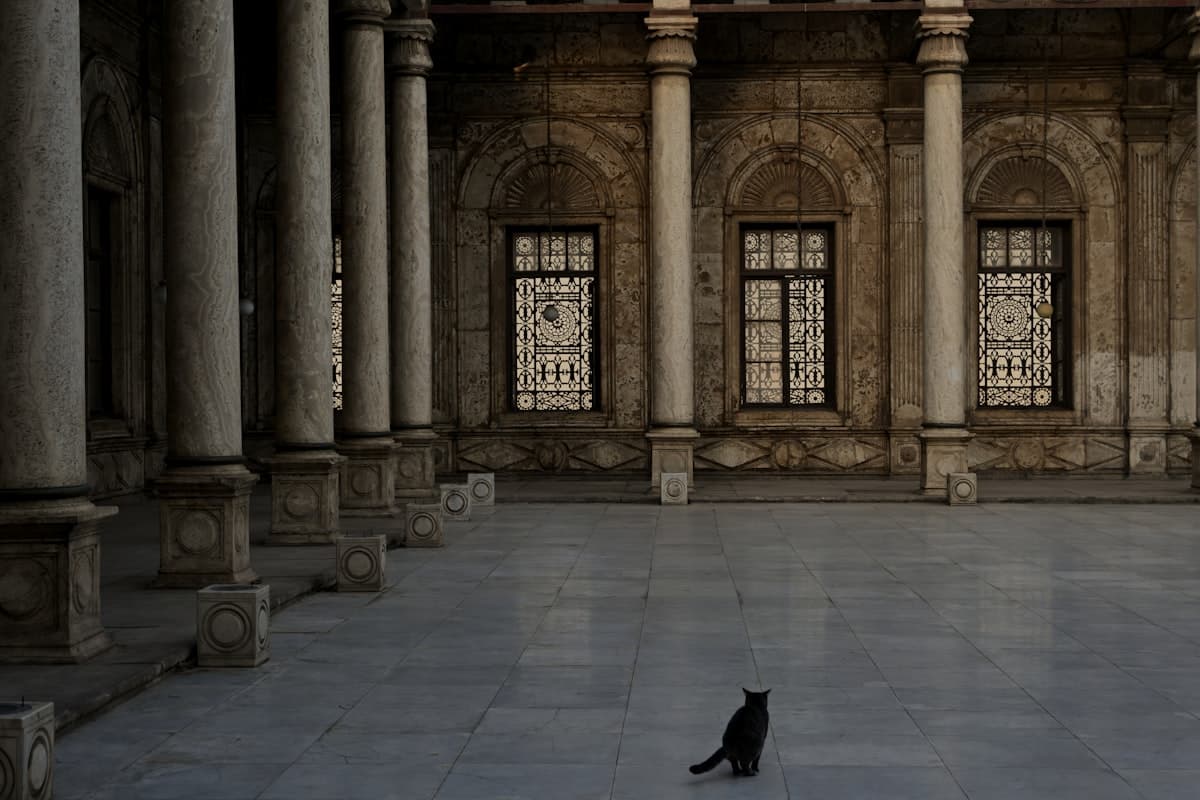
The French survey of the Cairo Citadel was produced by engineers who measured and drew every Mamluk and Ottoman structure they found there. Their drawings, published in the Description de l'Egypte, are now the primary source for understanding what several demolished buildings looked like. The Citadel itself was transformed by Mohamed Ali Pasha after 1805, who demolished most of the Mamluk structures the French had documented and replaced them with his Ottoman-Albanian aesthetic vision, including the Mohamed Ali Mosque completed in 1848. You are, in a very literal sense, walking through the negative space of what the French recorded.
---
Abu Qir: Where the Campaign Died in the Water
On August 1, 1798, thirteen days after Napoleon took Cairo, Rear Admiral Horatio Nelson found the French fleet anchored in Abu Qir Bay, east of Alexandria, and destroyed it. Of 17 French ships, 11 were captured or sunk. The French flagship L'Orient, carrying 120 guns, exploded when fire reached its powder magazine. The explosion was heard in Alexandria, 24km away. Napoleon was now in Egypt with no way home that he could guarantee.
The Battle of the Nile, fought at Abu Qir, is one of the most decisive naval engagements in history, and the bay is now a quiet fishing and resort area where Alexandrians eat grilled fish on weekends. There is almost nothing marking the battle. A small monument exists, but the site is not managed as a heritage site in any serious sense. Divers have found anchors, cannon, and ship timbers on the seabed, and in 1998, French and Egyptian archaeologists recovered artifacts from L'Orient, including the chest of the commander's eight-year-old son, Timoleon, who died in the explosion alongside roughly 1,000 French sailors.
A year later, in July 1799, Napoleon fought a second battle at Abu Qir, this time on land, and won decisively against an Ottoman force. It was his last military victory in Egypt. He left for France six weeks later, in secret, abandoning his army, and was in Paris by October. He told no one he was leaving until his ship was already at sea.
The seafront at Abu Qir is worth two hours of your time if you understand what the bay witnessed. The fish is excellent and cheap, EGP 80-150 per kilo grilled at the waterfront restaurants. The absence of any serious commemoration is itself a statement about how Egypt remembers foreign occupiers, which is to say: barely, and on Egypt's own terms.
---
Rosetta (Rashid): The Stone Is Gone, the City Remains
The Rosetta Stone was found on July 15, 1799, by a French engineering officer, Pierre-François Bouchard, during renovation work at Fort Julien, 5km northeast of the town of Rashid. He recognized that the stone carried the same decree in three scripts, Greek, Demotic, and hieroglyphics, and sent it to Cairo. The French knew it was significant. They did not know it would unlock a dead language.
When the French surrendered Egypt to the British in 1801, Article 16 of the Capitulation of Alexandria required the French to hand over antiquities collected during the campaign. French scholars physically fought British soldiers over the objects. The stone went to London. It has been at the British Museum since 1802, briefly interrupted when it was moved to an underground railway station in Holborn during the First World War to protect it from bombing.
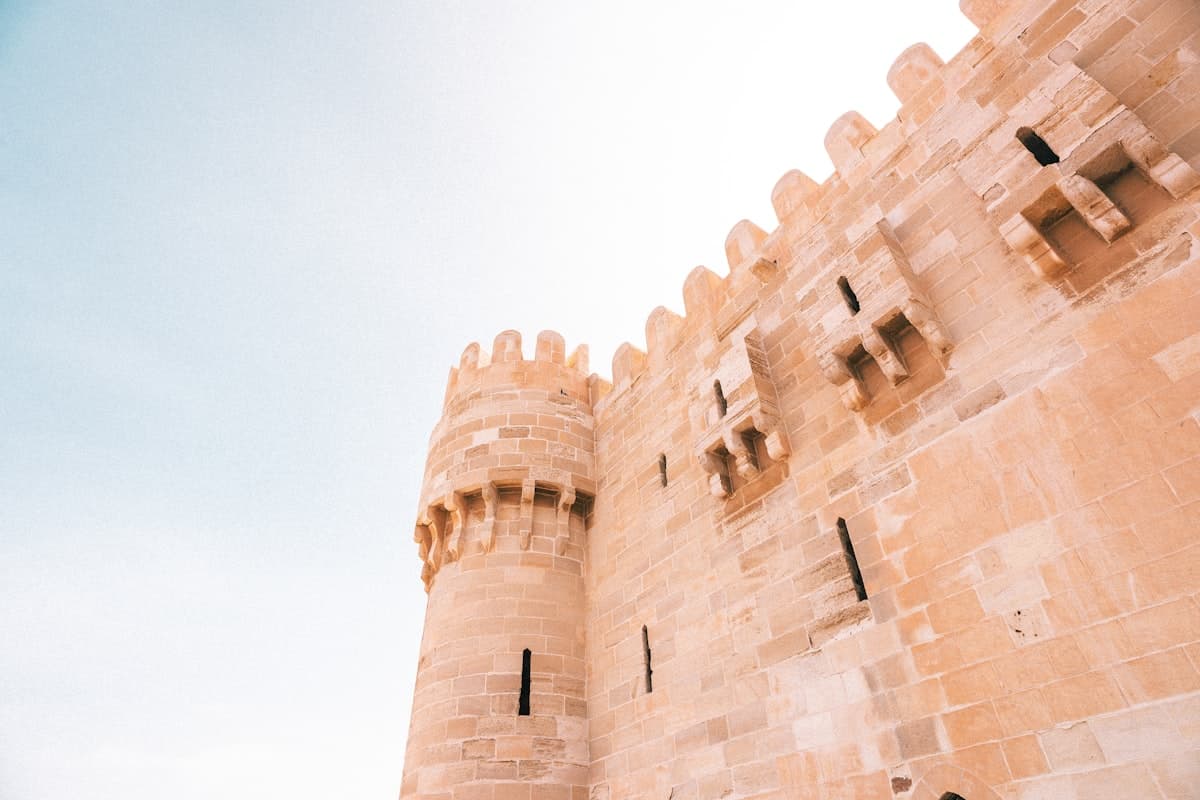
Fort Julien, where the stone was found, still exists and is accessible from Rashid. It is a genuine Ottoman-era fortification, constructed in 1808 on earlier Mamluk foundations, and the French engineering work that uncovered the stone took place in the specific north tower. You can walk the ramparts. Almost no one does.
The town of Rashid itself is one of the most undervisited places in Egypt, and unlike most undervisited places, it genuinely merits attention. It has 22 preserved Ottoman merchant houses, including the Ramadan House and the Arab Kily House, with their characteristic wooden mashrabiyya screens and central courtyards. These houses were standing when the French arrived. The merchants who lived in them were producing the rice and linen that made Rashid one of the wealthiest cities in Egypt before Alexandria's port superseded it in the 19th century. The Rashid National Museum, housed in a restored Ottoman house on the main street, displays a replica of the Rosetta Stone alongside genuinely good contextual exhibits about the French period.
---
The Connections
The French campaign did not occur in a vacuum, and tracing its roots through Egypt's layered history makes every site richer.
The Mamluk forces Napoleon defeated at the Battle of the Pyramids on July 21, 1798 (the pyramids were 15km away; Napoleon's famous speech was better geography than his sightlines) were themselves descendants of a military slave system that had ruled Egypt since 1250. The Mamluks had defeated the Mongols at the Battle of Ain Jalut in 1260, one of the few times the Mongol advance was stopped anywhere in the world. They built the mosques, the mausoleums, the wikala trading houses that still define Islamic Cairo's skyline. Napoleon defeated them in 45 minutes.
Mohamed Ali Pasha, the Albanian-born Ottoman commander who maneuvered into power after the French left, is sometimes called the founder of modern Egypt. He did so partly by studying French administrative and military models, importing French advisors, and sending Egyptian students to Paris. The French defeat created the conditions for the Egyptian modernization that followed it. The Suez Canal, completed in 1869, was engineered by Ferdinand de Lesseps, whose father Mathieu de Lesseps had served as a French consul in Egypt during the campaign and remained afterward to advise Mohamed Ali. The canal is a grandchild of the invasion.
The Coptic community of Egypt had a specific relationship with the French. Napoleon, practically and cynically, extended protection to Coptic Christians, appointed Copts to administrative positions, and framed the campaign partly as liberation from Ottoman-Mamluk oppression. The Coptic Orthodox Patriarchate, headquartered since 1047 in what is now the Abbassiya district of Cairo, maintains archives that include correspondence from the French period. The continuity is unbroken.
---
Common Mistakes
Treating this as a Pyramids add-on. Napoleon's Egypt is a Delta and Alexandria story primarily. The famous battlefield was near Giza, but the campaign's meaning lives in Rosetta, Abu Qir, and the streets of Islamic Cairo. Visitors who spend one morning at the Pyramids looking for Napoleon miss ninety percent of the picture.
Skipping Rashid because it is not on the standard tourist circuit. The standard tourist circuit was designed to minimize travel time and maximize ticket revenue for the most-visited sites. Rashid takes three hours from Alexandria by bus, costs almost nothing, and contains Ottoman domestic architecture that exists nowhere else in Egypt in this concentration. The replica Rosetta Stone at the national museum is better contextualized than the original in London.
Paying for a guided Napoleon tour in Cairo. Most guides on this circuit in Cairo have shallow familiarity with the French period and deep expertise in Pharaonic history. They will conflate dates, misidentify buildings, and skip the Institut d'Egypte story entirely. Read the relevant chapters of Juan Cole's Napoleon's Egypt before you arrive. It costs less than a one-hour guide and is more accurate.
The sound and light show at the Pyramids costs EGP 350 and contains exactly one sentence about Napoleon. The sentence is wrong about the date of the Battle of the Pyramids. Skip it.
Visiting Abu Qir without checking the tide schedule and underwater visibility. If you dive or snorkel, the wreck artifacts and anchor fields from the Battle of the Nile are the reason to go. Visibility varies dramatically. The local dive operators at the Abu Qir fishing harbor can advise, and a guided dive to the documented French wreck sites runs approximately EGP 600-900 including equipment.
Expecting the French sites in Cairo to be labeled. They are not. The palaces used by Napoleon have been demolished, built over, or converted. You are navigating by historical record, not by signage. Download the georeferenced maps from the Description de l'Egypte project at the Bibliothèque nationale de France website before you leave home. They are free and they are extraordinary.
Buying a replica Rosetta Stone from any vendor near the Egyptian Museum. They are universally inaccurate in scale. The original stone is 112cm tall and 76cm wide. The replicas sold near the museum are about a third that size. The one in Rashid is to scale.
---
Practical Tips
October through February is the honest window for traveling between Cairo, the Delta, and Alexandria for this itinerary. Summer in the Delta means forty-degree heat with humidity the desert does not produce.
For Abu Qir, the last microbus from Abu Qir back to Alexandria runs around 9pm. Do not rely on this being true on Fridays, when schedules shift. Catch the 7pm microbus if you are not staying overnight.
The Rashid National Museum closes on Tuesdays. This is not published prominently anywhere. Check before traveling.
For the Ezbekiyya area in Cairo, visit on a weekday morning before 10am. By noon the area around Ataba metro station is dense with commercial foot traffic and it is harder to look at buildings carefully. The early morning light on the 19th-century facades, built over the French-era garden landscape, hits the ornamental ironwork in a way that clarifies the whole European-Egyptian hybrid ambition of the Mohamed Ali modernization project.
If you read French, the Description de l'Egypte plates are available in full digital scan online. Looking at the plate for any site you are about to visit, while standing in front of it, produces the specific shock of time compression that makes this campaign worth following across four governorates.
Bring a hat and sunscreen to Abu Qir. The bay is exposed and the reflective light off the water is stronger than it looks from the shore.
Frequently Asked Questions
The Weekly Dispatch
More on Egypt, every Friday.
Cultural depth and places most guides never mention.
No spam. Unsubscribe anytime.