Syrian Community in Egypt: Cairo's Living Syrian History Guide
Over 1.5 million Syrians live in Egypt, but this migration is not new. Syrians have been reshaping Cairo's streets, food, and faith for over a thousand years.

Quick Facts
- Best time to visit
- October through April for walking the neighborhoods comfortably. Ramadan (dates vary annually) adds a specific cultural dimension to the Syrian restaurant and pastry scene worth experiencing.
- Entrance fee
- Neighborhoods are free to walk. Citadel complex EGP 450 (approx $9 USD). Sultan Hassan and Rifai Mosque complex EGP 100 (approx $2 USD). Syrian Orthodox Cathedral in Shubra: free entry.
- Opening hours
- Nasr City Syrian businesses typically 10am to 10pm with afternoon breaks 2pm to 5pm. Bakeries from 6am. Citadel daily 8am to 5pm winter, 8am to 6pm summer. Medieval mosques 9am to 5pm with closures during Friday prayer.
- How to get there
- Nasr City: Metro Line 1 to El-Nozha then microbus EGP 5-8, or taxi from downtown EGP 60-100. Islamic Cairo medieval quarter: Metro Line 1 to Sadat, walk east 15 minutes toward the Citadel. Shubra: Metro Line 1 to Shubra el-Kheima direction, exit at Shubra, taxi to cathedral EGP 20-30.
- Time needed
- Two full days recommended. One day for medieval Islamic Cairo Syrian architectural heritage, one day for contemporary Syrian neighborhoods in Nasr City and Ain Shams.
- Cost range
- Budget EGP 400-700 per day covering transport, street food, and bakery purchases. Mid-range EGP 1,200-2,000 per day adding a half-day guide for the Northern Cemetery Mamluk tombs and a full sit-down Syrian restaurant meal.
Quick Facts
Best time to visit: October through April, when Cairo is cool enough to walk the neighborhoods on foot without losing your mind to the heat. Ramadan adds a specific layer of Syrian-Egyptian cultural fusion worth experiencing, particularly in Ain Shams and Nasr City.
Entrance fees: The Syrian community neighborhoods are public streets, not ticketed sites. The Rifai Mosque and Sultan Hassan Mosque, which anchor the medieval quarter adjacent to historic Syrian-linked trades, charge EGP 100 (approx $2 USD) for non-Egyptians. The Citadel complex, where the story of Syrian-Egyptian political history is most concentrated, costs EGP 450 (approx $9 USD).
Opening hours: Neighborhoods are accessible at all hours. The Citadel is open daily from 8am to 5pm in winter, 8am to 6pm in summer.
How to get there: For Nasr City (largest Syrian residential and commercial concentration): Metro Line 1 to El-Nozha station, then a microbus toward Hay El-Ashir costs EGP 5-8. Taxis from downtown Cairo to the Syrian commercial strip on Abbas El-Akkad run EGP 60-100. For the medieval quarter (Old Cairo Syrian trade heritage): Metro Line 1 to Sadat, then walk east toward the Citadel.
Time needed: Two full days minimum if you want to cross the historical and contemporary layers seriously. One day for the medieval Syrian imprint on Islamic Cairo, one day for the modern diaspora in Nasr City and Ain Shams.
Cost range: Budget EGP 400-700 per day covering food, transport, and tea. Mid-range EGP 1,200-2,000 per day if you add a guide and a meal at one of the better Syrian restaurants.
---
The first Syrians did not flee to Egypt. They were sent for.
In 969 AD, the Fatimid caliph Al-Muizz li-Din Allah dispatched his general Jawhar al-Siqilli to conquer Egypt from the Ikhshidid dynasty. Among the skilled administrators, craftsmen, and traders who followed in the army's wake were significant numbers from Greater Syria, the historical region encompassing modern Syria, Lebanon, Palestine, and Jordan. They did not settle in a corner of Cairo and keep to themselves. They built mosques, ran markets, trained apprentices, and eventually became part of the city's permanent human architecture. The Syrian community Egypt history guide most people search for focuses on the recent refugee crisis. The real history begins a thousand years earlier and never stopped.
Why This Place Matters
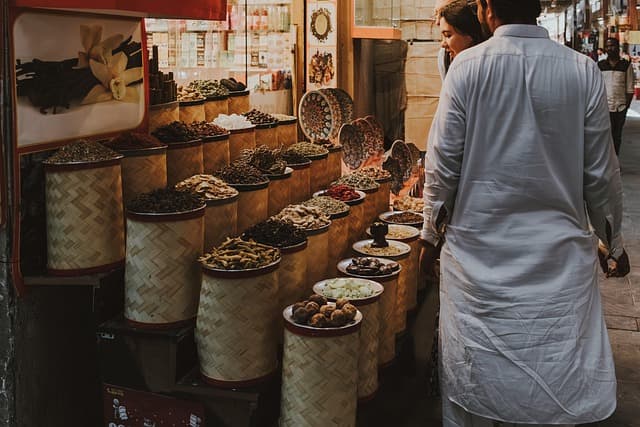
Cairo has always been a city of managed arrivals. The Fatimids brought their administrators from North Africa and the Levant. The Ayyubids, founded by Saladin (himself from Tikrit, in what is now Iraq, of Kurdish origin), staffed their courts and armies heavily with Syrians. Saladin's own family held significant power in Egypt for decades, and his successors built much of what tourists now photograph in Islamic Cairo.
The Mamluk period, which ran from 1250 to 1517, formalized this trans-regional flow of people into a political system. The word Mamluk means "owned" in Arabic, and these were enslaved soldiers purchased from across the Islamic world, including from Syria, the Caucasus, and Central Asia. When they seized power, their first act was often to import craftsmen from their regions of origin. The intricate geometric stonework on the facade of the Sultan Barquq mosque in the Northern Cemetery was executed by Syrian craftsmen brought specifically to Cairo for this purpose. You are looking at Syrian labor every time you photograph a Mamluk facade.
The contemporary Syrian presence is its own chapter, and a vast one. Egypt hosted approximately 150,000 registered Syrian refugees by 2013. By 2016 that number had grown to over 500,000 registered with UNHCR, with estimates of the total Syrian-born population in Egypt, including those who arrived before the conflict, running significantly higher. Most of these newer arrivals settled in Nasr City, Ain Shams, Obour, and 6th of October City, neighborhoods that now have Syrian bakeries, Syrian mobile phone repair shops, Syrian textile traders, and Syrian wedding halls. The community did not graft itself onto Cairo. It grew into it.
The Medieval Imprint: What You Are Actually Walking Through
Start at the street called Al-Muizz li-Din Allah, the spine of Fatimid Cairo, and understand that the trading logic of this street was partially organized around Levantine merchants from the beginning. The Khan el-Khalili bazaar, which tourists now associate entirely with Egyptian souvenirs, was founded by the Mamluk emir Jarkas el-Khalili in 1382. El-Khalili was not Egyptian. He was almost certainly of Levantine origin, and he built his caravanserai on the site of the Fatimid royal tombs, deliberately erasing a dynasty associated with Shia Islam and replacing it with Sunni commercial infrastructure. This is what Cairo does. It buries one era and trades on top of it.
The textile souk running off Al-Muizz has sold Damascene silk and Syrian brocade since at least the fourteenth century. Ask the older merchants in the fabric stalls near Bab el-Ghuri about Sham cloth (Sham being the Arabic name for greater Syria), and some of them will still tell you which designs came originally from Damascus workshops. The trade connection between Syrian weavers and Egyptian merchants survived the Ottoman conquest of 1517, survived Napoleon's invasion, survived everything. The recent wave of Syrian arrivals simply added a new retail layer to a commercial relationship that is centuries old.
The Mosque of Sultan Hassan, completed in 1363, is the building most architectural historians consider the greatest medieval structure in Cairo. What they mention less often is that its construction killed workers. According to the chronicler al-Maqrizi, the scaffolding collapsed at least once during construction, and the sultan recruited skilled stone carvers from the Syrian city of Aleppo, then the most sophisticated center of stone masonry in the Islamic world. Look at the carved muqarnas in the entrance portal and you are looking at a specifically Aleppan technique, not a generically Islamic one.
The Modern Diaspora: Nasr City and Ain Shams
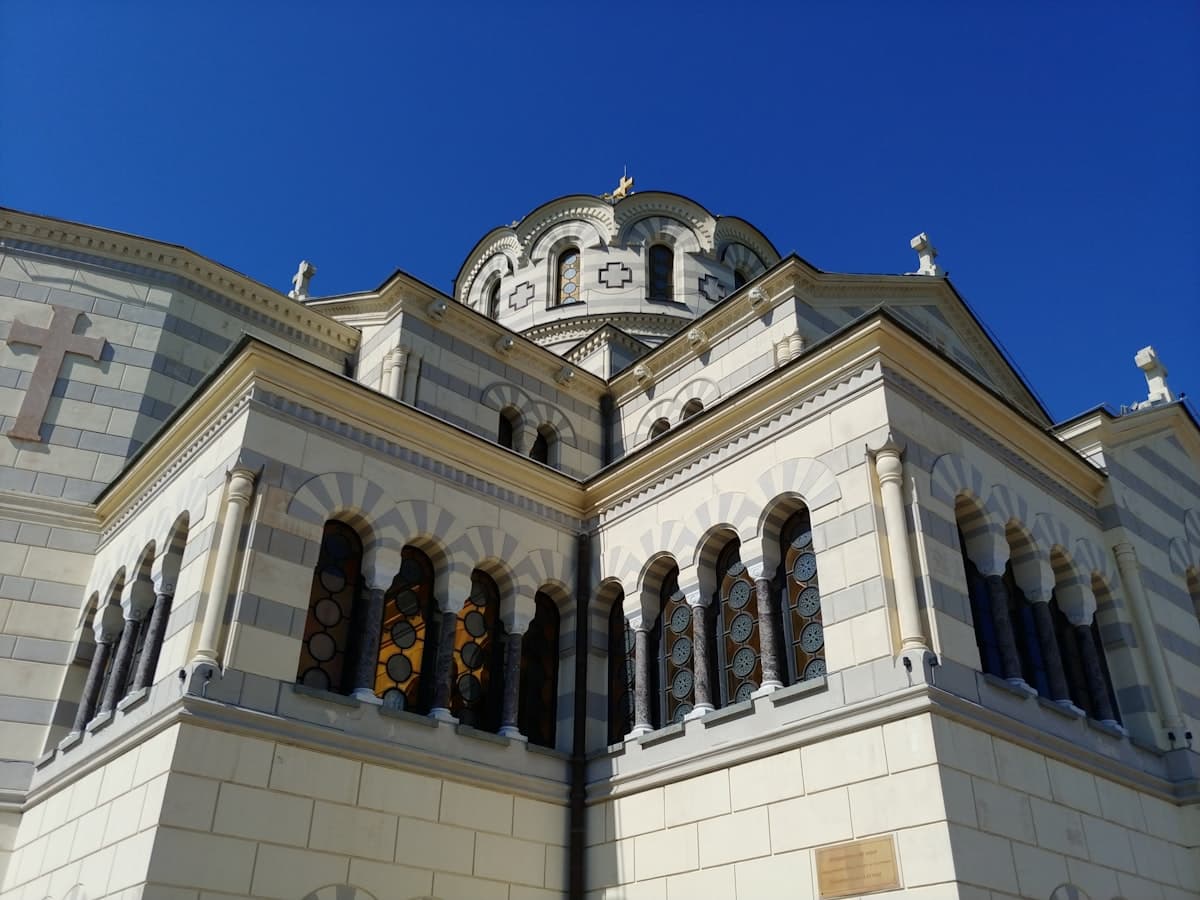
If you arrive in Nasr City expecting a defined Syrian quarter with clear boundaries and photogenic signs, you will be confused. The Syrian commercial presence is woven into the existing urban fabric rather than separated from it. Abbas El-Akkad Street has Syrian restaurants shoulder to shoulder with Egyptian fast food chains and Yemeni grills. This is not a refugee camp that became a neighborhood. It is a neighborhood that absorbed a migration and continued functioning.
The food is the most immediate entry point. Syrian bread, specifically the thin, blistered flatbread baked in wood-fired circular ovens, began appearing in Cairo around 2012. There are now Syrian bakeries in at least seven Cairo districts. The price difference tells you something about the economic integration: a bag of Syrian bread from a Syrian-run bakery in Nasr City costs EGP 10-15, roughly the same as Egyptian baladi bread from a government subsidy point. Syrian bakers are competing on quality with a product that is partially state-subsidized. They are winning the competition in certain neighborhoods.
The Syrians who arrived after 2011 brought specific professional skills that Cairo's market absorbed immediately. Syrian doctors set up clinics in Ain Shams and Nasr City. Syrian tailors revived custom suit-making traditions that Cairo's garment industry had largely moved away from. Syrian pastry chefs opened shops selling knafeh, baklava, and mamoul in the style of Homs and Damascus, and these shops now have Egyptian regulars who have never been to Syria and do not particularly think about where the recipe came from. This is how food culture travels. It detaches from its origin story and becomes local.
The community's relationship with Egyptian bureaucracy has been consistently difficult. Syrians in Egypt do not have automatic refugee status under Egyptian law in the same way they might in a country that has signed the 1951 Refugee Convention without reservations. Egypt signed the convention in 1981 but with significant reservations regarding work rights and freedom of movement. In practice this means Syrian residents often navigate a complex space between tourist visa renewals, UNHCR registration, and informal labor arrangements. The community has largely adapted by building economic structures that do not depend entirely on formal employment channels.
The Connections
The Syrian community's presence in Egypt cannot be separated from the Ottoman period, which is itself underappreciated in how it structured Cairo's current neighborhoods. When Selim I defeated the Mamluks at the Battle of Marj Dabiq in 1516 (in what is now northern Syria), he effectively merged the Syrian and Egyptian provinces of the Ottoman Empire under a single administration based in Istanbul. Syrian merchants gained formal access to Egyptian markets, and Egyptian grain flowed north to feed Syrian cities. The economic relationship was not incidental to the conquest. It was the point of it.
The Mosque of Sinan Pasha in Bulaq, built in 1571 by an Ottoman governor, used Syrian craftsmen for its tilework. The tiles are Iznik in style but were executed by artisans who had trained in Aleppo's ceramic tradition. You can see the difference if you compare them with the tiles in the Mosque of Suleiman Pasha at the Citadel, which used a more strictly Ottoman Iznik palette. Two mosques, built forty years apart, in the same city, under the same empire, expressing different regional craft lineages. Nobody on a standard tour will point this out.
The Coptic community also has Syrian-linked history that surprises most visitors. The Syrian Orthodox Church, one of the oldest Christian denominations in the world, has maintained a presence in Cairo since at least the medieval period. The Syrian Orthodox Cathedral in Shubra is not on any standard tourist itinerary, but it contains liturgical manuscripts in Syriac, one of the closest living languages to the Aramaic spoken by Jesus, and it holds services that have been conducted in essentially the same liturgical form since the fifth century AD.
Common Mistakes
Treating this as a refugee story only. The contemporary Syrian migration to Egypt is real and important, but arriving with only that frame means you will miss a thousand years of prior history. The Syrian imprint on Islamic Cairo is architectural, culinary, commercial, and theological. None of it begins in 2011.
Going to Khan el-Khalili and thinking you have seen the Syrian commercial legacy. The Khan is now almost entirely aimed at tourists buying papyrus and pharaonic replicas. The actual continuation of historic Levantine textile trade happens in the wholesale fabric markets off Al-Azhar Street and in the garment district near Ataba. These are not tourist spaces. They are working markets, and they are more historically continuous than the Khan.
Taking a guided tour of Nasr City's Syrian restaurants. Several tour operators now offer "Syrian food tours" in Nasr City for EGP 800-1,200 per person. You do not need a guide to find Syrian restaurants on Abbas El-Akkad Street. You need to walk down it. Save the money, go on a weekday afternoon when the lunch crowd has thinned, and eat at whichever place has the most Syrians in it.
Skipping the Syrian Orthodox Cathedral in Shubra. Every travel guide to Cairo's Christian heritage focuses on the Hanging Church in Coptic Cairo and the Monastery of Saint Macarius in Wadi Natrun. The Syrian Orthodox Cathedral is on almost no itinerary. It should be on yours if you are serious about understanding the Syrian community Egypt history in its full religious dimension.
Assuming language will be a barrier. Egyptian Arabic and Syrian Arabic are mutually intelligible with minor adjustment. If you speak any Arabic, even basic phrases, you will be understood by Syrian shopkeepers and restaurant owners without difficulty. The phonology is different but the vocabulary overlaps substantially.
Paying EGP 350 for the Citadel sound and light show. It tells you almost nothing about the Syrian-Egyptian political history that shaped the Citadel, focuses heavily on Saladin's military victories rather than his administrative reliance on Levantine officials, and runs about an hour in a plastic chair. Read Al-Maqrizi's accounts of Fatimid and Ayyubid Cairo instead. They are available in English translation and cost nothing.
Visiting only in summer. The neighborhoods are fully functional year-round but the heat in July and August makes walking between the medieval sites and contemporary neighborhoods genuinely unpleasant. The Syrian community Egypt history guide experience requires foot travel. Do it in November or March.
Practical Tips
The two days structure works best if you do not try to combine them. Medieval Islamic Cairo requires slow attention. Nasr City requires a different kind of attention, less monumental and more anthropological. Mixing them in one day produces a sense of visual and historical overload that resolves into nothing specific.
For the medieval quarter, hire a local guide through a reputable operator for one half-day session, specifically to access the lesser-visited Mamluk tombs in the Northern Cemetery (the City of the Dead). Independent access is possible but guides know which caretakers to speak to and which structures are currently open. Expect to pay EGP 400-600 for a half-day, negotiated directly with the guide rather than through a hotel.
In Nasr City, the Syrian bakeries open around 6am and the bread is best in the first two hours. The restaurants do not hit their stride until 1pm for lunch and 8pm for dinner. The gap between those times is good for the fabric and textile shops, which open around 10am and close for an afternoon break between 2pm and 5pm.
Photography in the neighborhoods is generally fine. Photograph food, storefronts, and street scenes without asking and you will rarely have a problem. Photograph people, especially women, without asking and you will have one. Ask, in Arabic if possible, and permission is almost always granted with warmth.
Frequently Asked Questions
The Weekly Dispatch
More on Egypt, every Friday.
Cultural depth and places most guides never mention.
No spam. Unsubscribe anytime.