Napoleon's Egypt Campaign Sites: A Field Guide to Where History Broke
Napoleon brought 167 scientists to Egypt alongside his army. They accidentally invented Egyptology. Here is where to find the physical evidence of both catastrophes.

Audio Guide: Napoleon's Egypt Campaign Sites: A Field Guide to Where History Broke
Quick Facts
- Best time to visit
- October to February. Delta and Alexandria sites become humid and overcrowded in summer. Winter light at Abu Qir Bay is particularly clear for the coastal sites.
- Entrance fee
- Egyptian Museum EGP 200 (approx $4 USD), Mummy Room extra EGP 100. Alexandria National Museum EGP 100 (approx $2 USD). Fort Julien Rashid EGP 50 (approx $1 USD). Citadel of Qaitbay EGP 100 (approx $2 USD). Cairo Citadel complex EGP 200 (approx $4 USD).
- Opening hours
- Egyptian Museum daily 9am to 5pm. Alexandria National Museum daily 9am to 4pm. Fort Julien Rashid daily 9am to 4pm. Citadel of Qaitbay daily 9am to 4pm. Al-Azhar Mosque open outside prayer times, generally 9am to 3pm for non-Muslim visitors.
- How to get there
- Cairo sites: Metro Line 1 or 2 to Sadat station for the Egyptian Museum, EGP 7. Taxi to Al-Azhar and Citadel approximately EGP 50 to 80 each. Alexandria: express train from Ramses Station EGP 80 to 120, two hours. Abu Qir from Alexandria: microbus from Raml Station EGP 10, 45 minutes.
- Time needed
- Cairo Napoleon circuit: one full day. Alexandria plus Abu Qir: one full day. Both cities combined requires two days minimum with one overnight in Alexandria.
- Cost range
- Budget EGP 400 to 700 per day covering transport, admissions, and street food. Mid-range EGP 1,500 to 2,500 per day including guides and restaurant meals. Abu Qir seafood lunch EGP 150 to 250 per person.
Quick Facts
Best time to visit: October to February. Cairo sites are manageable year-round but the Delta battlefield sites and Alexandria become brutal in summer humidity.
Key entrance fees: Egyptian Museum (Cairo): EGP 200 (approx $4 USD), includes Mummy Room EGP 100 extra Citadel of Qaitbay (Alexandria, where French fleet was destroyed nearby): EGP 100 (approx $2 USD) Al-Azhar Mosque (central to French occupation headquarters): free Abu Qir Bay area: no admission, public coastline Institut d'Égypte reconstruction (Cairo): not open to casual visitors, exterior only
Opening hours: Egyptian Museum daily 9am to 5pm. Citadel of Qaitbay daily 9am to 4pm. Al-Azhar Mosque open outside prayer times, generally 9am to 3pm for non-Muslim visitors.
Getting there: Cairo sites are reachable by metro and taxi. The Egyptian Museum sits at Tahrir Square, accessible via Metro Line 1 or 2 (Sadat station), fare EGP 7. Alexandria requires a train from Ramses Station, EGP 60 to 120 depending on class, two hours each way. Abu Qir is 24km east of Alexandria central, microbus from Raml Station costs EGP 10.
Time needed: Cairo Napoleon circuit: one full day minimum. Alexandria plus Abu Qir: one full day. Combining both requires two days and an overnight.
Cost range: Budget EGP 400 to 700 per day covering transport, admission, and street food. Mid-range EGP 1,500 to 2,500 per day with guides and sit-down meals.
---
Napoleon Bonaparte arrived in Egypt in July 1798 and left fourteen months later having lost his fleet, most of his army to plague, and a siege of Acre. He departed secretly at night without telling his men. France's Egyptian adventure ended in complete military failure. And yet the 167 scientists, artists, engineers, and linguists he brought along, the Commission des Sciences et Arts, produced a 23-volume work called the Description de l'Égypte that essentially created the academic discipline of Egyptology. The soldiers lost. The scholars won. The consequences of both outcomes are still physically present across Egypt, if you know where to look.
This is not a guide to Napoleon mythology. It is a guide to the actual sites where the campaign unfolded, what survives, what has been erased, and why the Egyptian response to the French occupation matters far more to understanding modern Egypt than the occupation itself.
Why This Place Matters: A Three-Year Rupture That Changed Everything
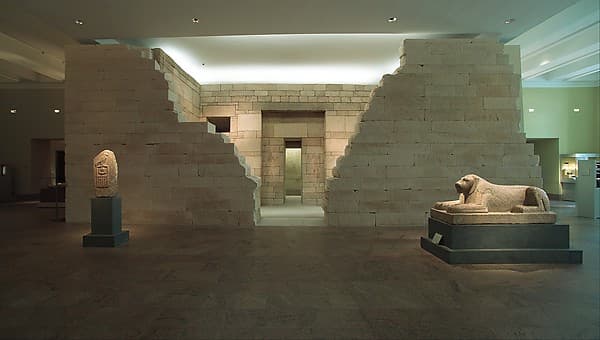
The French campaign lasted from July 1798 to September 1801. In that time, Egypt went from an Ottoman-Mamluk provincial backwater, governed by competing Mamluk beys who had not updated their military tactics in two centuries, to the most studied piece of real estate on earth. The Description de l'Égypte, published between 1809 and 1828, contained illustrations so precise that architects today still use them as reference documents for sites that have since deteriorated.
But the campaign also triggered a chain of consequences that shaped modern Egypt entirely. The power vacuum left by the French departure was filled by an Albanian Ottoman officer named Muhammad Ali Pasha, who massacred the remaining Mamluk leadership in the Cairo Citadel in 1811 and founded the dynasty that ruled Egypt until 1952. Without Napoleon, no Muhammad Ali. Without Muhammad Ali, no modern Egyptian state, no Suez Canal commission, no industrialization program that reshaped the Nile Delta. Every major political structure of modern Egypt traces back to the chaos the French created and then abandoned.
For the Napoleon Egypt campaign sites guide to make sense, you need both tracks: the French physical presence, and the Egyptian political response that outlasted it by 150 years.
Cairo: The City the French Occupied and Renamed
Napoleon's forces entered Cairo on July 24, 1798, two days after defeating the Mamluk cavalry at the Battle of the Pyramids, which was not actually fought near the Pyramids. The battle took place near the village of Embaba, on the Nile's west bank north of Cairo, roughly where the Imbaba neighborhood now stands. There is no marker. The French named it after a landmark they could see from the battlefield because it sounded better on dispatches home.
In Cairo itself, Napoleon established his headquarters in the Alfi Bey palace in the Azbakiyya district, an area that no longer exists in any recognizable form. The Institut d'Égypte, which he founded in August 1798 to house the scientific commission's work, was located near what is now Shaykh Rihan Street in downtown Cairo. The original building burned during the 2011 uprising, a genuine cultural catastrophe that destroyed thousands of manuscripts. A reconstructed building now stands there but is not open to the general public. You can stand outside it and consider what continuity of loss looks like across two centuries.
What survives from the French period in Cairo is largely indirect. The Egyptian Museum on Tahrir Square holds artifacts the French commission documented but the British seized: the Rosetta Stone was discovered by French soldiers at Fort Julien in the Delta in July 1799, studied by French scholars, and then surrendered to the British under the terms of the 1801 Capitulation of Alexandria. It has been in the British Museum since 1802. What you see in the Egyptian Museum is a replica. The original has never returned.
The French also left graffiti. In the interior of several tombs in the Valley of the Kings in Luxor, French soldiers and scholars carved their names into ancient walls, a practice that horrifies us now and was considered perfectly normal documentation at the time. You can see French inscriptions in KV9 (the tomb of Ramesses V and VI), which is included in standard Valley of the Kings entry.
Al-Azhar and the Resistance Cairo Does Not Advertise
On October 21, 1798, three months after the French arrived, Cairo rose in revolt. The uprising centered on Al-Azhar Mosque, the thousand-year-old seat of Sunni Islamic scholarship. Napoleon's response was to ride cavalry into the mosque courtyard, desecrate the space by allowing horses inside, and execute the uprising's leaders. The Egyptian chronicler Abd al-Rahman al-Jabarti documented this in his journal Al-Aja'ib al-Athar, one of the most important eyewitness accounts of the period.
Al-Jabarti was deeply conflicted. He admired French scientific rationalism and was horrified by French military brutality. His account reads like a man trying to process cognitive dissonance in real time. His journal is available in English translation and is far more valuable than any sound-and-light show Egypt has ever produced.
Al-Azhar itself, founded in 970 CE by the Fatimid general Jawhar al-Siqilli, predates the French by 828 years and has outlasted them by 224. When you visit, the French occupation is not mentioned on any signage. This is not an oversight. It is a curatorial choice. The mosque absorbs occupations and continues.
Alexandria and Abu Qir: Where the Campaign Turned
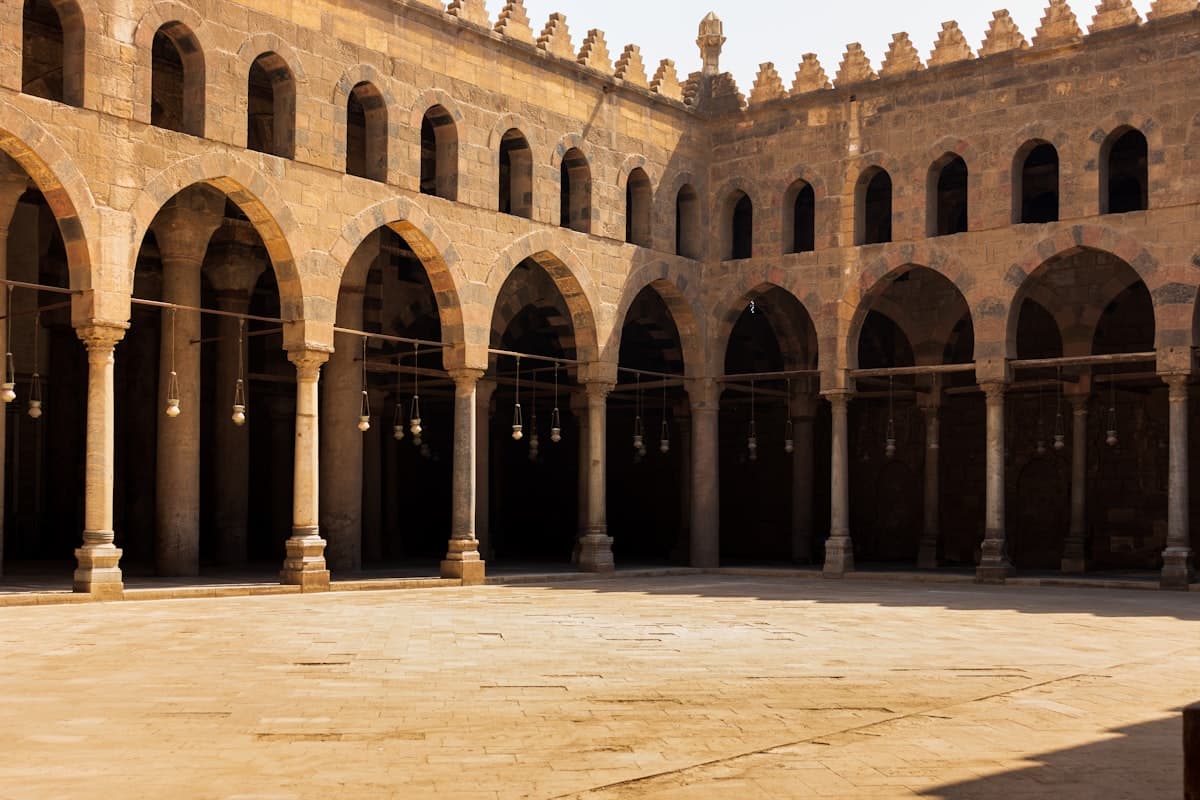
The French occupation's military fate was decided not on land but on water, and not in Alexandria harbor but 24 kilometers east of it, at Abu Qir Bay.
On August 1 and 2, 1798, the British Admiral Horatio Nelson destroyed the French fleet anchored in Abu Qir Bay in a night battle the British called the Battle of the Nile. Nelson attacked from a direction the French commander Admiral Brueys considered impossible, sailing between the anchored French ships and the shallow shoreline. The French flagship L'Orient, a 120-gun vessel and the largest warship in the world at that time, caught fire and exploded at approximately 10pm. The explosion was reportedly heard in Alexandria. Of 17 French ships engaged, 11 were sunk or captured. Napoleon was now trapped in Egypt with no naval support and no route home.
Today, Abu Qir is a fishing village known primarily for its seafood restaurants. The bay holds the wreckage of the French fleet at depths of 8 to 10 meters, and French marine archaeologist Franck Goddio has been excavating the site since the 1980s. Recovered artifacts, including cannons from L'Orient, are displayed at the Alexandria National Museum on Tariq al-Hurriyya Street, which houses the best single collection related to this period in Egypt. Admission is EGP 100 (approx $2 USD).
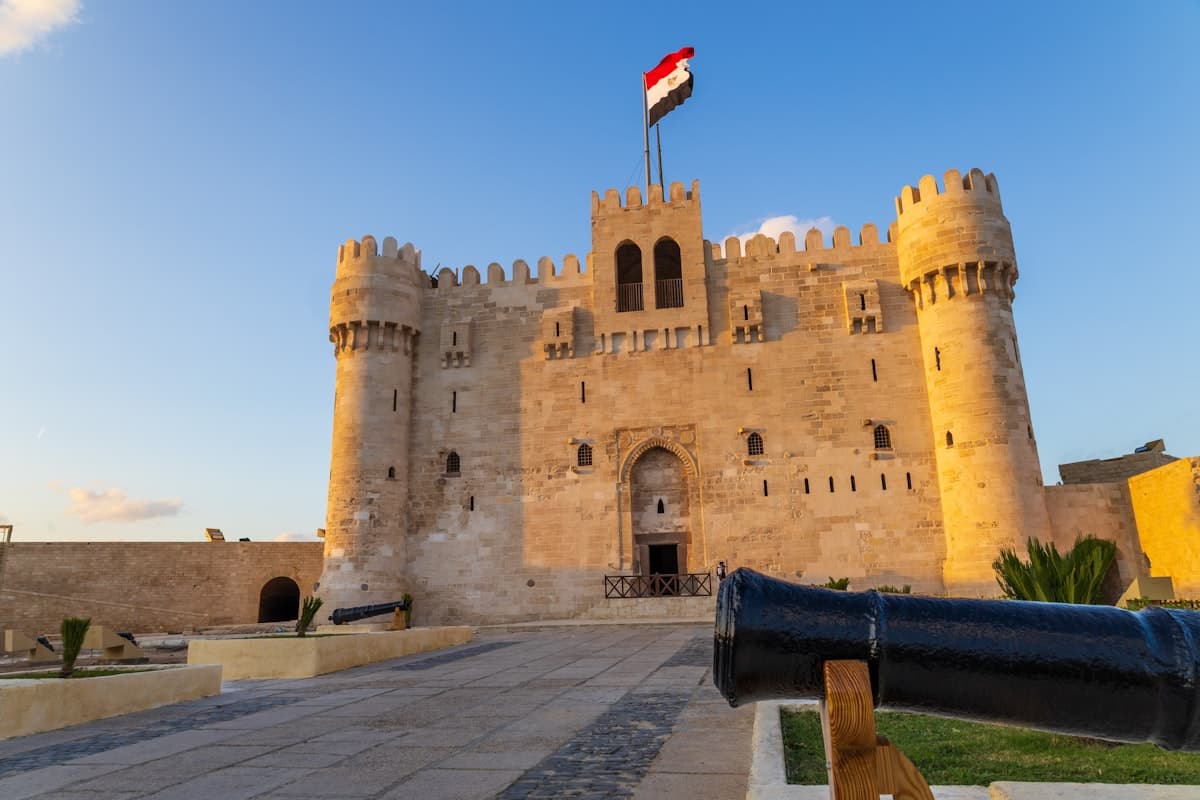
The Citadel of Qaitbay, built in 1477 on the foundation of the ancient Pharos lighthouse, was the French coastal fortification point. The Mamluk Sultan Qaitbay built it specifically to repel Ottoman naval attacks; the French used it as a harbor defense point against the same British who eventually defeated them. The walls that faced Ottoman cannons in the 15th century absorbed French cannon fire in the 18th. The masonry does not distinguish between occupiers.
The Connections: Layers the French Never Understood
The French scholars documented Egypt with extraordinary precision and almost no cultural understanding. They measured temples whose religious functions they could not read. They catalogued mummies they considered curiosities. They stood in front of hieroglyphics for three years and understood nothing until the Rosetta Stone provided the comparative key, and even then, the actual decipherment was done by Jean-François Champollion in 1822, working in Paris from copies, never having visited Egypt.
What the French failed to see, and what makes the Napoleon Egypt campaign sites guide genuinely interesting rather than just military history, is the continuity beneath their feet. The Cairo neighborhood where Napoleon camped had been Fatimid before it was Mamluk. The Mamluk mosques were built on Fatimid foundations. The Fatimid city was built on the ruins of the Roman fortress of Babylon. The Roman fortress was built at a point where a Pharaonic canal met the Nile. When French engineers surveyed Cairo for infrastructure improvements, they were drawing maps of 4,000 years of hydraulic engineering without knowing it.
Muhammad Ali Pasha, who took power after the French left, understood this layering instinctively. He built his alabaster mosque inside the Cairo Citadel that Saladin had constructed in 1176, on a hill the Romans had fortified, over a plateau the Pharaohs had used as a limestone quarry. He then invited French engineers to build him an industrial infrastructure. He took the French tools without the French occupation. This is the smartest response to Napoleon's Egypt adventure, and it came from an Albanian who barely spoke Arabic.
Common Mistakes
Treating this as a French story. The Napoleon Egypt campaign sites guide only makes sense if you center Egyptian responses. Abd al-Rahman al-Jabarti's chronicle, Muhammad Ali's political maneuver, the Al-Azhar uprising: these are the historically consequential threads. The French military adventure is an episode. The Egyptian reaction is a turning point.
Visiting the Egyptian Museum without a guide for the Napoleonic-era context. The museum's Rosetta Stone replica is on display but almost entirely unmarked. Without knowing the acquisition history, you will walk past it. A knowledgeable Egyptologist guide costs EGP 300 to 500 for two hours and transforms what you see.
Going to Abu Qir only for the seafood. The fish restaurants in Abu Qir are genuinely good. But if you make the 40-minute trip from Alexandria without stopping at the Alexandria National Museum first, you have skipped the interpretive material that makes the bay meaningful. Do the museum first, then lunch at Abu Qir. Grilled sea bass at a waterfront restaurant costs EGP 150 to 250 per person.
Paying for the Cairo Citadel sound and light show. It costs EGP 350, runs in English three times weekly, and contains nothing you will not learn from two hours of reading. The Citadel itself, including Muhammad Ali's mosque and the Military Museum with its Napoleonic-era exhibits, costs EGP 200 and is worth it. The show is not.
Skipping the Delta sites because they require effort. Fort Julien at Rashid (Rosetta), where French soldiers found the Rosetta Stone in July 1799, is 65 kilometers from Alexandria and requires a microbus change in Rosetta town. The fort is partly restored and admission is EGP 50. The stone was found in a wall the soldiers were demolishing, which is the kind of specific fact that makes history feel real rather than curated.
Expecting French signage or acknowledgment at Egyptian sites. Egypt does not narrate the French occupation on its heritage plaques. This is not ignorance; it is a considered presentation of Egyptian continuity over colonial episode. Bring your own context or hire a guide who can provide it.
Conflating the Battle of the Pyramids location with the Pyramids. Tourists occasionally ask taxi drivers to take them to the battlefield. Imbaba in 1798 no longer exists as a navigable historical site. The Pyramids of Giza are extraordinary and worth visiting, but they are not where the French defeated the Mamluks. Do not organize your day around a connection that geography does not support.
Practical Tips
The most efficient two-day structure for tracing the Napoleon Egypt campaign sites is Day 1 in Cairo (Egyptian Museum, Al-Azhar, downtown Institut d'Égypte exterior, Cairo Citadel Muhammad Ali Mosque military exhibits) and Day 2 in Alexandria with afternoon at Abu Qir (Alexandria National Museum in the morning, Qaitbay Citadel after lunch, Abu Qir bay and dinner).
For the Cairo day, start at the Egyptian Museum when it opens at 9am to beat tour group congestion. The Napoleonic-era replica Rosetta Stone is in the ground floor central hall. Al-Azhar is a 20-minute taxi ride from Tahrir; visit on a non-Friday morning when it is quieter. The Citadel is another 20 minutes south by taxi.
For Alexandria, take the 7am express train from Cairo Ramses Station (EGP 80 to 120, book through the Egyptian National Railways website or at the station the day before). The Alexandria National Museum opens at 9am and closes at 4pm, which is tight for a combined itinerary. Do not attempt Alexandria as a half-day trip from Cairo. It requires a full day minimum and ideally an overnight.
Hire a local guide in Alexandria specifically. The French-era material at the National Museum is poorly labeled and the staff are not consistently able to provide historical detail. A licensed guide arranged through the Alexandria Tourist Authority costs EGP 400 to 600 for a half-day and is worth every pound.
Bring water, especially in Abu Qir where the waterfront is exposed. The bay is beautiful in winter light from November through February. In July and August, the humidity is physical and the seafood restaurants are overwhelmed with Alexandrian vacationers. If you are doing this research in summer, prioritize the indoor museum in the morning and limit outdoor time to early morning.
The French occupation of Egypt was a military failure that produced intellectual consequences still reverberating through archaeology, linguistics, and political history. The sites that carry this story are scattered, imperfectly marked, and far more interesting than any single monument. That is the point. The campaign was complicated. The evidence matches.
Frequently Asked Questions
The Weekly Dispatch
More on Egypt, every Friday.
Cultural depth and places most guides never mention.
No spam. Unsubscribe anytime.